S_V_H Dave Brubeck Blue Rondo á la Turk image 1

BlueRondo1

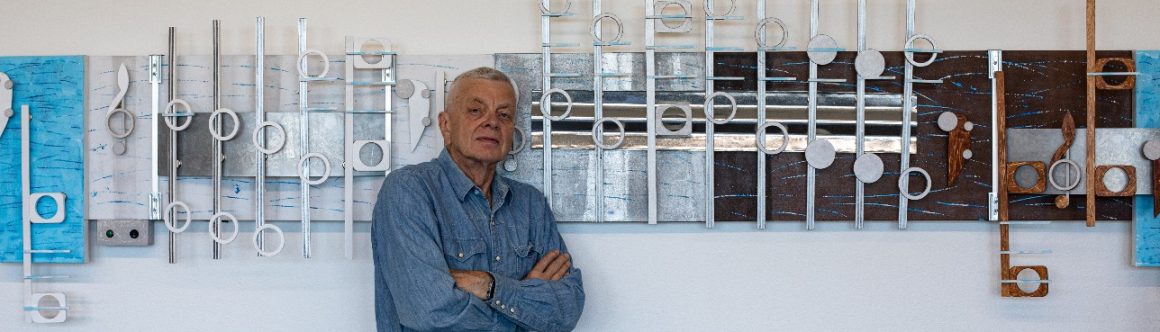
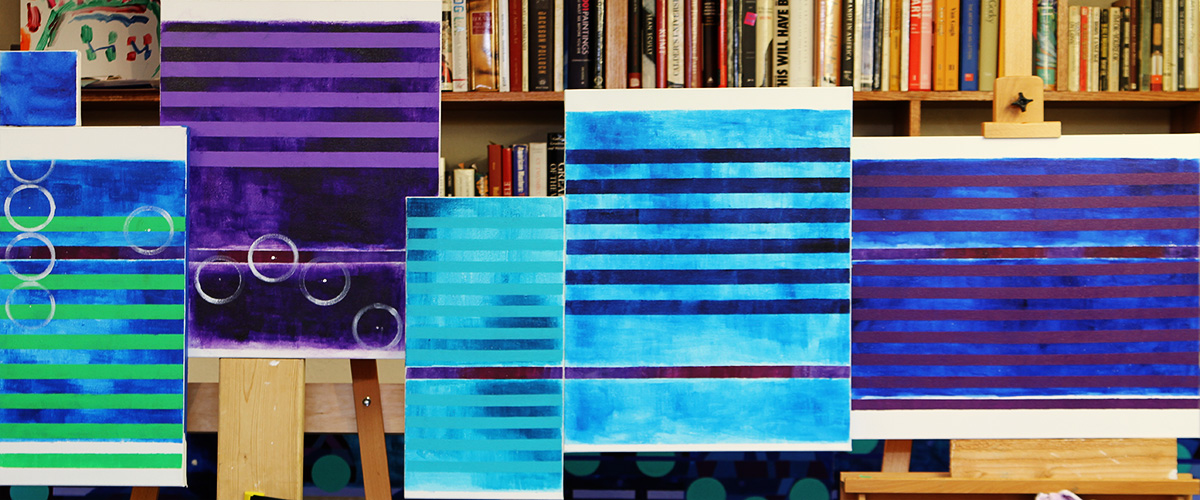
This artwork is just over six feet in length, consisting of six panels. It surprised me that I can paint a piece of music in that small amount of space.  Lucky, there are a couple of parts from this amazing music that allowed me hold down the final length of this work, but still fit a phrase.

This is a jazz piece  called Blue Rondo, so the color blue is a natural choice. Since this work is only two measures long, it would have been possible to place it all on a single canvas, but that look would have lacked interest.  What has energized this artist is the method of  breaking the music apart  into smaller pieces per each canvas, and then connecting all those canvases in an orderly flow.

This artwork comes from suggestions made by my Music teacher, professor Tim Buchholtz. When finished,  hopefully, I will be presenting it too him, as a gift to the Music Department of the University of Wisconsin Marathon campus.  It is my way showing appreciation to the school and the teacher that allowed me to take the fall semester class, Music 171 Music Theory 1.

This is an update from the image you see.  I am having issues placing the music, especially, on the last canvas. This is happening  because of the style change in how I  group the music.  In the past the music flowed evenly across a work, so  if I was having spacing problems, I could make up for such issues further down the artwork.  Now, that option is more limited by the decision to place the music in groups with each group placed on a single canvas.  After resolving the spacing issues, helped by reducing the size of my notes, I found I still had one more problem. This final issue was with the last canvas.  I found that I had to shorten up the stems for the notes, so everything would fit vertically, but in doing that the beams, for these notes, dropped considerably off  of the work.   Generally, I do not mind cutting off the music, like cropping a photograph to create  an  edge that adds drama and tension to a work, but this slicing was causing too much of the music to disappear.  To solve this problem, I added an eight inch by twenty-four inch canvas on the lower edge of the existing twenty by twenty-four inch canvas. This change to the artwork will appear in the next update.

Scott Von Holzen
S_V_H Vivaldi’s Four Seasons – Winter – Allegro image1

4SWinterAllegro1

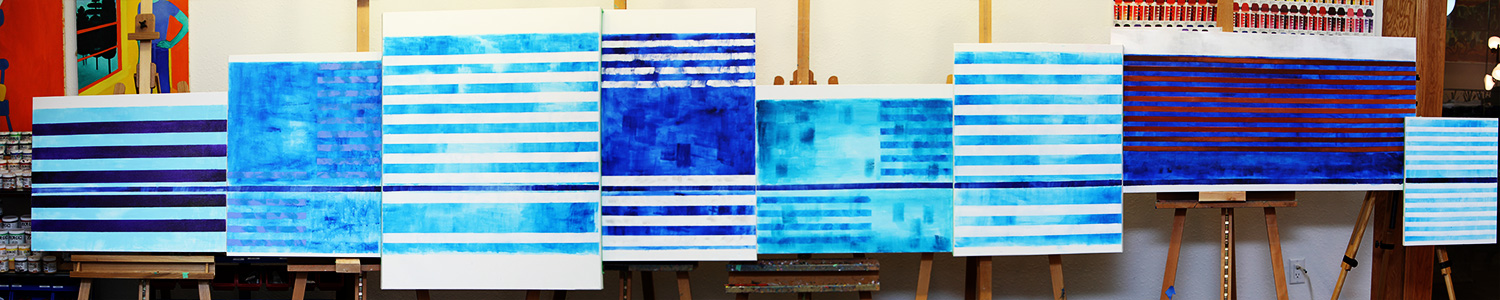
This canvas consists of nine panels and is almost eighteen feet in length.  In the beginning I was against a canvas this long.  This art room is only thirty feet by sixteen, and just handling such a large work would create serious movement issues for one person. The problem, was with me, and that I considered an artwork  one piece no matter how many canvases.  So, thinking that way I considered ways to go short to fix handling issues.  To do this I began, as I always do with large works,  by laying them out on the floor.  To keep this works  length down in size, I found I could zig-zag the music.

By off setting and stacking of the canvases the length could be shortened.  This seemed to work until I realized how difficult it would be to connect the pieces, not only right to left but also top to bottom.  Also it quickly became clear that the height of the work would also cause  issues, with the limited height adjustments of the easels.  None of this was making sense.  That was when I decided the only answer would be let the work grow to whatever length it wished. To then, to solve the handling issue of a very long work,  I  decided to divide up that length into manageable pieces.  The thought was I could then place a much more manageable piece on the easels and then change it out with the other section when needed.  I soon realized that by adding an extra easel and some extra support, I could fit both pieces on the easels. Of course, I then realized, with some adjustments to the easels, that I could line them up. Finally I bolted the pieces together, as one.  I came full circle.  This all makes sense knowing that I am saving  the best Four Seasons movements for later projects. The thought is that my rapid artistic maturing will be a benefit  to those movements I care the most about.  Plus, I know that the best of the best of Vivaldi’s The Four Seasons, could easily reach lengths of twenty feet or more.

This is the introduction, an a look at how and why I plan on working together on two different works, one large one small.

This is a short discussion about Image one of Vivaldi’s The Four Seasons Winter Largo.


Scott Von Holzen

S_V_H Vivaldi’s Four Seasons Winter Largo Final Image

4SWinterLargoFinal

Antonio Vivaldi’s The Four Seasons, RV297, Winter Largo final image. I still have to create a final portrait of this work for the website. What you are again seeing in the enlargement are two separate photos merged together.

Now, I am wondering  where am I going to store this 15 foot artwork, once it leaves the easels. I do have the last Vivaldi work, another 15 footer, Autumn Allegro, hanging in our living room, but I am thinking for safety reasons, I will put this one with the other giants stored on the lower section of this house. It would be nice to hang it in the bedroom,  but most likely it will quickly end up leaving the studio, because of its size, to be  carefully and tightly stacked together with dozens of other artworks.   This storage method works, especially with the use of silicone paper sheets to keep each work separated,  but this makes it  difficult for me to see them, if  they can even be found. There have been many times, that I have  dug out an artwork,  but mostly I have found it easier to look at them on-line, to refresh an idea, or to see how an object was painted in the past.

That brings me to something that I have wondered about.  Knowing that Vincent Van Gogh sent most of his finished work to Theo,  I wonder how much did he miss by not being  able to look at his finished works.  Maybe, seeing his past canvases, for him, was not that necessary for his new subjects were in front of him, presenting him with fresh ideas.  But with this art, I have few visuals to work with and subject matter that sounds better than it looks, so referring to the past artworks is pretty much routine, and important to continually improving  this art.

My final thought about Winter Largo is that  I  enjoyed merging ten different canvases together.  I like letting the music define the look of the artwork. I do believe that is a winning path, that brings out the sculptor and builder in me.  A couple of other things I would like to point out, is that I like the way the beams, seen in the above photo, curve and move.  The last thing I would like to mention are those little red-orange circles, you can also see above, and the possibility that  they may play in the future, to show the music.  We shall see.

Now, here are the videos.  The first one is another summary of this artwork, while the second one is what I call a Walk Through.  I have wondered about  how best to explain this art.  I can not, for sure, tell you an exact answer.  Hopefully, using these type of videos, I can connect the viewer to the music, and to this artistic journey which so far, I have found fun to follow.

Antonio Vivaldi’s Winter Largo final comments.

Antonio Vivaldi’s  Winter Largo Walk Through.
