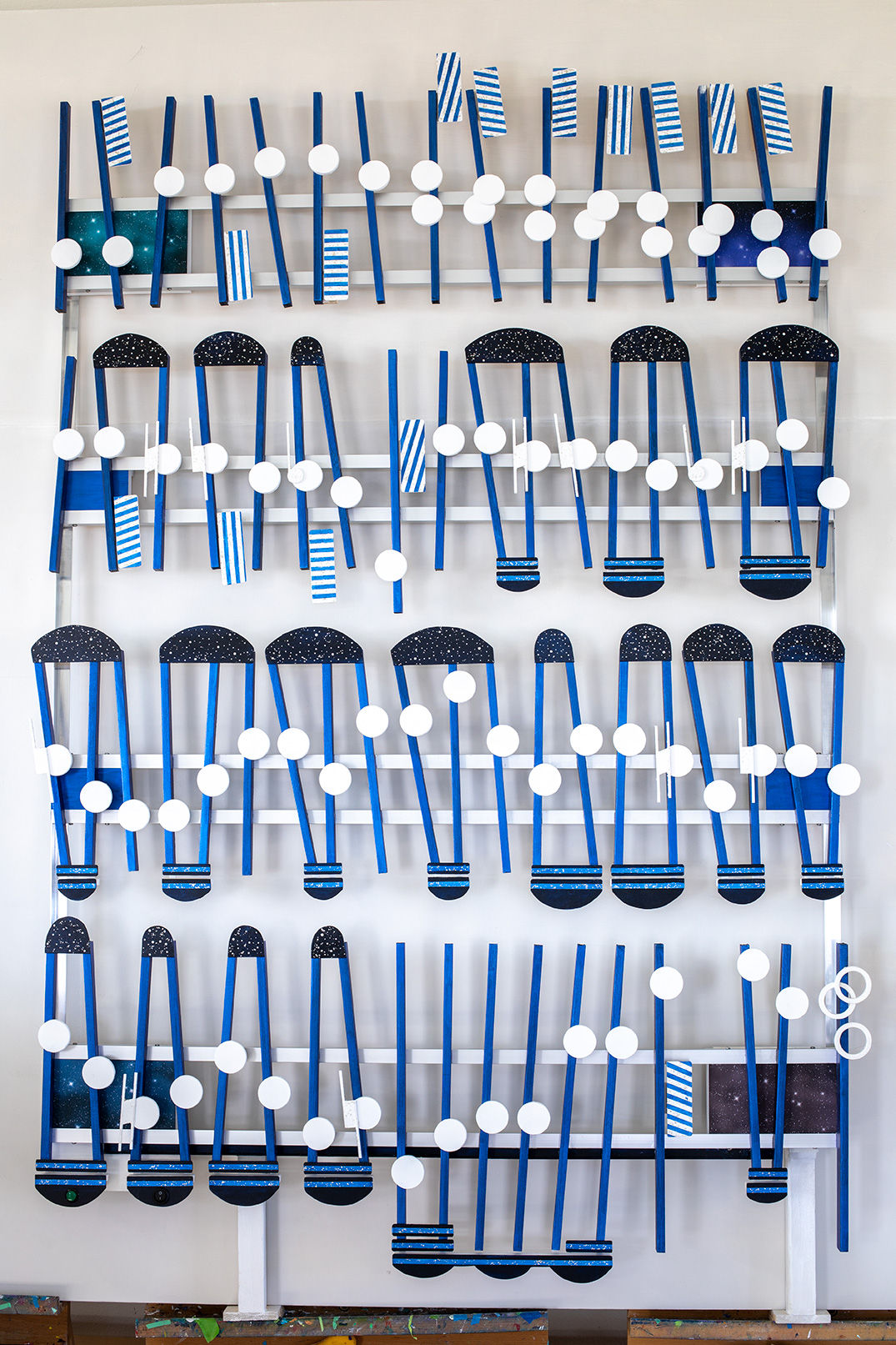
S_V_H Twinkle Little Star Final Image

Twinkle Little Star L44.25″x H65.50″ x D4.25″

I finished Twinkle Little Star, on October 11th.  I delayed this blog entry because my attention quickly pivoted to my next major project, Unbroken, based on the music Will the Circle Be Unbroken.  When I first put together and then started this project, my enthusiasm was high.  That feeling came from my arrangement and from Twinkle Little Star being highly recognizable music.  I felt this artwork would increase awareness and appeal for this art.   Later, after over a month of work, I lost that excitement, except for my arrangement of the music.  You can see those feelings in my final video of Twinkle little star.

What I forgot to mention in the video is my concerned with the dominates of these sculptural artworks by the musical flow while smaller and smaller backgrounds are adding less interest and support to the music.  My direction in 2019 has been to minimize the backgrounds while emphasising the flow of that music.    In Twinkle I have pushed this idea even further with such small backgrounds that add little interest.  Part of why this happened was because of Twinkle’s theme,  Mozart’s piano version number 5, and not today’s version of Twinkle, Twinkle Little Star.  I may need to change this direction made obvious by this artwork.  This all became part of my concerned when I found it hard to follow the musical flow while listening to my arrangement of Twinkle Little Star.  Then the question became, why should anyone follow the flow today, if It never mattered before?

From this art’s beginnings I have portrayed a small flow of a particular piece of music, that only a trained musician had any chance of understanding.  I thought nothing of it.  I was creating artworks that contain much more canvas so I could add lots of visual interest and colors to enhance the flow of the music.  That began to change when I took the flow of the music of the canvas and made it three dimensional.  That resulted in a reduction in the background’s value.  I then discovered sound when I added it to a small artwork of the first four notes from Beethoven’s fifth symphony.  Pressing the play button brought smiles.  That caused me to add sound to my artworks thinking this helped the viewer better connect to the artwork.  I then made improvements to the sound and the quality of my arrangements to where I have found it hard to follow the flow and the sound of the music.  It looks like I am back where I started in 2006.

That tells me to succeed, I need to go “Back to the Future.”  I look at it in this way using my mentor Vincent Van Gogh and two of his images, courtesy of Wikipedia  The first is Van Gogh’s masterpiece The Potato Eaters done early in his career:

Wikipedia
Wikipedia

On my art path, The Potato Eaters may be where I am today with this art.

This other image is of Van Gogh’s popular Sun Flower artworks.   The big change is his lightening of his palette.   That is where this art needs to end up.  I thought my “big change” was adding sound.  That may be only part of this story.  There remains some extra volumes to write if I want to reach the “lightening” of this art.
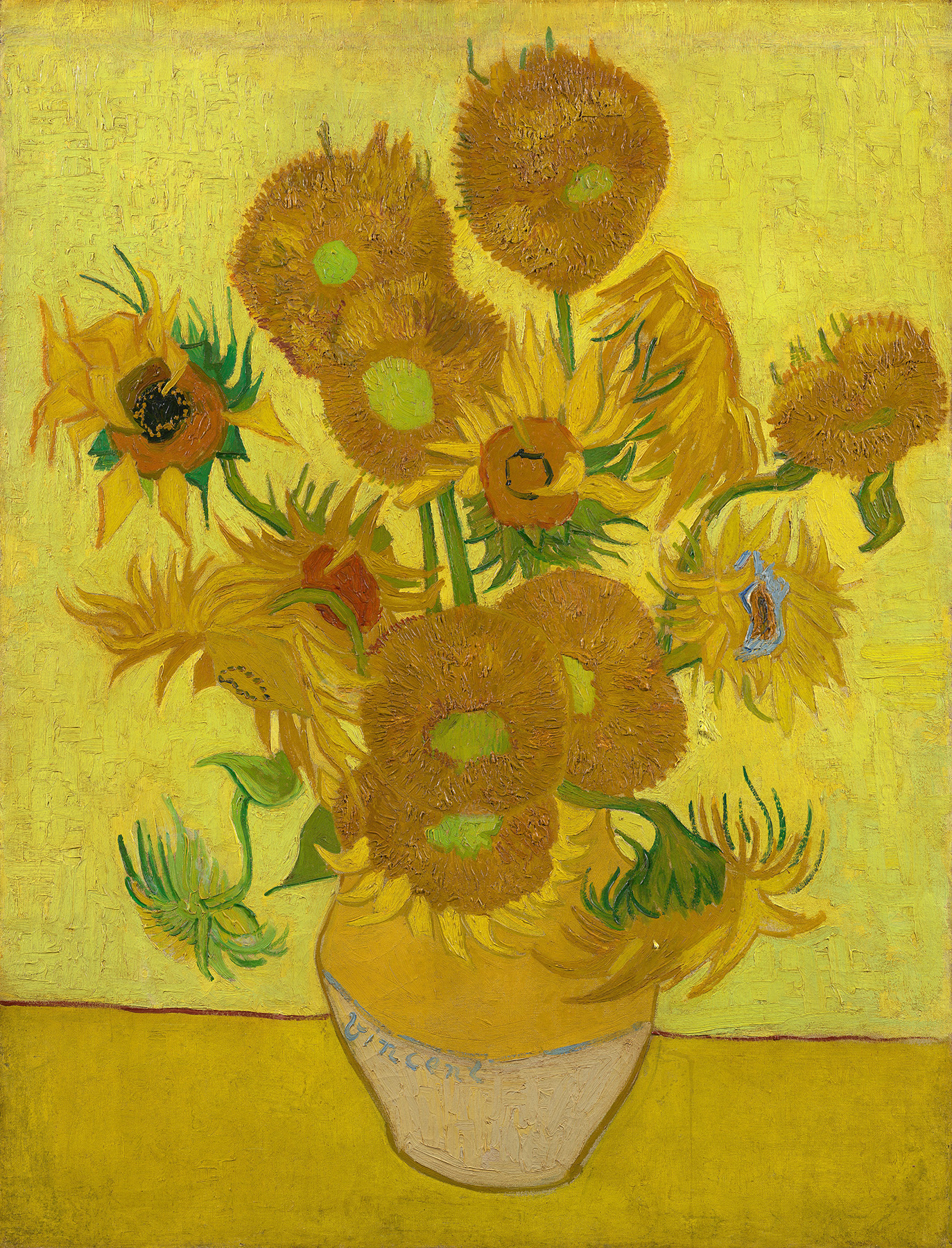
Wikipedia

Scott Von Holzen


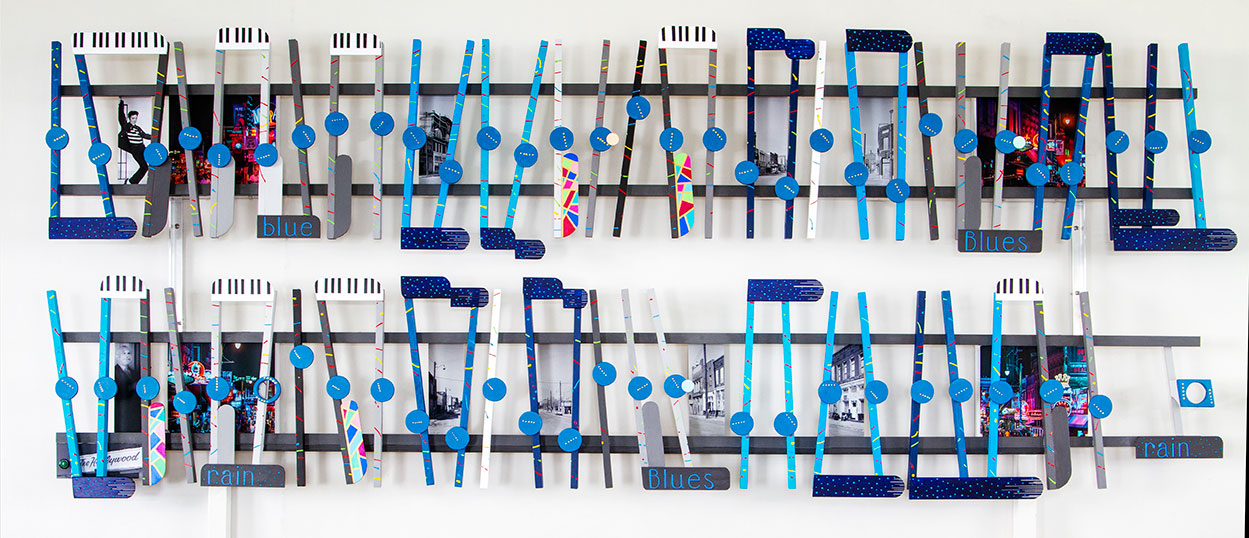
S_V_H Walking In Memphis Final

88″ Length by 33.5″ Height by 4″ depth

My start date was July 17th for Walking in Memphis.  I finished on the 20th of August. Most of my final thoughts on this artwork are in the YouTube video, but I will add a few more comments.

The piano and strings in this arrangement are the interactive parts of this artwork created using the software MuseScore.  In my video, I mentioned that the strings are the voice of the music.  I’ll add that the piano part of the arrangement connects Marc Cohn’s video to the artwork.  I now see sound as a transformational tool.  I once viewed adding music to my artworks as a selling gimmick for art fairs.  Nothing sold.  At less the non-paying public enjoyed it, although saying “Push the button to hear the music,”  grew tiresome.  What changed where the enthusiastic comments at ArtsWest’s Africa, and Mozart’s Turkish March at the Trout Museum.  A staff person at the ArtsWest library, at pickup,  asked to play Africa on our way out of the library.

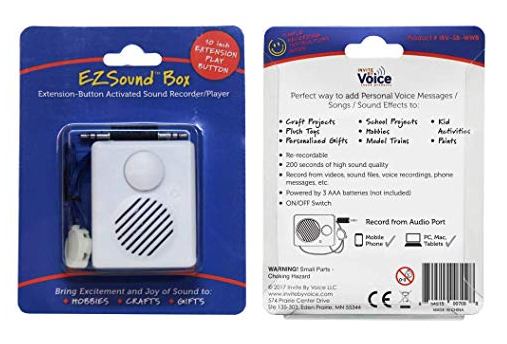
My first serious music notation software, Noteflight. For years I used it only to create the arrangements of the music I painted.  My first added sound came with my little Beethoven 5th first four notes artworks.  I had found a recordable small plastic battery-operated soundbox with a half-watt speaker within an extension wired push button.  In 2018 using the software, Musescore, and soundbox enhancements, the music from this 1inch flat speaker sounds good on The Turkish March, and 2019’s ArtsWest artwork Africa.

My first Sound Box

After Africa, in early 2019 I created the jazz artwork Giant Steps whose style came from  2017’s Miles Davis artwork,  So What (Which I agree).  Giant Steps I believe I never considered adding music because of the limits of the soundbox and MuseScore’s synthesizer to replicate this Jazz masterpiece.  After Giant, I painted Over the Rainbow another experimental work based on the So What style.   From the blog entries adding music was a low priority.  That changed with Schindler’s List.

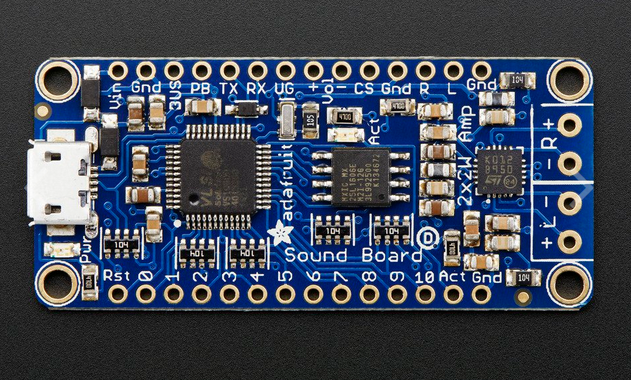
The largest in a long while, and a statement piece, I knew this music needed a higher quality sound to match its size.  Through research, I found a two-watt stereo amp that I could store and play a music file.  Instead of a flat one-inch speaker I now can power two, three-inch speaker placed inside their own custom made speaker boxes.  It required soldering.  I am getting better.

Adafruit Audio FX Sound Board + 2x2W Amp 2″ in length

Next up came Mercy Me, a self-inflicted obligation project that I saw as a long shot for a local environmental exhibition.  The song Mercy, Mercy Me was my first choice for this show.  My choice of music and time restraints made adding sound only a consideration.   Mercy, Mercy Me,  did not show.  I never created a sound file.

With The Blue Danube, I returned to doing artworks for me.  From the start of Schindler’s List, I knew I wanted to add a music file.  In fact, this artwork is a turning point.  From Blue Danube and Walking In Memphis onward finding the right music for a sound file is as important as finding what music to portray.

One final thought on Walking in Memphis: this music by Marc Cohn is the first song on Spotify’s playlist, One-hit Wonders.

Maybe this artwork will someday be a wonder on its own playlist of Greatest Hits.

Scott Von Holzen


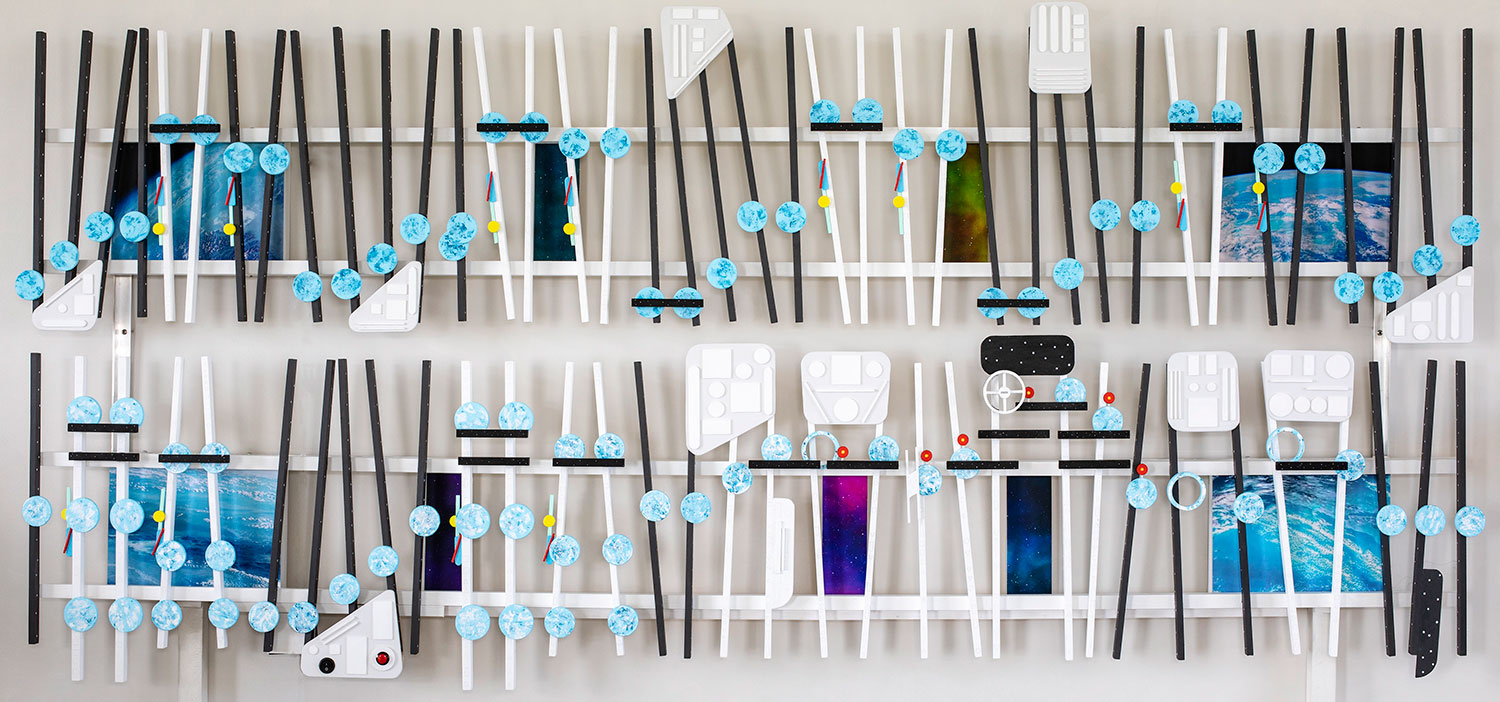
S_V_H The Blue Danube Final Image

The Blue Danube (2001 Space Odyssey) 82″ length x 35.5″ in height x 4″ in-depth

I posted a final video on The Blue Danube on July 4th.  The video explains how I connected the Artwork to the music, to the movie.  I have been working on this project since May 23rd.  Following the lead of The Theme from Schneider’s List, the overall color range for The Blue Danube resembles the look of the movie 2001 Space Odyssey. The main colors are neutral,  a mix of black, gray, white.  Beyond the color blue, I added small splashes of brighter accent colors, found in the movie, to add interest and contrast.   My style now is to stay away from the rainbow look of using too much and too many bright colors creating art that is strongly punchy.  When I see a lot of flashy colors in a lot of today’s contemporary art,  I think baby toys.  All that mix of bright colors diminishes the impact and can be a fallback tool to distract from the lack of originality.

For this work, I thought I would experiment with another wood frame.  My thinking was that the white-painted wood frame would match the movie better than a bright metal frame.  I did not see a lot of bright metal in the movie.  Because of the length of eighty inches for the frame pieces, I found cutting the wood a challenge.  They required a lot of sanding.  One advantage of using wood frames is that the music, also made of wood,  adheres strongly to the frame.  This is not the case when I am using metal frames for I am gluing wood to metal.  What I like about metal is its strength, straightness,  and modern look.

I specifically created The Blue Danube project for entry in this year’s Major fall art show at the Eau Claire Confluence center.  Since it is important to always submit the maximum number artworks, I also entered Giant Steps and The Turkish March (rejected for last year’s show).  I received this news on August 7th.

“Dear Scott,

Congratulations!  You have been selected as an exhibiting artist for the Confluence of Art Annual at Pablo Center at the Confluence.

The work selected for this exhibition is:

The Blue Danube

Pablo Center has kept images of all the accepted artwork for use in publicity for the exhibit.
Exhibition Dates:     September 13-November 3
Meet the Artists’ Reception and Awards Ceremony: Friday, October 4, 5-7pm
Rose Dolan-Neill
Visual and Literary Arts Manager PABLO CENTER AT THE CONFLUENCE
128 Graham Avenue
Eau Claire, WI 547011.715.471.6130
Pablo center. org •    

The exposure will be valuable.  The Pablo show is the next addition to this artist’s best showings including Eau Claire’s ArtsWest, The Secura show at the Trout Museum in Appleton, and the current ROOTS exhibition at the Center for the Visual Arts in Wausau.  Being at display at the Pablo may offer a greater benefit of turning this unknown, unknown artist, into the unknown local Artist. Looking forward to the reception.

I am close to finishing my current project, Walking in Memphis, that like The Blue Danube will be my primary entry for another exhibition later this fall at The Museum of Contemporary Art in Wausau.


This is my 600 Blog Entry.  Vincent Van Gogh sent Theo 663 letters.

Scott Von Holzen