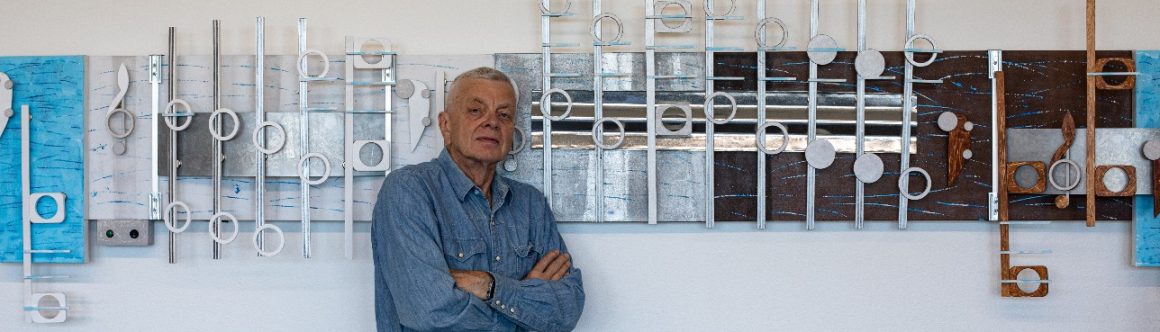
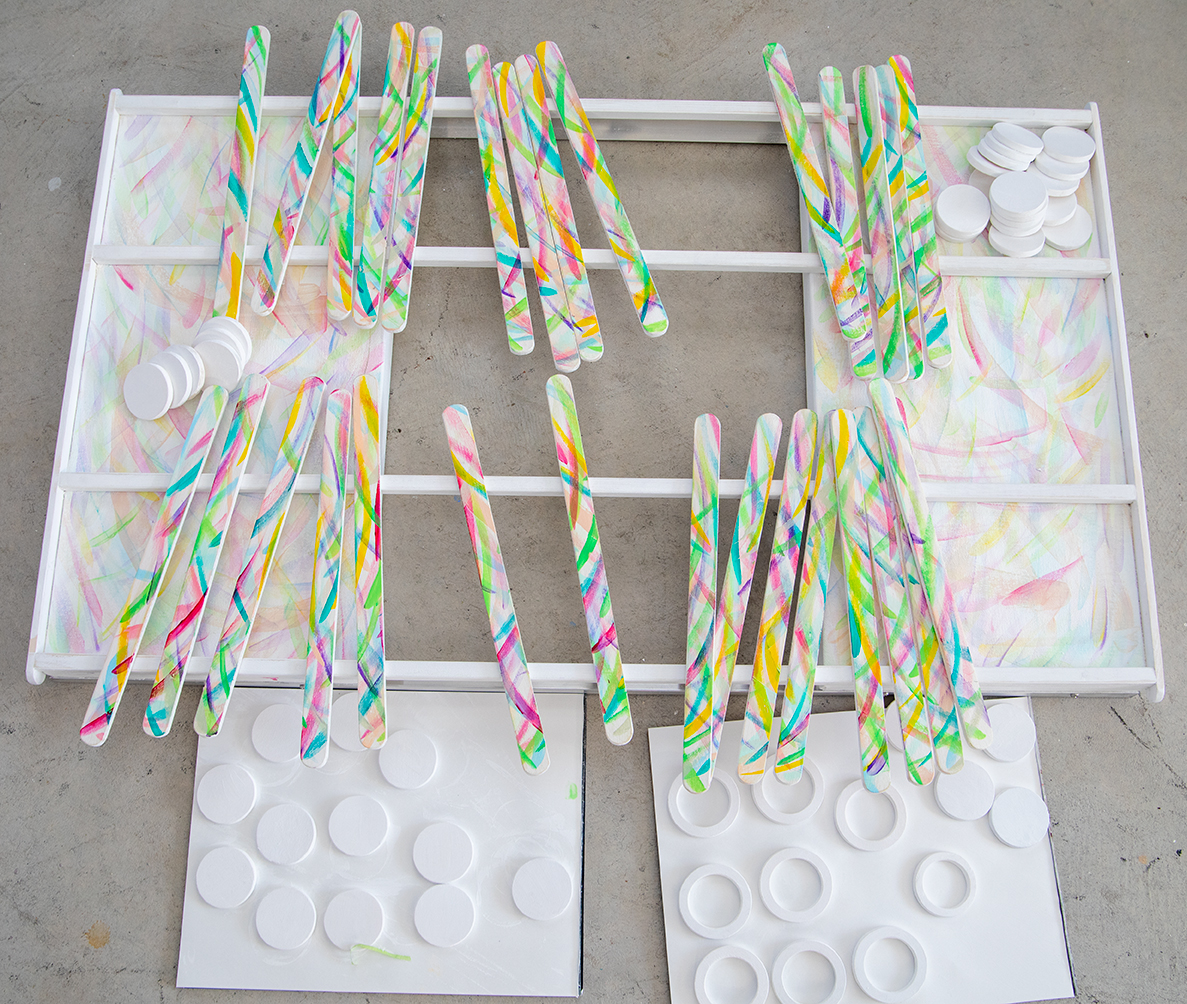
S_V_H Where have all the Flowers Gone image1

This is my first image of the classic Folk song, Where have all the Flowers Gone.  This music is one of my Greatest Musical Hits, the Early Years.   I am guessing, but I believe it was the Kingston Trio version of this song that created that connection.   Here is a video from 1966 of The Kingston Trio on the Andy Williams show singing Where have all the Flowers gone:

This is a 1960s live video of Pete Seeger, who wrote the song, that starts at one minute forty seconds:

Finally, this is the 1986 live version of Where have all the Flowers Gone, by Peter Paul and Mary. This group’s musical diversity, through the sixties, kept alive my interest in Folk music even as my musical tastes turned to the Beatles and rock n’ roll music.

There are a lot of good reasons to paint Where have all the Flowers Gone, but in reality, it was this email that finally motivated me to set aside the time for this project:

“CALL FOR ARTISTS & FLORISTS

FABULOUS FLORALS & FINE ART

Pablo Center at the Confluence is seeking visual artists and floral designers to participate in Pablo Center’s group exhibit: Fabulous Florals & Fine Art. This popular annual exhibit will run March 18-22, 2020. Fabulous Florals & Fine Arts is a five-day exhibit paring visual art with floral interpretations of each art piece. We invite visual artists to submit images of their completed work for jury. Artists may submit up to three artworks. After artwork has been selected, images of the artwork will be sent to floral designers and will be the inspiration of their floral design. Selected works of art will be on exhibit at Pablo Center in the James Hansen Gallery.  APPLICATION DEADLINE IS JANUARY 11, 2020.”

This well-attended, and colorful exhibition,  comes at a good time in our Wisconsin winter.  I have submitted the last two years,  and both times I have received kind email rejections.  This year I am stepping it up.  I have kept this work small. The artwork will be full of colorful plant looking shapes, and for the first time, I will include playable music.  This artwork will also have an ironic title, Where Have All the Flowers Gone.  The color of the music, only white,  says where have all the flowers gone.  The florist will provide that answer.

Scott Von Holzen
S_V_H The Water is Wide image Final image

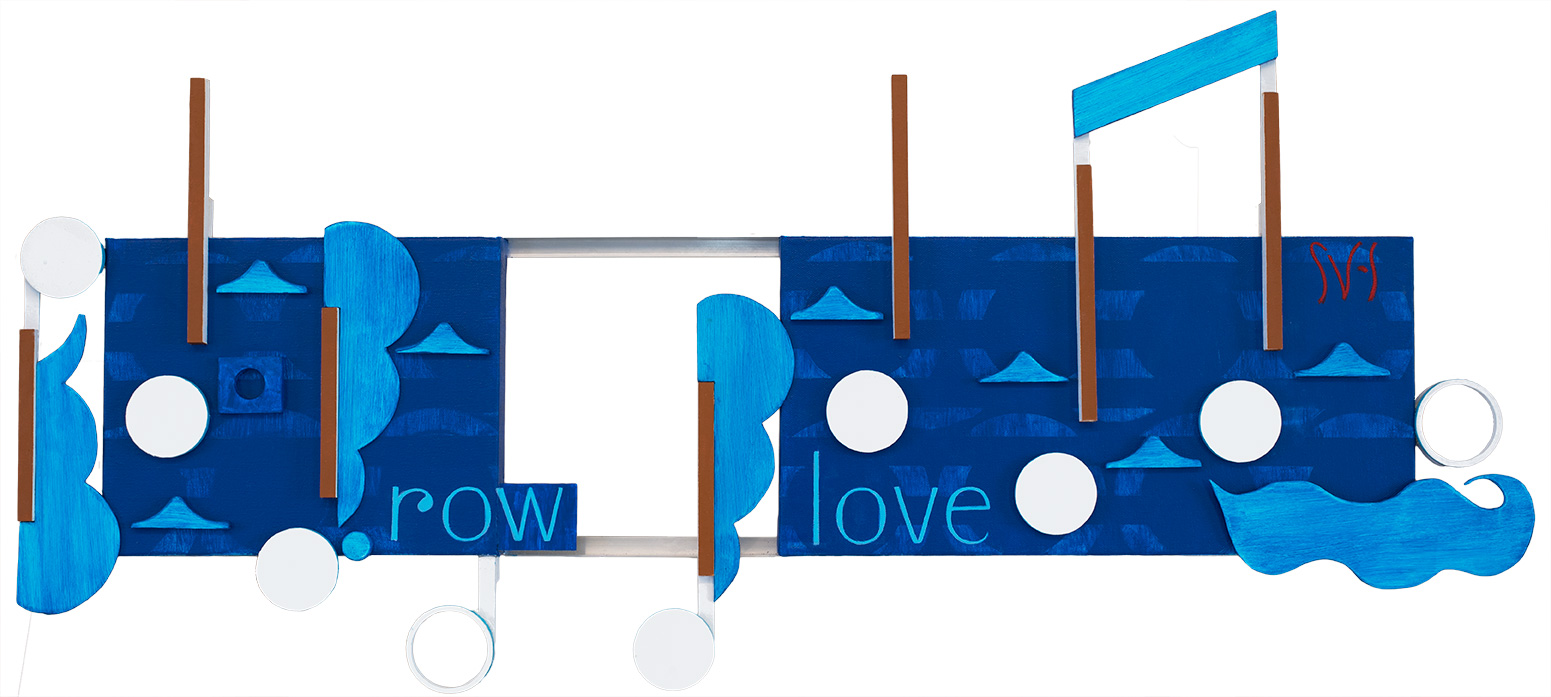
I have cross over to the other side,  by finishing The Water is Wide. This little acrylic painting consists of two canvases, aluminum and wood, and is about 38 inches in length by 17 inches.  Musically this is a simple song. I can confirm its simplicity for I practice it on the piano, violin, guitar, and saxophone.  That is what is deceiving about this music. It is so easy to play, anyone can do it, which is strangely deceiving.  Anyone playing or listening to The Water is Wide will be surprisingly rewarded by the melody.   This is a piano version by Michael Logozar:

With the lyrics,  the exceptionalism of this music is complete.  Here is a live version with Jewel, the Indigo girls and Sarah Mclachlan:

Because of the style of the music I thought a small painting, with a limited color pallet would work best. I kept my blues to two colors for the background. From the lyrics I choose white,  and a mixed brown to represent the colors of the music and the row-boat.

This  artwork has turned out to be a nice surprise, that reconfirmed that these paintings……bla..bla…..bla… music.  I do not know how to end that sentence.  After 10 years of painting music I still don’t have the answer that best describes this art and its relationship to a lot of pretty darn good music.  I still working on the enlightenment phase.

Scott Von Holzen

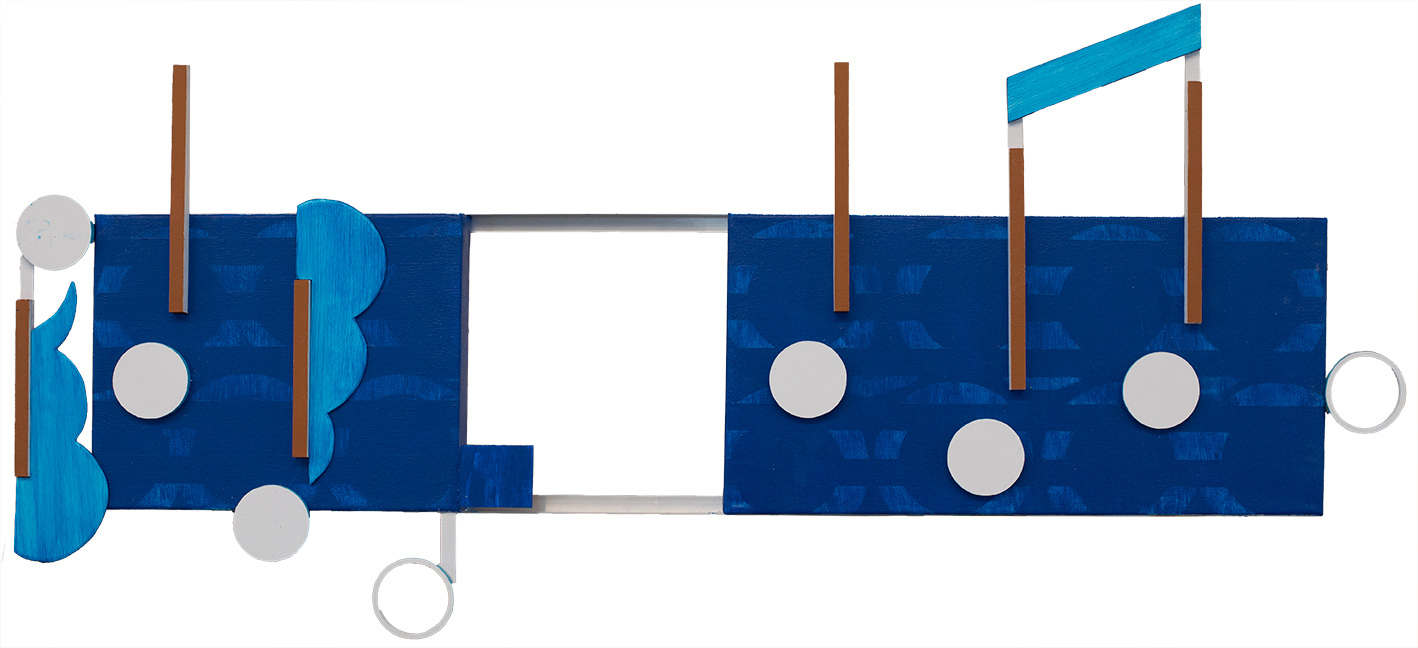
S_V_H The Water is Wide image 1


This Scottish folk song The Water is Wide has origins that are hundreds of years old.  Pete Seeger first popularized the song in the Folk music era.  This is a live celebration version of The Water is Wide,  sung by  Emmylou Harris,  for Pete Seeger’s 90th birthday:


The Water is Wide first came to my attention from this wonderful cello version by Steven Sharp Nelson:


This little artwork’s two canvases along with metal and wood pieces is just over thirty-seven inches, and continues  the look of the music  flowing outside the canvas framing.  These smaller works are marketable,  quicker to produce and are a good for experimenting.  They are worth doing, although their smaller physical size difference does have a visual impact.  What does not change,  no mater the size of the artwork,  is the level of importance of the music chosen for each painting. The differences in sizes comes from the design of the music that can make it easier to portray on a smaller artworks.

Scott Von Holzen