S_V_H Giant Steps 2nd image

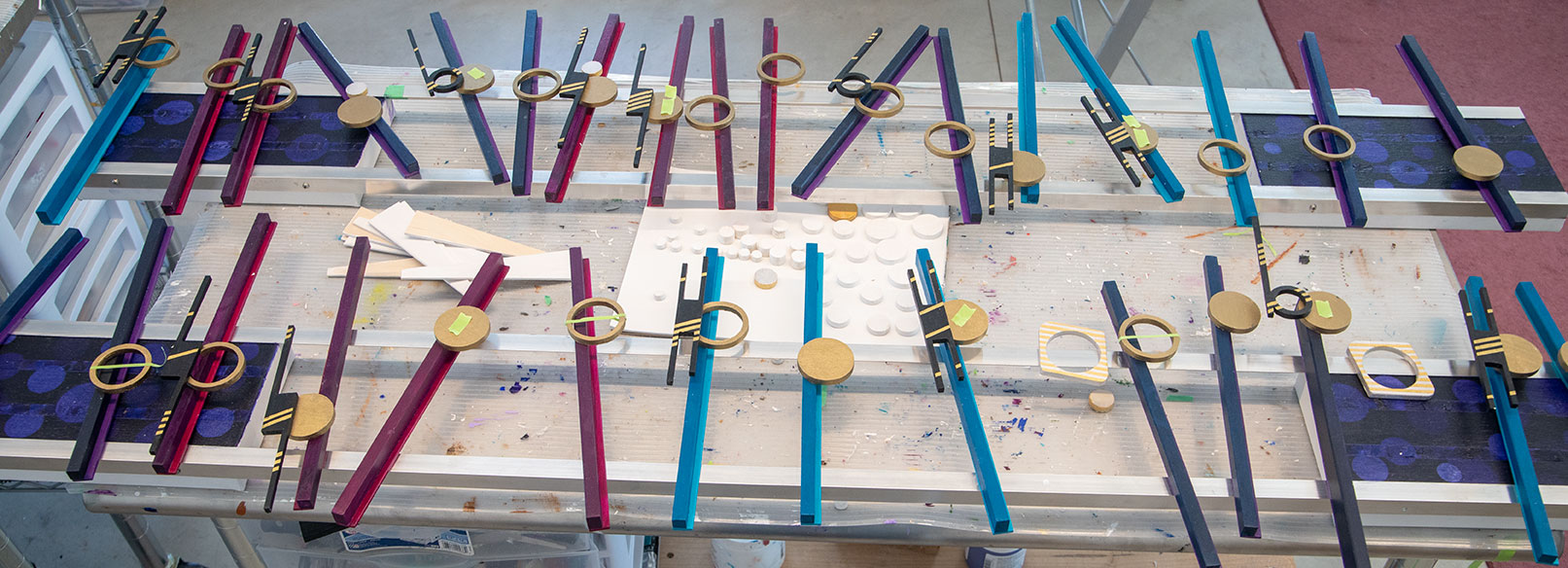
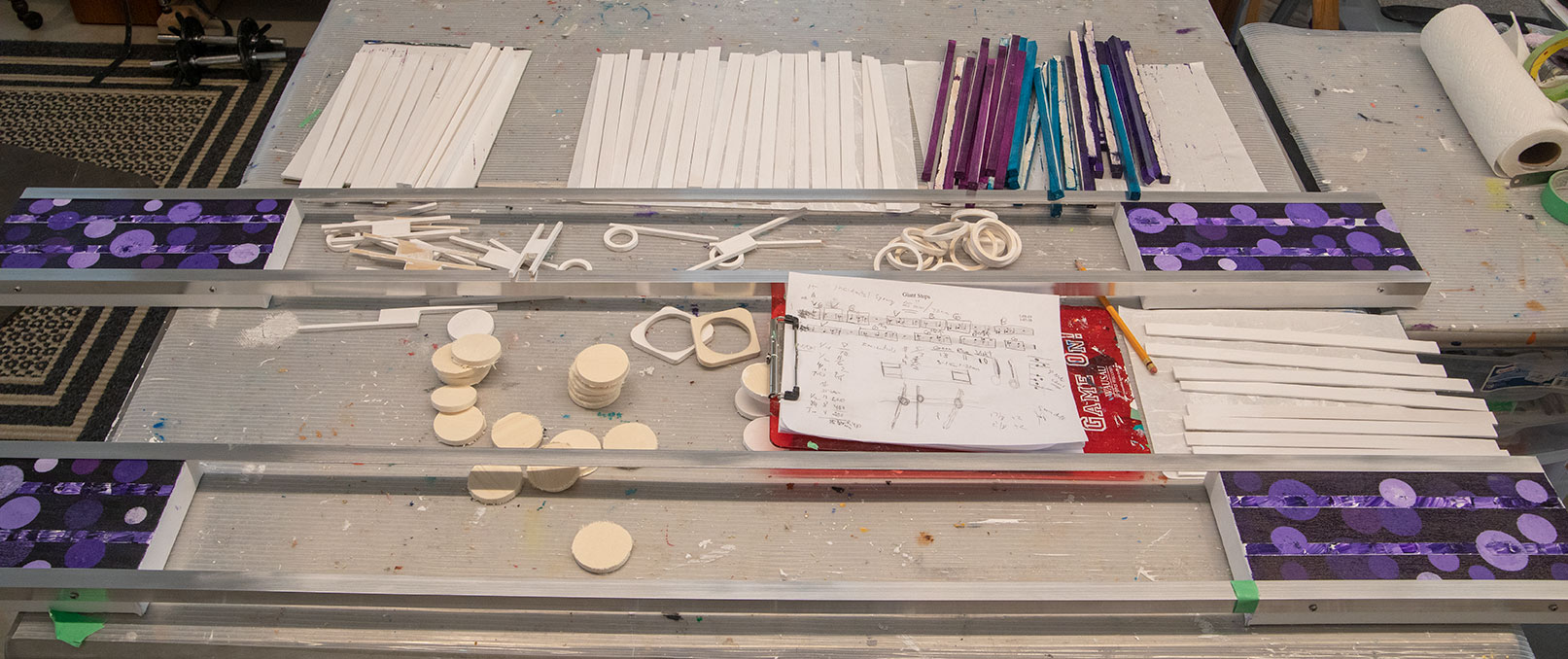
This is Giant Steps still in pieces, but starting to look interesting.  In past projects my procedure was to first cut out all the round heads, and then space them together to find the length of the artwork.  I would than build the artwork in sections and mount them to the background, moving from left to right.  You can see this done recently in the artwork, The Tango first image.  The reason I built these artworks that way was to help build interest in this blog by giving the viewer progress bar images of my artworks .  The problem with doing it that way was I was creating each section and then stopping to install it, and then starting the process all over again, always interrupting the work flow.

I learned from Africa, that creating all the major parts of the music first, saves construction time.  Another advantage that I have seen with Giant Steps is that my enthusiasm, which is always greatest early in a project, lasts a little longer, knowing there will be more enjoyment with less frustration by laying everything out before installing.

That reminds me of another enjoyment when doing a puzzle, and you are down to the last few pieces. Your emotions begin to rise knowing that where the few remaining puzzle pieces fit is becoming increasingly obvious.  Your pace quickens to insert the final pieces.  With the final puzzle piece locked in place, a momentary joy lifts your spirits for only than does the image of the puzzle come into focus.  That is the same feeling I had when finishing Africa.  For a few minutes, I did not feel exhausted with the project, but felt joy in seeing the completed artwork. The only difference between the two (and this is not cheating) I had already know where all the puzzle pieces fit.

Scott Von Holzen
 

S_V_H Giant Steps image 1

This first image of Giant Steps shows the pieces that I have made so far for this artwork. Once painted and glue together I can than map out the music flow to make sure everything fits on the two 60 inch by six-inch frames.  I will connect the frames one above the other, after attaching all the music.

The importance Giant Steps by John Coltrane, I knew, but it wasn’t until I watched the video on Giant Steps “The most feared song in jazz,” that I had the incentive to paint it.  Since this video also involves a lot of discussion of music theory,  I found that attractive.  What finally convinced me to do Giant Steps was how well  Africa’s rectangle format worked for that music.

The rectangle format allows me to create larger works with more music while keep the artwork length reasonable, under eight feet (longer lengths makes storage an issue).  Using the rectangle format, with two frames for the music instead of one long frame,  cuts the length of Giant Steps down from over ten to five feet.  Even though the stacking of the music was new, I felt disappointment with Africa.  Stylistically there was only small differences with Africa from the other 2018 artworks, like Vogue, or the Turkish March.  The answer to that was the rediscovery of So What.  Finding the video on John Coltrane’s Giant Steps, and at the same time taking a second look at a forgotten artwork, I found the new direction I was looking for after Africa.

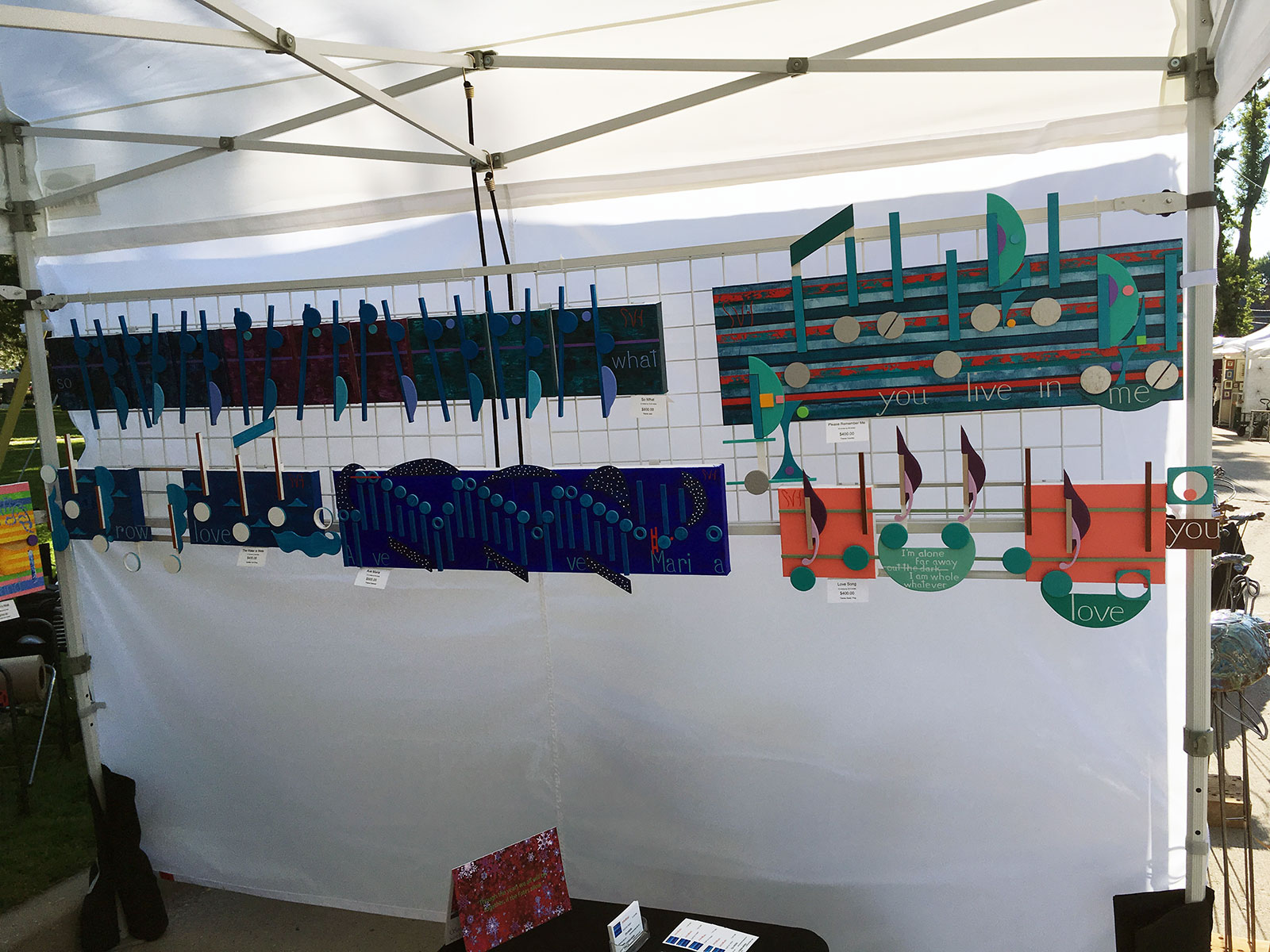
So What was my birthday painting in the summer of 2017.  This Miles Davis artwork had its first showing at The Art in the Park Art Craft Fair in Appleton, the day before my birthday.

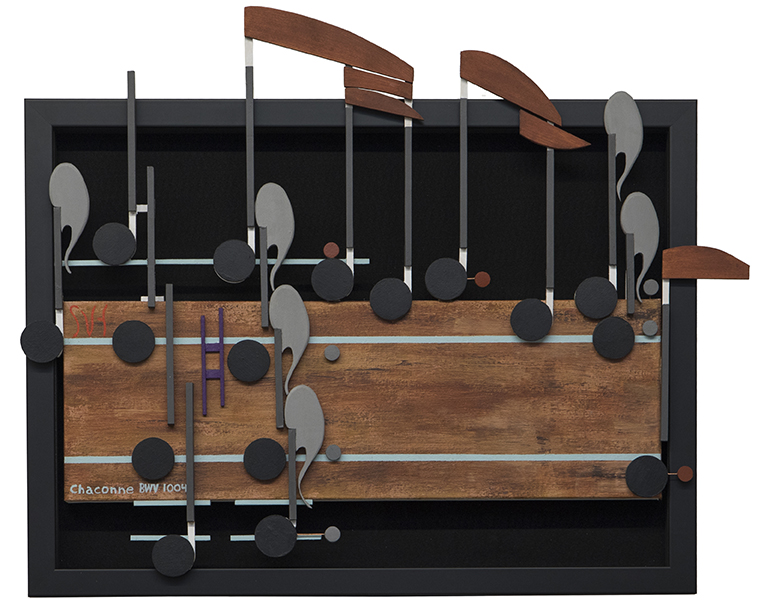
I took the larger, and different looking So What to the Art fair as a statement piece.  So What was Art Fair priced at $800.00, but was never noticed that day.   At that time I thought the musical style of So What would only work with solo Jazz music, and no other genre. This was clear with my next painting, Chaconne,  by the Classical Composer J S Bach, that came out of no where because of a print request from a customer in China.  The Bach music was Classical in style, and much more complicated than So What so it was never considered.  Chaconne turned out to be an exceptional work with it own wonderful Classical music look, that set the example for what was to follow.  So What, then ended up in storage as “so what.”

Lately,  we needed a longer, but narrow artwork to decorate a wall. Since So What’s colors worked for that room, and because it was at the front of the stack artworks,  it came out of storage.  To refresh this blog header I also switched that image to So What. Than came the video on Giant Steps. Because So What’s Jazz style worked well, it became my plan to use it as the template for the John Coltrane Jazz piece.  What  I am doing is  my own Back to the Future move with Giant Steps, with the hope, this time, of using this look in future projects.  Looking back I regret the time lost in not exploring the possibilities of  So What.  Giant Steps will take So What forward using as its theme the first 14 seconds of this music:

Scott Von Holzen

S_V_H In The Mood final image

Acrylic on three canvases, 40.5 inches in length x 17.5 inches in height.

In The Mood  is  finished. This is an upbeat jazz music, so I used different shades  of yellow, red, and multiple blues to add to the feeling of   movement. For the flow of the music the first coat I painted a light magenta. I than lightly painted the music with a gold color pick from the brass instruments.  I also used a light gray for the Mondrian squares, and to represent the suit color of the band  on the vertical shafts.

In the middle, out-of-place, I placed three notes that represent the lower bass music.  To separate them from the rest of the music flow, I reduced their height  and used darker colors, to represent the lower tones.

This is also the first painting where the aluminum frame defines the size of the artwork. The  three canvases are than used to fill in the spaces inside the frame, and to more importantly offer support for the flow of the music. The metal frame makes it a lot easier to work with different heights of canvases. That flexibility is nice, and framing the artwork may be a direction to follow.  My problems with using more aluminum is finding lengths with few flaws,  the increased complexity, and issues in making sure everything ends up looking square.

I can judge my feelings for an artwork by a glance, and am happy with the results of this one.  This painting is more fluid in its movement,  and is less musical looking, when compared to the recent artwork,  I will always love You.  That artwork I feel has a structure that is too rigid like notation. This change in thinking means that I am looking to paint artworks  that are less notational, and far less sheet musical, looking.

With the death of Tom Petty, next up I am going to paint one of his great classics, Running Down a Dream.

Scott Von Holzen