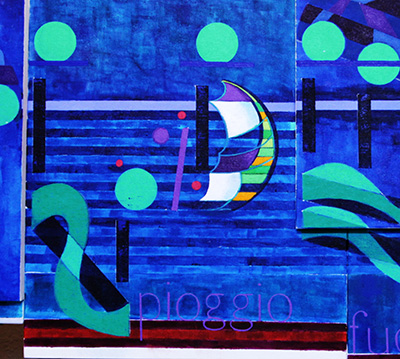
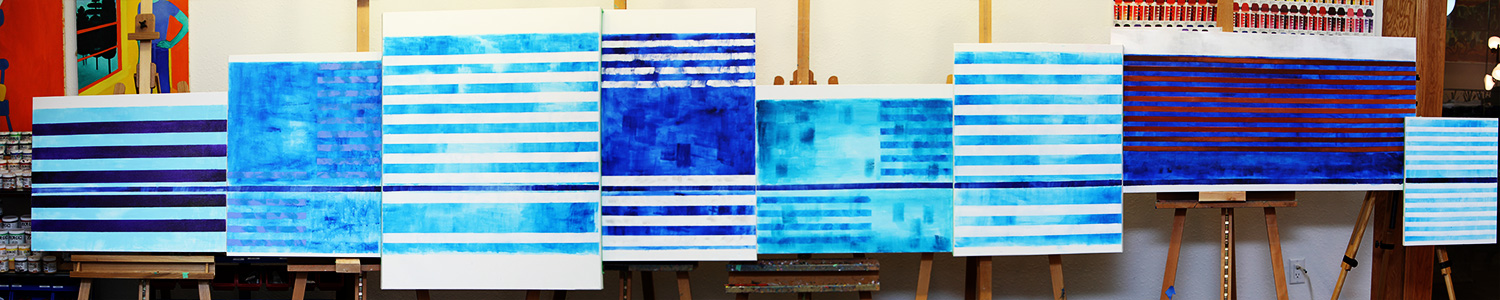
This is image 4 of Vivaldi’s The Four Seasons – Winter – Largo. This is the sixth in the 13 part series with this artwork measuring 15 feet(4.572m) in length. The next image you will see of this work will be the final completed work.
One addition to this work are the two interesting eight notes. They have similar contours as sailing masts in a good wind. I have always admired sailing ships, and actually did a little sailing in college so I have enjoyed this approach to these lone notes. Over the years there have been a lot of different attempts to display eighth notes with this idea being my favorite approach. In addition to the eighth notes the quarter rest at the end of this work, I also like this evolution of this type of notation. Those three angled rectangles look to me like they are putting on the brakes, which works as a good representation of a musical rest.
This is work is now in its final days. The main components have all been painted in, which leaves the only the finishing.
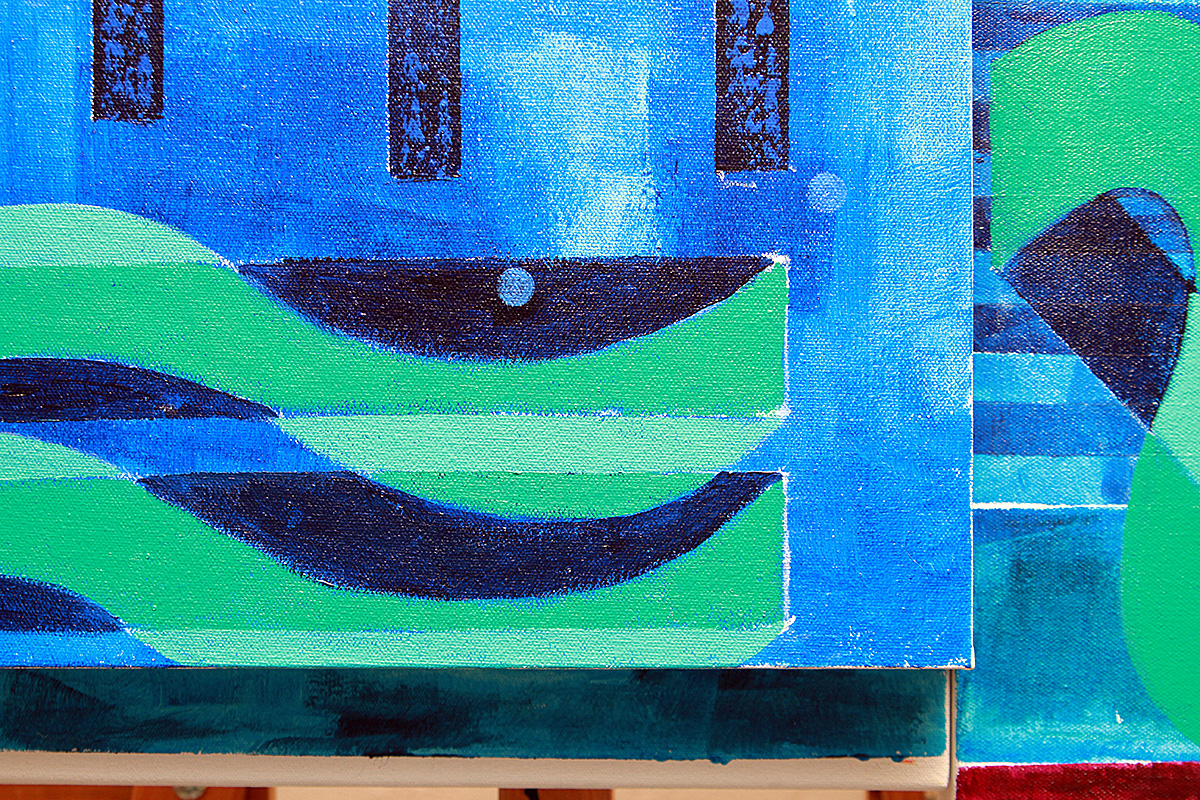
Rough Image:
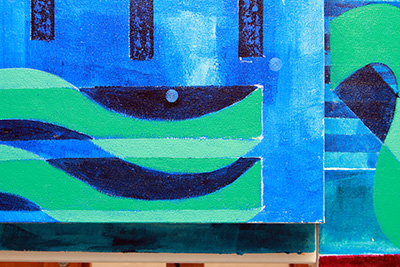
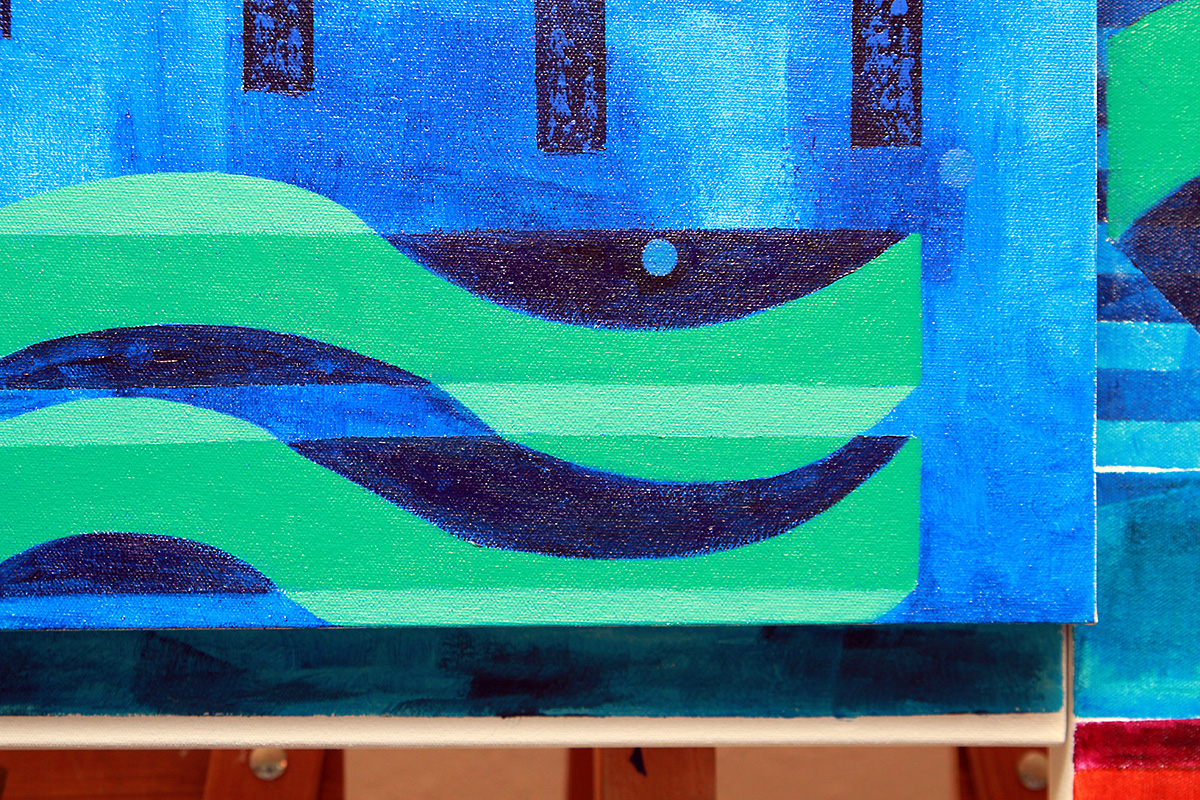
Image finished:
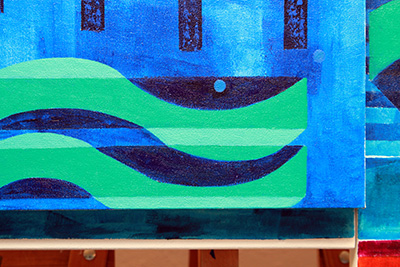
I could easily leave the work as is, with only a little amount of clean up, and in truth the main points made in this work would still all be there. But it is the cleaning up and the sharpening of edges that gives the work that professional look. These artworks may not have that plastic finish of much of the current art scene, but art is more than the look it is about the depth of meaning and purpose, along with lots of originality.
Let me expand on originality, in that in it self guarantees nothing, when it comes to art. My artwork, certainly has originality, but when it does not sell, and is unknown in the art circles, who besides myself can give it value? That is where recognition comes in. When the artwork, somehow finds a way out of basement storage into the view of art critics, and or art appreciation circles, then comes the opportunity for recognition. So, originality may bring opportunity, which leads hopefully to that phantom word, success.
This originality in this art is the foundation that may eventually lead to recognition and then success. What recognition, means to me, is the changing definition who I am. It is this transition from Scott the IT guy that works at a local paper company, to Scott the Artist that eventually becomes know, beyond local contacts. Then with a career eventually focused entirely on art, hopefully I can create a number of small successes that it can push me further along.
Success finally leads to freedom and greater self discovery, which can end with living the dream, but in many of the lives of artists the tragic opposite has occurred. For me, my whole life has been about, finding the way. Now, that I have decided that Art is the way, there is no turning back no matter the overwhelming risks. I am all in, and what happens, will happen if I am good enough to make it happen. We shall see.
At this point in my life, there is this realization that if I am to live the dream the time to reach this goal is somewhat limited by my age. It does not take much research into the lives of successful artists to understand that it can take decades to get recognition of their work beyond friends and relatives. So that is a reality check. I will take the time that is given to me, and try to make the most of it. Although, writing blog entries does take me away from painting, I am discovering that it has made me slowly, a better writer. That also was once the dream to live the life as the next Ernest Hemingway.
I will have more thoughts on this, but I would like to pause this line thinking (just go with it) and respond to this quote I heard today: In a segment of CBS Sunday Morning, about the artist Ai Weiwei, Kerry Brougher the Chief Curator at the Hirshhorn Museum said this:” His works are filled with questions. That is what great artwork does. It raises questions. It doesn’t necessary answer them for you. It makes you have to think about things” (my transcription. I regret the commercial. Go to just after 6 minutes for the quote).
First, the only show I know that consistently has segments on Art is CBS Sunday Morning. You can see people murdered all day long on multiple channels but the great many stories of hundreds of outstanding Artist is rarely being told. So, I enjoyed this six-minute break. Ai Weiwei, is a good artist that deserves recognition and success. Now, for the quoted lines from Kerry Brougher, they make sense, and they make me stand back and look at my work, and wonder, what questions does my art offer? Let me put it this way, this art is about displaying music without actually displaying real music. Hum? That should raise some questions. If this art is about music, but is not music, what is it? I am not sure. No wonder no one recognizes me. My art is an enigma. I guess that sums it up. Hum? As far as Kerry Brougher’s line “It makes you have to think about things,” that is true about a lot of things, and not just art. I think about things all day long at work, that have nothing to do with art, so really does art have to make you think. I am thinking most people would rather feel art. In Mr. Weiwei’s situation, well explained, maybe the way to understand his art is to feel it from the perspective of his life in China. That is good for him, but what about me. My life is fairly ordinary, so in my case, to fill my artworks with questions, I need to do it emotionally, and that is why I paint music. OK whoopee. Here then is the issue with my art: if a viewer understands music they try to analyze the flow of the notes across the canvas, which misses the emotional point of this art. If you do not read musical notation and have no clue what music it is, can that viewer feel the music it is depicting just by looking at it? The answer is yes. This art is about music. And music stirs great emotions in billions of people. And this art speaks to that, and if you see the music in the art, your hooked.
Scott Von Holzen


 aRT iN mUSIC