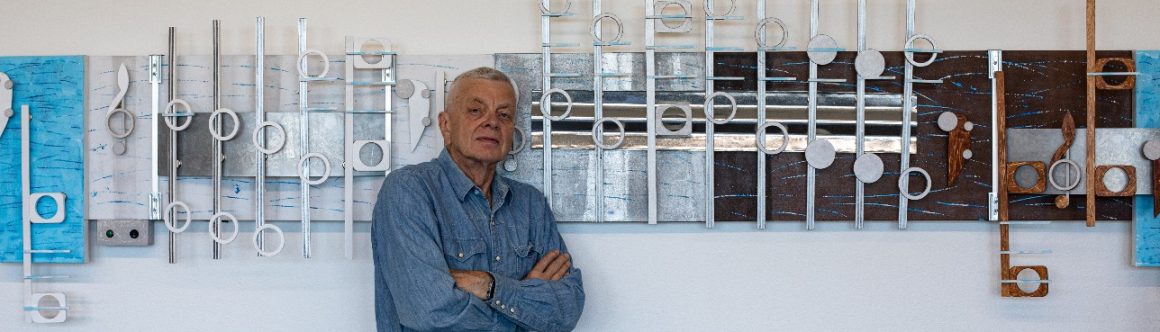
S_V_H Final Image Everything I Do

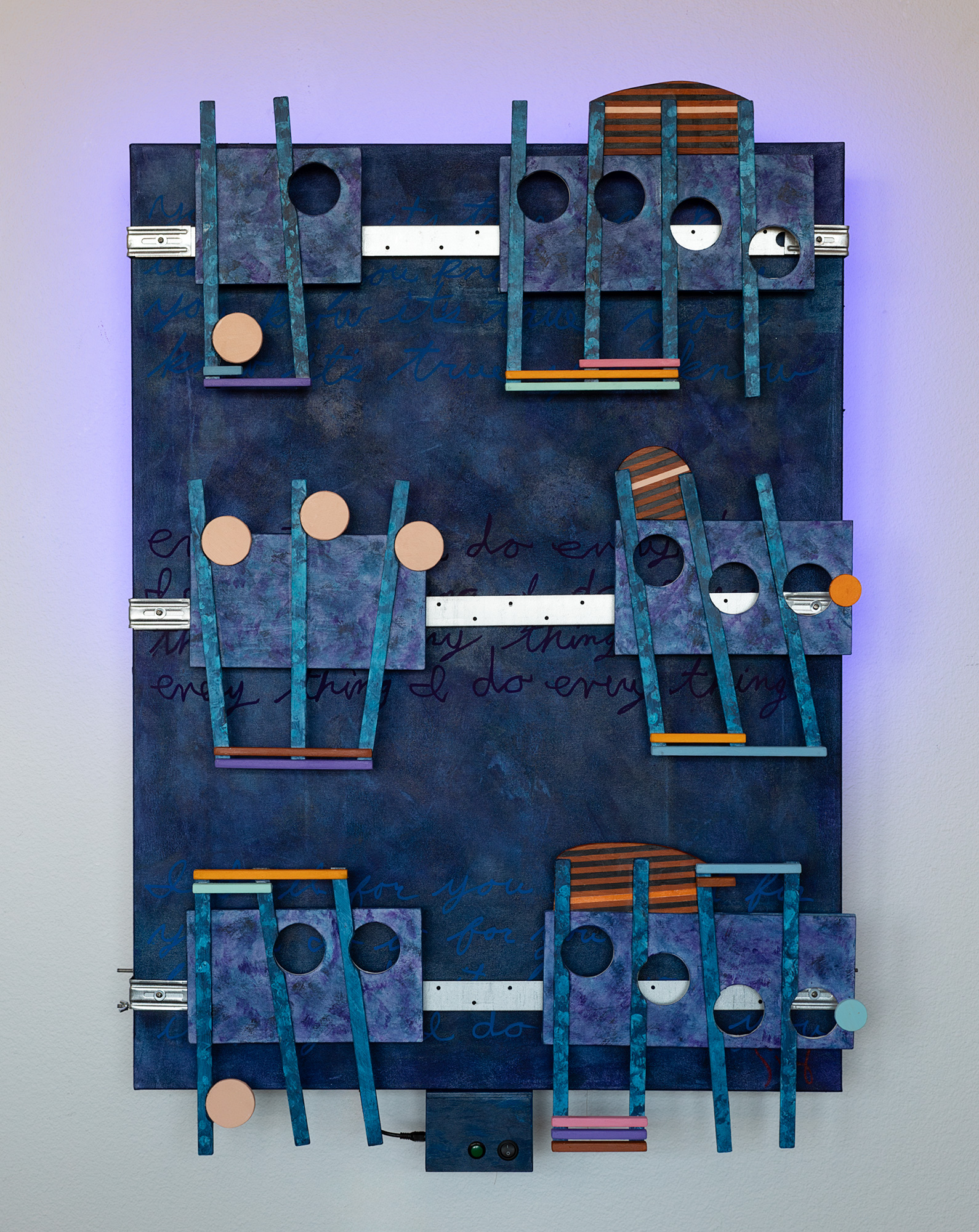
Everything I Do ≈ H46 x L30.5 x D9.5 inches

The artwork, Everything I do, is an example in a long line of breakthrough projects that have changed the look, the style, and the direction of this art. I have four reasons for this style shift. First is simple: I was tired of the current direction. I took another new look at Mark Rothko. Using only one standard size canvas for transport makes it easier to pack into our car. Finally, having the ability to place three rows of music on a single 40 x 30 inch canvas looks much better than I thought it would.

When I look at this artwork, I see the familiar vertical standard appearance of art. It seems less aggressive to me and it does not go every which way, maybe making it a little easier for the viewer to grasp. My one minor concern is because of the height of these artworks and their depth nearing 10 inches, storage is going to need a reshuffling of my limited storage space. And this change, like all the previous moves this art has made, may not be the one that changes the circle of life of these artworks.

Each project starts with finding a song. Then I create a rough cut of the cover music. Next comes the build and painting followed by creating of the final soundtrack. Then there is the dating, signing, and the recording of a final thoughts video. There may be, but more so, maybe not a public showing. No matter, there will not be any feedback. In the Studio it will remain for a few months for reference. Then I will put it in storage. Repeat. But I do not fault this path. It makes for a work routine and keeps me moving this art ahead. To counter this reality, I actually received a pleasant surprise.

I received a comment (it feels honest) on my YouTube channel. But first I will mention that for this art to receive any comments is rare, and only slightly rarer than comments from those who know of this art. What makes this comment on this art worth mentioning is that considering the last 18 plus years, I have never had a spoken or written comment that has gone much beyond one sentence, or much beyond my collection of rejection letters. It was November 10, 2024 when this message show up in my email.

I am a violinist and had to prepare a presentation about Vivaldi`s Four seasons. I just can not believe the time and the effort that you put in these paintings. I have no words to say, other than how amazing these paintings were and understanding music in such a way is like a blessing. I am so sorry for the amount of followers you got. Nowadays people unfortunately do not understand the value of these things. But since I came across your page, I will tell all my students to watch your videos and learn some perspective through your amazing artworks! Thank you for not giving up on music, all of your works are so rare and valuable!!” ________YouTube

Here is the rest of the story of Everything I do:

The cover music for the music box: Everything I Do.

I should only post a 30 second snippet of the cover music like on my website, but this blog exists to preserve this journey, and the music plays a major part in this story.

Scott Von Holzen
S_V_H Everything I do first image

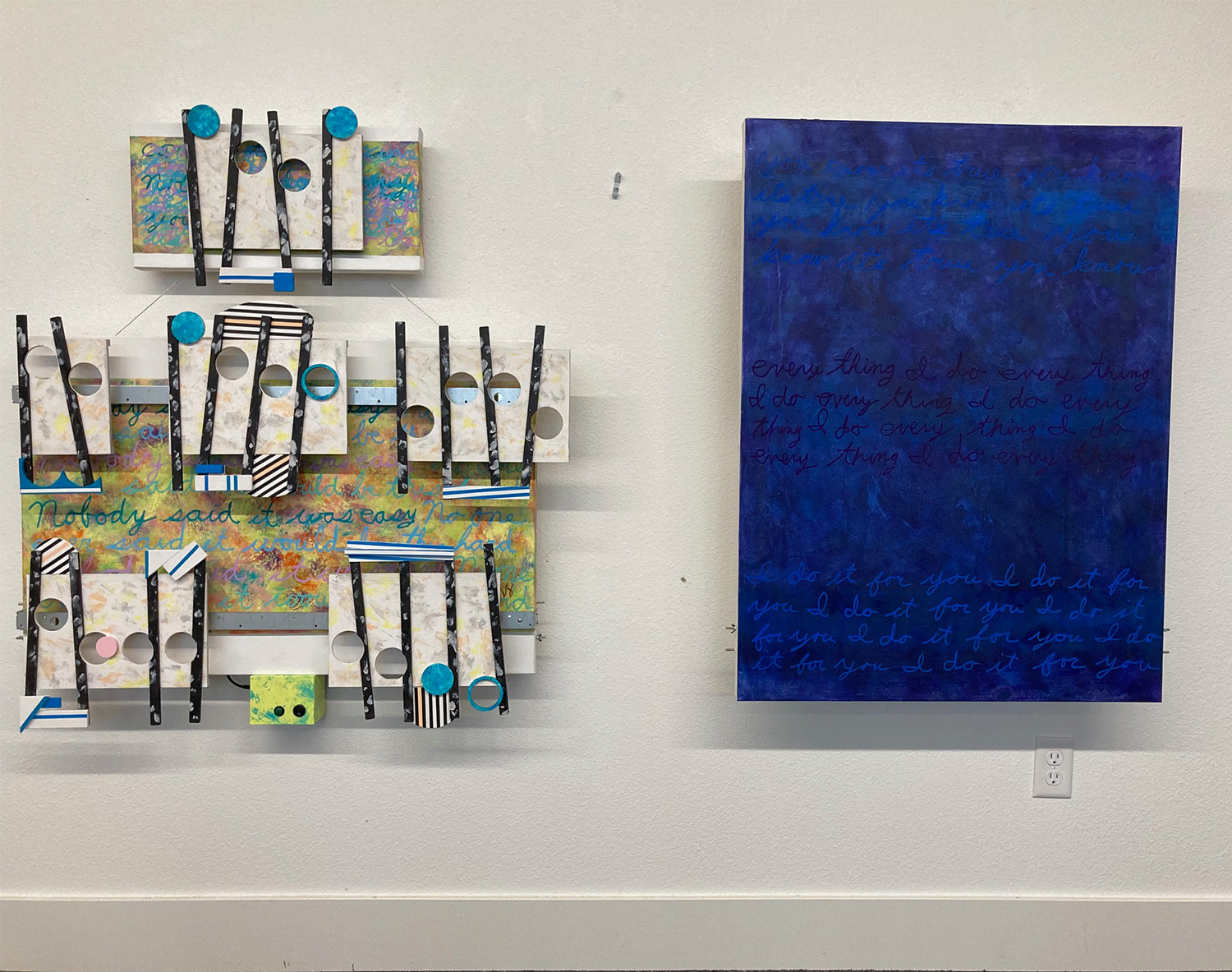
Everything I do next to the previous project,The Scientist

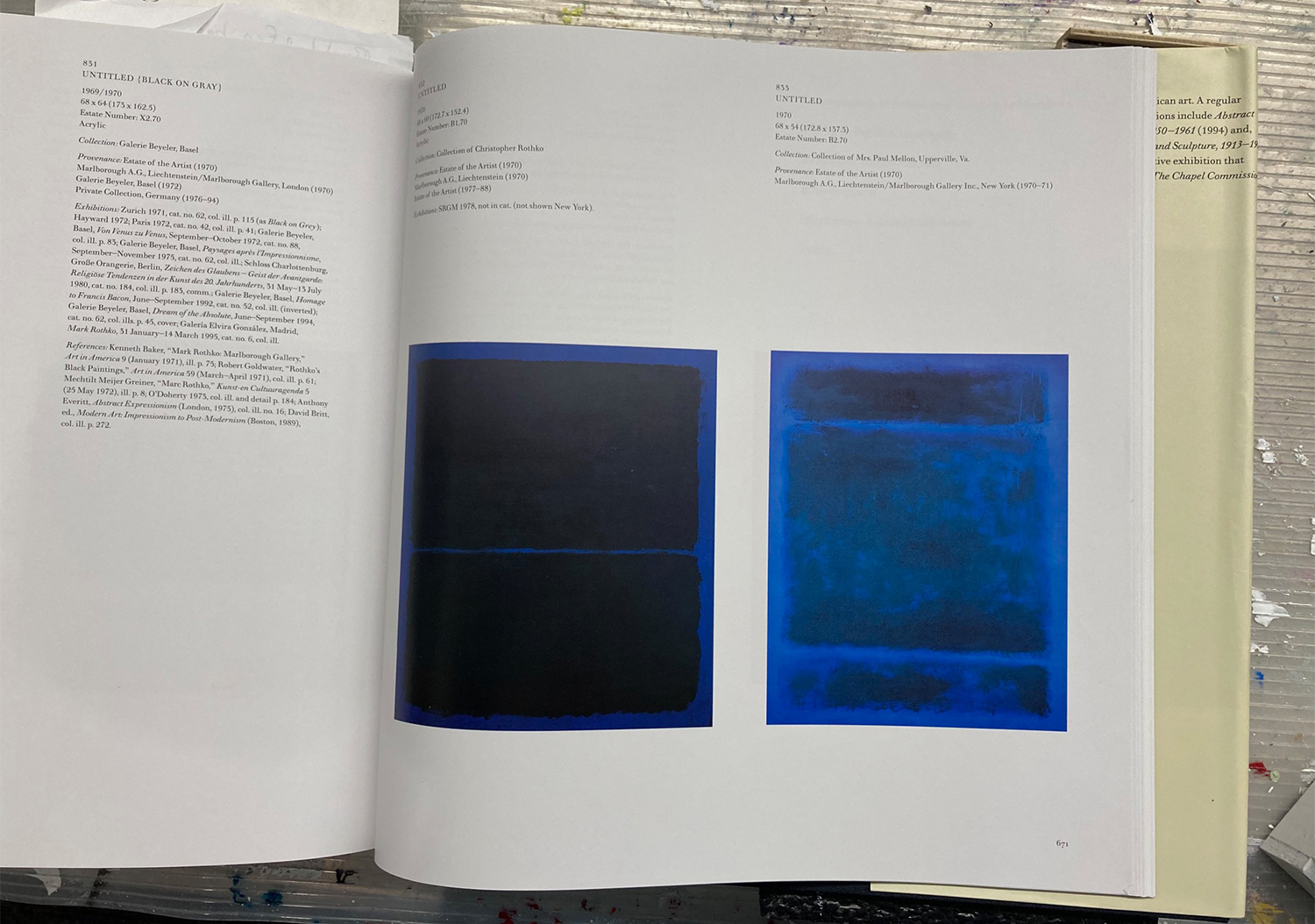
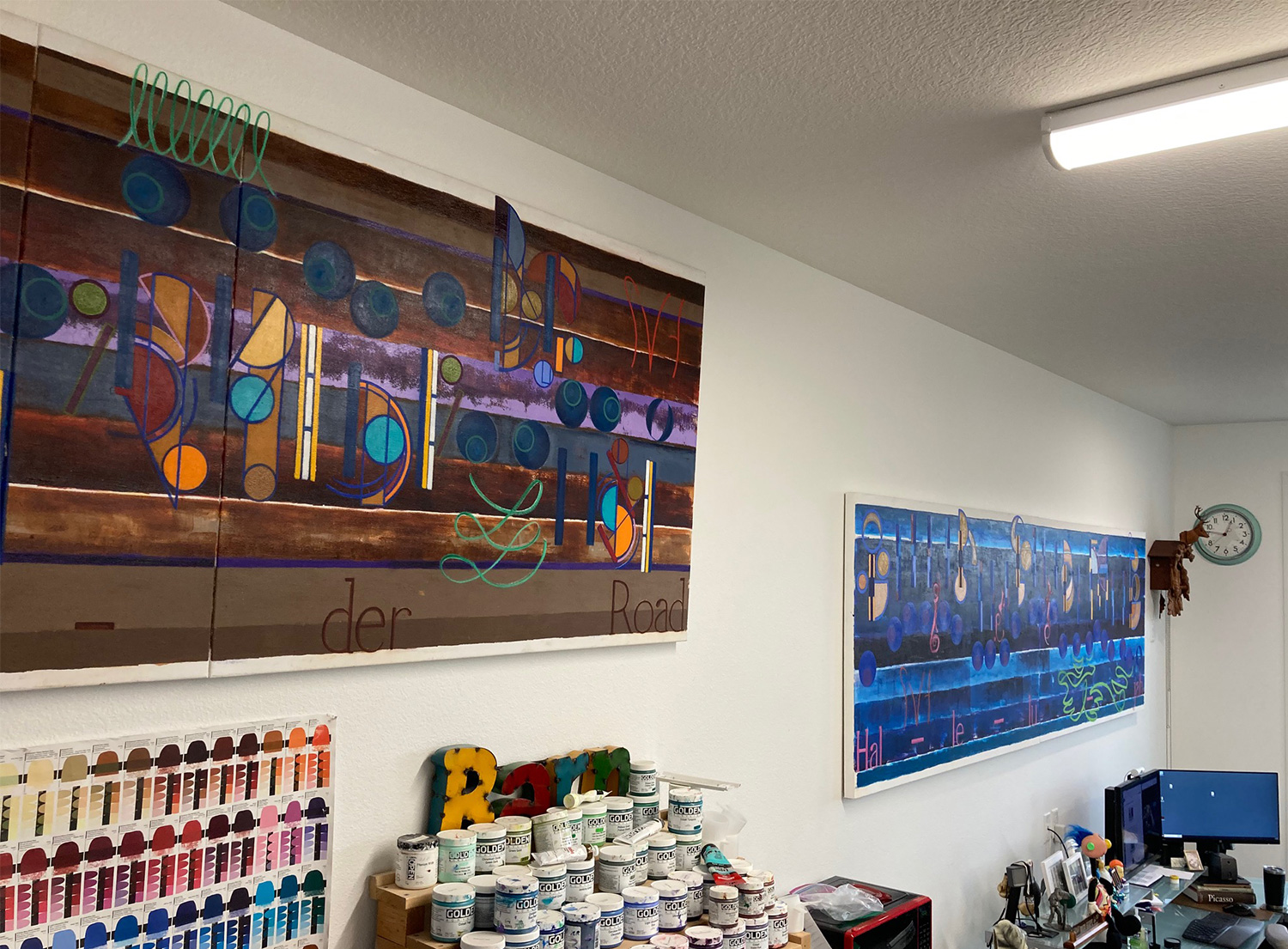
Everything I do, the music box artwork pictured above, displays a new design direction for this art. This change came about from looking back at how the artist Mark Rothko handled color. I have a large and expensive book of Mark Rothko works on canvas. Picture below, on the right, is the 2nd to last image from that book. I believe it is this image that also inspired the backgrounds of the great artwork’s Hallelujah and Thunder road. Both hang in the studio, pictured below.

Besides taking another look at Rothko’s use of color, I also turned my canvas to match his vertical style. It turned out to be a simple move from a horizontal look to a vertical look. I will arrange the music in three sections across the canvas, from the top left to the bottom right.

The image I like is on the right. One of Mark Rothko‘s last paintings.
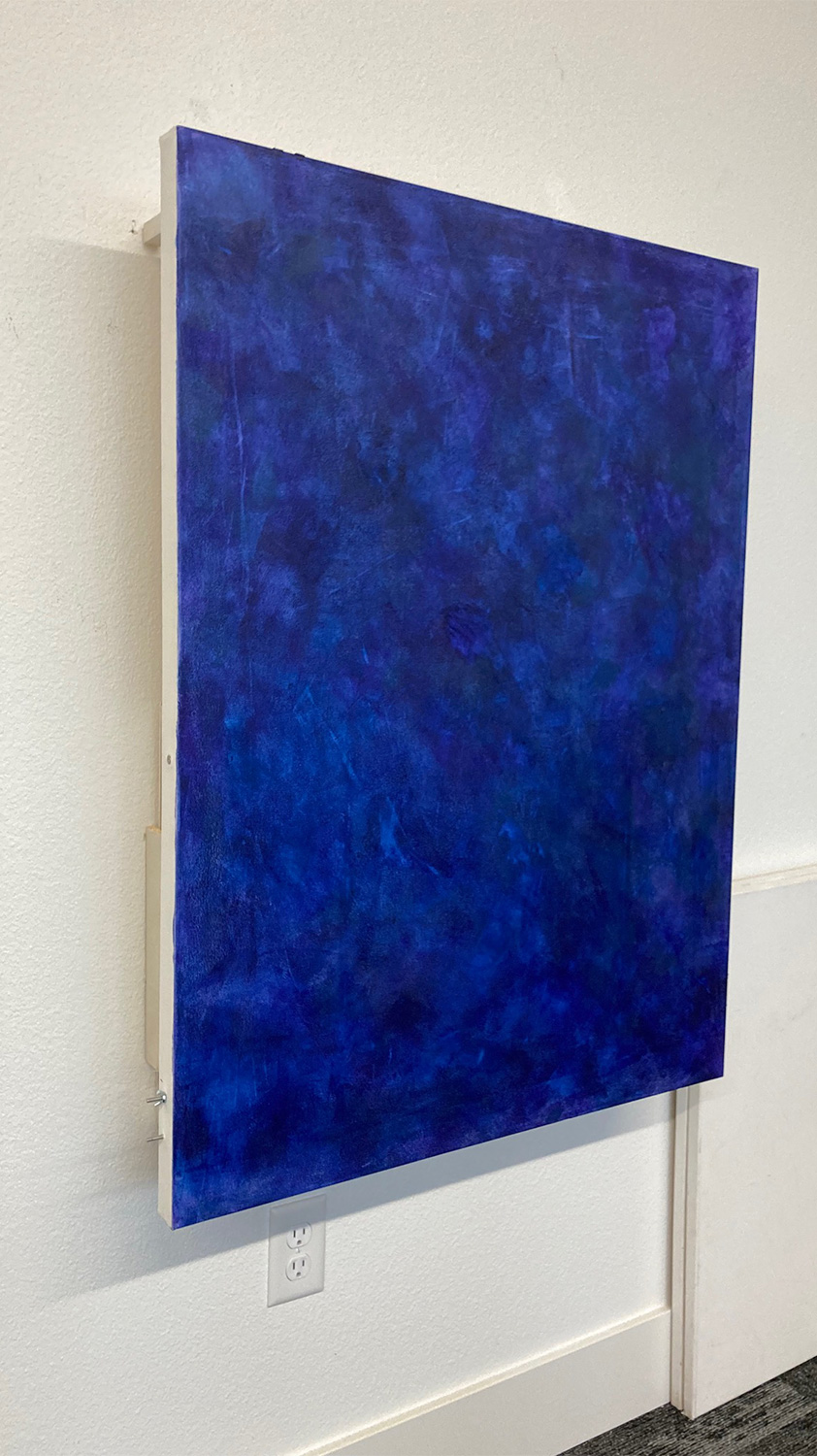
Everything I do earlier image side view.

I like the idea of wall mounted artworks extending out from the wall as if reaching out to the viewer. This one canvas turns out to be over 6 inches out from that wall. There is a reason for this.

Typically, I mount the speakers in the canvases, which projects the sound from out the back, bouncing off the wall. I hear the stereo effects in larger works, but with smaller artworks, the speakers are close together, and although the music is fine, the stereo separation suffers. This artwork is 30 inches wide and too narrow to accommodate a decent stereo sound. That is why I mounted the speakers on the sides of that canvas. This pushes the sound out in two different directions, a separation of 180 degrees. I expect to experience a larger stereo soundstage (definition). Of course by accommodating side mounted 5×7 inches speakers, I also gave myself a practical reason for extending the canvas further out from the wall.

Artist’s Studio wall hanging of the brown colored Thunder Road 2011 next to the blue Hallelujah 2011.

I wanted to do an update version of the Rothko painting I found in his book. That is why I choose a 30 by 40 inches canvas. And I really wanted to go with his horizontal rectangles in a new way but comparable to what I did in the early years, for example, Canon In D from 2009. But after some attempts to update Rothko’s idea, I thought what I was trying to accomplish failed. Wisely, for this project, I went with a mix of blues for this work and will attempt a Rothko update another time.

Bryan Adams – (Everything I Do) I Do It For You, Live At The Royal Albert Hall

I never was a Brian Adams fan, but this music is one of his best, with its exceptional arrangement, strong lyrics and a good melody.

Scott Von Holzen

S_V_H The Scientist final image

The Scientist ≈ H42.5xL38.5xD6 inches

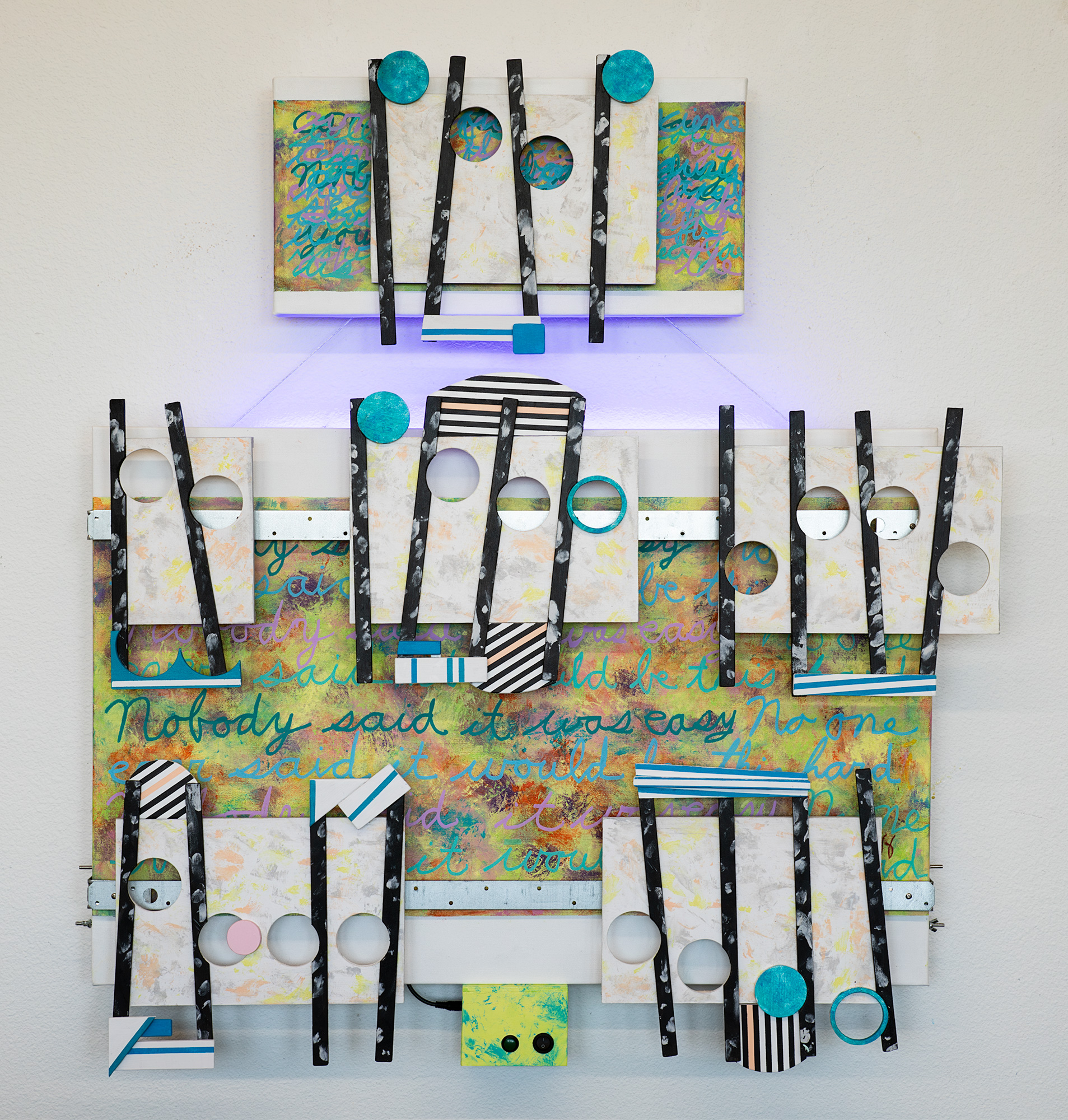
I did not really want to do another Coldplay song, but the music was too interesting to pass up. This music caught my attention when I was in a Thunder Road mood. I idea that my music mood has a range comes from listening to the up lifting Bruce Springsteen’s “Thunder Road (Live VH1 Storytellers),” to his followup, which counters Thunder Road, his reflective song “The Promise (Live in New York City).” Bering in a Thunder Road moment, I still needed the backup of the music’s lyrics that appear on the artwork. They read: ” Nobody said it would be easy. No one said it would be this hard.” Although I don’t think the casual viewer understandably finds this art difficult to grasp, this music’s words are relatable to me and others. They point to the value of the music being portrayed. This contrasts with the dizzying artspeak that major galleries use to describe the art and the artists they represent. Check out the Gagosian gallery’s understandable word salads, descriptions.

For this project I opened up my choices of colors to colors that only kinda work together. I have found that colors that seem to go somewhat in the same direction look fine on the finish work. An example of this is the colors of the main canvas. I list titanate yellow and a yellow green. Those colors worked together. I then mixed in a complementary medium violet, a relatable cobalt teal, and finally drifted off the color wheel with light magenta and a deeper orange. All look fine after I balance the strengths of each of the colors so that they flowed together across the canvas. My changing emphasis is now on using color strategically across the artwork’s appearance, rather than relying on dominant solid colors to dominate the artwork and therefore the viewer’s attention.

The music box cover of The Scientist

I love what I have accomplished with this cover music. What is being played and heard from each note of this cover, from its emphasis to its blending, is based only on my choices. There is no AI help in the production of this music. I know well that AI could surely improve the quality of the master of this cover, to the possibility of even being fine art music, but this art is not about fine art. My artworks reject fine art, for that is not who I am. Therefore my music to be real must come from me. I understand that many significant advantages of an AI assistant, but did Mozart, Beethoven, or Vivaldi have assistants? To be real art. The art has to be real. To be real, the music has to be real. AI is not real, not human. I am. I am here. AI machines will live forever, I will not. This is my time, my moment to let fly the butterfly effect on contemporary art.*

Scott Von Holzen

* “The butterfly effect is the idea that small, seemingly trivial events may ultimately result in something with much larger consequences” – HowStuffWorks