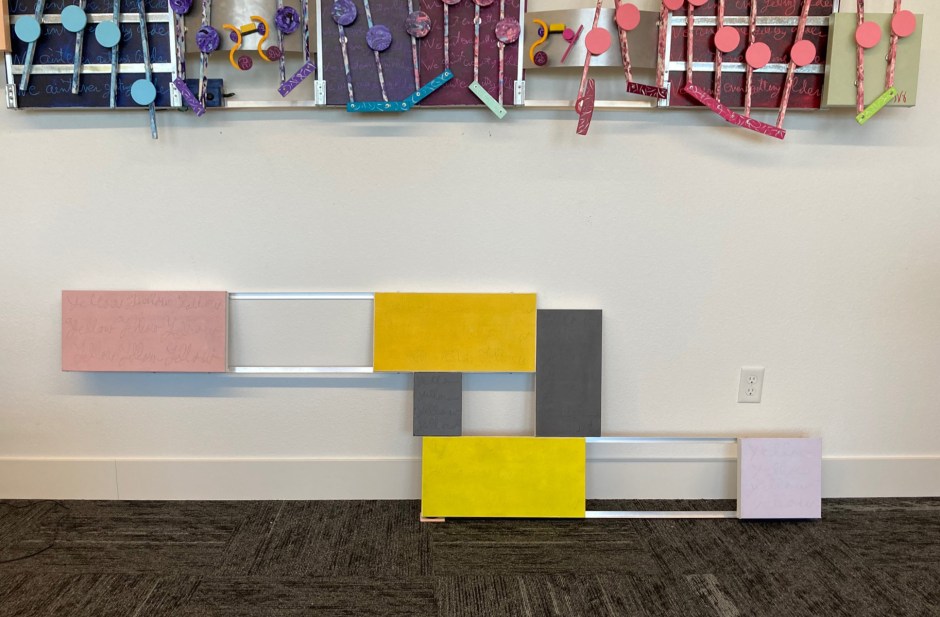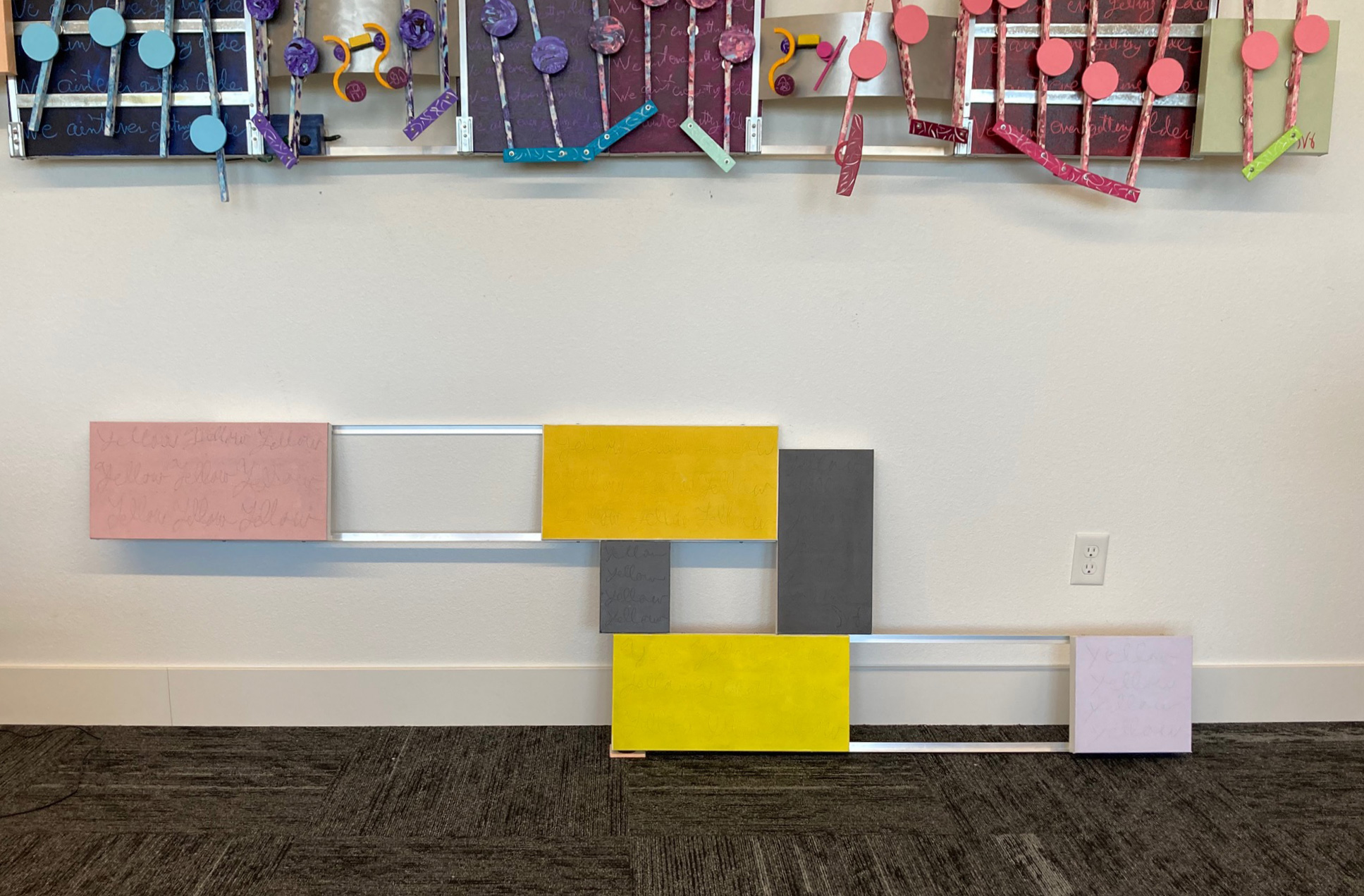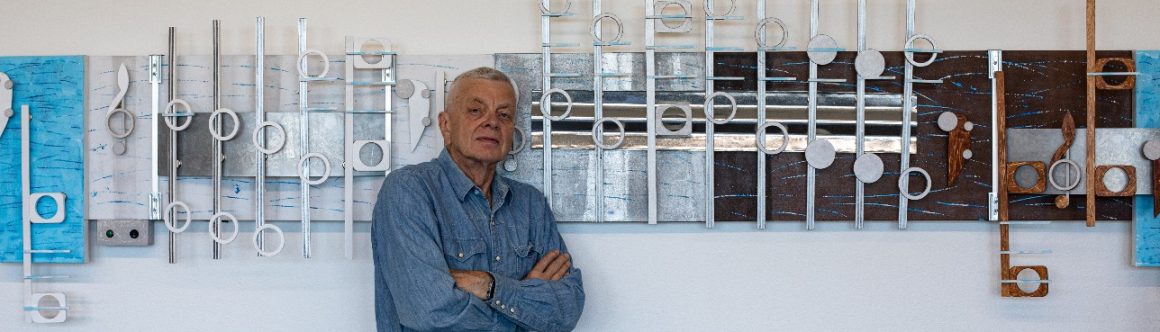
S_V_H Final Images & cover for Yellow

The new project Yellow offered the opportunity to use up some of my many shades of acrylic yellow. Or at less I could use those yellows that I had not dried out over the years. I have not used a lot of yellow in this art until this year. I have two music boxes where yellow is the dominate color. The other 2023 yellow was an experimental vertical for a Bach piece in which the music drops quickly. I thought the color yellow would add emphasis to the music.
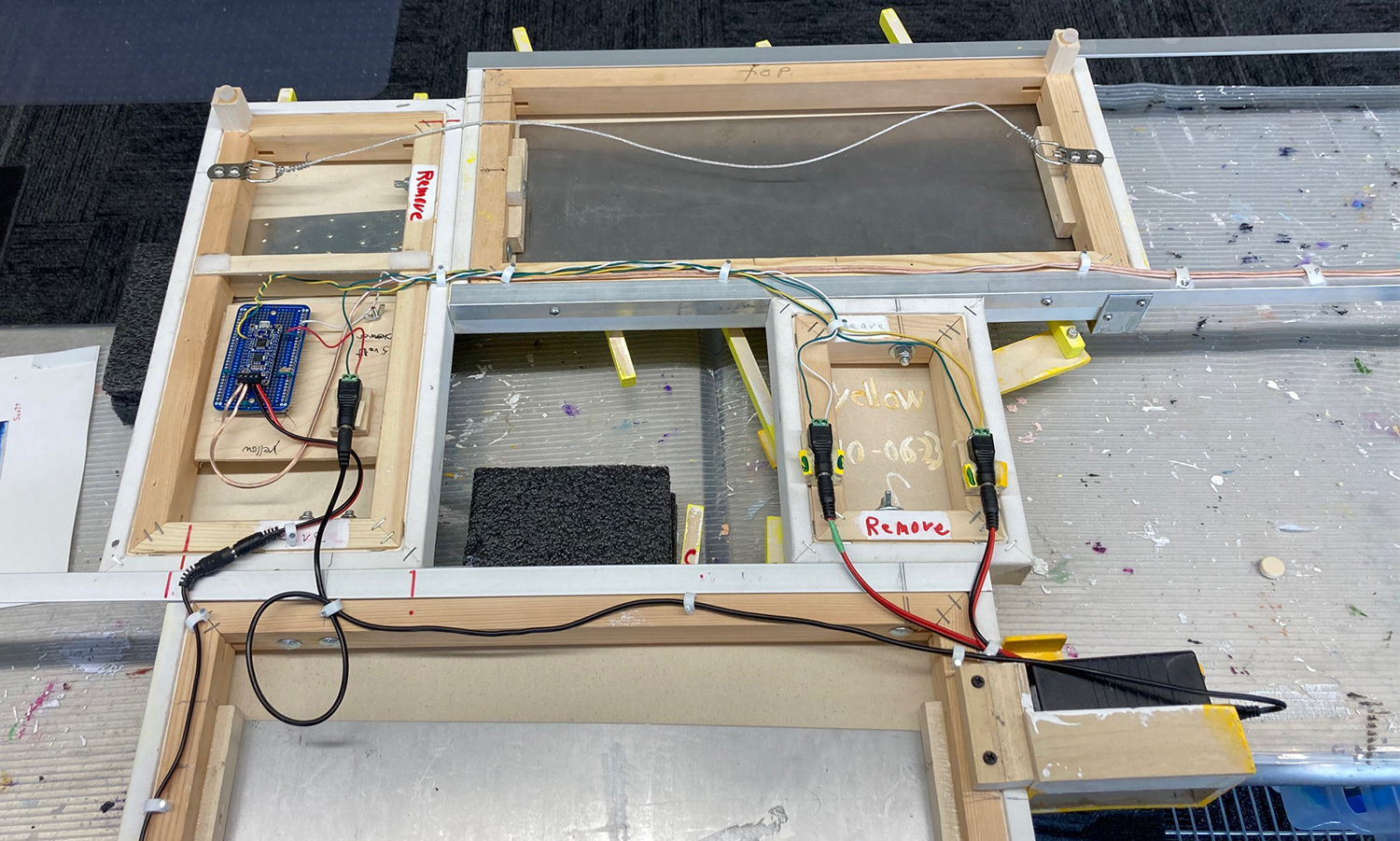
Back of Yellow showing all the disconnects needed to break down this artwork for travel.

I work long on these artworks that when I finish them, I truly feel finished and wish only to move on. Here are a couple of reflective thoughts on this work.

My original idea for this project was to make a shorter and smaller work around six feet. Unlike the previous project, Closer, I did not want to do another long horizontal. Although that did not happen, even though early, I chose 4inch 2way speakers with a 2 Watt stereo system instead of the 5×7 speakers and 20watt used in Closer.

I always chose for the visual part of the artwork an interesting part of the cover music. But since the visual part of the artwork only samples a small piece of the music box, that part has to portray a stand out part of the cover, and more so also presents an interesting visual.

For this music box, there was only one section of the cover music that I thought would work. The pre-chorus has the visual look along with a nice beginning and ending (seen below in the worksheet). This choice then required a large reduction in the notation’s size to fit all the music. Even doing that, the artwork horizontally would have stretched to 114 inches. Yellow would be longer than the artwork Closer. To resolve this, I divided Yellow into two parts (similar to Closer) to under the 6 foot travel length. Then, to reduce Yellow’s length, I overlap the two sections to bring the artwork under 8 feet.
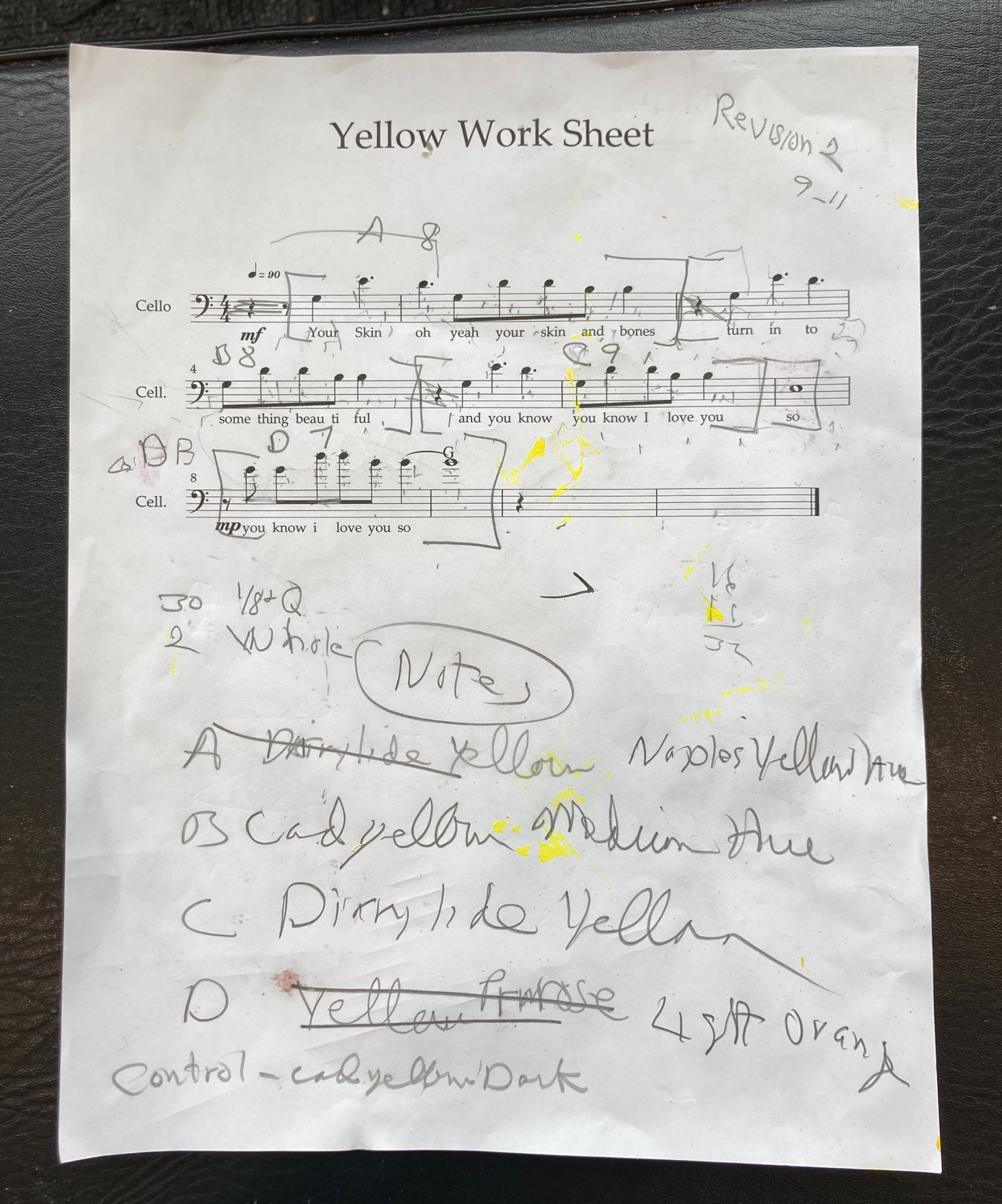
Sample taken from 8 pages cover of Yellow
The visual sample of the pre-chorus (seen in the edited sheet music above) starts at 26 seconds and ends at 45 seconds.

My other comment about this artwork was because of its divided sections needed for traveling. It was a learning and challenging experience to wire, and to balance for hanging, the two different arms of this work.
The speaker and controls wiring for Yellow

Scott Von Holzen

S_V_H Yellow as architecture

In early 2023, for a series of three paintings, I used prominent buildings designed by Frank Gehry as my color and design templates. Looking back in my videos, I found an explanation in this blog post video 9 minutes in why I did so. My reasoning comes together this way: “I like taking a piece of art (a major Frank Gehry project) and making art out of it….I guess that is what I am doing with my music, my music boxes I am taking music art, the art of music, and turning it into the art of art.”


Today I see this art’s connection to architecture also in a physical way in that I too design and built these artworks. But the important understanding comes from the blog site, All About Architecture. The article says “Architects start with abstract ideas and create something real, while artists start with real things and make them abstract.” That may be true, but my art comes with a circular twist. This art starts with real music. I then go abstract with a visual background, that is not a staff, populated with my own abstracted note design, which is not notation. Then, with a push of the artwork button, reality returns as the artwork plays the cover music of the original music.

I recently looked up information on the Farnsworth House design by the architect Miles Van der Rohe.

Later, early design for Yellow that disconnects in the middle for travel.

Have I moved on from Gehry and am now challenging my inner Miles Van der Rohe? I see a comparable architecture design in the early version of the music box, Yellow, and the Farnsworth House. I like the long and narrow design for it works with my notation. This time, though, I wanted something different that was still architectural in design.

September 20th image of the music box Yellow with the previous artwork Closer in need of a final quality photographic image. Nearly 8 feet.

With this new look I did test and find that I could balance the artwork using only the top yellow canvas for the hanging wire. The addition of the two smaller gray canvases creates a sturdy connection between the two separate sections that were needed for travel. These two canvases connect the artwork with five 1/4 inch carriage bolts tightened, that are easily removable with wing nuts.

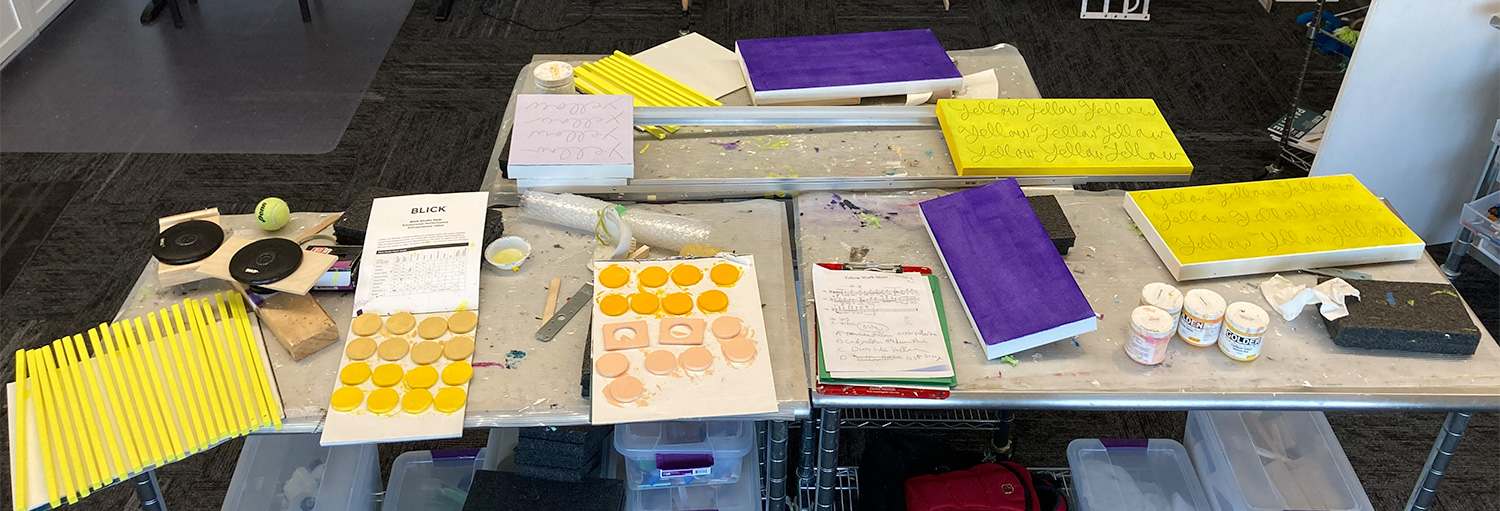
The music box Yellow, progress September 15th
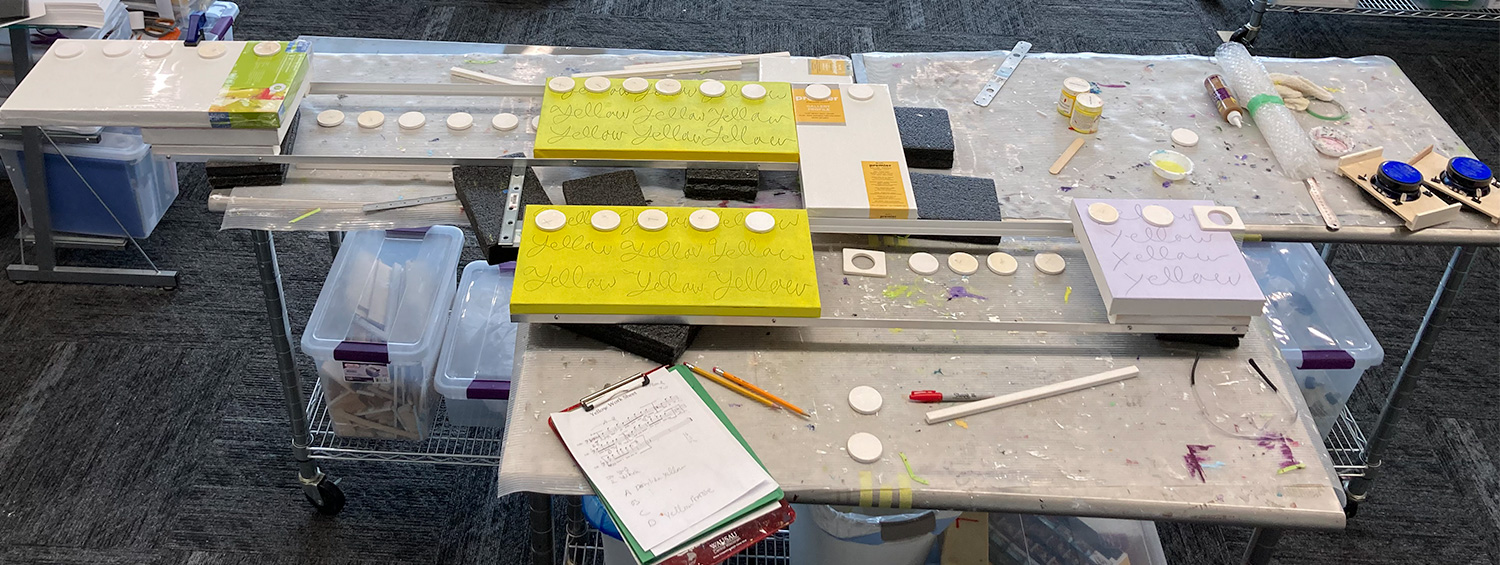
The music box Yellow, progress September 16th.

Scott Von Holzen

S_V_H Yellow first image

On the studio floor, the first rough idea for the project, Yellow.

My studio floor image for Yellow came together fast. After doing the gigantic Don’t Give Up, I thought I needed a motivational directional change to a smaller, simpler project. Yellow’s length will be about 8 feet and narrow, with the use of 10-inch canvases. I plan on using two 24-inch steel plates to bridge the gaps. I will use the smaller 4-inch two-way speakers on both end canvases. Those canvases will rise out front of the center canvas to increase the volume size of the speaker boxes, and add interest.

When I was working on Don’t Give Up I wanted to go big in order to make an impression. Its final length was 14 feet. The artwork’s debut public display was at The Art Garage with an EmptyWallsArt group show in Green Bay, Wisconsin. As expected, this exhibition appeared to be my normal display routine which starts with hanging the art. Followed by removing the art, with little to no token feedback or suspect praise. And then finally, store the art. Except this time would be different. Near the closing of the exhibition, surprised a woman wearing a plain summer dress on this hot summer day, walked into the show.

My wife Barbie and I were soon after removing the artwork when I noticed she was sitting behind the reception desk talking to our host Lindsay. When we were ready to leave, I approached them. Without introduction, I thanked them for the opportunity to show. I don’t recall details of our conversation, but this late-arriving person knew that the musical work was mine. She told me how much everyone enjoyed the piece. I remember saying something like how kind she was to say that. And catching me off guard, she said no, I really mean it. She said the artwork was the most talked about in the show. In my years of hearing platitudes of painting music, her simple honesty was refreshing. When I spoke later to Barbie, she recalled the words hit of the show and that there was a mention of the enjoyment of the artwork that plays music.

I emailed our host, Lindsay, from the Art Garage asking what her first name was. Lindsay quickly responded: “That is so sweet! Her name is Wendy Wimmer Schuchart, and she is the president of the Board at The Art Garage. She’ll be delighted at a mention!” I knew this work would never sell (listed $9,000) but what I wanted from this exhibition was that my artwork would make a statement about this art and our group. Wendy’s words confirmed to me I met that goal. Lindsay even spoke of a return show next year. Otherwise, no others at the reception, including my fellow artists, mentioned a single word about the work. We all packed up and went our separate ways.

Getting the basics of cover music right before using my finishing application StudioOne saves time and effort. I created this audio draft with the notation software Notion. It sounds good, and later in StudioOne, I will open up the sound stage, especially the piano.

An advance draft of the cover music for Yellow

I am building my cover from another cover of Yellow by Brooklyn Duo. The original song by Coldplay is guitar-focused and rocks hard in its presentation. The Brooklyn Duo cover better fits my cover musical style. My main voice will be the cello, backed up by an alto flute and held together by the piano.

The little over-the-top version of Yellow by Brooklyn Duo.

Here is the original version by the band Coldplay, released on the debut 2000 album Parachutes.