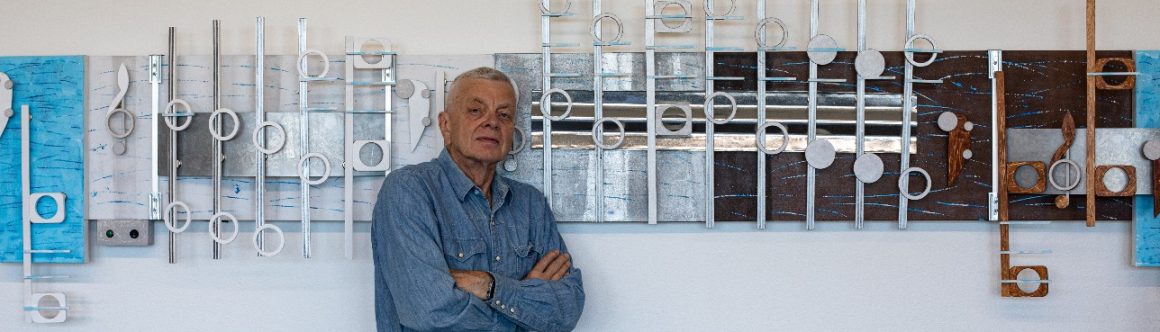
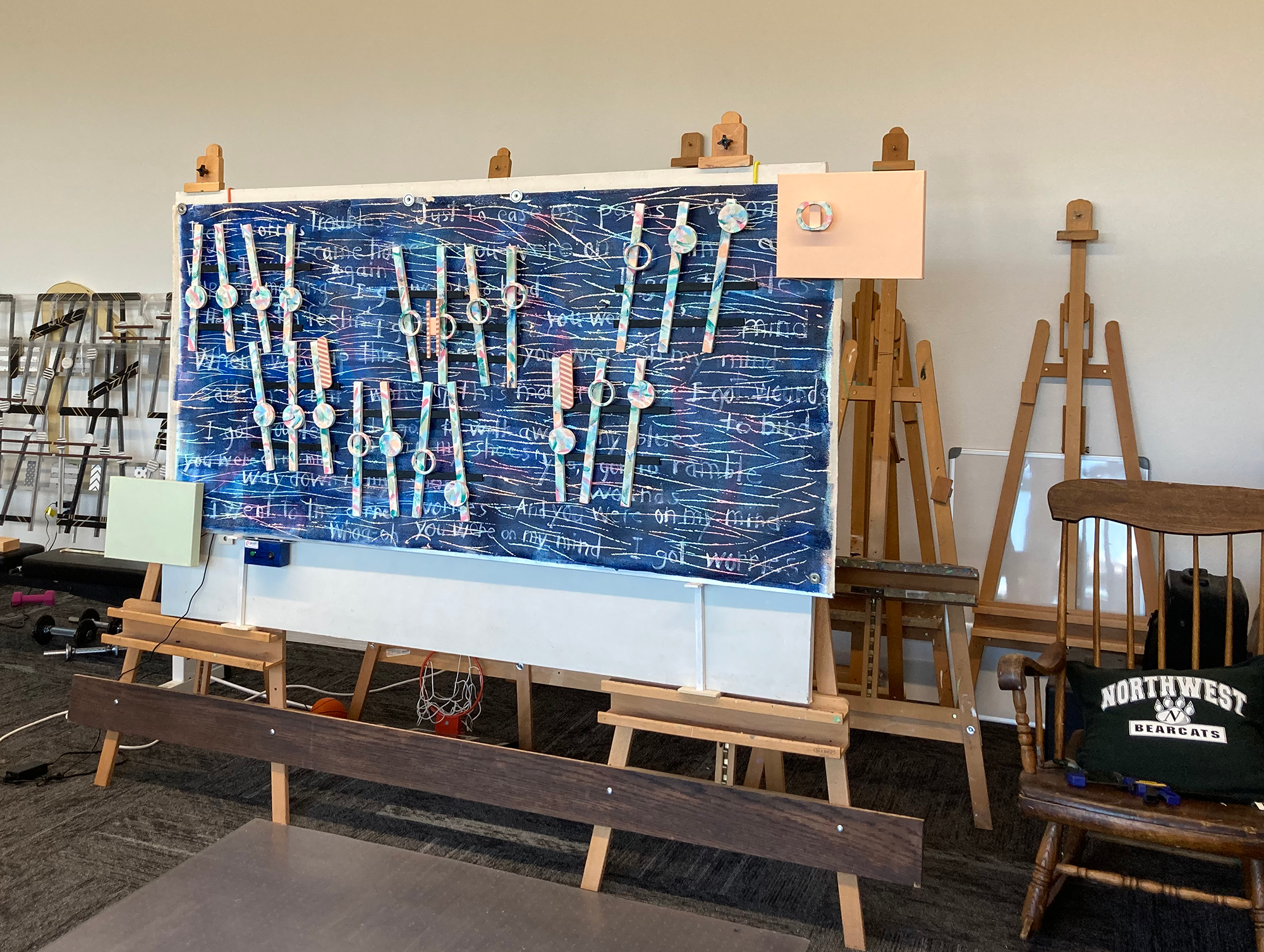
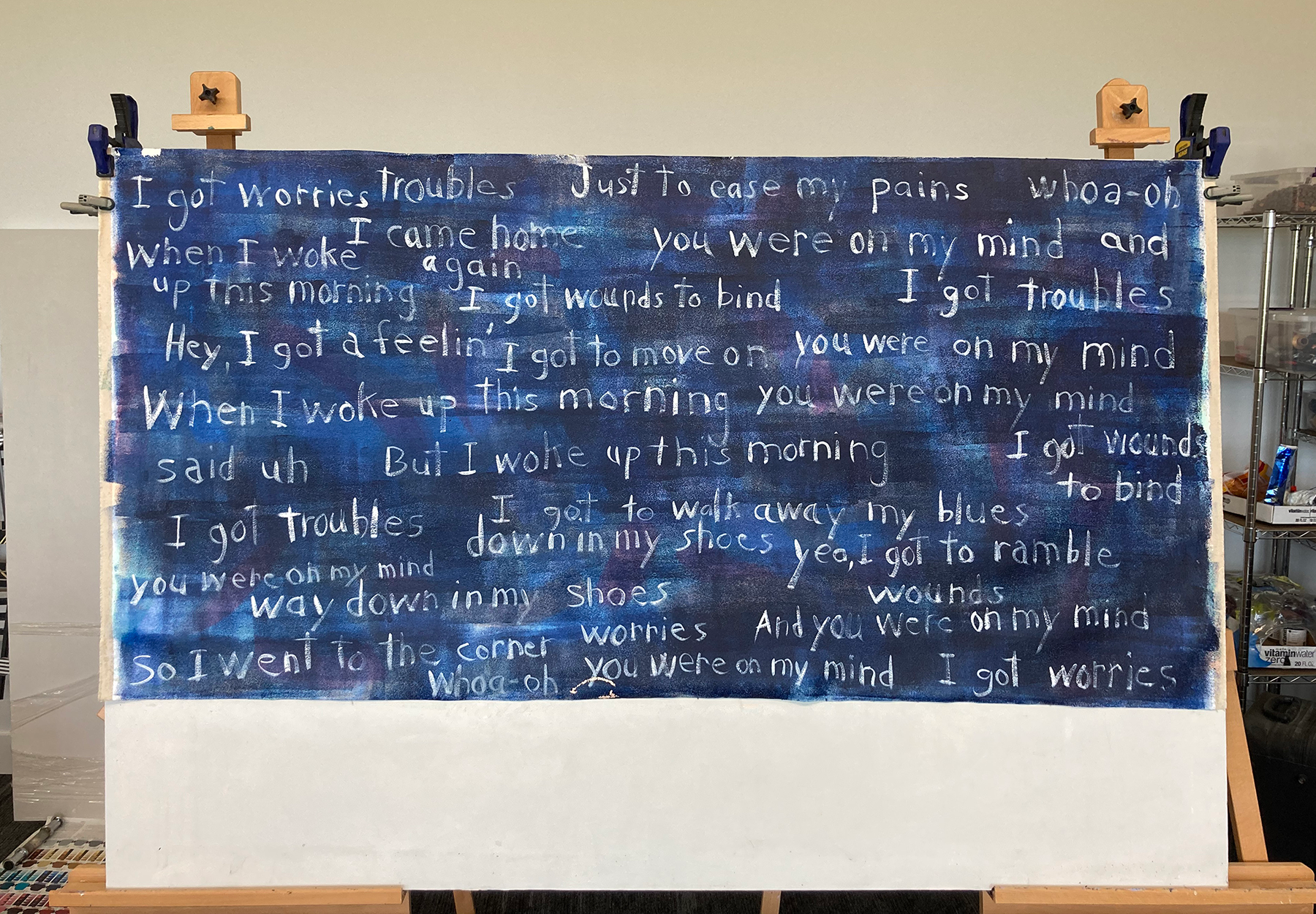
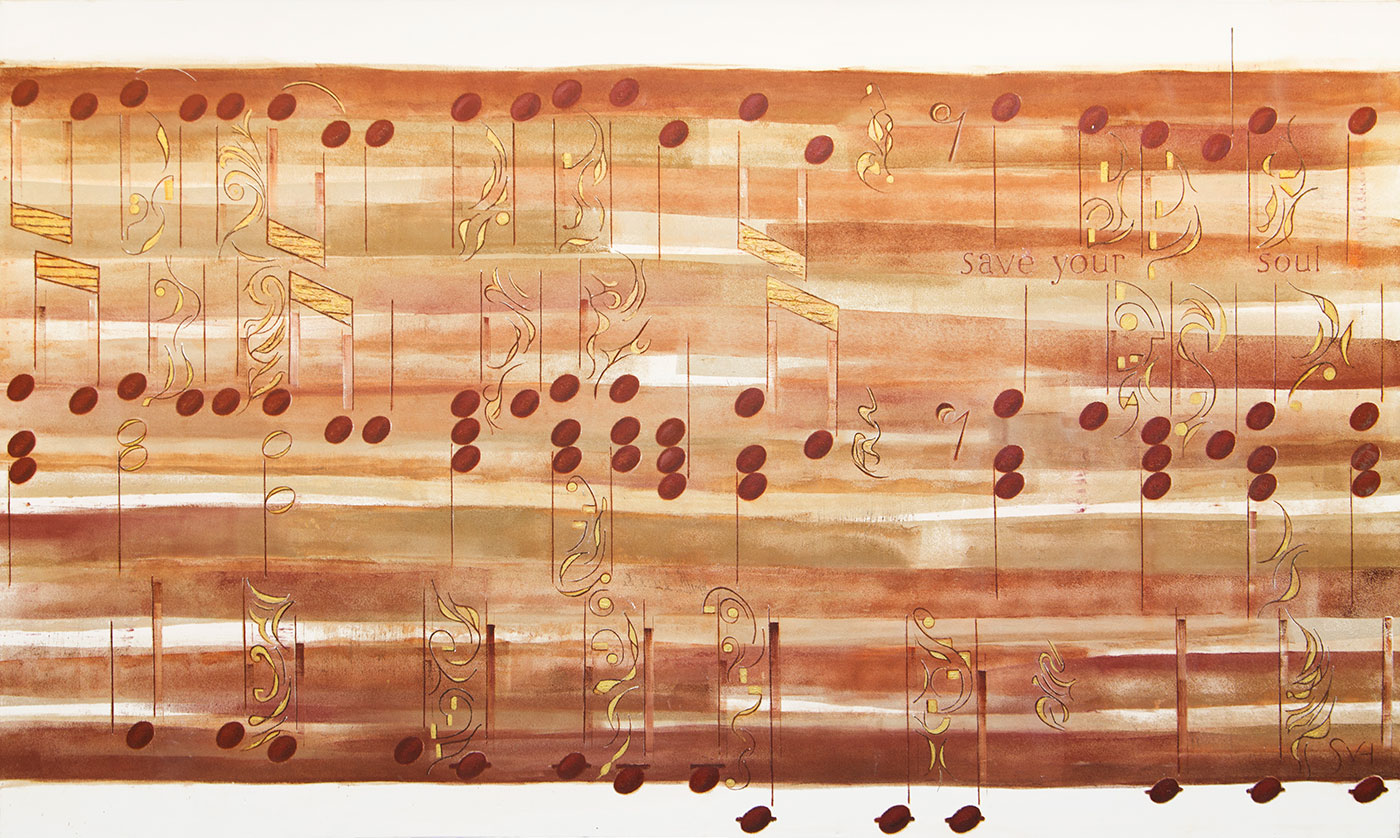
L72″xH38″xD5″
Here is the all-done-but-the-signing studio image of the project, You were on My Mind. I completed it the day before it was to be hung in a local exhibition sponsored by the Valley Art Association, of which I am a board member. The next day I with the help of Jeff hung this artwork successfully at the Heyde Center for the Arts.

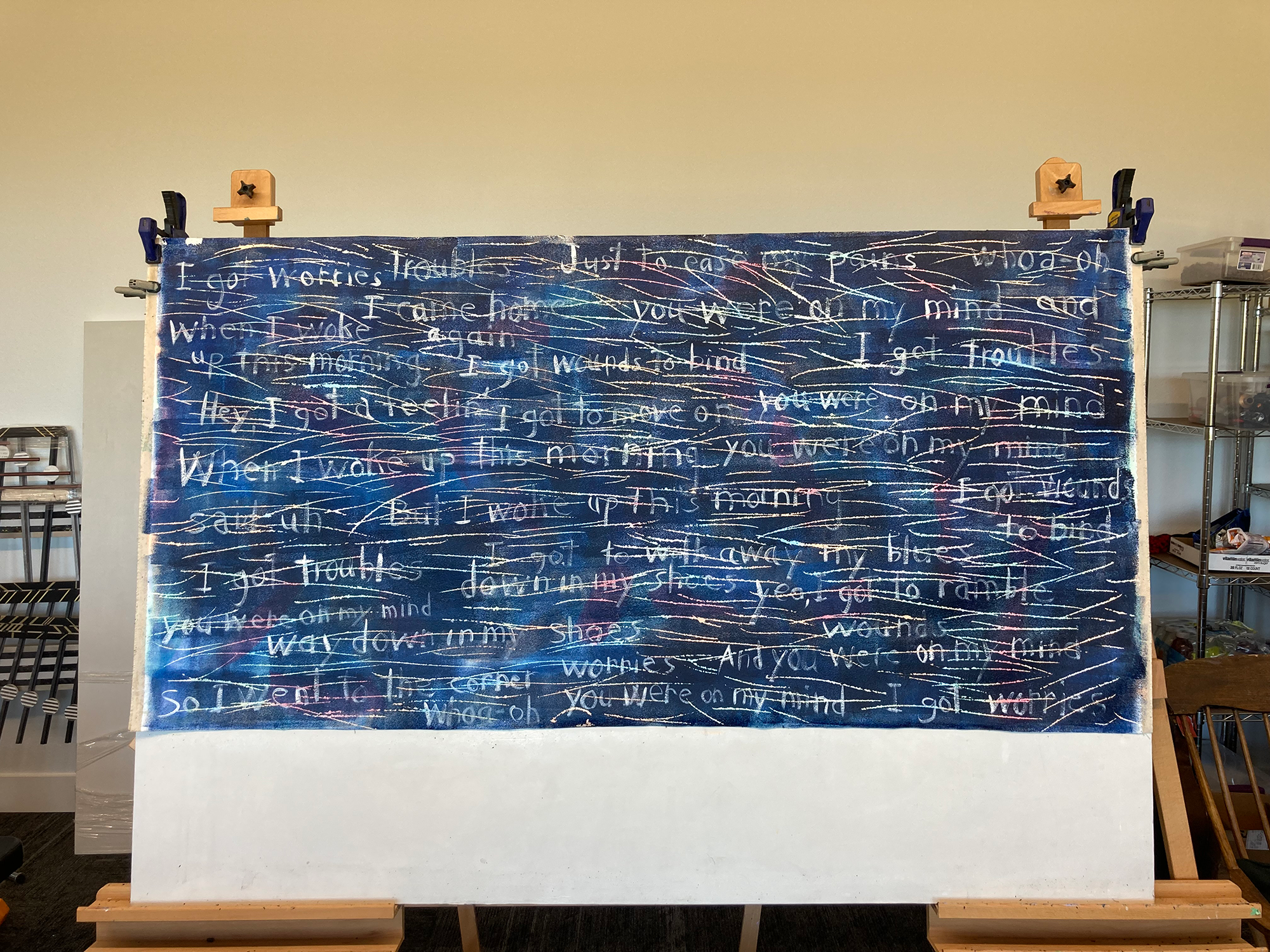
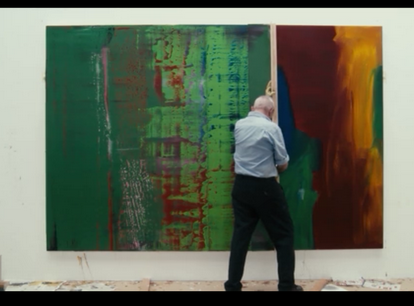
This other image is when I returned the day after to help to hang other artworks for the show. My caption I texted along with the image to Jeff (an art friend) reads, “Waiting to be seated.”
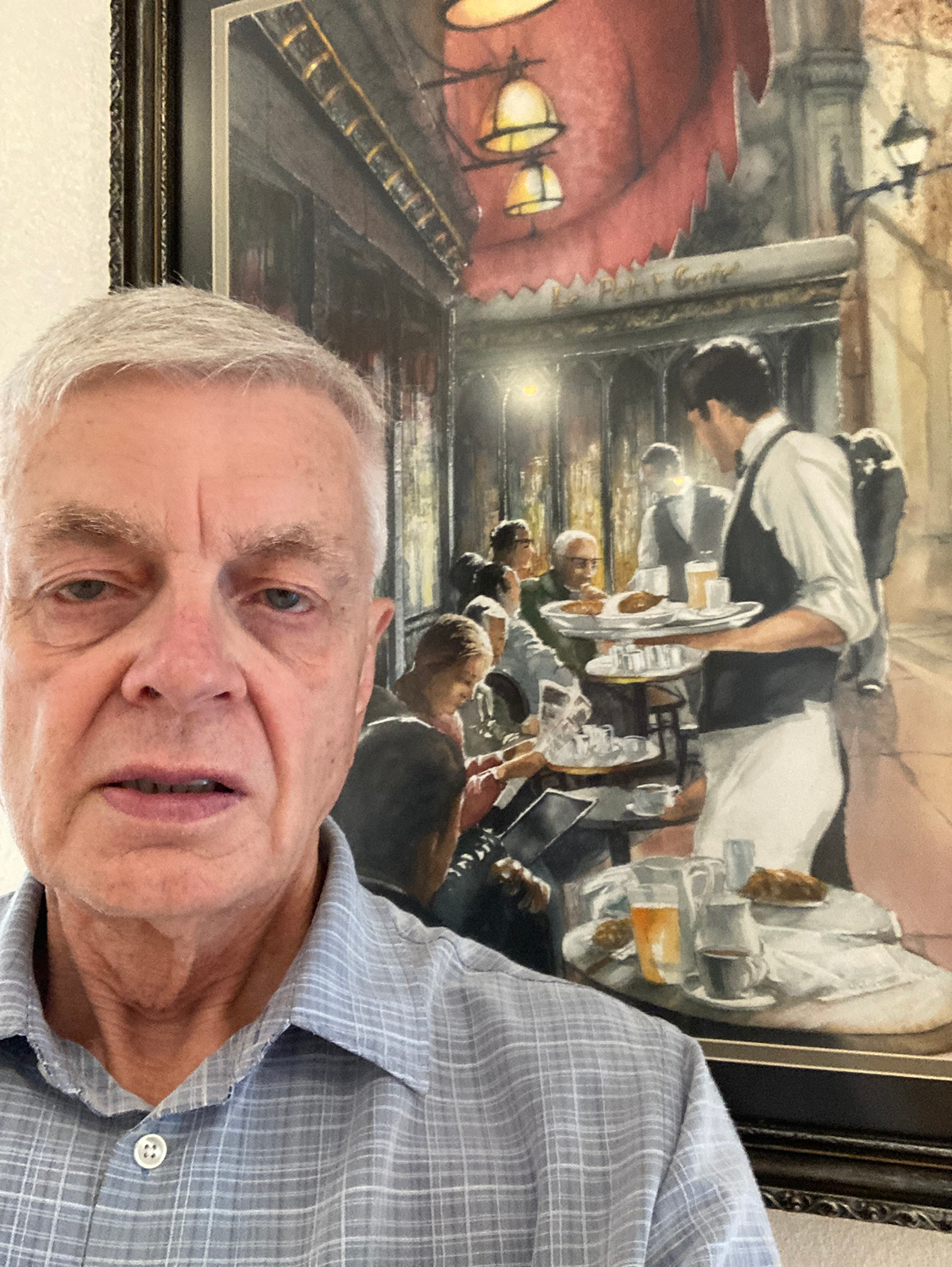
Jeff is an outstanding water colorist and art teacher. He is creative in his style, theme choices, and presentations. All that, along with his personality and motivational abilities, has contributed to his high level artistic respect among his peers and sales of his works. Luckily I have had a number of lunches with Jeff to discuss in my usual meandering way, what is art? its value, purpose, meaning, etc.
I have little else to add about this art project that is not in the following video. I do have some words about how this project has contributed to a change in this art.
In late 2018, I purchased my first cover license for Africa. That license was for 25 Music Boxes, which was the only option for a cover that made some logical sense for me. That project used a .5 watt sound system. Over the years, I have continued to purchase cover licenses for 25 music boxes when I have only ever used one copy of the music for every license. I am fine with that; I did not write the original music. Only recently have I sold my first piece made under a cover license. That buyer turned out to be a private company I once worked for, and who had purchased another work years earlier. To be honest, until my stuff sells for tens of hundreds of thousands of dollars, no one is going to pay me any attention. In the end, it is all about the value of the monies. No real money, no actual concern from the music industry. Their responses to this art so far have been pretty standard and generic, such as a dropped entry on Amazon, removed listing from Etsy, or a demonetization on YouTube. In money terms I have made little to cover my expenses in maintaining these promotional outlets. I used those three sites not for selling but more so to get the word out. Over many years, the results have been little to nothing. That matches my experiences with Art Fairs and Exhibitions, with the costs of exceeding the results. The only major benefits of my online promoting have been the hundred plus videos on YouTube and my 660 entries on this blog, which document this story.
That brings me to my first change that has come about because of this project. I am no longer calling what I do as Art (although the words art and artwork will still be used for description). Once, I added that push button to hear the music, I started to wonder what I should call what I am doing. My art genre title became Interactive Constructive sculpture (I made that up). After finishing this project I am now considering it is time to acknowledge the moving of my artistic needle to the center between performance art and visual art. Maybe, the genre term, Music Box, as a better description then artwork.
The fact that these music boxes are designed to hang on a wall instead sitting on an end table gives the impression to Art Jurors and Art aficionados the leeway to still call what I do as Art. That may keep me in the running for Group and eventually one person Art shows in the big towns. Think about it. For all the art venues out there that need to make monies calling a show of wall hangings of Interactive Constructive Sculptures is a mouth full. Easier to say come see and play the creative music boxes by Scott Von Holzen. That will certainly attract the ordinary gallery walker. As for the people with the monies, that may pert their interest for Art that they can easily afford and can actually have fun with.
With those thoughts I want to mention something interesting with these so called artistic music boxes of mine. Since the very first art that showed up on cave wall, to Van Eyck, Vermeer, Rembrandt, Monet, Van Gogh, Picasso and beyond most visitors spend only seconds looking at art. This latest project has music that is about one minute twenty seconds in length. Since this art is fairly unknown add that time to another ten to fifteen seconds looking at the artwork. That brings the total viewing time to easily one minute and thirty seconds a visitor could spend looking and listening. That puts this artwork in an exclusive category. That is amazing considering I am and this art is still and unknown, unknown.
Finally, this is the grip I have. What is the deal with Jurored (the art deciders) Art Shows and their rewarding of honors and monies to at best is high end craftsmanship. What I am referring to is that all Art shows I have been apart of, from my first exhibition way back in the 1970’s to the Pablo show this early October, have been strangely captivated by the finely made, untouchable, buttery smooth looking, and exquisitely crafted objects that easily get a one-up on the competition? Throw in a shallow social or environmentally connection and you got a winner, or at less an honorable mention. It is absurd, and I will explain.
On an ordinary 7 day working week I spend 10 hours a day in my Studio. Around 60 hours of that time a week I use for project time. The rest of my time is being used for maintenance of everything else art and music related. This project’s worksheet has a start date of September 8th. I finished on October 7th, with the signing. I spend four weeks on this artwork for a guess total of 240 hours spent in the planning, figuring out, solving problems, correcting mistakes, and the constructing of the artwork out of wood, aluminum, canvas and paints. Then there is the writing of the music followed by the creating of the performance and the building of the stereo system along with speaker boxes needed to hear the artwork’s music. All this effort requires a high level of learned skill, or craft, which is a process that I have taught myself. I use this process to put together all the items I created with the end goal being a work of art.All art starts as craft, and end only as art when the final object represents something greater then the sum of its physical parts. Recently I have found a simpler way to expressed that idea of something greater with the words ennobling an object (from the french writer Guillaume Apollinaire concerning the rejection of Marcel Duchamp’s infamous Fountain by a 1917 jurored exhibition he help organize). His three words separate Art from Craft and I am sure the art deciders of this world would understand that. But instead they have convinced themselves that high Craft, a level of skill, is itself art. It is not. Artisans who take ordinary objects and combine them together in a presentations that are buttery smooth, with a meticulously finish, that screams do-not-touch, your fingers will mar the shine, and that intimidate the viewer with absurd amounts of attention to detail create nothing more then high craft which is lovely to look at and expensive to own. Those considerations has caused jurored art exhibitions, and the art deciders to raise high craft in stature to their art comfort level. They keep awarding an art process as the artwork itself. In reality I see high craft as the putting separate parts together to create an overall high finished object that substitutes for everyday ordinary. It is the high finishing that the art deciders see that raises craft to art. They are rewarding the ennobling of the process not the objects. They know not what they do.
Scott Von Holzen
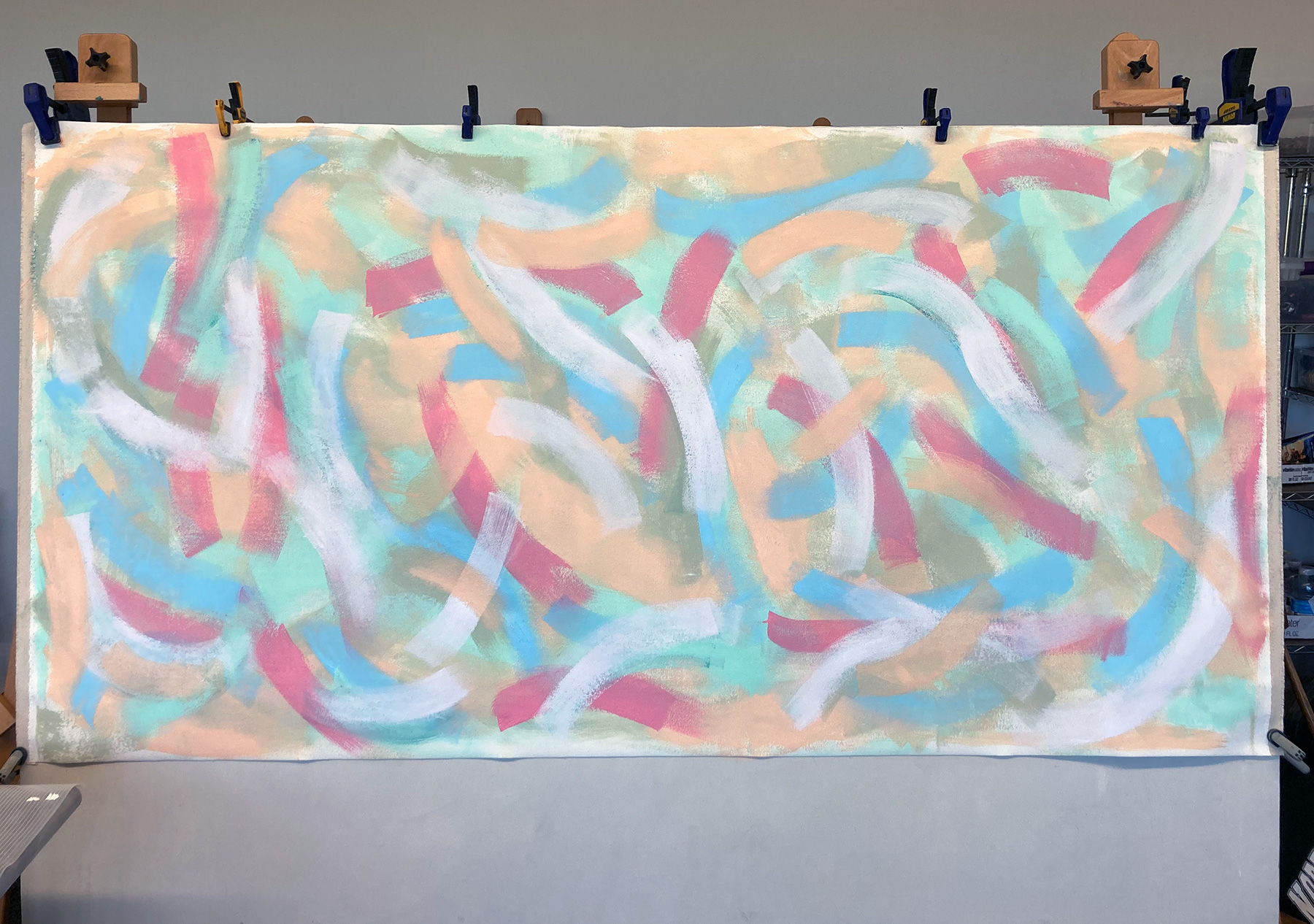
 aRT iN mUSIC