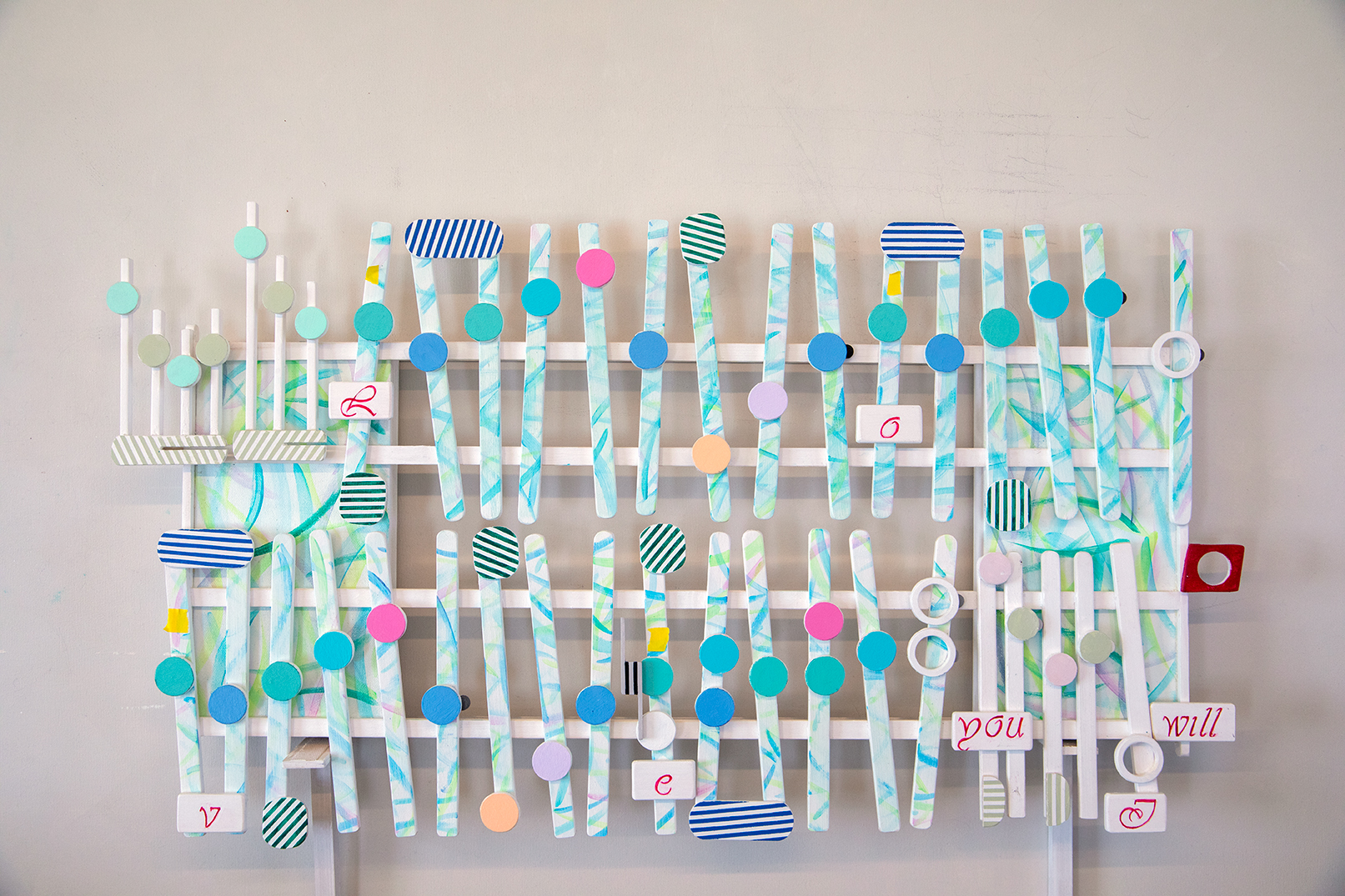
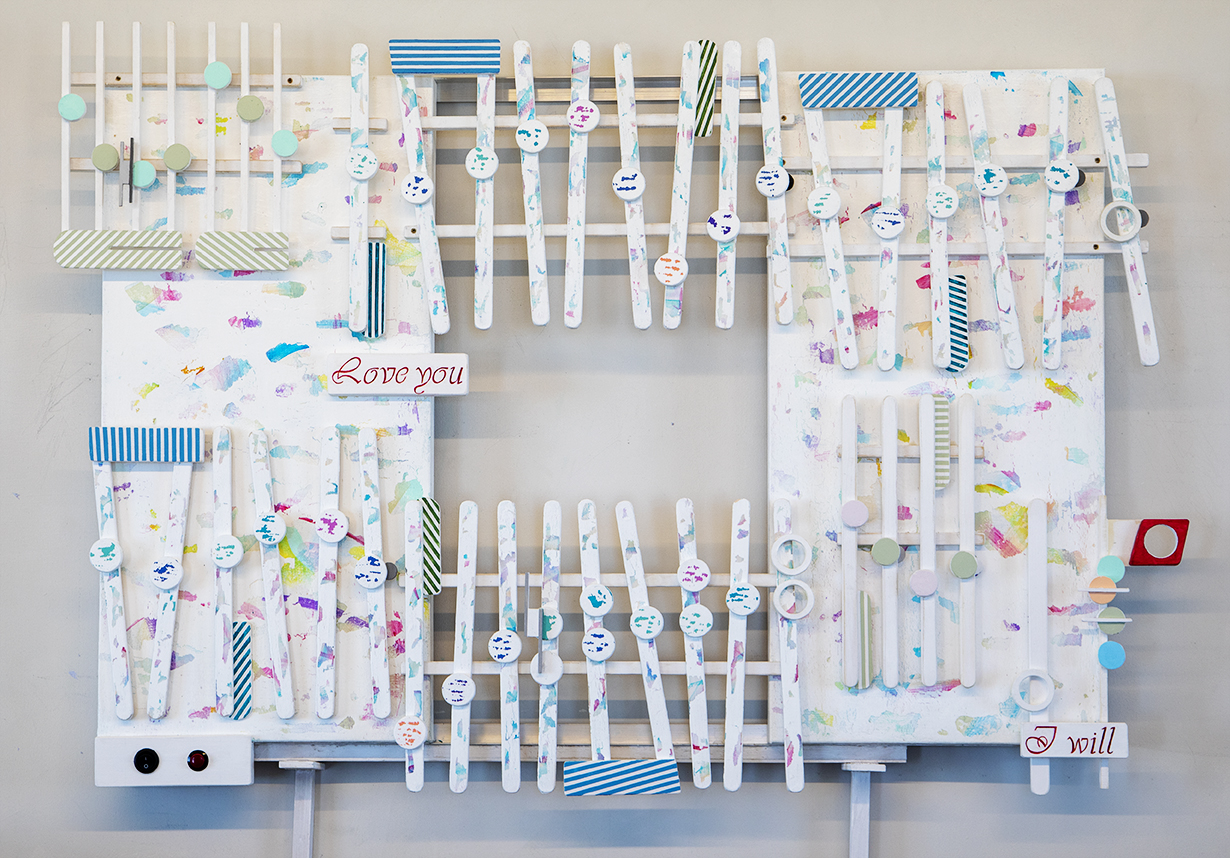
S_V_H I Will final image

I Will L41″ x H27″ x D3″

I have finished the second version of the music I Will.  The video below talks about the two versions of this project and the differences in the music.

What makes this artwork unique is the experimental technique of scraping off the top layer of paint, reviewing the painted layer below.  The creation of this procedure gives to me my own abstract style.  Dealing with backgrounds has been a big pain since the beginning of this art.  The music needs to be on something and that dilemma has been the struggle and the driving force behind this arts innovation.  Although there is still some testing and trial and certain errors to come, I believe after fourteen years of changing background styles I now have a straight path forward.

I like to follow up on what I have said concerning what the viewer is to do when standing in front of the artwork and then playing the music.  Originally,  I wanted the viewer to listen to the music and visually follow the flow of the music that is the artwork.  That made sense. The viewer could then see how the music and the artwork related to each other, which was a founding reason I wanted to paint music.  That reasoning worked great as long as it was up to the viewer to find the music on their own.  They then needed to figure out by listening to the music exactly when and what the artwork flow was displaying.   That all changed when I added the music.  My first push of a button was the first four notes of Beethoven’s 5th symphony.  With that change, I made it a lot easier for the viewer to follow along with the flow of the artwork.  That relief did not last long.

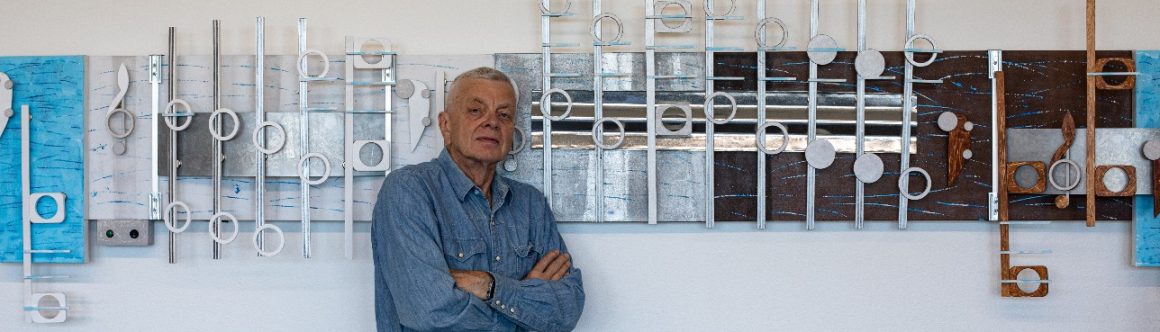
Because this art is living and growing, new changes came along.  I found better computer software to create notation, and that included higher quality computer versions of instruments.   It did not take long for me to create a notation that used multiple instruments representing the flow you see in the artwork.  A good example of this is the wonderful 2019 artwork, Will The Circle Be Broken.


Then came the awakening that shocked me: this art and the music in it had grown to where I could not follow consistently along with the music and the artwork.  If I could not what hope would there be for the causal viewer?  Not being able to follow the flow of the music of the artwork left me with the question of how the viewer was to interact with the artwork?  I had made a great advance with this art, but unintentionally I created a conflict between enjoying looking at the artwork and listening to music.  With the presence of a button to push to play the music, I had created artwork that interconnected sight and sound.  For now, unless I figure out something else, I recommend the viewer keep the two senses separate.  Look at the artwork as a representation of a song in color and form.  Then press the button and enjoy the music for what it represents,  the sound of art.

Scott Von Holzen
 

S_V_H I Will, The Artist version image 1

To save time and planning, I designed this artwork, I Will, from what I learned from Where Have All The Flowers Gone.  The plan with the Artist version of I Will was to use the first I will as the template to speed everything along.  Even though I still have finishing work to do on the first I Will, for now, I am setting it aside.  It is difficult for me to work on two artworks at once, although I created all the wooden stems and the music for both works together.  That was as far as my joint effort lasted.   I have now moved on to the Artist version of I Will.

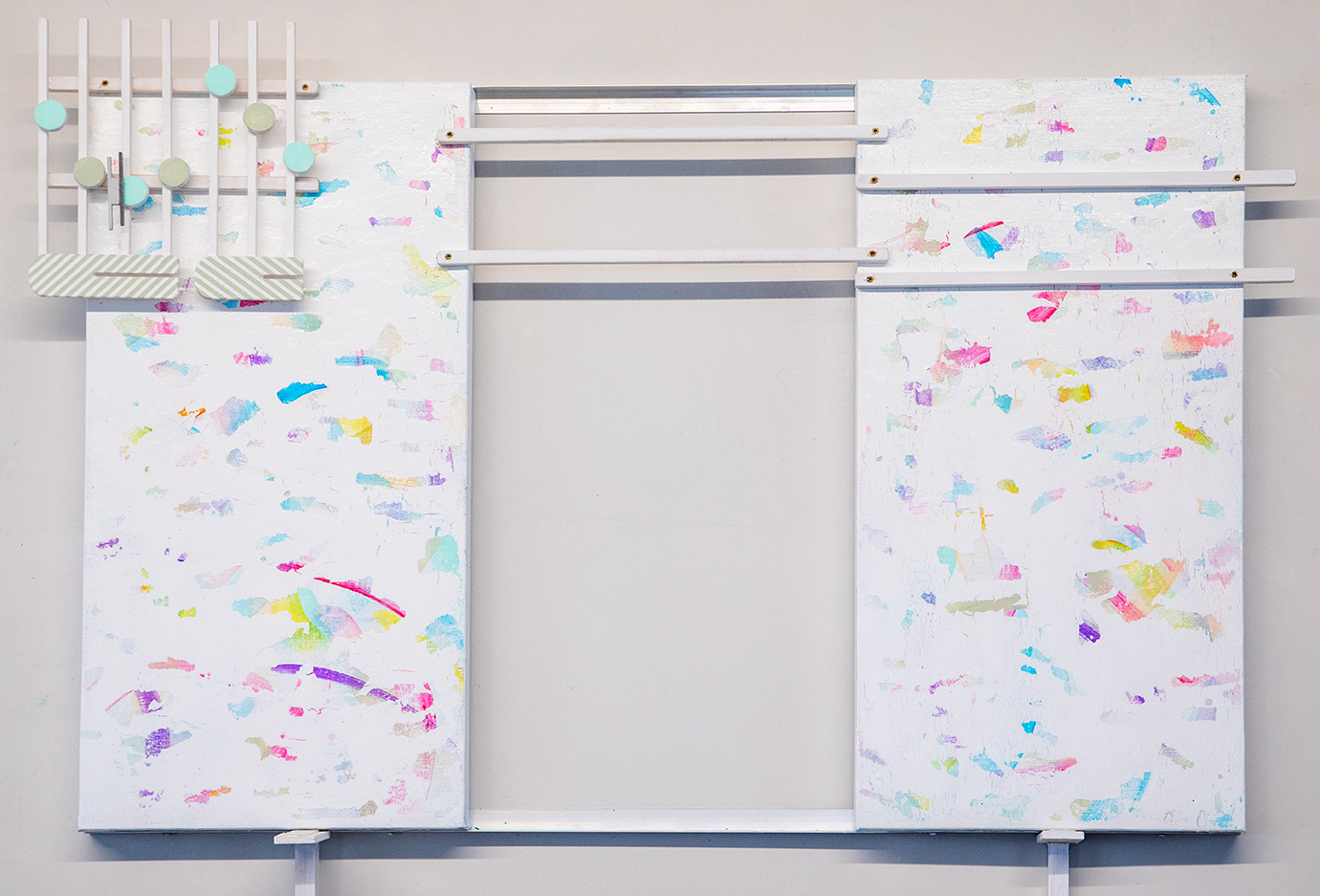
This second, I Will, be larger.  The first used two 6 inch by 12 inch canvases.  For this second work I am using two 12 by 24 inch canvases and have increased the length six inches.  My main take-away from the first I Will was to use it as a guide especially for the colors and overall design.  The difference between the two artworks is the painting of the background canvases.   On the first, I Will,  I used layers of glazes to paint the canvases.  While, on the Artist version of I Will, I am using a new and unproven technique on the two canvases, and along with the music.  This new method allows me to scratch away the top painted white layer to reveal, unexpectantly the color rich layer below.   I can remove the top paint layer, for example, with the edge of a pallet knife without damaging the abstract layer below.  In this first image, the top layer is white.  All the colors showing are from the bottom layer.  I like this look and technique, but I have concerns.  The top white layer is soft, too soft.  Rubbing that layer off could become an accidental issue.  I have applied two layers of glossy clear glaze in hope to strengthen the adherence of the paint.   In time, this canvas surface will probably harden, but for now handling with extra care is important.

Once I finely tune this scratching technique, then I think I can say that I have finally found my personal Abstraction style.  Before this, my best abstract technique was a version of Gerhard Ritcher’s squeegee technique.  Having an artwork, that is not a major project,  was the incentive to set aside the first I Will and to try out some ideas with Artist version of I Will (the wrath of Kahn).   Removing paint after I have applied it is not the only idea I am trying out new with this artwork.

This is the first artwork since I started painting music,  that I have abandoned the standard horizontal flow you see in the lines of sheet music. Every artwork before in varying degrees shares some semblance with the style of artist Mark Rothko, whose floating images, that resembled sheet music, that gave me my starting point in early 2006.

Sheet music staff lines

In my early days when I showed my musical artworks to others, the main take away I received was that this art would only appeal to musicians.  That was what I heard over and over, and I may have agreed with that.  My thinking was that there were a lot of musicians and songwriters, along with a large group of people who understood and love music.  It was later that I began promoting the idea that this art could appeal to anyone who loves music. The ability to read sheet music no longer became a requirement to appreciate this art.  That change of thinking then allowed me to chip away at my connection with sheet music.  Over the early years and even to this day, it is my early artworks, such as Canon in D, that the public finds the most interesting.  The reasoning is that such works look more like sheet music.   When over the years I moved away from the look of sheet music, and all of its restrictions, the public and musicians all lost interest.  That market left the building.  It had to, because I wanted it to.  I could have stopped evolving and created clones of Canon in D (2009) or Imagine (2010), for example, which would have given me a nice lucrative niche in the art market.  But that was never my goal. Even after these many 10s of thousands of hours, that was never my plan.

Scott Von Holzen

S_V_H I Will image 3

This image shows the color changes I made after learning where the artwork would be hanging.  My original color scheme was to create a softer look.  Besides using a lot of white, I also used a variety of pastel colors, giving each of the notes types a different color.  That became a problem.  Standing back and looking at the artwork, I saw all those pastel colors working only in a baby’s room.  That was absolutely not what I wanted from this music.  My client solved my concern when she mentioned that the artwork would hang in their bedroom.  Oh!  I changed out the blue color and adjusted the tints.  With those changes I kept the soft look idea, while giving the artwork more of an intimate touch.  Most notable with the addition of the words.  I will explain them in the next blog entry.

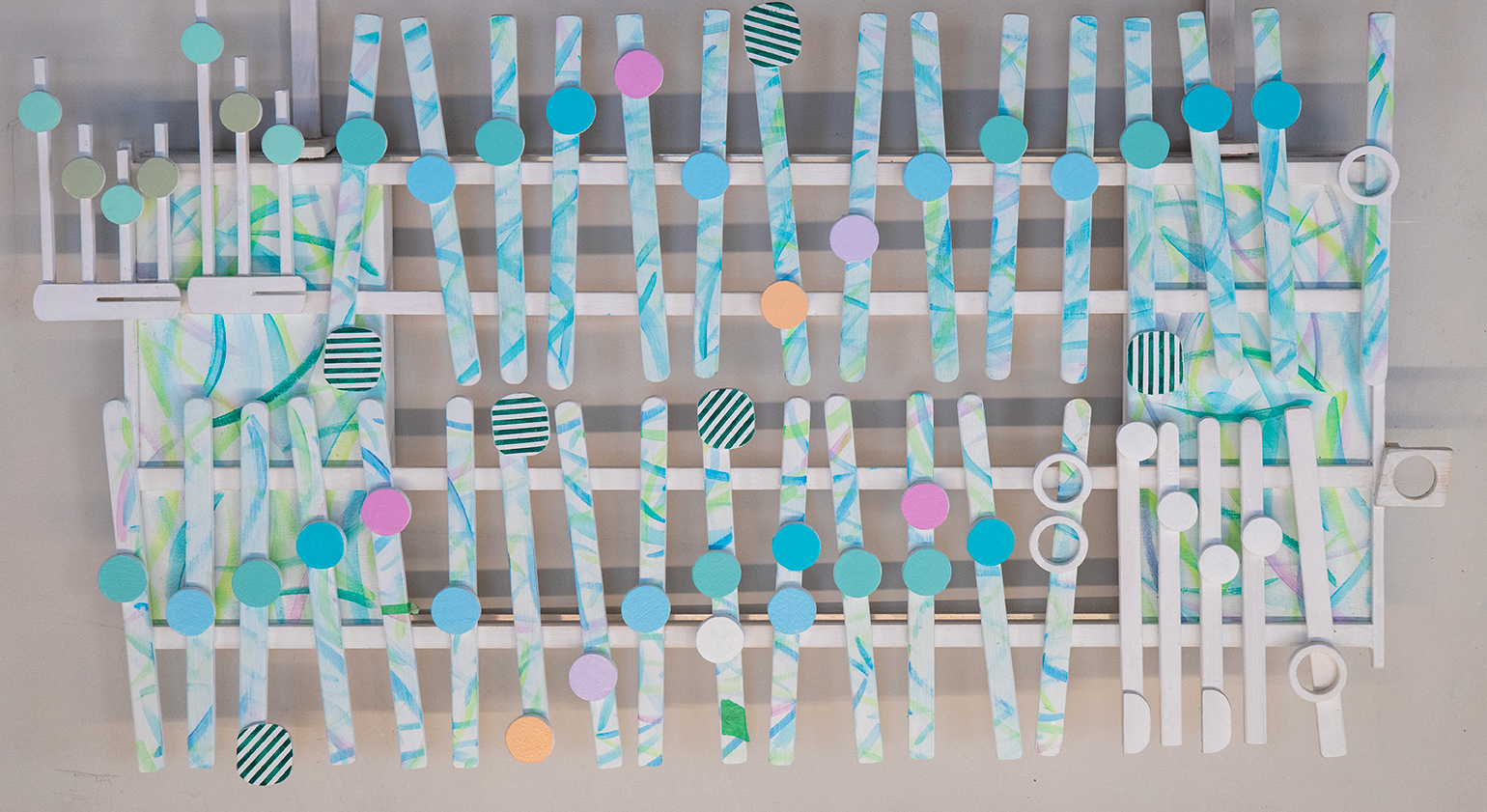
The only image of I Will showing the baby color theme.  I photographed it upside down but flipped it when enlarged.

Scott Von Holzen