S_V_H Martha my Dear musicBox project

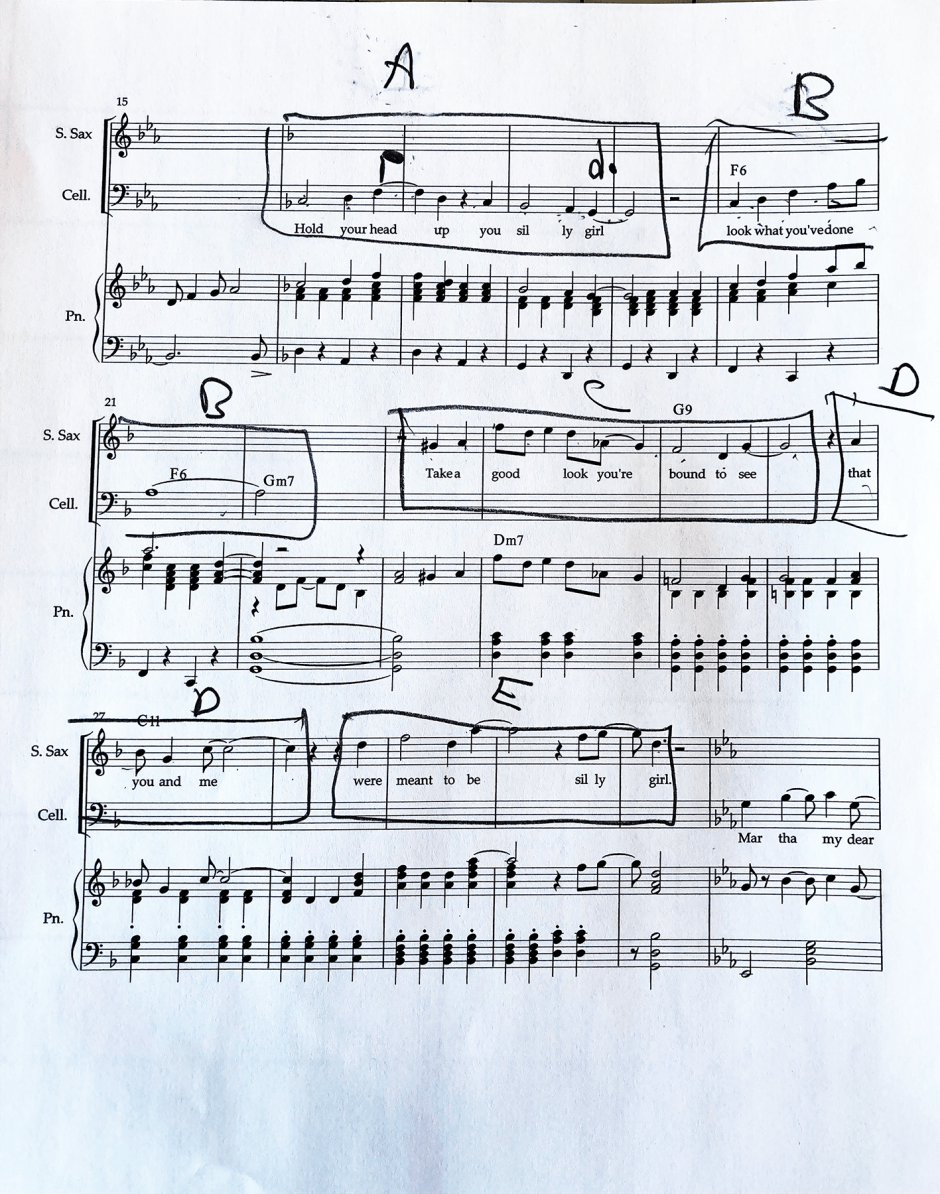
I am posting early to document this process. The image below is part of the sheet music I put together. I am using the notation software Notion that is a part of StudioOne, the DAW used for the final soundtrack. This worksheet is dated November 20th. By putting in the hours needed I found to my surprise that the draft of this music was done after a bit of tweaking today. This sheet music will then be my template to create the visual part of the artwork. The circled parts of the image below show the music that I will build. The choice of notes was made the same as it has always been: I look for an interesting part of the arrangement that has a good start and finish that will fit the artwork. Today’s projects, I no longer am concerned about the fitting the music to the artwork. That is because I don’t want the artwork to fit anymore. Moving the music outside the canvas makes for an open and improvisational look. This is art without borders.
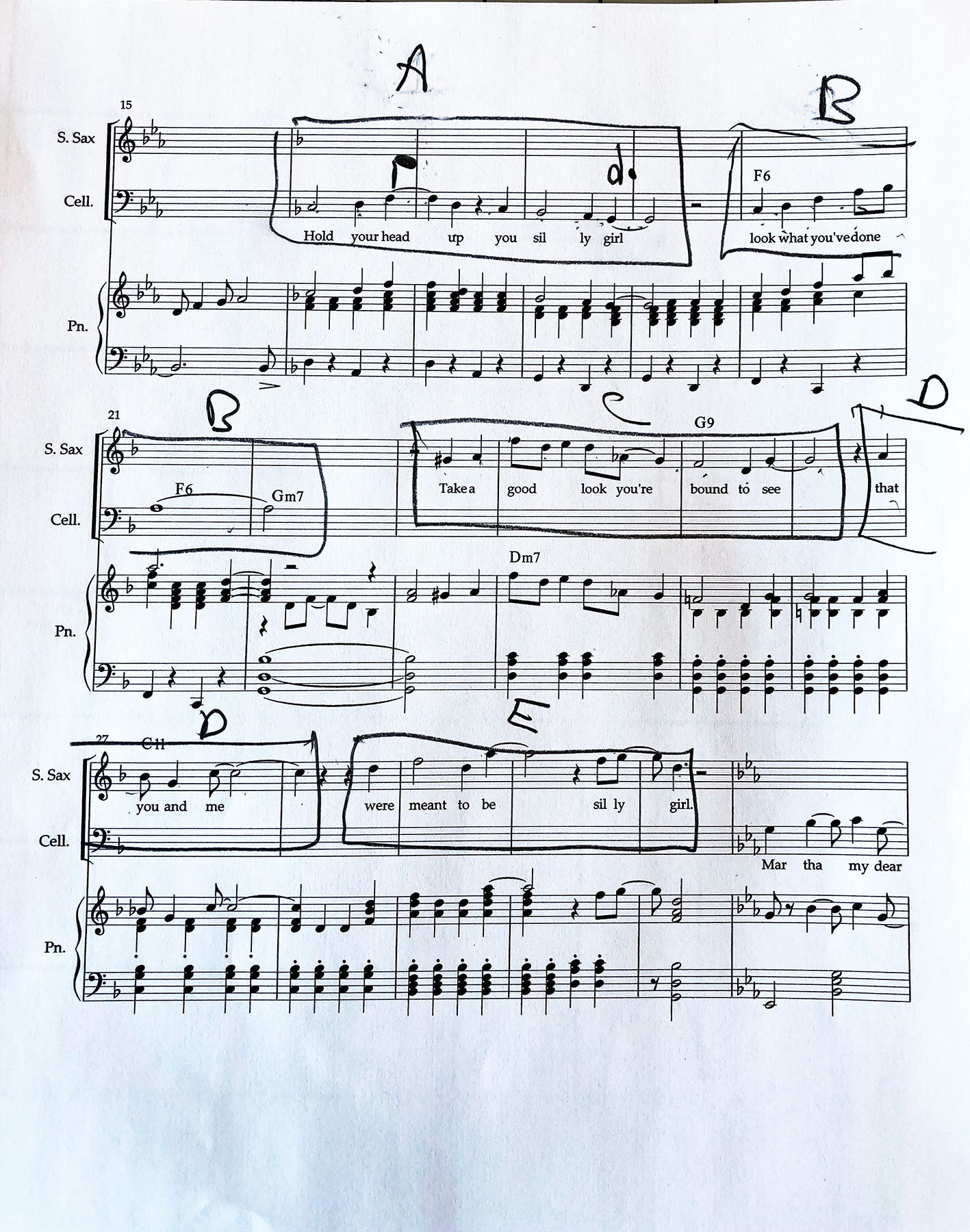
Page 2 of 3 of the Martha my Dear worksheet date 11/2012021

The sheet music is what the artwork samples. To explain, I create and when required; I pay for the right to create a cover for the music. From that cover I then choose a sample and that is what the viewer sees. I then import the sheet music notation from Notion into StudioOne. With a few days of work the music will be finished. Notion works great to produce a musical draft. StudioOne then takes that Notion file to a professional level. Its only limitation is the skill of this artist.

Notation software draft of Martha my Dear

I am not trying to overestimate the quality of this shorten by a minute cover of this great Beatles song from their White Album. The same White Album that I stood in line on a November day at the record store on State Street in Madison, Wisconsin, the day of its release. Nor am I trying to denigrate this fabulous piece of music by chopping it up into smaller pieces visually and in the performance. No, this project and the others like it, which I now refer to as musicBox instead of Interactive Constructive sculpture, are challenged by the typical viewer’s attention span.

A lengthy piece of music can lose a viewer’s interest waiting for the song to end. They can simply walk away, not comprehending what they are looking at or what is being heard. There will be many viewers, especially younger ones, and listeners who have never heard of this music, or do not connect to the music. Shortening helps, but the music, no matter the quality or the length, means more to me than another cover song. No, this music exists as a voice of an artist extending a finger forward. I am a bright shiny object. If you ever get the chance Push the button. I do.

Scott Von Holzen
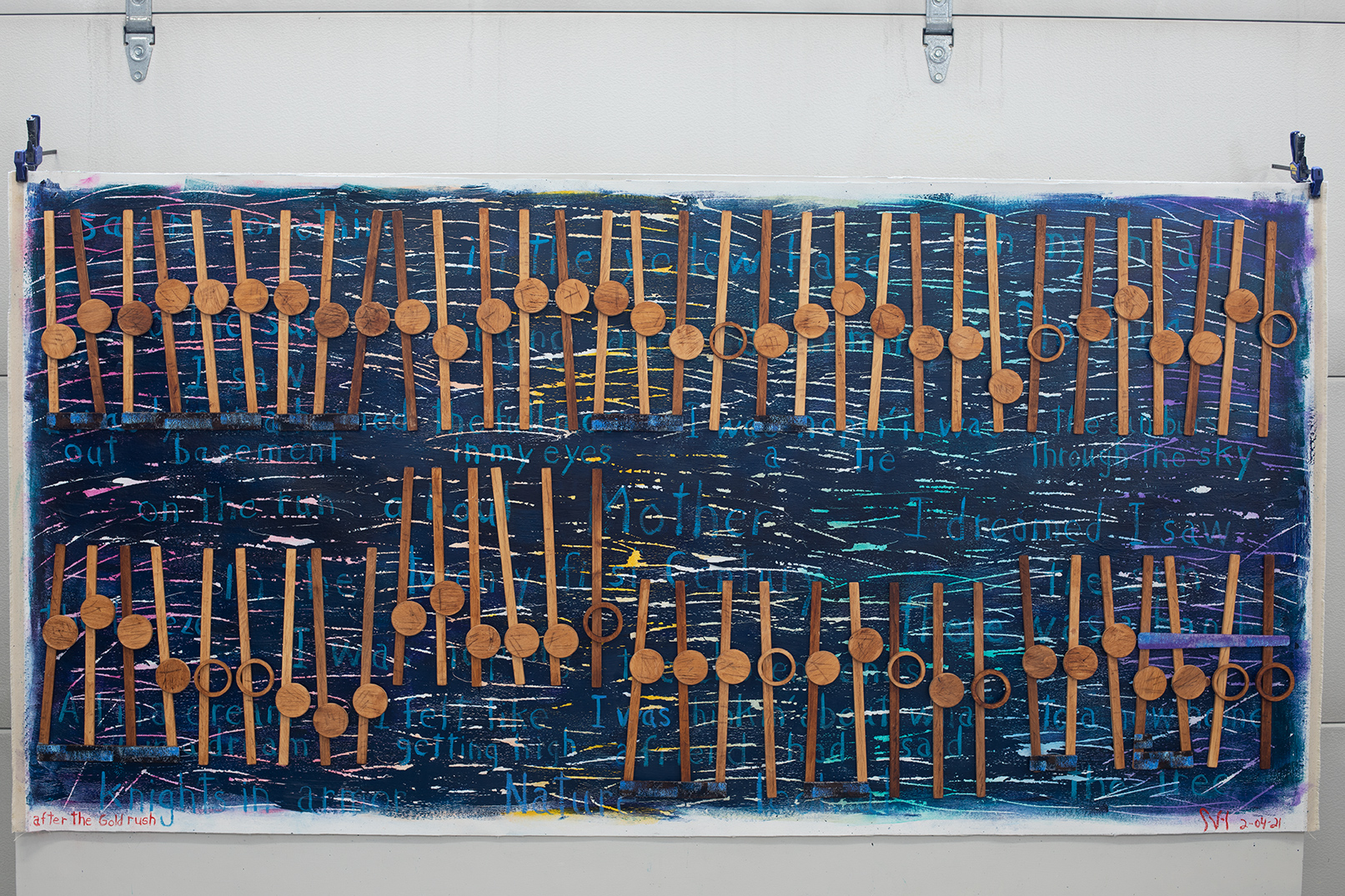
S_V_H After the Gold Rush arrangement

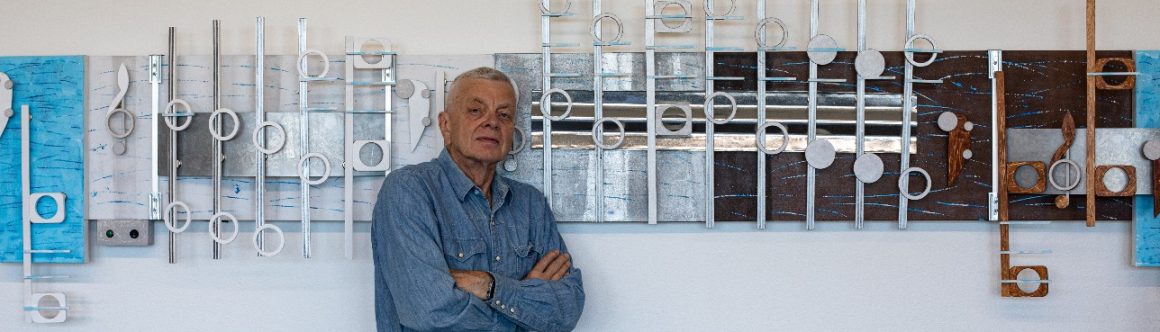
After the Gold Rush 72 inches in length by 36 inches

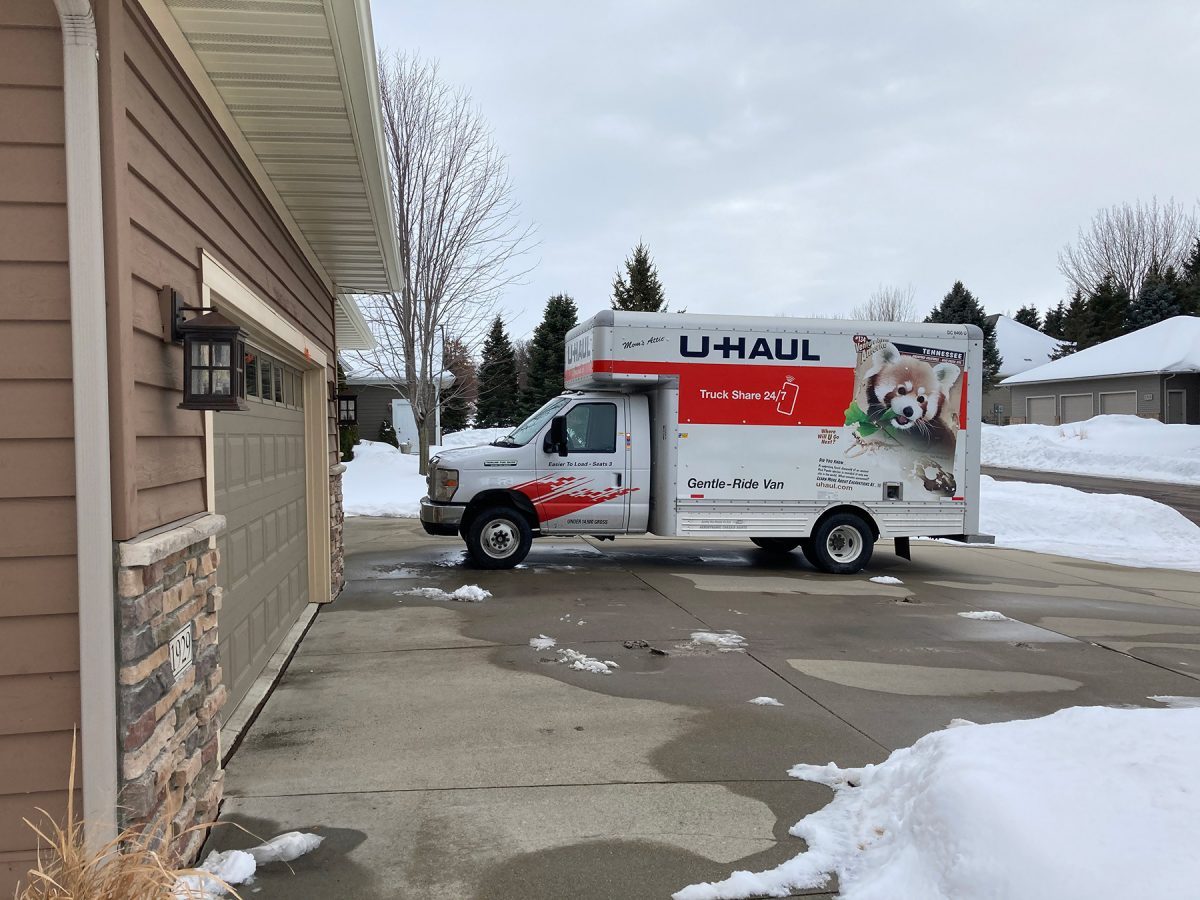
Here is the final image of After the Gold Rush, once again showing the artwork attached to its working 4 x 6 foot stretched canvas that is leaned up against the inside of the garage door so that I could get a reflection-free photograph.   Like the other artworks I created in this temporary studio, I have sandwiched this one between cardboard for protection. They are all now stacked in a fifteen-foot U-Haul in the driveway.  Tomorrow, I will take them to a temporary storage unit for the next two to three months until my new permanent Studio is ready. Until then here is my current arrangement of After The Gold Rush.

The instruments used in this arrangement include the piano, organ, bass flute, viola, cello.   For special effects I have included soprano and tenor voices, along with a tambourine and a little hand clapping. Even though I know my arrangement skills are young in their development the basic musical structure, I believe, is decent and progress is being made.  Finally, when I have a frame to attach this work to and have built it stereo system, I will post a video of the complete project, After the Gold Rush.

Scott Von Holzen

S_V_H After The Gold Rush Final Art image

36 inches in height by 72 inches.

This is the finished artwork for After the Gold Rush art project.  Before starting the artwork, I first created an arrangement of the music.  I then sampled it as seen in this artwork.  To complete this project, I will work with my arrangement to create the soundtrack.  I have already purchased the mechanical license for this music, which of course is still under copyright.  I have the metal frame from Woodstock, so I will only need to put the stereo amplifier together, and then install the soundtrack.  Once all that is complete I will post a video of my arrangement

For this artwork, I wanted to make the music as large as possible.  I did that but ended up with both the top and bottom lengths being 32 notes.  That left little spacing between the notes.  That raised a long time concern about fitting my music in a restricted amount of space. 

This has been an issue from the beginning of this art.  That is why I would first set the music out on the canvas on a table before attaching it.  Since I am still in a small temporary studio, the only table large enough for this artwork is the ping-pong table on the lower floor.  Because of the softness of the top layer caused by the scratch technique, and not wanting the distress of moving the canvas with the music attached, I decided against using a table.  I felt I could better align and assemble the music with the canvas safely attached to a  six-foot by four-foot stretched canvas on the easel.  I had tested these same steps on the previous and smaller Christmas painting. 

I taped a string along the top of the easel so I knew exactly where to place the top of the note’s stems.  In this way, my arrangement had the correct up and down.   Then excited to make sure all the notes fitted before the glue dried, I quickly attached the music, which comprised four sample sections.  This well-documented concern caused me to forget to place the middle sections on different planes from the end pieces.  I simply forgot to run another string.  When I had finished, the top section I soon realized this error.  I was beyond the time where I could safely remove any of the music without tearing away the top layer of paint.  At first, I thought I would have to do the bottom layer also in one straight line, as I have done with most of my artworks over the years.  This time I choose not to continue down that well-worn path.  I move the bottom to two middle sections, one up and one down, and added some words along the artwork bottom to fill in as interest.  

This video tells the rest of the story:

As I am writing this, I have sandwiched up this artwork and others between cardboard for safe travel.  I have begun the slow removal of my temporary artist studio from a room that makes a better home office.

This is my 649th blog post.  As I have mentioned one goal of the blog was to match the number of letters Vincent Van Gogh sent to his brother Theo Van Gogh, 651. 

Scott Von Holzen