S_V_H The Song Woodstock intro

Joni Mitchell wrote the song: Woodstock,  which will be the subject of the next musical portrait.

By the time I finish an artwork that can take a month or more, I have lost much of my earlier interest and am ready to move on.   Thankful for a break it can take days to find and select the next piece of music to portray.  Then it takes added time to convince myself that the chosen music is worth the effort.  How I work is from project to project:  I focused until I finish an artwork,  and only then do I consider what to do next.

Once I have chosen my next subject, I arrange the music.  That was a lot easier before I added sound.   Without sound or words, what I did was pick a phrase or a sentence from the music as a start point and follow that to an obvious end point.  If the music included words I then had to choose carefully not only the words (Copywrite concerns on my part), but I had to make sure I still had a good start and end point.  Now days with added sound,  I create arrangements.  What that means is I pick short sections from different parts of the music’s notation, change them to connect,  and then together I create a pleasant flow of the music I am portraying.  This takes days with many revisions.  Eventually, I find an arrangement that sounds good to my ear.  I then move on to the artwork, using my arrangement as my guide to building the artwork.

That is where I am at with this first blog entry about the Woodstock project. There is no first image of the artwork (The start date of his project is September 26th).   Instead, I am offering a late revision of the music that I arranged for this artwork and that I will use as my guide to cut out, sand, prime, and paint what will be the notation parts for this project.

This is my current arrangement of the project Woodstock that comes from the music of Joni Mitchell:

In 1970 while in college in Madison the version of Woodstock I knew was by Crosby, Stills, Nash and Young. This song was on their album Déjà vu, a favorite album of mine. Their music confirmed my taste preference for the melodic style of Rock music

I discovered my rock n’ roll style when the Beatles came to America, as a sophomore in a rural high school farming town. I was a Beatles rock ‘n roll guy: great melodies and lyrics, at moderate volume, without any distortion. I had little to no interest in the groundbreaking hard rock style of Led Zeppelin. Obviously, my musical tastes expanded in college. I grew to like The Who, buying their album Live at Leedes, and Cream buying their two disc album Wheels of Fire. Still, The Beatles’ influenced continued into the eighties as I favored Madonna and the Funky sound of Prince, instead of Van Halen, whose music hits resurface with the passing of Eddie Van Halen.

Why then did I not arrange the version of Woodstock from my past? It was because recently when I listened to Joni Mitchell’s Folk rockin’ version of Woodstock; it caught my interest. I knew it would be a better fit for my current limited arrangement abilities, and it would be an acknowledgement of my early years appreciation for Folk music. Folk music later paralleled my preference for rock ‘n roll and grew from the likes of Peter, Paul and Mary, to Joni Mitchell, who I often mixed up with another favorite of mine, Judy Collins. I believe the album Déjà vu contains several other songs that are artwork worthy of future projects for the Sixties time in my life. This one is a thank you to Joni Mitchell, and her lyrics about my lasting memory of the Woodstock Rock Festival.

Finally, unrelated to the music, I have a comment about this blog site. Starting early in its existence, I made up a goal to post the same number of letters Vincent Van Gogh wrote to his brother, Theo Van Gogh. That total is a challenging 658. After ten years of blogging, this post will bring me to 637. I am only twenty-one away.

Scott Von Holzen
S_V_H I Will, The Artist version image 1

To save time and planning, I designed this artwork, I Will, from what I learned from Where Have All The Flowers Gone.  The plan with the Artist version of I Will was to use the first I will as the template to speed everything along.  Even though I still have finishing work to do on the first I Will, for now, I am setting it aside.  It is difficult for me to work on two artworks at once, although I created all the wooden stems and the music for both works together.  That was as far as my joint effort lasted.   I have now moved on to the Artist version of I Will.

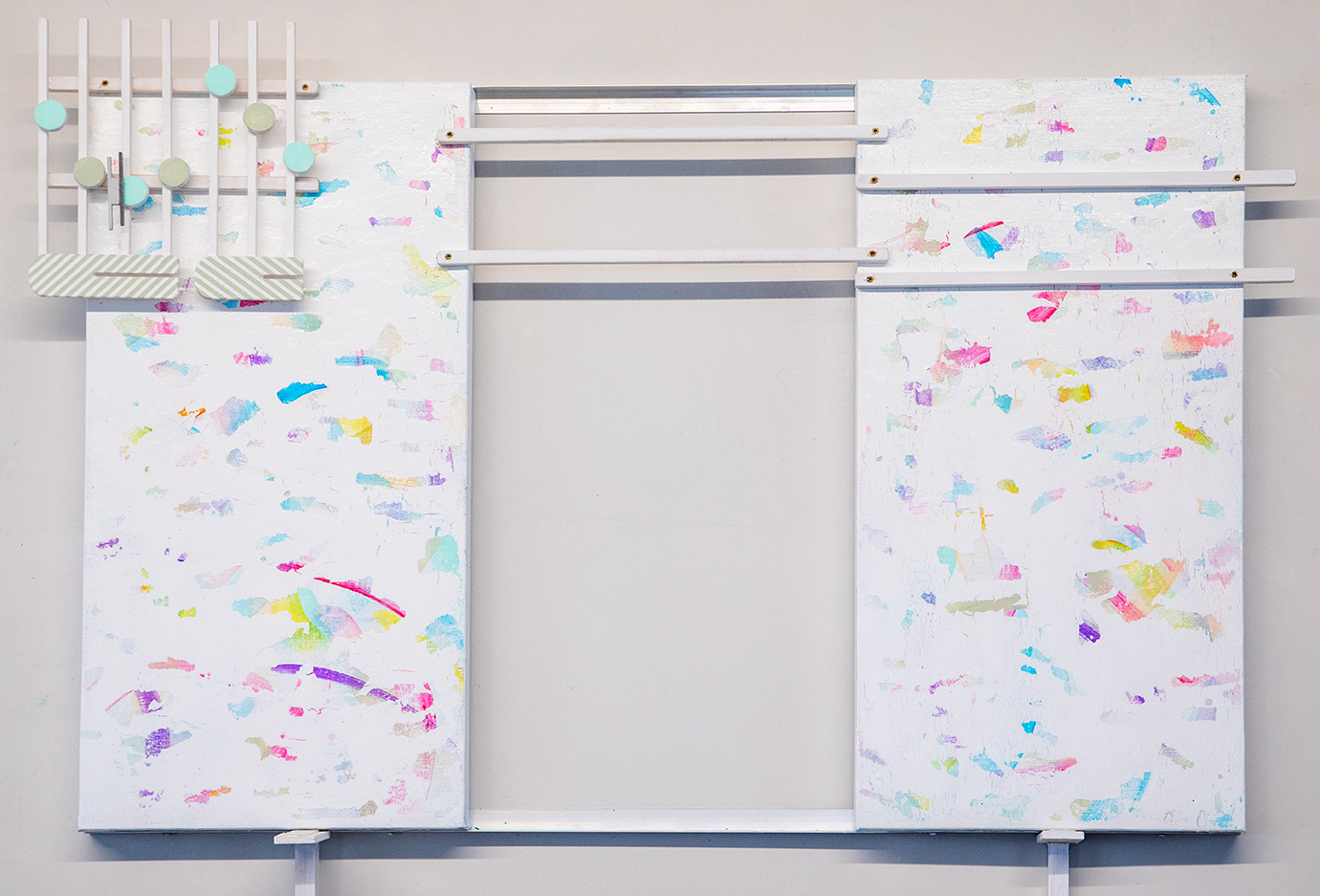
This second, I Will, be larger.  The first used two 6 inch by 12 inch canvases.  For this second work I am using two 12 by 24 inch canvases and have increased the length six inches.  My main take-away from the first I Will was to use it as a guide especially for the colors and overall design.  The difference between the two artworks is the painting of the background canvases.   On the first, I Will,  I used layers of glazes to paint the canvases.  While, on the Artist version of I Will, I am using a new and unproven technique on the two canvases, and along with the music.  This new method allows me to scratch away the top painted white layer to reveal, unexpectantly the color rich layer below.   I can remove the top paint layer, for example, with the edge of a pallet knife without damaging the abstract layer below.  In this first image, the top layer is white.  All the colors showing are from the bottom layer.  I like this look and technique, but I have concerns.  The top white layer is soft, too soft.  Rubbing that layer off could become an accidental issue.  I have applied two layers of glossy clear glaze in hope to strengthen the adherence of the paint.   In time, this canvas surface will probably harden, but for now handling with extra care is important.

Once I finely tune this scratching technique, then I think I can say that I have finally found my personal Abstraction style.  Before this, my best abstract technique was a version of Gerhard Ritcher’s squeegee technique.  Having an artwork, that is not a major project,  was the incentive to set aside the first I Will and to try out some ideas with Artist version of I Will (the wrath of Kahn).   Removing paint after I have applied it is not the only idea I am trying out new with this artwork.

This is the first artwork since I started painting music,  that I have abandoned the standard horizontal flow you see in the lines of sheet music. Every artwork before in varying degrees shares some semblance with the style of artist Mark Rothko, whose floating images, that resembled sheet music, that gave me my starting point in early 2006.

Sheet music staff lines

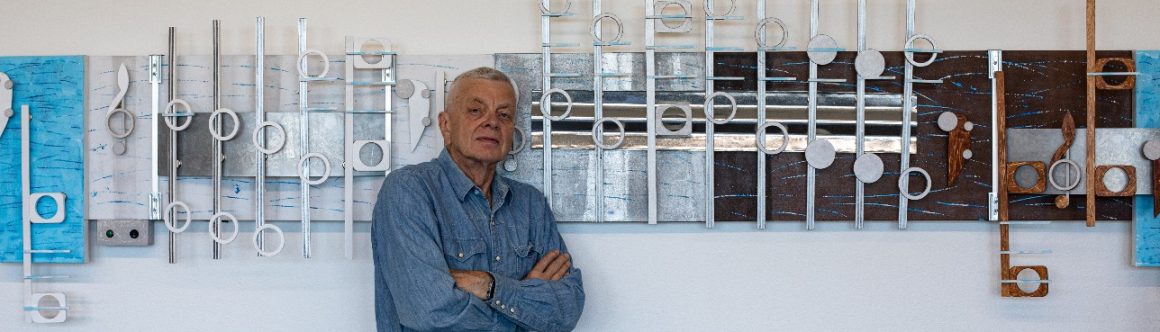
In my early days when I showed my musical artworks to others, the main take away I received was that this art would only appeal to musicians.  That was what I heard over and over, and I may have agreed with that.  My thinking was that there were a lot of musicians and songwriters, along with a large group of people who understood and love music.  It was later that I began promoting the idea that this art could appeal to anyone who loves music. The ability to read sheet music no longer became a requirement to appreciate this art.  That change of thinking then allowed me to chip away at my connection with sheet music.  Over the early years and even to this day, it is my early artworks, such as Canon in D, that the public finds the most interesting.  The reasoning is that such works look more like sheet music.   When over the years I moved away from the look of sheet music, and all of its restrictions, the public and musicians all lost interest.  That market left the building.  It had to, because I wanted it to.  I could have stopped evolving and created clones of Canon in D (2009) or Imagine (2010), for example, which would have given me a nice lucrative niche in the art market.  But that was never my goal. Even after these many 10s of thousands of hours, that was never my plan.

Scott Von Holzen

S_V_H I Will image 3

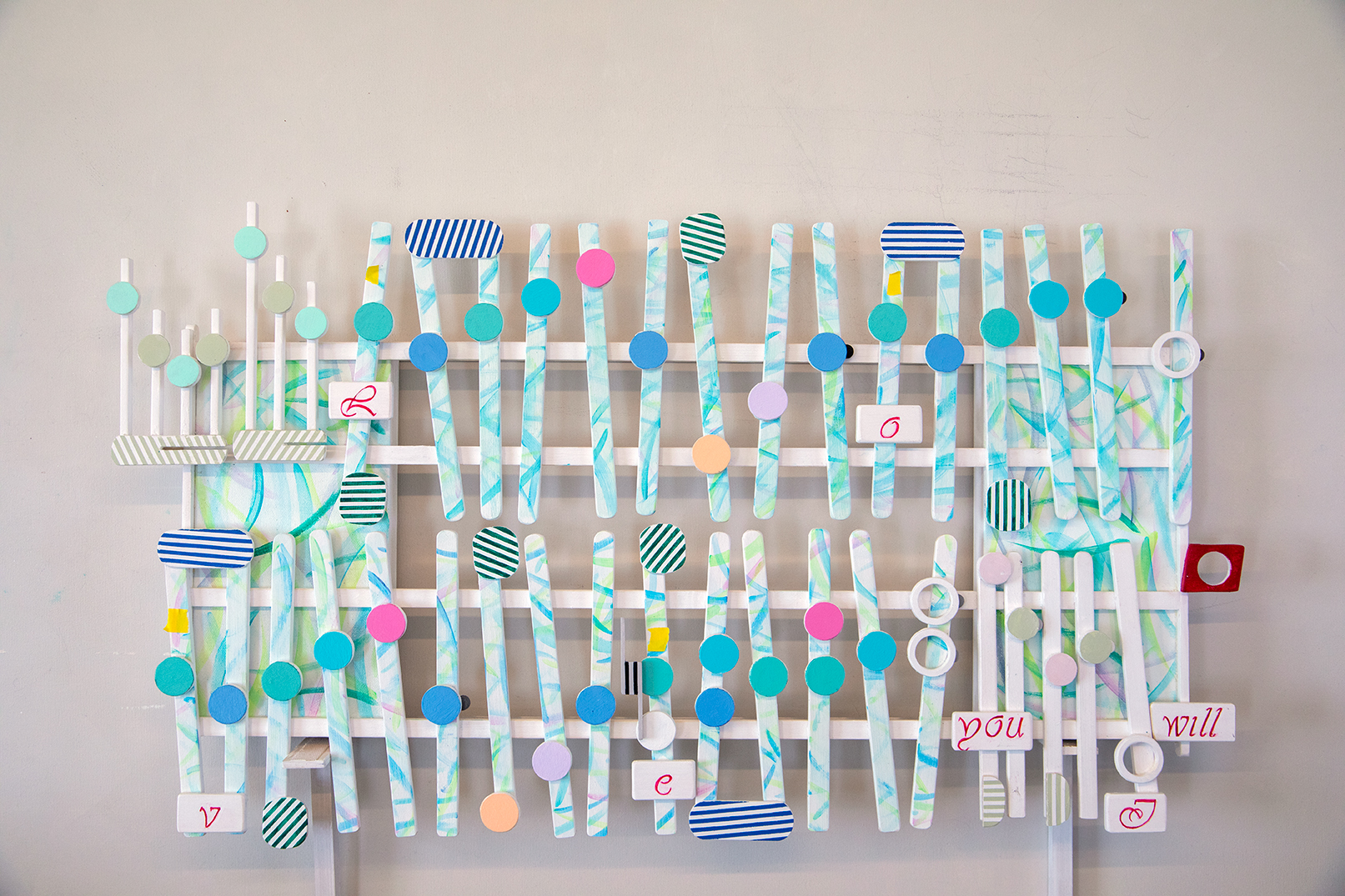
This image shows the color changes I made after learning where the artwork would be hanging.  My original color scheme was to create a softer look.  Besides using a lot of white, I also used a variety of pastel colors, giving each of the notes types a different color.  That became a problem.  Standing back and looking at the artwork, I saw all those pastel colors working only in a baby’s room.  That was absolutely not what I wanted from this music.  My client solved my concern when she mentioned that the artwork would hang in their bedroom.  Oh!  I changed out the blue color and adjusted the tints.  With those changes I kept the soft look idea, while giving the artwork more of an intimate touch.  Most notable with the addition of the words.  I will explain them in the next blog entry.

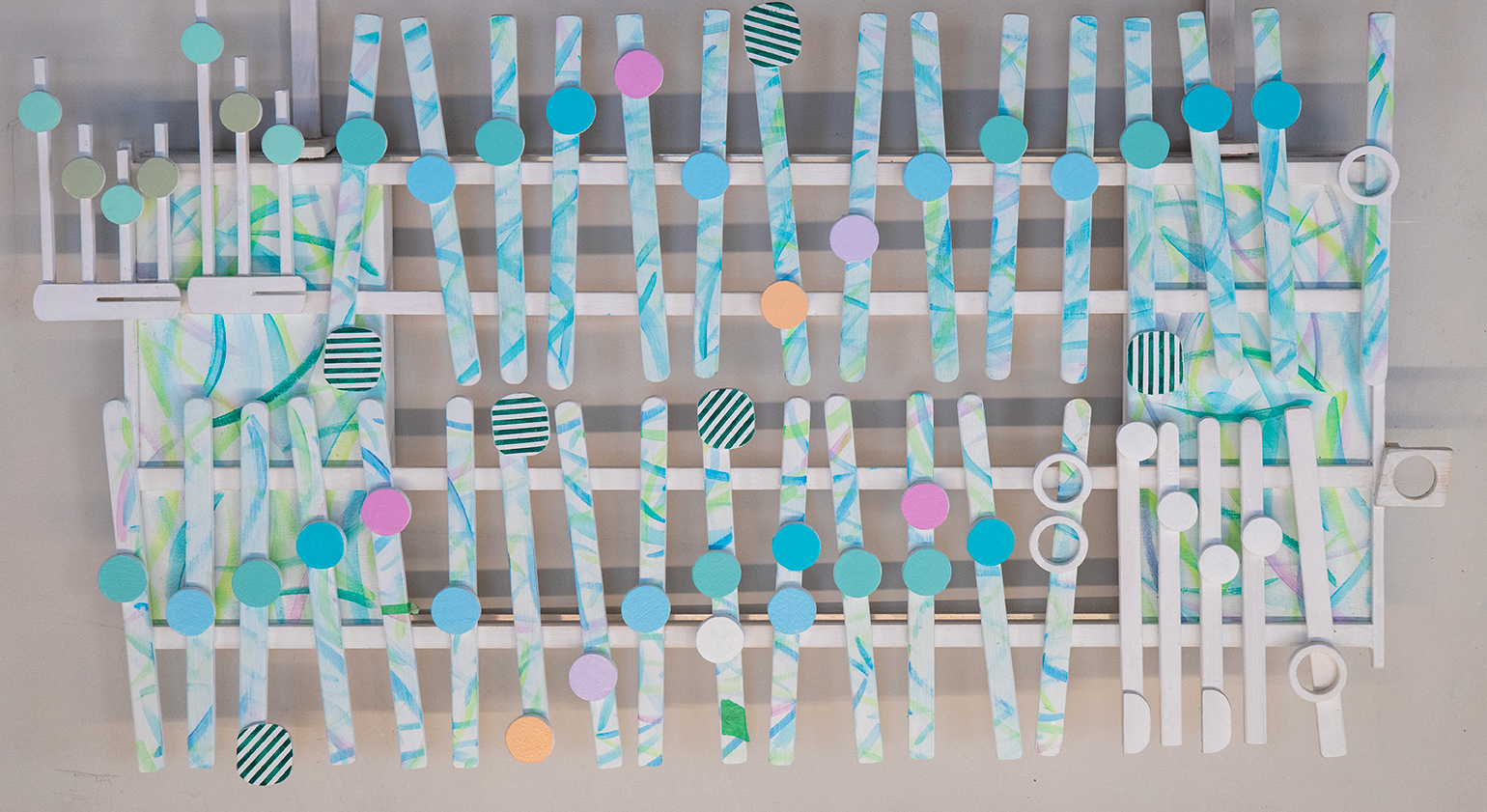
The only image of I Will showing the baby color theme.  I photographed it upside down but flipped it when enlarged.

Scott Von Holzen