S_V_H Your Song image 4

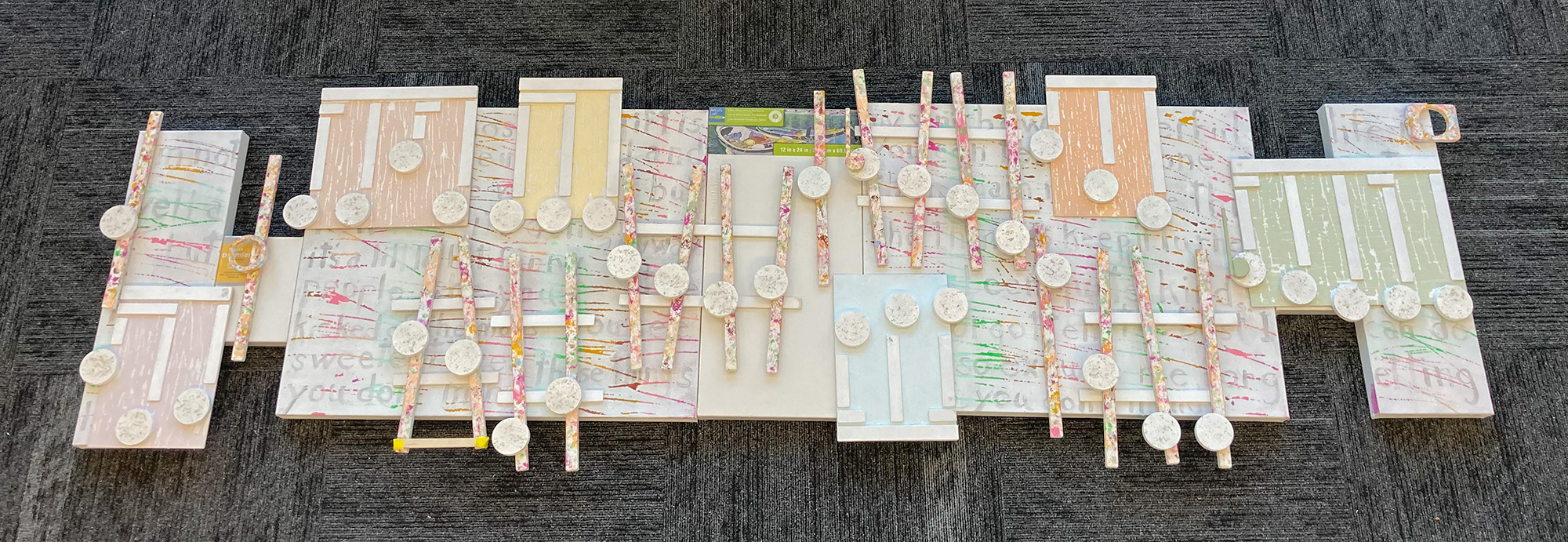
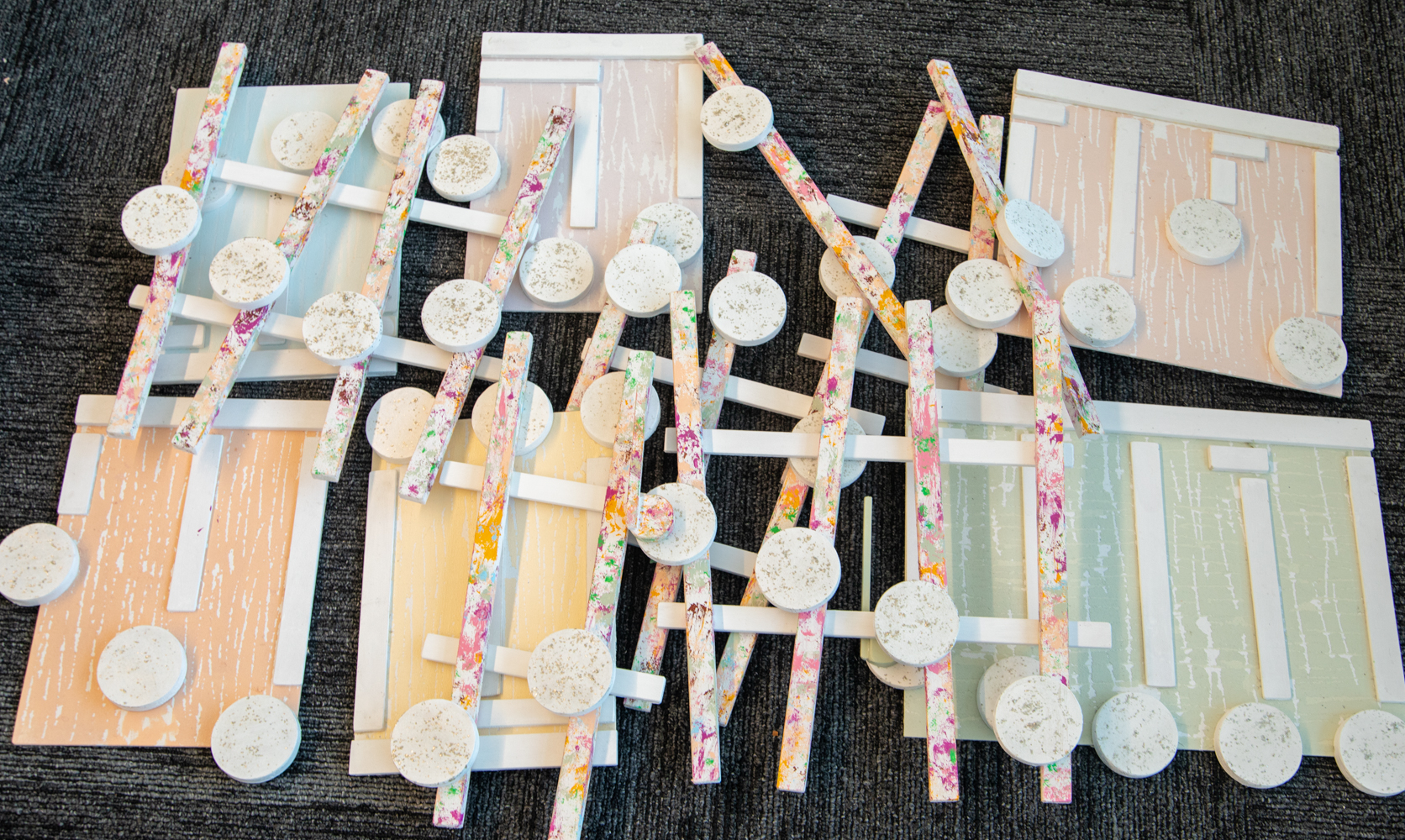
The project Your Song layout laid out on the floor.

I ran into a problem of my creation by not calculating the project’s length. Until recently, I would count the number of notes and the spacing between each, and that total would give me an accurate project length. I would then put together the size of the background needed to support the music. Lately, instead of lining up my music in straight rows across the canvas, I have been stacking my music in an up and down zip-zag pattern. By doing this, I use more of the artwork’s vertical space. The benefit is I can then overlap the music. This can then reduce the require length of canvases. The trade off is the zip-zag method has variables a straight line does not. That then makes it difficult to estimate the final length of the project, and only a guess if the music will fit the background. That happened with this project. The music did not fit. It then took considerable time to find the solution. I finally had to calculate what my actual length of the music would be laid end to end. That turned out to be twelve and a-half feet. My four original prepped canvases had a combine length of six feet four inches. No wonder the music would not fit. The solution ended up being increasing the length of the background.
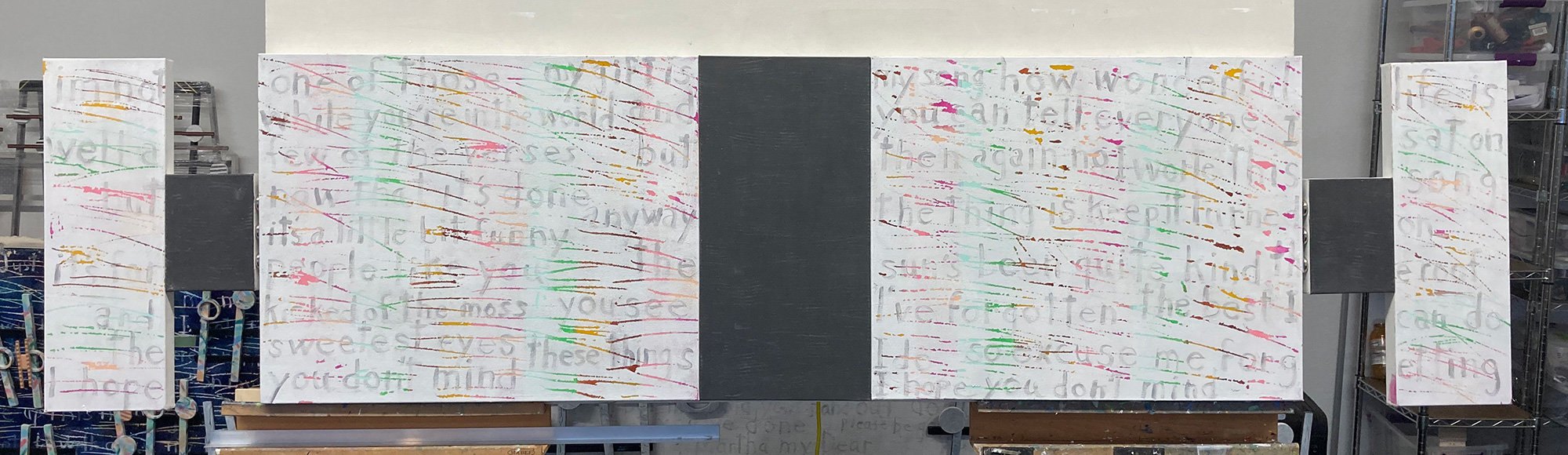
The original Your song canvases now with added bolted on black canvases. The last artwork that used bolts is When Doves Cry, in 2017.

This project now comprises three additional canvases that are bolted to the original design. The last project that use bolts was the 2017 artwork When Doves Cry. What also complicates the size of these artworks is that I need to make sure that any signal piece does not exceed the maximum length of seventy-two inches by twenty-four. That is the space I have in my car.

I have to say I actually knew I would be length poor and in trouble once I had the music in a rough draft. Since I had already finished, the background canvases I first considered attaching angled aluminum between the two center canvases, for a max length of 72 inches, and the speaker canvases to reach the length needed. The problem was the short length of my music sections. They fell into the space the aluminum created. I found no practical method to float the music. Finally, to attach the music, I went the easy way by adding canvases. Since I had already finished my background, I took another shortcut by painting the added canvases a shade of black with a lighter black glaze. To my surprise, I liked the contrast of the background canvases. I see more of this idea being used in future projects, and wondered if this logic is unique in the five-hundred years of canvas painting.

After years of trying to follow the worn artist path to victory, I am now going with Robert Frost and these lyrics by Ricky Nelson from the Song, Gardan Party:

“And it’s all right now, yeah
Learned my lesson well
You see, you can’t please everyone
So you got to please yourself”

I simplified the thought behind these words to four piano notes: A4, F4, A4 D4. My first song with these lyrics: My art, my rules.

So it is.
Scott Von Holzen
S_V_H Your Song image 3

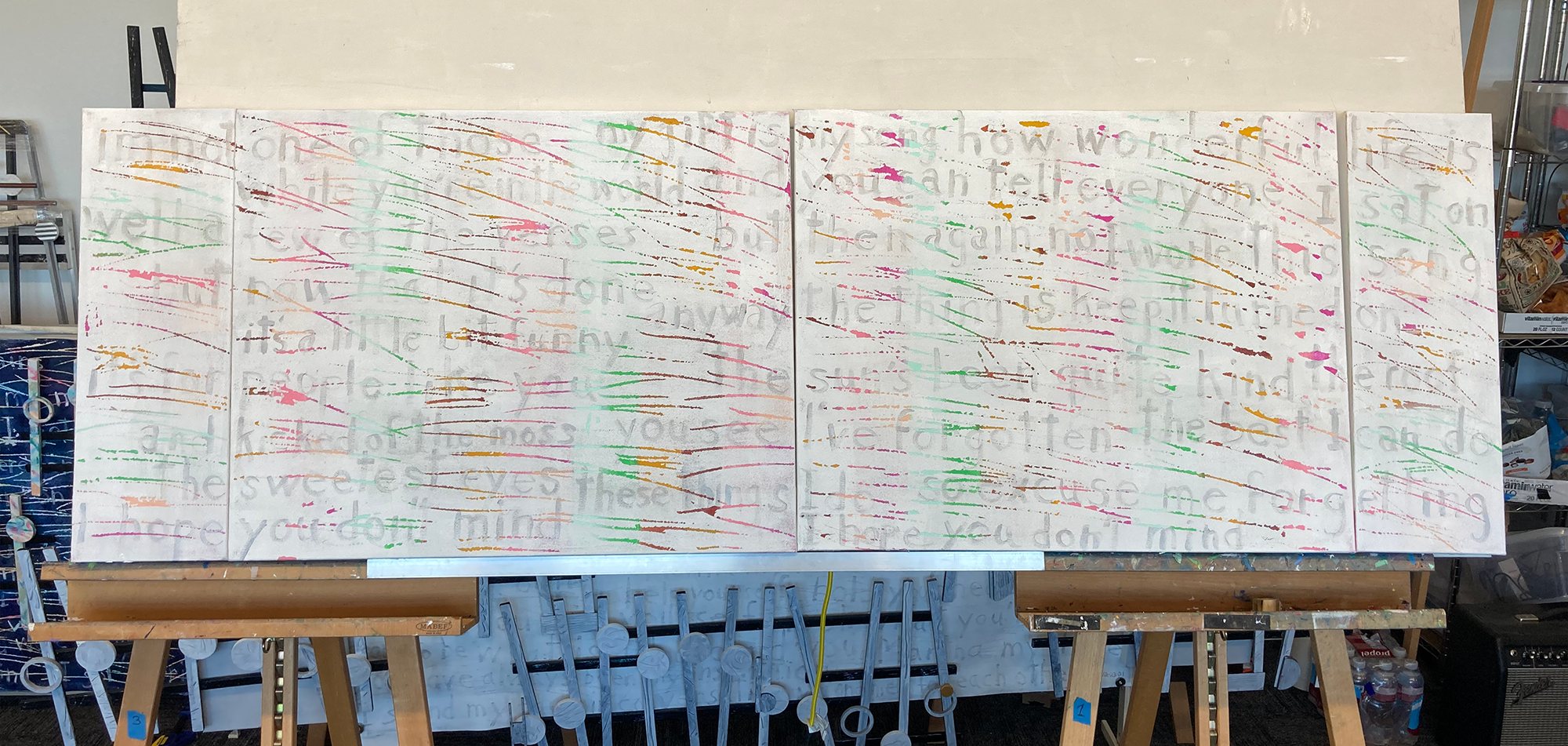
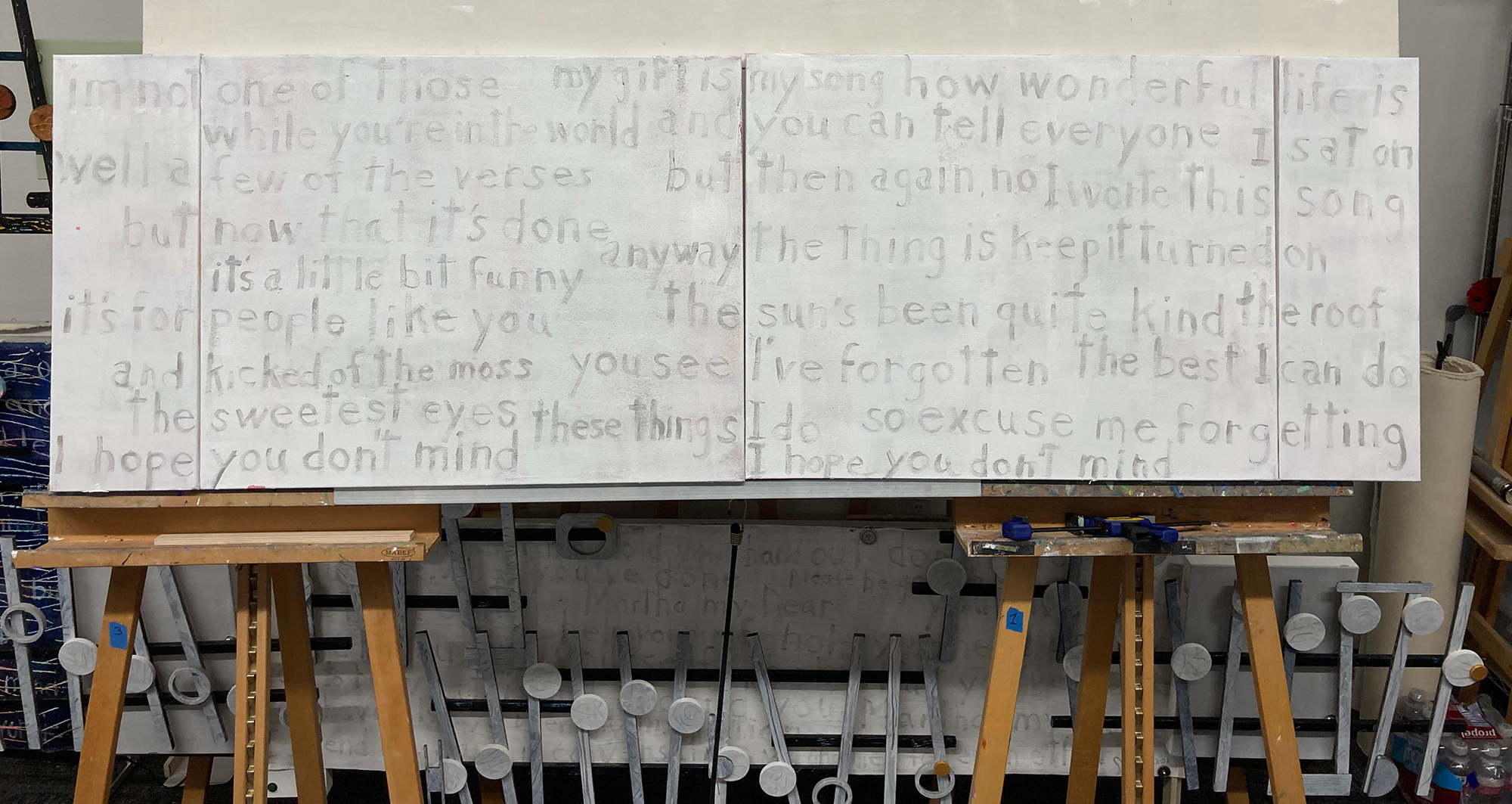
This is the last stage of my scratching technique, when I draw in the words. I dislike art that includes words to enhance the works’ lack of purpose. My words go with the music. They are there because they belong. They exist to add interest and offer the viewer the option to choose their meanings. I have always applied words in that way. If the music has words, I like to use them. I see them as decorative graffiti. I then scratch through them. This technique downplays their value and covers my print writing, which is awful, but important. My hand writing connects me to the artwork, not unlike Jackson’s Pollack hand print on his canvas.

I should mention how I choose the colors for this artwork. The background color ideas that appear through the scratching, and the top white layer of white, come from Elton John’s outfit in an early video of Your Song. The silver I used for the words I found in the glasses of Lady Gaga’s performance of Your Song at the 2018 Grammies.

Elton John’s live 1971 performance of Your Song.

This is a technical note: This image above is after the scratching was done. Issues are continuing with getting a clean scratching across the entire canvases. The top layer, in places, is rubbery. That means the pallet knife tears the top layer instead of clean ripping it away. This issue could be caused by the thickness of the paint, or that it needs longer drying time. The solution is further complicated by the rubbery issue not being consistent across the canvas. What is known is that as the days pass, the top layer firms up on the artworks and my test canvases. Letting the top layer of paint cure for maybe weeks, with testing, could be an answer, except that does not work for me. I live with each of these projects until finished. Only when completed do I start the search for the next music project. Hum, so the choice is?

Scott Von Holzen

S_V_H Your Song first image

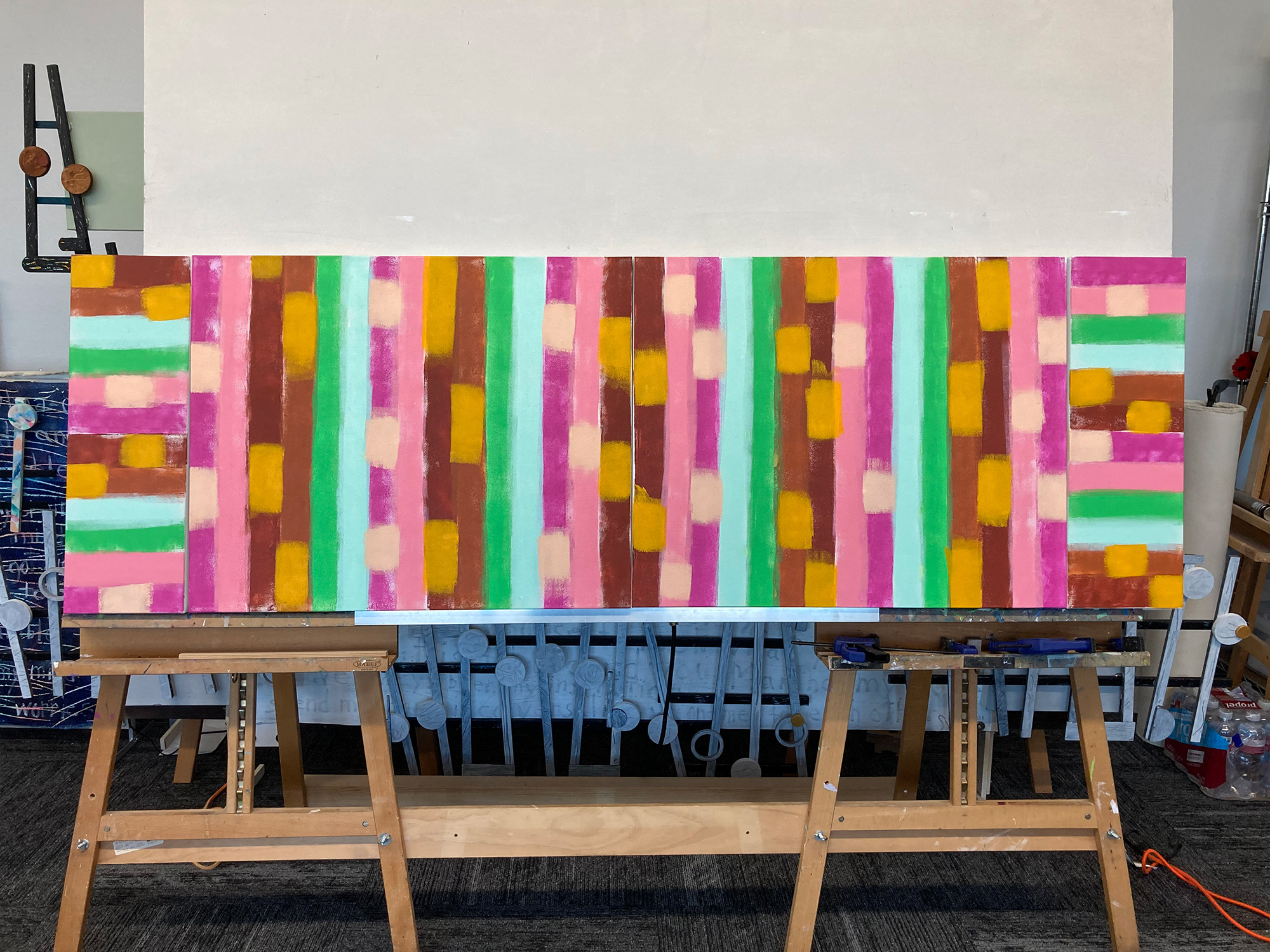
This is the first image of Your Song, my next music box, featuring the music of Elton John Your Song. Like all of my first images, this one will disappear under a top coat of paint. Only then will it be reviewed when I scratch off parts of that top layer of paint. As I have said, this bottom layer I can paint anything a prodigy would paint. I choose to go with narrow and vertical colors because my scratching is strongly horizontal. This creates a pleasant flow of colors across the canvas.

With this project I am gong anti Robert Frost and diverging down a road most traveled. I have a large amount of stretched canvases that have been stacked away for years. Lately my music boxes have used loose canvas attached to an aluminum frame, and connected to stretched canvas speaker boxes. This work uses all stretched canvases, with two 24 inch by 30 inch, and two 8 inch by 24 inch canvases. I may separate the two 30 inch center canvases with angled aluminum once I calculate the length of the music to be attached.

I have a large stack of stretched canvases. I also was tired of handling loose canvas, which requires a frame to attach to with magnets. When finished assembling my loose canvas artworks, they resembled my stretched canvases works, without the stretching part. The loose canvas style advantage is I can create custom sizes. With bought stretched canvas I have many size choices, but not all sizes are available. Because I do not have the time to build custom frames and then stretch canvases, I ended up purchasing many stretched canvases sizes as a workaround. That ended up, regrettably, with me storing an extensive collection of canvas that can sit for years, and taking even more years to use up.

The final rough draft of this music box cover of Your Song.

Back in my college days, I bought albums, with little monies to spare, at the local record shop on State Street. While in college, I probably first heard of Elton John listening to Your Song on the radio. I did not think that much of him to buy the album.

The record albums that I bought (in no particular order) that come to mind around the late sixties and early 1970s of my college years, are the great album Déjà vu – Crosby, Stills, Nash & Young 1970 release, Mad Dogs & Englishmen – Joe Cocker 1970, The Who – Live at Leeds 1970, and probably Tommy 1969 release, Cream Wheels of Fire 1968 release, also in my first year 1968 in the dorm when I heard Laura Nyro’s album Eli and the Thirteenth Confession. My top favorite record in the dorm was Blood, Sweat & Tears – Blood, Sweat & Tears 1968, Switched-on Bach 1968 release, The Beatles – White Album November 1968, Woodstock 1970, Sweet Baby James – James Taylor release 1970, Pearl – Janis Joplin 1971 release date that was the last album I bought before college graduation, and my motorcycle trip out west. I also bought a great album Bridge Over Troubled Water – Simon and Garfunkel 1970 release, that was given to me just before graduation, just out of college Barbra Joan Streisand – Barbra Streisand 1971, and finally Tumbleweed Connection – Elton John 1970 release date while still in college.

I finally bought into Elton John with his record album Tumbleweed Connection because it appealed to what I will call my version of country classic rock, placing it right up there, with Déjà vu. Great songs from beginning to end. This was followed by my favorite from beginning to end Elton John’s album, Madman Across the Water.

All those albums and more that I have forgotten connect all together to me musically. That is why I still play Elton John’s music on Spotify, and probably why Your Song was an easy pick to paint, especially after watching Lady Gaga’s revival at the 2018 Grammies.

Scott Von Holzen