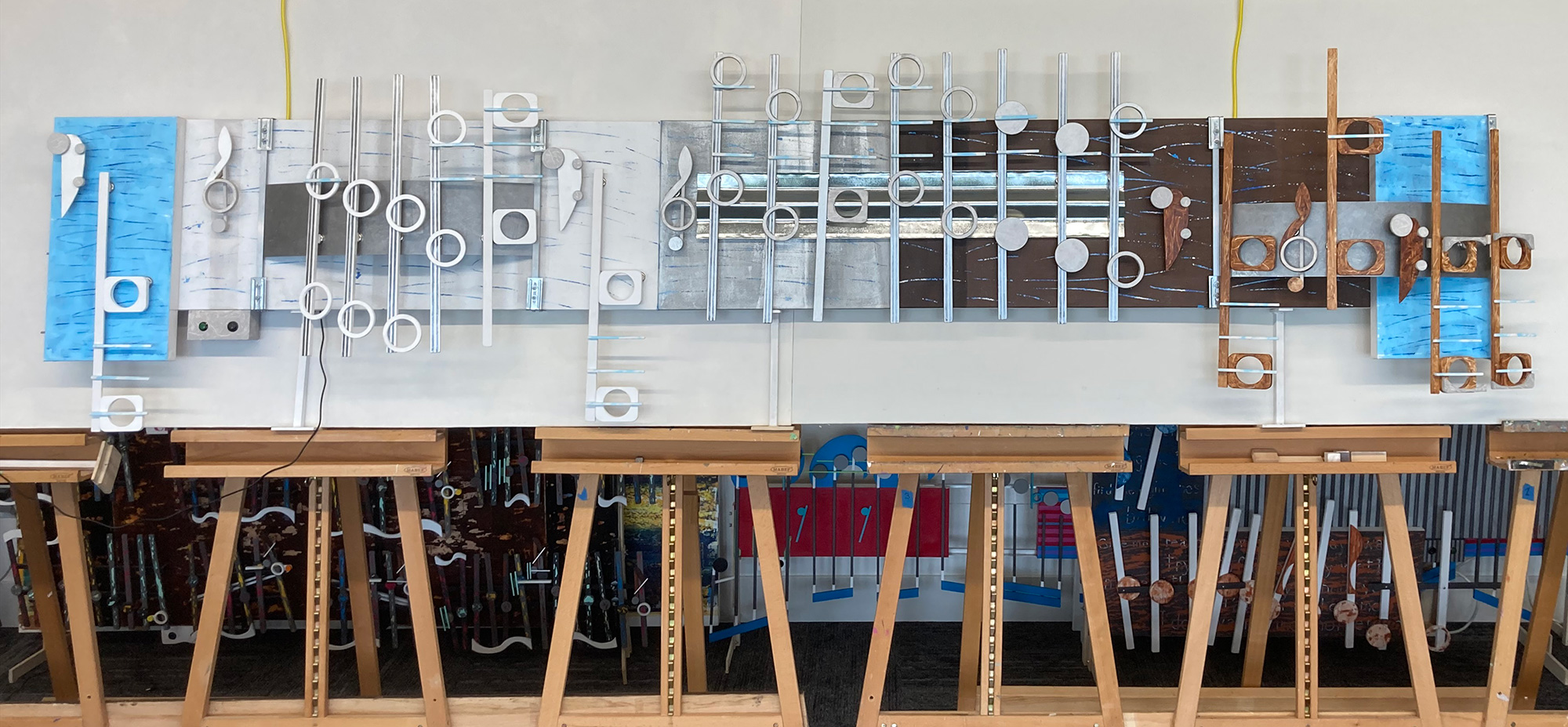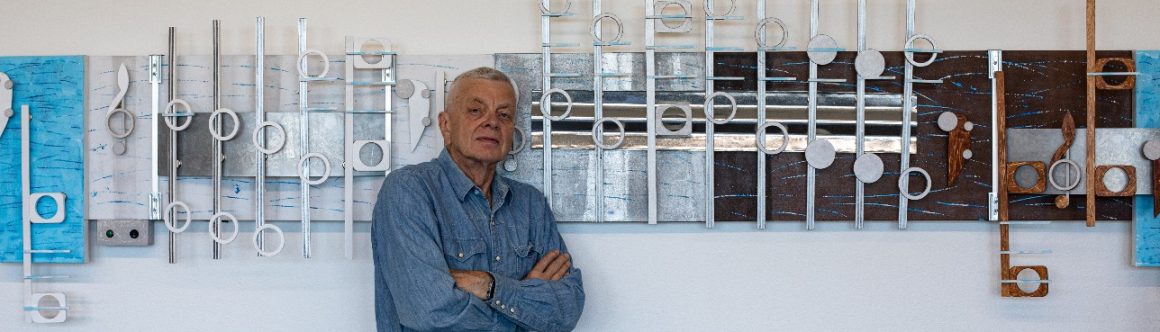

S_V_H Yellow first image

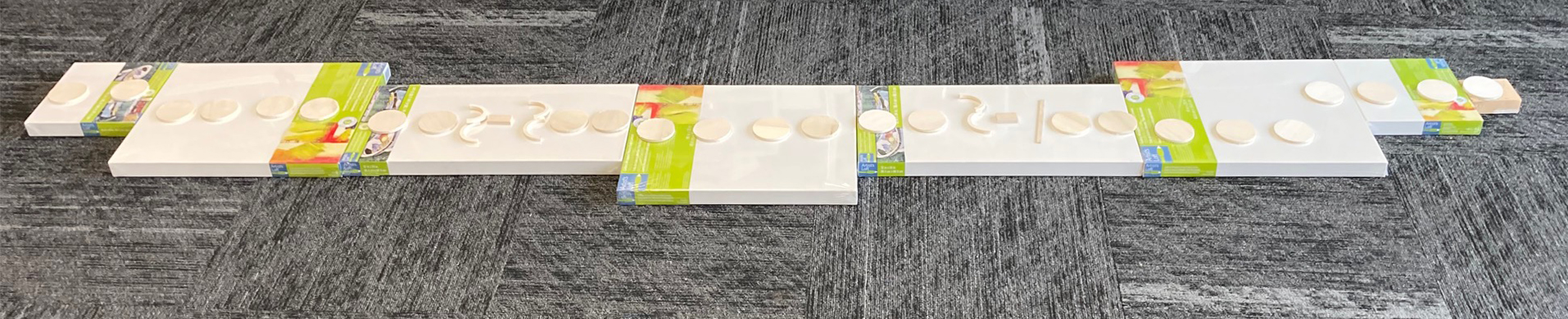
On the studio floor, the first rough idea for the project, Yellow.

My studio floor image for Yellow came together fast. After doing the gigantic Don’t Give Up, I thought I needed a motivational directional change to a smaller, simpler project. Yellow’s length will be about 8 feet and narrow, with the use of 10-inch canvases. I plan on using two 24-inch steel plates to bridge the gaps. I will use the smaller 4-inch two-way speakers on both end canvases. Those canvases will rise out front of the center canvas to increase the volume size of the speaker boxes, and add interest.

When I was working on Don’t Give Up I wanted to go big in order to make an impression. Its final length was 14 feet. The artwork’s debut public display was at The Art Garage with an EmptyWallsArt group show in Green Bay, Wisconsin. As expected, this exhibition appeared to be my normal display routine which starts with hanging the art. Followed by removing the art, with little to no token feedback or suspect praise. And then finally, store the art. Except this time would be different. Near the closing of the exhibition, surprised a woman wearing a plain summer dress on this hot summer day, walked into the show.

My wife Barbie and I were soon after removing the artwork when I noticed she was sitting behind the reception desk talking to our host Lindsay. When we were ready to leave, I approached them. Without introduction, I thanked them for the opportunity to show. I don’t recall details of our conversation, but this late-arriving person knew that the musical work was mine. She told me how much everyone enjoyed the piece. I remember saying something like how kind she was to say that. And catching me off guard, she said no, I really mean it. She said the artwork was the most talked about in the show. In my years of hearing platitudes of painting music, her simple honesty was refreshing. When I spoke later to Barbie, she recalled the words hit of the show and that there was a mention of the enjoyment of the artwork that plays music.

I emailed our host, Lindsay, from the Art Garage asking what her first name was. Lindsay quickly responded: “That is so sweet! Her name is Wendy Wimmer Schuchart, and she is the president of the Board at The Art Garage. She’ll be delighted at a mention!” I knew this work would never sell (listed $9,000) but what I wanted from this exhibition was that my artwork would make a statement about this art and our group. Wendy’s words confirmed to me I met that goal. Lindsay even spoke of a return show next year. Otherwise, no others at the reception, including my fellow artists, mentioned a single word about the work. We all packed up and went our separate ways.

Getting the basics of cover music right before using my finishing application StudioOne saves time and effort. I created this audio draft with the notation software Notion. It sounds good, and later in StudioOne, I will open up the sound stage, especially the piano.

An advance draft of the cover music for Yellow

I am building my cover from another cover of Yellow by Brooklyn Duo. The original song by Coldplay is guitar-focused and rocks hard in its presentation. The Brooklyn Duo cover better fits my cover musical style. My main voice will be the cello, backed up by an alto flute and held together by the piano.

The little over-the-top version of Yellow by Brooklyn Duo.

Here is the original version by the band Coldplay, released on the debut 2000 album Parachutes.

S_V_H Closer image 2

Artwork on the studio floor.

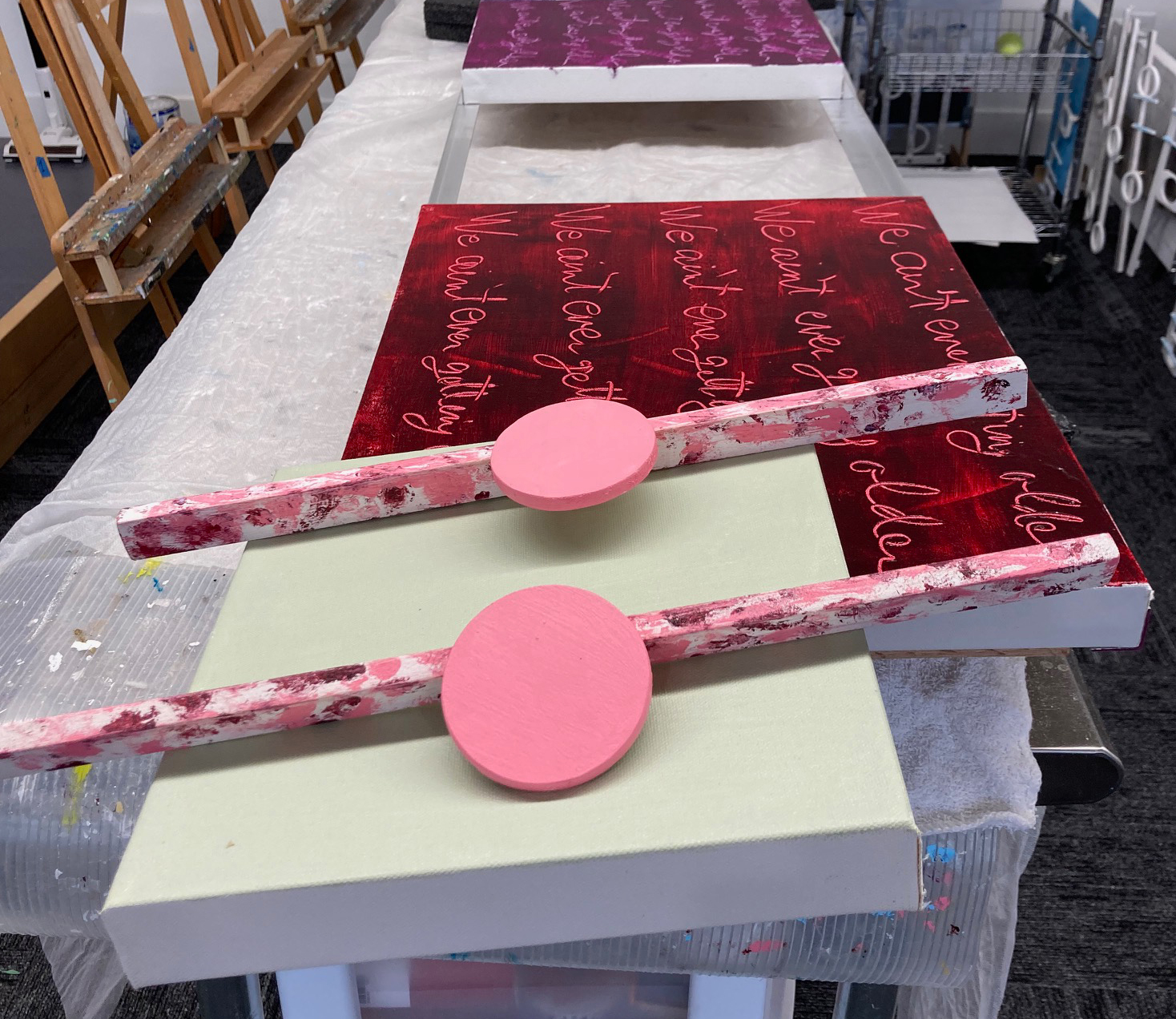
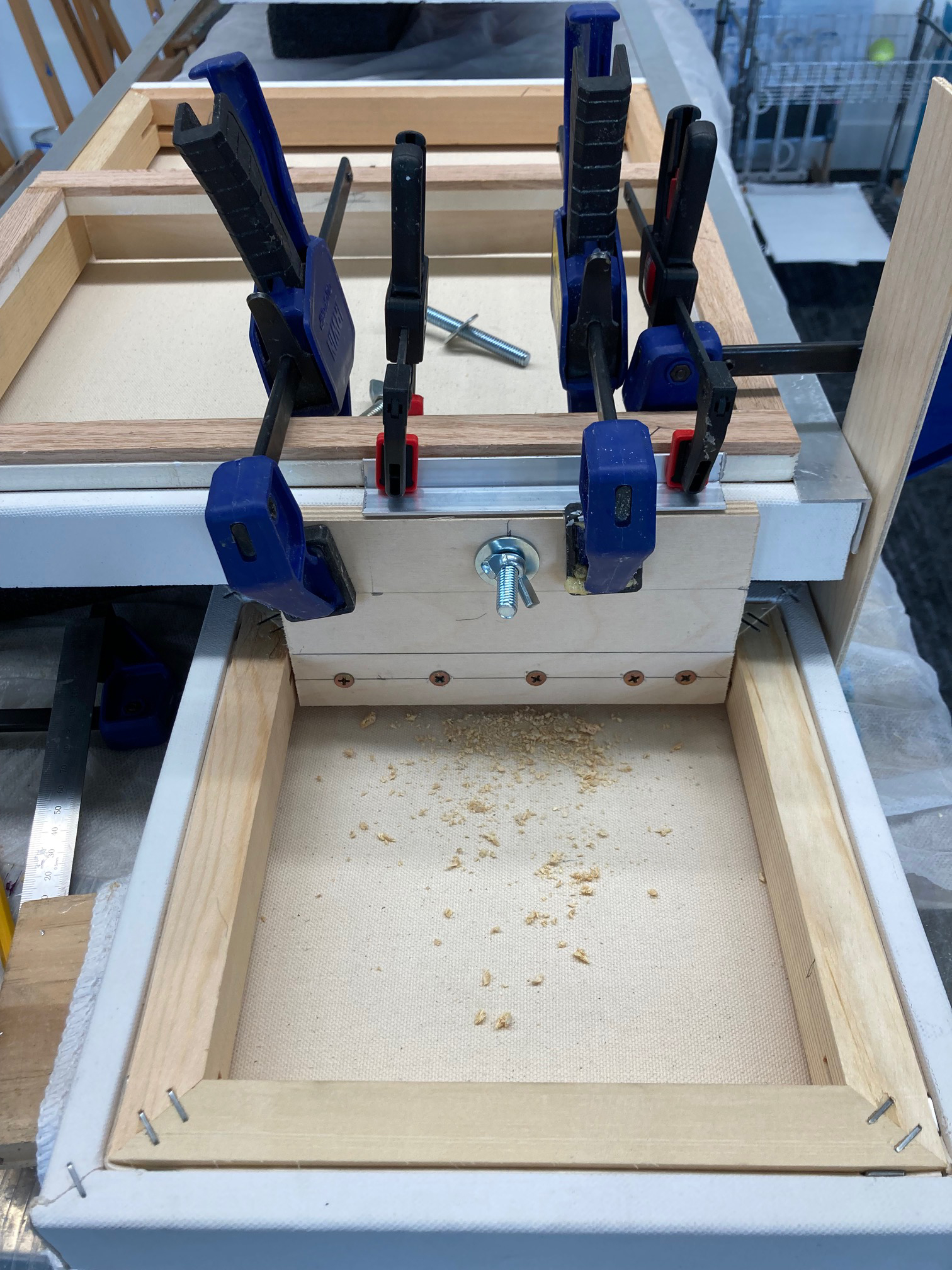
The gallery images above result from my wanting to do something different with the two ten-inch end canvases. In the above image of the artwork, the two end canvases I can easily butt them up against their adjacent canvases. Not only boring having all the canvases in a line adds no depth to the artwork. To develop this artwork I first look at the idea to mount those little end canvases either under or on top of their adjacent canvases. Because of the wording written on the main canvases, and the farming of the speakers’ boxes on the backside, I decided against that idea. The solution was to mount the end canvases high enough above the base canvases to allow the words to be seen. The height needed between the canvases then led to a simple design of swiveling the end canvases shown in the images above.

Finally, the idea of swiveling canvases seems interesting. The concern I see is the difficulty in swiveling multiple canvases, while also maintaining structure stability when hung. This music box I see as a good start and a template to expand the technique of swiveling canvases in future projects. Whether this is another door open or another path found, this project continues the line of incremental innovations in the evolution of this art.

Scott Von Holzen

S_V_H The music box Closer image 1

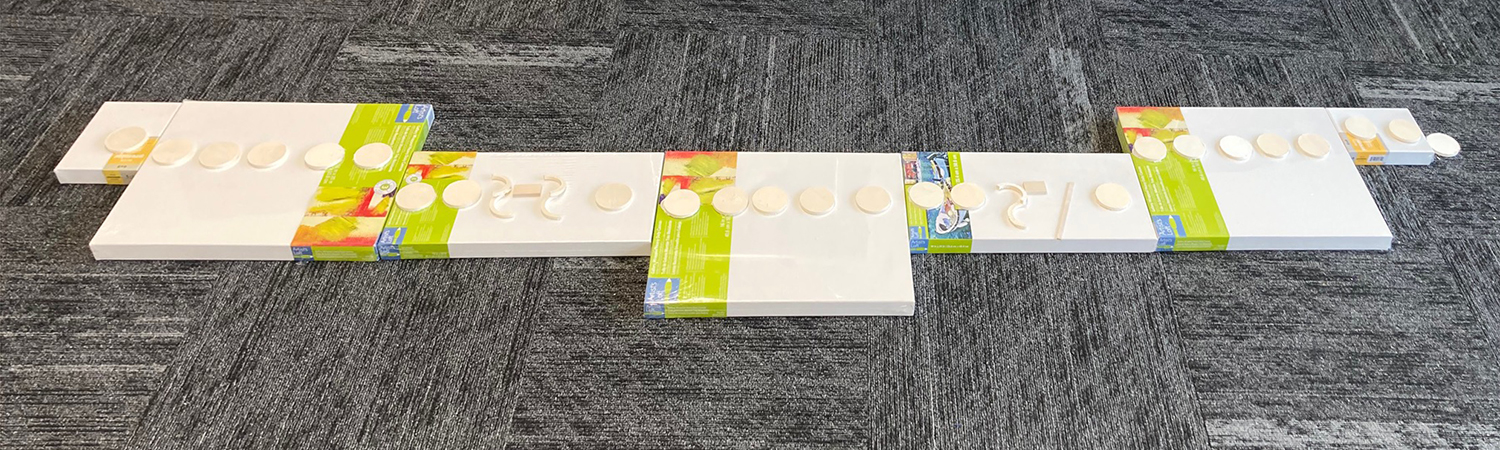
The first layout plan at ten feet works with the 3.5-inch notes I cut out for this project. Then I decided I wanted to include the incidentals.
The second plan increases the length of the artwork to 11 feet using the 3.5-inch notes and adding in those incidentals.
This third design returns the artwork back to a final length of less than 10 feet. I removed two 12 x 24-inch canvases. See the second image. I then returned to my very first image plan using 10 x 20-inch canvases as their replacement. My size constraints required that I cut out all new notes, reducing their size to 3 inches in diameter. A later decision was to replace each of the two smaller end canvases with rectangular pieces of metal.

One design factor for this new work was that its length of 10 feet did not include the speaker boxes. Usually, the added speakers mount onto the ends of the artwork. I cannot do that here because of the requirements of fitting all the music on the canvases and still keeping the 10 feet length. The solution for the speaker boxes was to use the two 16×20 end canvases for the speaker boxes. The musical notes on those canvases I will then place on a curved metal sheet. I showed an example below from Metamorphosis 2. This keeps the overall length as is, while the curved metal sheet also adds depth to the artwork. After taking a longer look at the purpose artwork, I decided I needed to reduce its length, but still retain all the incidentals. I did this by reducing the size of my notes from 3.5 inches to 3 inches.

Example from Metamosphsis2 using curved steel plates.

This is an updated draft of the cover music for the music box Closer. The music has more punch and a better up-and-down flow to the music.

The final artwork will display the three last lines from the cover music. Those lyrical lines are “We are never getting older, We are never getting older, and No, we are never getting older.” I am repeating the repeating idea that I used in the previous project: Don’t Give up. In that work, I wrote those three words probably a couple of hundred times. That many repeats won’t happen here because of the length of the lines.

Include in this art’s documentation, I will attend a reception at The Art Garage in Green Bay, Wisconsin on Friday, the 11th from 5pm until whenever I become bored. Pictures to follow. Of the seven members of EmptyWallsArt, only two Don and I will be there. All the others are attending to “family matters and shabby excuses.”

Scott Von Holzen