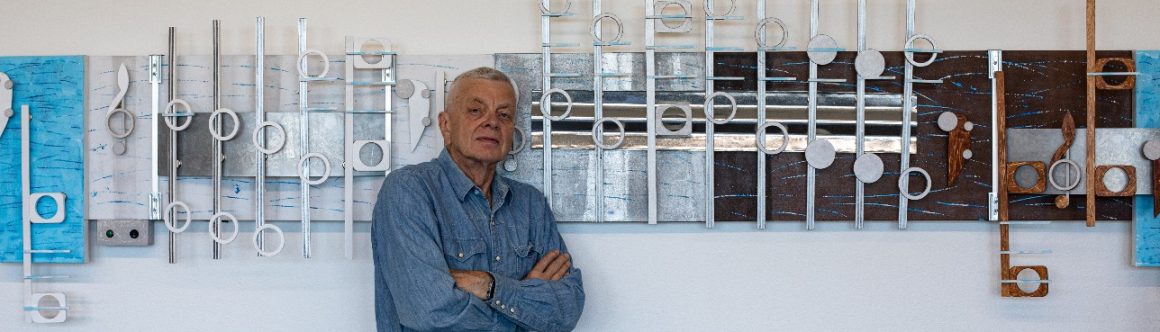
All these different images of My Foolish Heart is an example of the unique assemblage of this art. I number of them are dated currently.

My AI assident needed clarification for this matter, knowing it was about time: In sheet music the music is placed on a staff which shows 5 lines. In my world of notation I do now have any staff or lines. Knowing this art I have decided to explain the difference between ordinary Sheet Music and This Ar’t ‘s Notation in a more formal way. Up next is an explanation for ArtiInMuisic’s approach to musical notation. Explaining the difference and the similarities between what appears to be music on the canvas as notation and standard sheet music.

ArtInMusic Notation: Part of the Story.
Sheet Music and the Visual Language of ArtInMusic
Introduction
There are deliberate differences between standard sheet music and the notation used in this art. After two decades of painting music, here is a summary that will clarify this artist’s approach to notation.
In conventional sheet music, composers arrange musical notes on a basic five-line staff. The staff provides the visual framework that allows musical information to be organized and understood.
In ArtInMusic, there is no staff for music placement. That does not mean the musical information has no placement. The information has been given a different visual structure.
This distinction is important because the notation placed on these canvases is not sheet music being used as decoration. The notation is part of the artwork’s visual language and part of how the song becomes an unique visual art. The more important question is:
What happens to musical notation when the staff is removed, but the music remains? That is what this discussion explores: what remains the same, what changes, and how the removal of the staff allows musical information to become part of the physical visual composition of the artwork.
What Conventional Sheet Music Communicates
Most people who have looked at sheet music know that the notes sit on the standard five-line staff. Even without knowing how to read music, it is easy to see that the position of a note on those lines and spaces matters. But what exactly is being communicated by that position. In conventional sheet music, several pieces of information work together.
Pitch tells us which musical note we are hearing. The vertical position of the note on the staff represents that pitch. A note positioned higher on the staff represents a higher pitch; a note positioned lower represents a lower pitch.
Duration tells us how long that note lasts. A whole note, half note, quarter note, eighth note, and so forth each have their own conventional visual form.
The note symbol carries much of that duration information. The shape of the notehead, whether it is filled or open, whether it has a stem, and whether that stem has a flag or is connected to other notes by a beam all contribute to telling the musician how the note is to be performed. There is also something less obvious but equally important: flow.
The notes occur in a particular sequence. They are not simply individual symbols scattered across a page. They move from connected bars beginning to end, creating the musical line of the composition.
So conventional sheet music can be thought of as a visual system in which:
Flow is represented by the sequence of the notes through the score.
Pitch is represented vertically on the staff.
Duration is represented by the note symbols.
What Changes When the Staff Disappears
ArtInMusic began to depart from conventional notation by removing the five-line staff. What was not removed—and remains today—is the musical information. Instead, the artist gives that information a different visual structure.
Without a staff, a note can no longer use one of the five lines or four spaces as its reference point for pitch. In ArtInMusic, the position of the note on its stem then becomes the pitch reference.
Higher on the stem means a higher pitch. Lower on the stem means a lower pitch. The stem has therefore taken over the job that the staff performed in conventional notation.
The note still carries its conventional duration information. An eighth note is still an eighth note. A quarter note is still a quarter note. The flags and beams still have their familiar musical meaning.
ArtInMusic has not changed the musical value of those symbols. What has changed is where the musical information is located within the visual composition. That distinction is important.
Two Formats — One Music
| Conventional Sheet Music | ArtInMusic Visual Music |
| Five-line staff establishes the pitch framework | The stem establishes the pitch framework |
| Note’s position on the staff represents pitch | Note’s position on the stem represents pitch |
| Notehead, stem, flags, and beams communicate duration | Notehead, stem, flags, and beams retain their duration information |
| Notes proceed in musical sequence | Notes proceed in the same musical sequence |
| The staff provides the visual structure | The artwork provides the visual structure |
The musical information has not been discarded. It has been translated into a different form.
Musical Value and Visual Value
That is why the artist, Mr. V, sees value when looking at his notes and not a staff. In this context, “value” is not being used as a replacement for the established musical terms pitch or duration. Those terms already have precise meanings in music.
Mr. V in ArtInMusic is using value in an artistic sense: each visual element contributes its information from the music?
- A note’s vertical position has value because it tells us its pitch.
- The note’s shape has value because it tells us its duration.
- Its position within the sequence has value because it contributes to the musical flow.
- The position of the entire stem within the artwork can have another kind of value: visual value.
This where ordinary sheet music becomes art.
The Freedom of the New Format
Once the five-line staff was removed, it still took a decade and more of finished artworks to decide it was no longer necessary to keep every stem within the rigid visual rectangle of conventional notation. The artwork, displays such change. The stems in a group or individually can be moved. They can also occupy different areas of the composition, as long as they stay true to the flow of the original music. The position of the music notes then becomes part of the artwork’s architecture.
In My Foolish Heart, for example, the arrangement moves visually in many directions. Some stems rise while others fall. This late composition does not look like a traditional page of sheet music.
All of this is intentional. The artwork is allowed to have its own visual rhythm. Yet underneath that visual freedom, the musical information remains connected to the original composition.
- The pitch remains accurate.
- The duration remains accurate.
- The sequence remains accurate.
- The flow remains the flow of the original music.
The Central Idea
What has changed is the format in which those things are presented.
ArtInMusic adheres to a song’s music. What Mr. V changes is the look of the visual language in which the music is presented.
Traditional sheet music organizes musical information around a staff. ArtInMusic artworks organize that same information within a staff-free visual composition.
Sheet music primarily helps a musician perform the music. ArtInMusic creates artworks to transform music into more than just a song map. ArtInMusic lets people see, explore, and experience the music as visual and performance art.
A Final Way to Think About It
Ordinary everyday sheet music is like a studio recording of the music. ArtInMusic’s Mr. V’s form of notation is more like a live performance.
Working principle: Same music. Different visual language.
(AI assisted but heavily edited by Scott Von Holzen to maintain personal style and flow.)


AI-drafted thread summary, When Sheet Music Becomes Visual Art, edited by Scott Von Holzen
_______________________________
Scott Von Holzen
__________________________________________


