S_V_H Dance Monkey final

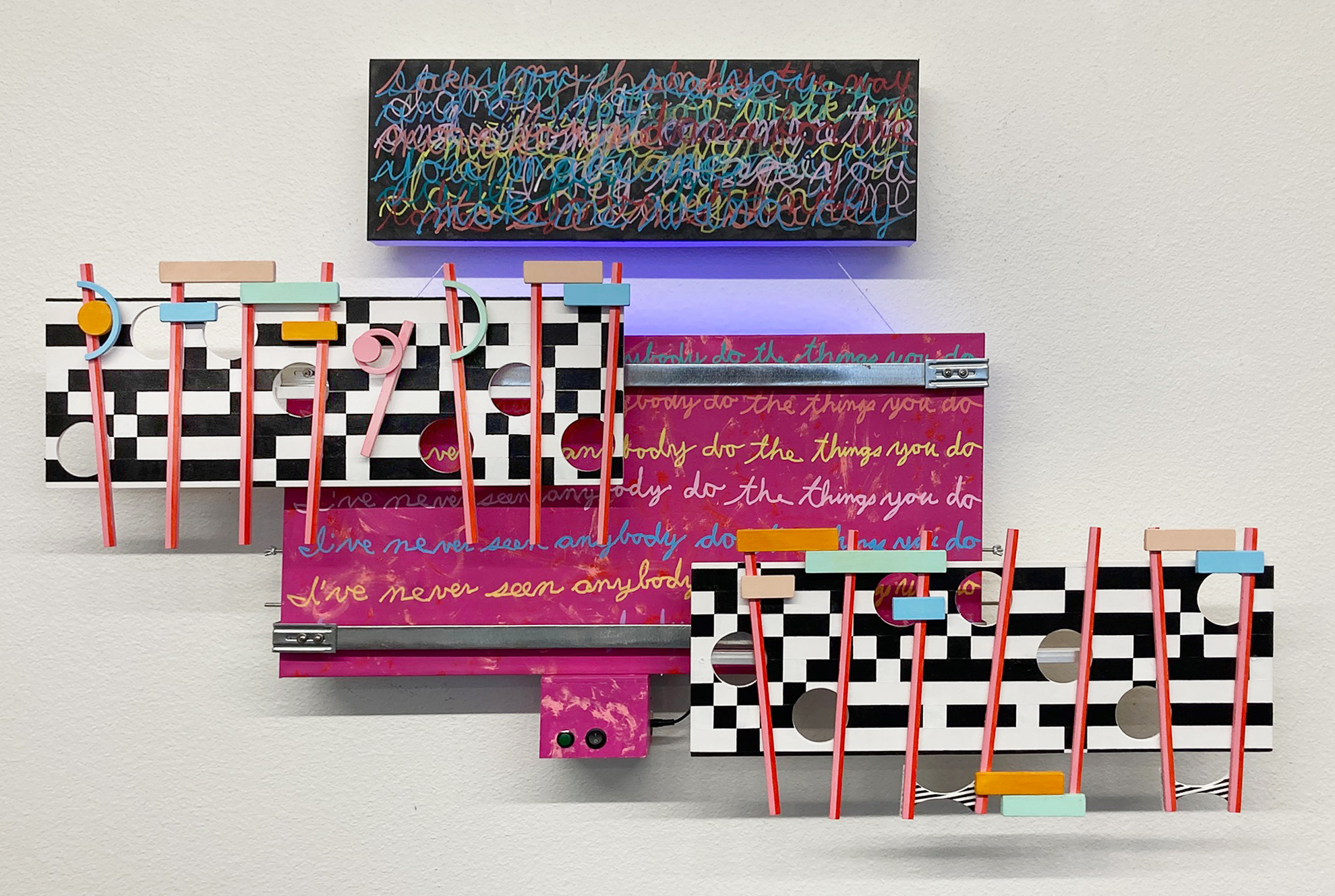
Dance Monkey ≈L51″xH33″xD6″ The artworks musical notation follows the words: “And when you’re done, I’ll make you do it all again.”

Dance Monkey project took over three week to complete. Creating an advanced draft, and then a finish version of the artworks cover music took three days. The rest of that time, was spend solving a number of issues related to the design and the performance of these mini works, plus updating the stereo system on Cheap Thrills. I also put together a new LEDs lighting system for these mini works and an alternative amplifier option. Time was also used up fixing a number of construction bugs for this series of artworks. My goal for time spent to complete these small artworks is two weeks.

Before photography, talented painters where payed to produce ever growing realistic two-dimensional images of a three-dimensional world. Throughout the history of western art from the thirteen century into the twentieth century that is how they made a living. Then there was a change with the invention of photography and the portable camera that made realistic images easier and cheaper to produce. Painting, then had the opportunity to diversify its purpose. Notable artists like Wassily Kandinsky contributed to the creation of abstract art. But, for me, I would look to Pablo Picasso’s 1907 artwork, Les Demoiselles d’Avignon, as the first important painting of the twentieth century. In 2015, I saw this artwork in person at MOMA in New York city. I remember nothing about that moment, but luckily my good friend Tom Haley took the image below. I have read that Les Demoiselles d’Avignon had few admirers, including Picasso’s fellow artists. Les Demoiselles d’Avignon did not sell until 1924. MOMA purchased the artwork for a modest $18,000 sum by selling a Degas painting and donations in 1939.

I feel a connection between Les Demoiselles d’Avignon and my art. I see Les Demoiselles d’Avignon as a major artwork that was not made to be a quick turnaround sale by Picasso. I think Picasso created Les Demoiselles d’Avignon to make a statement and to change the course of art history. He certainly did all that and more. This art from day one was also never about sales. Instead, its end goal still is a more humbled realistic butterfly effect on future art. This quote by Richard Serra represents my sentiment: “Good artists impress the viewing public, while great artists impress their fellow artists.” Right now, my only connection to other artists is our art group. And their art, as I now expect and am perfectly fine with, is focused on impressing the viewing public. That is where the sales are. My take is: where their art stops mine begins.

On the drive over to a wedding with my wife I was playing softly my favorite music on Spotify. It was like listening to Muzak. I felt nothing coming from the music. I think music needs to be felt to be heard. At the wedding dance for 300 people the DJ music got louder as the night came on. Even though, again, I recognize the music all I actually heard was throbbing bass. All the other instruments sounded like a mix of blaring white, pink, and brown noise. I certainly felt the music, but did not hear it.

When this art is on display, the dilemma is the volume of the artworks. No matter who is in charged the artist’s preferred volume set in the Studio will need to be adjusted down for any public display. To help set the volume at public events I dug out my old sound level meter from Radio Shack. I put in a fresh 9 volt battery and this analog device, of course, worked. I use the meter to test and set a base reasonable volume in my Studio. I found that to be around 65 decides with spikes into the seventies. It can be louder but for this artwork those settings are enough that I can hear the music. I can feel the music.

With some experimentation and feedback from my last exhibit I am going with a gallery setting from 50 to a peak of 60 decibels. The sound meter manual states those levels would correspond to the residential to background music setting. Any volume lower than 50 number did not work for me. I am capping spikes at 64 decibels. I take all the measurements about 30 inches back from the artwork. This is only a starting position. I certainly know when hanging these works in either a private or public spaces, there will always be the threat of turn-it-down. In those moments I will do just that while hearing in my head the voice of Meat Loaf saying: “If it is too loud you’re too old.”
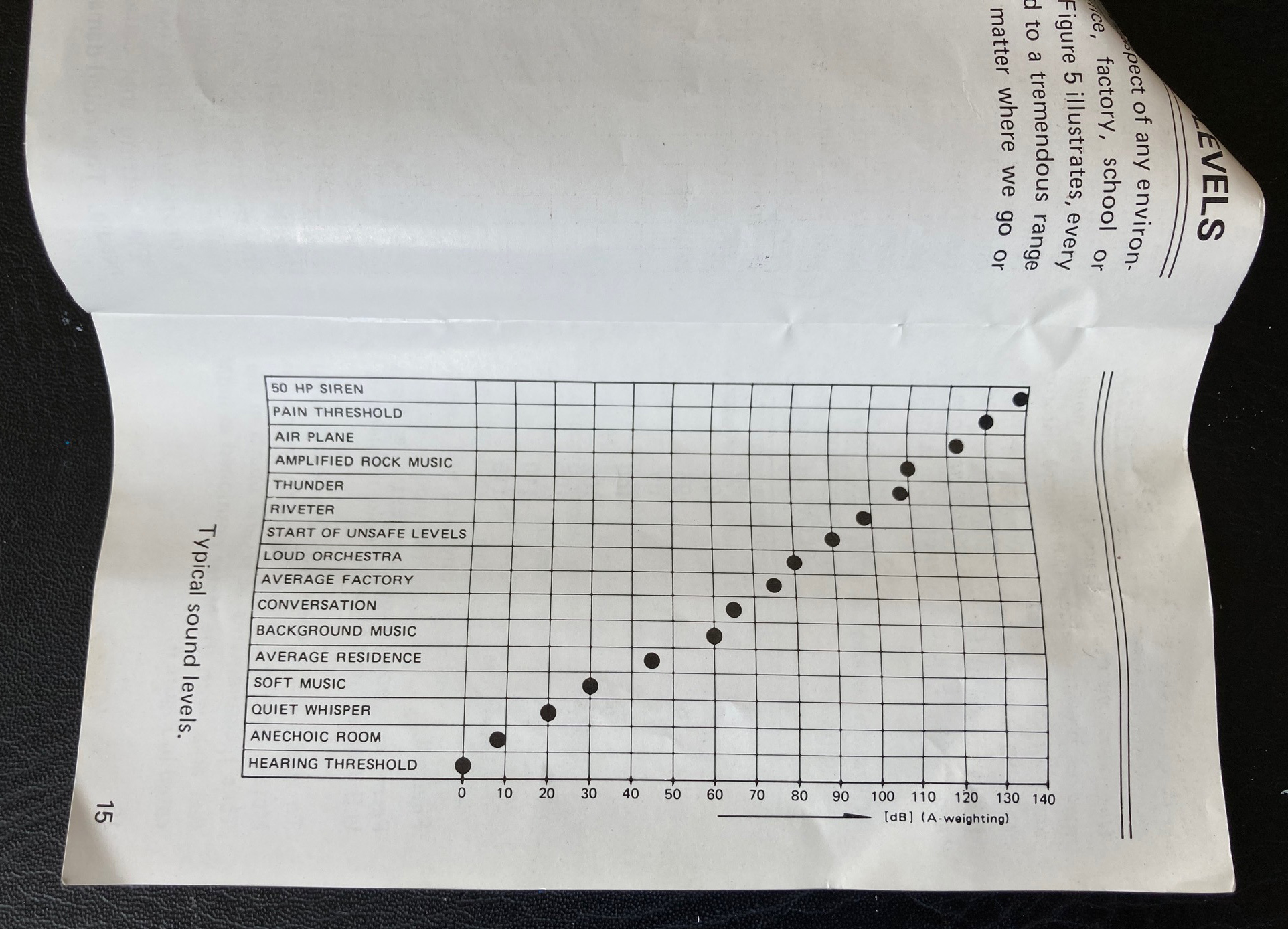
Sound Level Meter manual

Using the sound level meter, I have found a strange effect I am unsure of. When I compare at equal volumes, a better quality stereo system to a lesser quality system, the sound from the better system sounds consistently louder. The difference may be the quality of the sound being reproduced. Therefore, here is the mp3 of the music box music from Dance Monkey. Since a listener is not in the Studio, it’s okay to set the volume of Dance Monkey at a level depending on the quality of the stereo system. Find your level for this music needs to be felt to be heard. Although, in the Studio, my music varies in volume, quieter in the daytime, louder into the night. No sound level meter needed.

Dance Monkey final Music Box cover

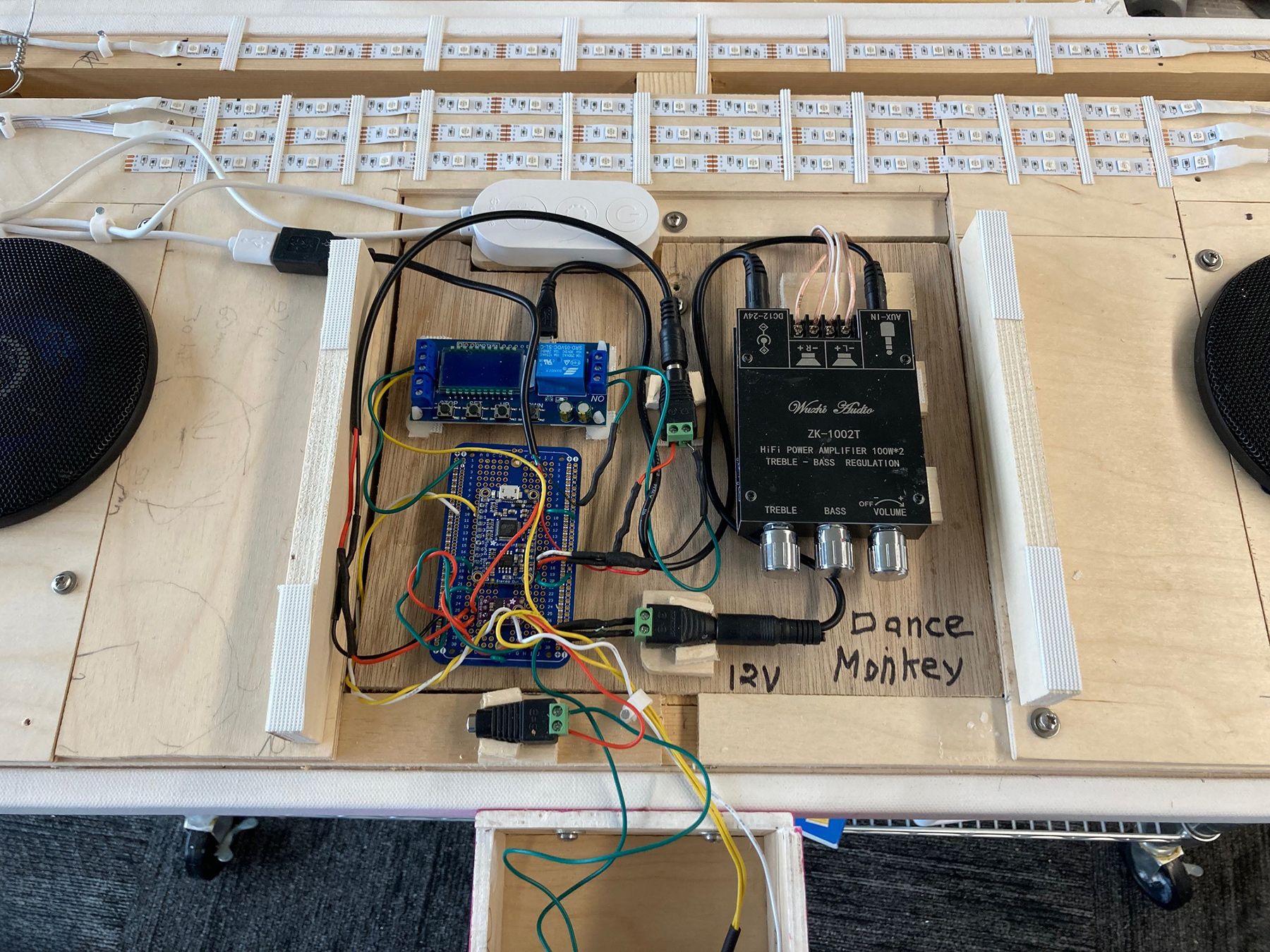
This is an update on the previous artwork Cheap Thrills. The images below show the upgraded Cheap Thrills stereo system, and a test amplifier I used on Dance Monkey. In my comparison testing, setting the volumes close on both artworks, the differences surprised me. Some of this might be the music, but the sound coming out of the Dance Monkey amplifier system feels to me to be wider, with better separation between instruments. That may be because the test amplifier has both treble and a bass controls.
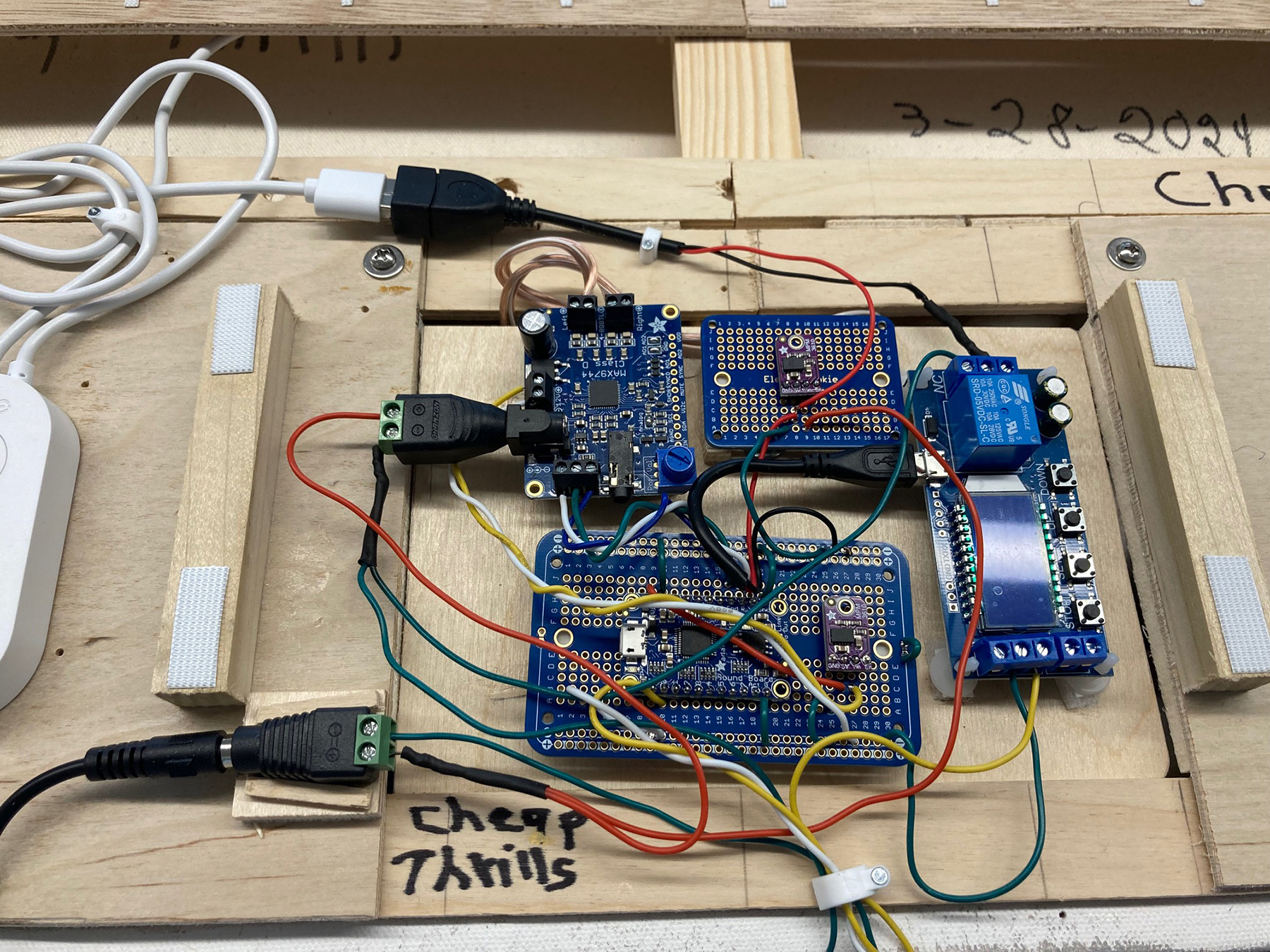
Cheap Thrills upgraded 20watt stereo system. Amplier is on the upper left.
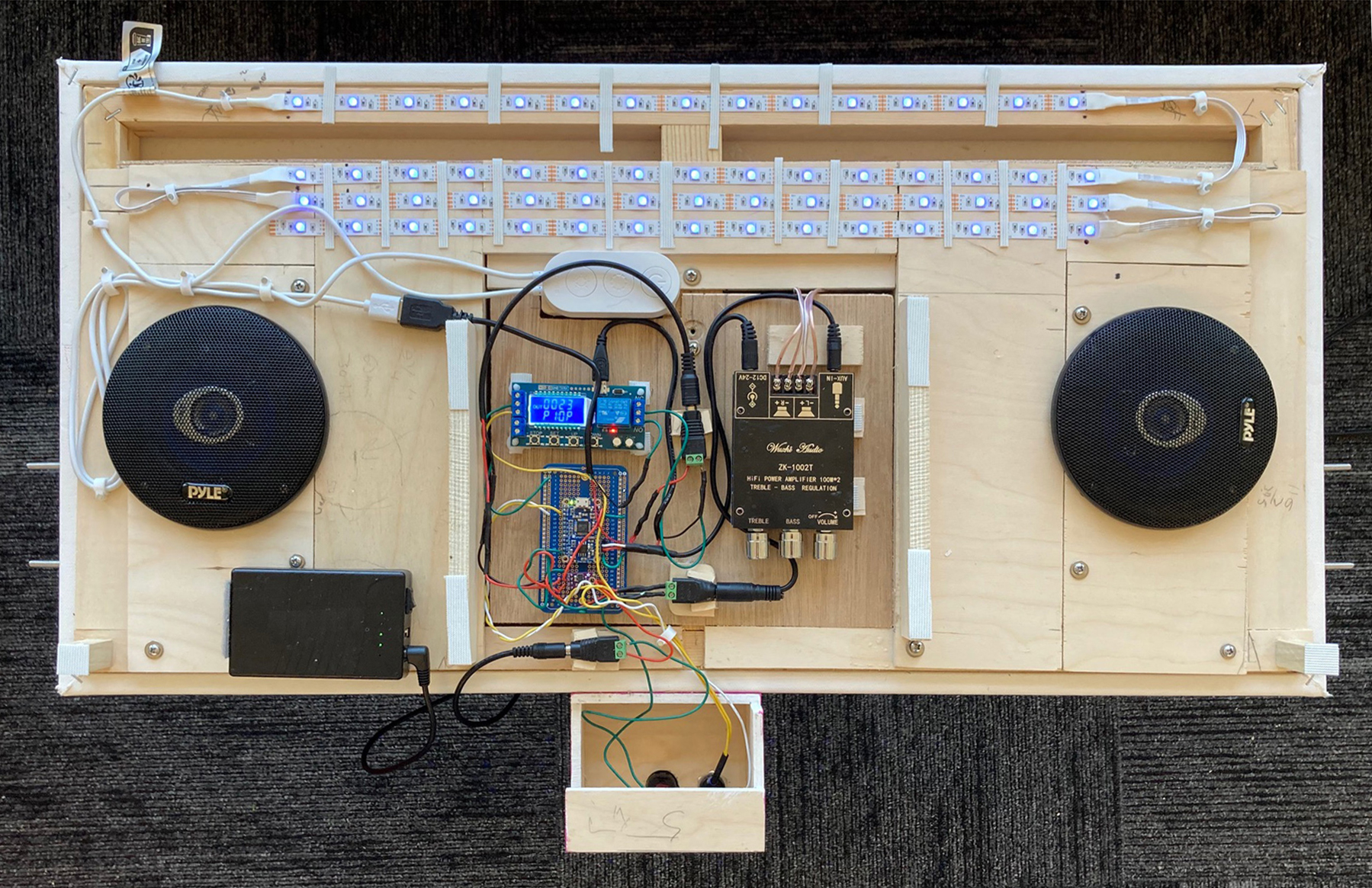
Cheap Thrills 100watt stereo system. Amplifier is on the right.

Originally, the artwork Cheap Thrills came with a 2 watt stereo system for the cover music that is under one minute. I thought this would save time and money over a 20watt system. I thought the 2watt system was appropriate for these mini styled works. I was wrong. In short, the 2watt stereo, even at its maximum volume of 60 decibels, lacked clarity, separation, sound depth, and detail. The 20watt upgrade resolved all those issues and made Cheap Thrills cover music sound almost as good as my major and much larger works, which have cover music limited to a length of a minute and a half.
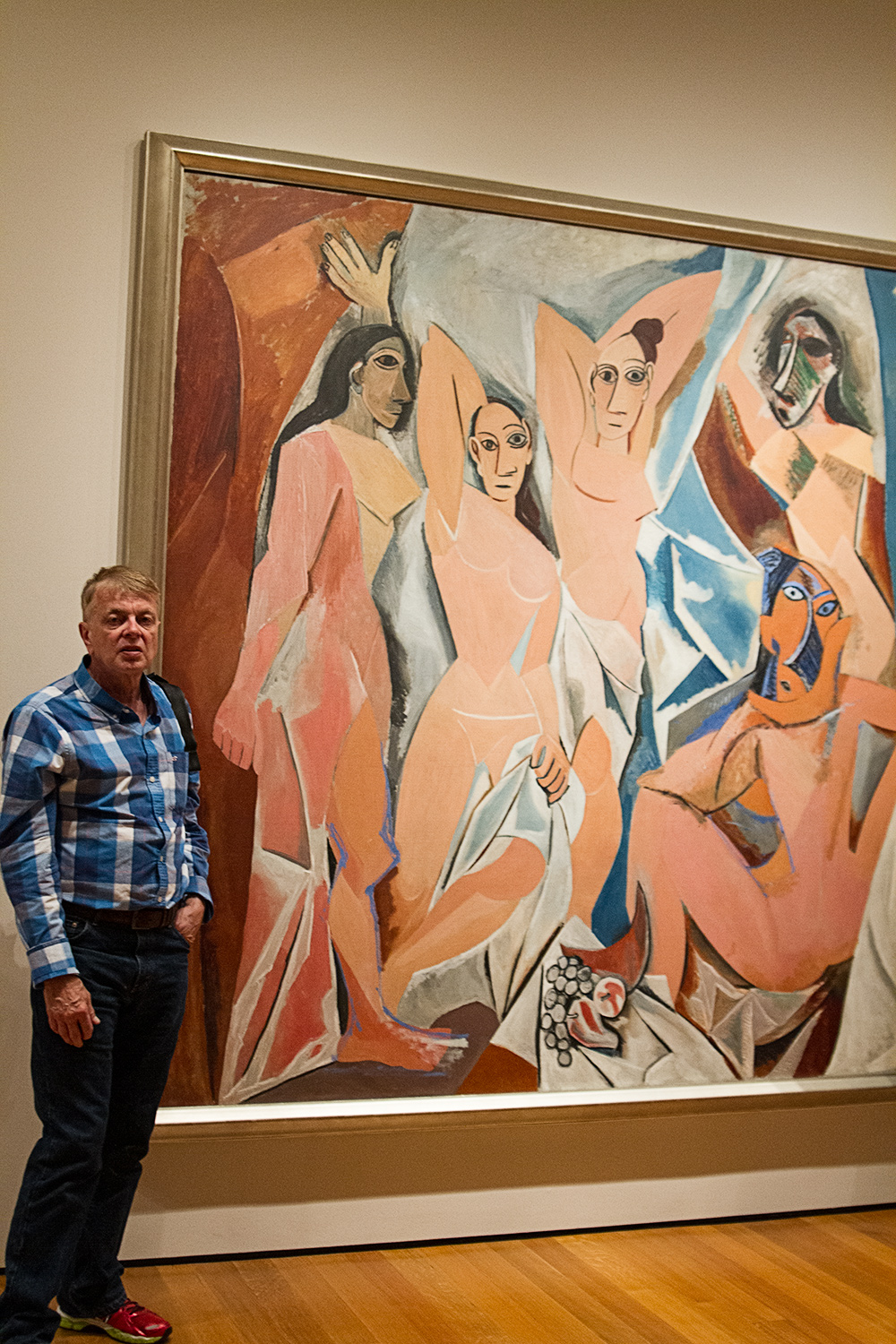
Les Demoiselles d’Avignon 1907 MOMA 2015 photo taken by my lifelong friend now passed, Tom Haley

Next Music Box project is called Fast Car. Tracy Chapman wrote and released the song Fast Car in 1988, Luke Combs recently covered it, in 2023.

Scott Von Holzen
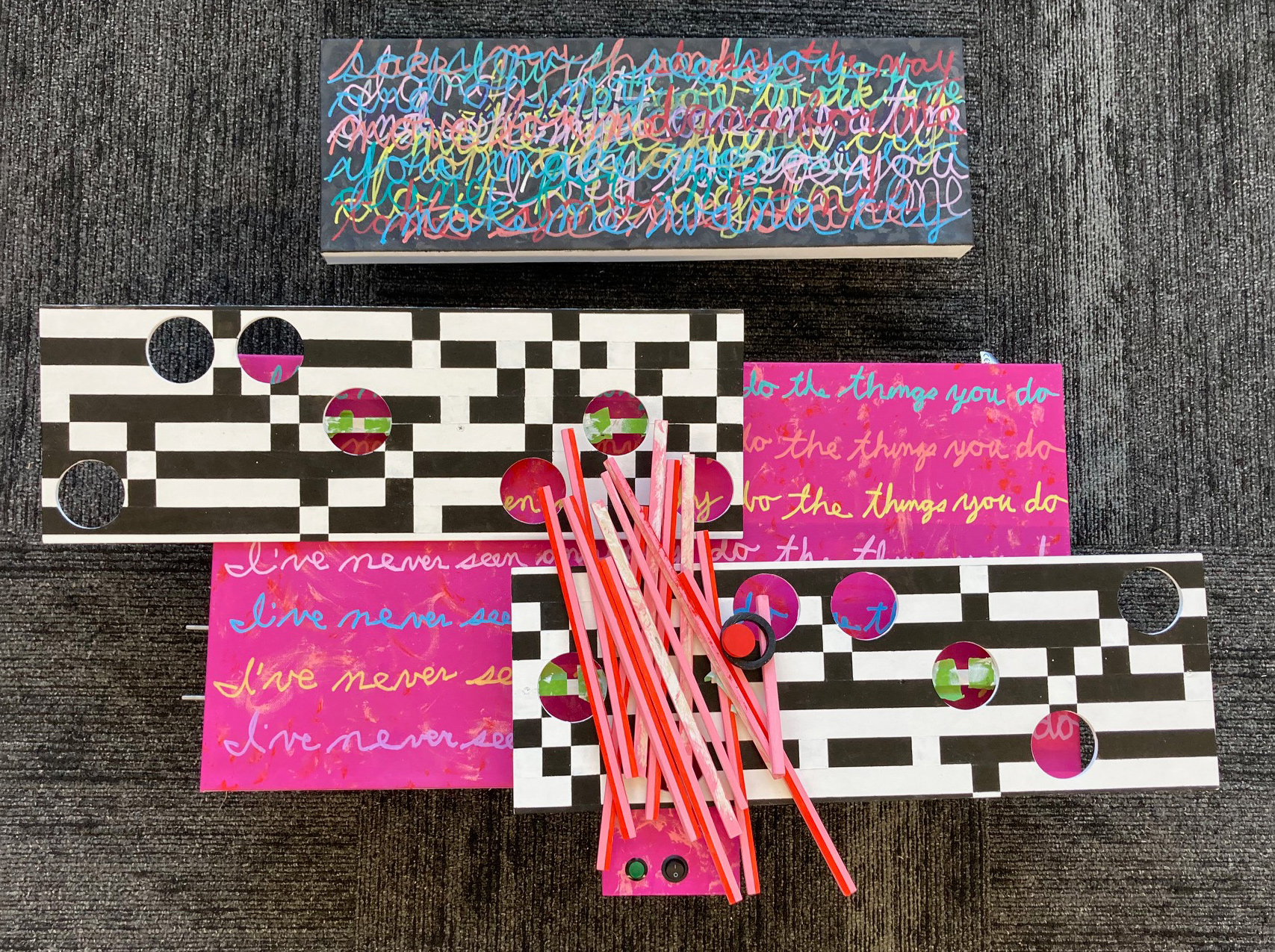
S_V_H Dance Monkey 2nd image

Dance Monkey
The backside of Dance showing the replacement 100w amplifier I found to replace my 20w that is back-ordered.

My choice to become a visual artist began after looking back at 500 years of western painting, and finding a different way to represent it. If that had not happened my other options would have been a return to photography (Ansel Adams) that I had pursued for decades, fall back on my passion for poetry (Robert Frost & E. E. Cummings, or writing (Ernest Hemingway) that drove me in my twenties. Instead, I am making this new path by creating distinctive portraits of songs. These mini music boxes are now the latest step forward in this journey. Once, resolving production issues, their smaller size, and therefore shorter production time, will make them less of a risk in time spent and in artist project fatigue. These mini works should also double my yearly production, making more current art available to show in more exhibits and galleries.

Hearing the words left, right, in the video below, when testing a new stereo system install, is a relief knowing that all the soldering and wired connections work. This first test came about because the company where I have bought the 20watt amplifiers, that I have used for years in all my major artworks, where out-of-stock. That lead me to look for a backup replacement amplifier.

First tests of a new optional amplifier. The Adafruit sound board comes with a default sound file used to tests the speakers.

I had a major crossroad back in 1993. That was the year the tourist motel up in Northern Wisconsin that my wife and I managed, sold. We went from “Scott and Barb from the Lake Aire motel” to “scott and barb,” living in a neighborhood. It was in this transition period that I earned a two-year degree and went to work at a paper company as an IT support person. This is where I meet the maintenance crew that I supported.

Eric Clapton and Cream

The maintenance workers lived with the idea that if you wanted something done, the cheapest and the best quality would be if you do it yourself. During my time at the motel I outsourced all the needed improvements. Now working as an IT guy, with its modest income, I reluctantly realized if I wanted home improvements, I would have to do the work myself. That choice started a learning process helped by the advice and guidance of my friendly maintenance crew. What I achieved then now years later has helped me build better art. That was a major crossroads that I luckily chose.

Recently, I stumbled onto another crossroad, which showed up in a note I wrote that I later shared with my therapist. The scribbled message read “…everything would make sense up to this point if this art sold.” That got me to thinking: how do I justify my new large expensive studio, all these many years of time, and incalculable amounts of monies spent, that to this day eighteen years later, there is still no definable market or interest? Of course the answer is I can’t. But the note’s stark question, offers an equally stark answer. Even my therapist thought selling art to whomever wanted to buy was the way to go solve (my words) artist’s frustration exhaustion. I had made the point earlier that my wish was to sell to collectors.

I need sales, became my thinking at a time that I began producing smaller, cheaper, more home owner wall friendly works. The original purpose of these mini works was to help slow down my tight storage issues. But now I see their size, quality, and lower pricing as a as a fresh approach, ignoring all the previous promotional attempts. Another understated advantage for smaller sized works is that they will be visually a better fit with the other members of our artist collective, EmptyWallsArt.

Although I do not have numbers from talking, I feel most of my fellow member artists sell fairly consistently. Still, they joined the collective, looking for more opportunities to sell their art. Overtime I realized that their practical focus was to make art that sells. When I first help create EmtpyWallsArt, my naïve reasoning was it was all about creating original art, that would then catch the eyes of high end galleries, that would then sell the art. But that may not be what they were thinking. Speaking for myself, I see the membership’s current obvious desire is to create more art that sells. That got me thinking. Maybe I should stop (it was not working anyway) trying to convince the group to go crazy creative. Instead, I wondered if I should follow them instead, knowing what I wrote that sales make sense out of all this art thing.

The collective comprises members who need to sell art to make a living. Others appear to want to sell to supplement their income. Until I read my note to the therapist, I felt I did not fit in either group. What helped me to choose were my current projects of smaller, less expensive, and more viewing public orientated artworks. Changing my thinking to that of the supplemental sales group meant I was taking the note seriously. But soon there surfaced the omnipresent reminder of who I and this art were all about. Once again, I found myself at another crossroads. Should my directional choice be Dire Straits or follow the advice of Oliva Rodrigo?

Dire Straits – Money for Nothing
Olivia Rodgrigo – Bad Idea Right?

Oh well “Fu#k it. It’s fine. Stay the course.”

Scott Von Holzen

S_V_H The guilt of Art & first image of Dance Monkey

Dance Monkey first image Length currently 44 inches & variable
Dance Monkey’s debut in America

There I was in a recline chair, staring up at your standard office speckled off white tiled ceiling, with a large four blub fluorescent light focused on me, as if I was there for an interrogation. But not so. I was there for my twice a year dental cleaning. My dear in the headlights look found me noticing a round yellowed framed eight inch speaker playing some forgettable country song that was almost discernable. I mentioned to the dental assistant in between, water splashing all about my face, about the music. She was not a county fan. Later, as we waited for the doctor, she asked me what I was doing after this appointment.

I said I was going back to the studio and work on my latest project, Dance Monkey. I then asked her if she had heard of that song. She said no. I then wondered to her if she listened to music at all. She responded only on the radio. I said that was too bad, telling her that music is an important part of my life. That I listen to music throughout my day, no matter what I am doing. She said she listens to music all day at work, so when so goes home there is no interest. I then spoke to her about my regrets hearing that and listed some of the many emotional attachments I have with music, including sadness. She did not understand sad. But I do. Music makes those moments special, and so does the uplifting sound of Dance Monkey. I told her to listen to it and it would make her feel good. I said the song would bring her joy, and boast her spirit, in so many words. She then took her phone and went to website YouTube and play it. When the voice of Tones and I came on (that is the singer’s stage name) she had a sharp eye opening surprise on her face. Just moments later, the doctor came in for his quick check. I mentioned to him he should also listen to Dance Monkey for a cheering up. They both kind of laugh, but looked more confused. He left the room. Soon I was out the door, in the car, back with my music, turned up beyond my wife’s tolerance, and thrilled I was out of that environment and back in the arms of my music’s emotionally comforting embrace. I sense relief and exhilaration that a trip to the dentist had supercharged my ride home. I feel blessed. Blessed by that ride home surrounded my the music I loved, in what could have been just an ordinary musical drive back to work Thursday.

This is the first draft of the cover music for the Project Dance Monkey. From this cover’s sheet music, I chose the notation that will sampled on the artwork.

Scott Von Holzen