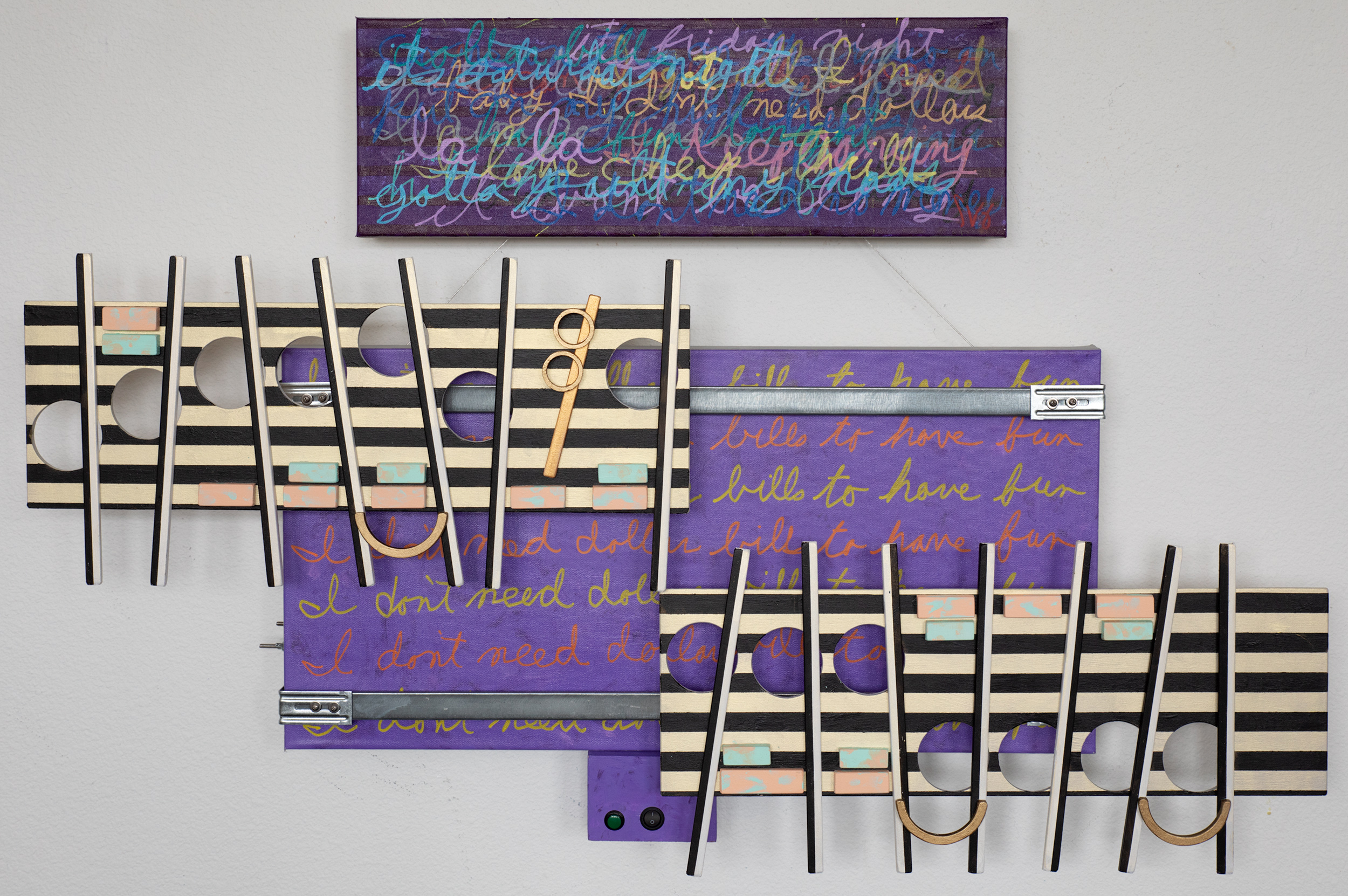
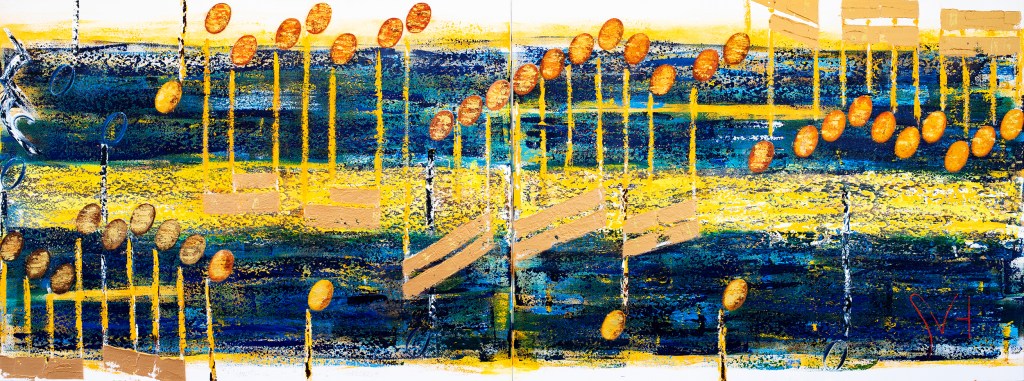
What thrills me first about cheap thrills is the time saved when I only need to cut out circles to represent the artwork’s notation. And even more important thrill is I like what I see on the canvas that hangs the artwork. That eight by twenty-four inch canvas has multiple layers of spaghetti like words that appear to be a word salad of semi-abstraction. I place words on an artwork from the lyrics of Cheap Thrills to help bind the music to the artwork. That is why on the main canvas, my clumsy cursive writing is fairly legible.
For this mini artwork to accommodate my attention rule for mini artworks, the cover music length must be under one-minute. This requires extra shrinking down of a song, while retaining as much catchy melody as possible. The Cheap Thrills cover is 51 seconds. I compose, modify, and adjusted this cover on my desktop computer using a quality Bose speaker system. With it I can hear all the subtle differences in the sound, especially when I turn up the volume. This range of volume of the Bose system helps me to create a decent sound track for each artwork. But apparently, installing the cover music on a small 2-watt stereo system powering 4-inch 2-way speakers wastes much of the effort. I found that the 2-watt system’s lack of volume range weakens all the subtleties of the original cover sound heard on the Bose. Even the effort to maximizing the volume, no clipping, the 2-watt stereo system has no punch compared to the 20watt systems on my large artworks. On these small artworks the cover music plays out to the listener at around 60 decides. That is comparable to light conversation. Although disappointing to listen to as music, these mini works, besides their boutique portable size, play their cover music at a volume level that should not offend any listener’s ears, and be enough for most moderate sized rooms.
Not irrating the listener I found has been an issue with this art. For example, when I was picking up a large artwork after an exhibition, the curator told me that my music echoed loudly in the gallery. Obviously, this is a gallery that prefers its art to be seen but not heard. Then recently my volume issue came up when setting up the large Beatles triptych at another exhibition. That curator asked me to turn down my powerful 20-watt music boxes to conversational levels. She tested it while I adjusted the volume. The Beatles’ music lost much of its bite, its presence, and its purpose. I did not like that, but had little choice. I understood her requirements but disliked the idea of big artwork having little sound. The balance is all wrong. The good news for these mini artworks is that my volume issue should never be an issue with them until it is. Their meek sound is okay if it balances well with the dinky artworks and the stupid standard of a visitor’s conversational levels.
Here is an modified version of my Instagram post of Cheap Thrills. And yes it is silly, but here it is anyway.
Okay, after watching that YouTube video, I think I have had my fill (actually emptiness) of the audio from a 2watt stereo. The music that was playing in order to sound more normal sounding awful, I doubled the volume (increase was 10.37 decidable). I had first tried to increase the output in the software for more volume and a deeper sound, but found I had already reached the system’s limits. That is when I realized I had also reached my limit. I will update the audio on both this artwork and the other mini artwork, A Day in the Life, to the much better sounding, 20 watt system used in all the major artworks. I have another reason for this change.
I limit the cover music length on mini artworks to under one minute. The issue I found was my effort on these mini artworks audio is as time consuming and detailed orientated as the longer cover music I create for major artworks. That is because I care deeply and respectfully the music I am portraying. Therefore, why should I listen to my hard earned cover music sounding weak, tin can like, and totally lacking depth? I cannot justify that compromise any longer. I am done with 2watt audio systems. Once updated, these two mini works will have the option of actually have a range from soft to loud. This allows me to balance the sound and the art in its space. It is a good feeling that I can finally let reality return to the surface. I am eager to ride the next available wave to see if these mini works can truly float by themselves.
The artist Sia released this “bouncy party anthem” in 2015. This music continues its popularity to this day. Cheap Thrills is big, with almost 1 billion video views on YouTube, and on Spotify, Cheap Thrills has played over 1.7 billion times. Definitely a catchy pop song. In choosing what music to paint I take popularity into consideration. More important, the connection to the music’s rhythm along with the music’s lyrics plays a greater role in my choice of spending weeks turning music into an artwork. I did not know who or what Sia was until now. I ended up listening, for the first time, to other music by her. The quality of her music, lyrics, and video performances convinced me that Sia is cool.
Sia video on YouTube of Cheap thrills
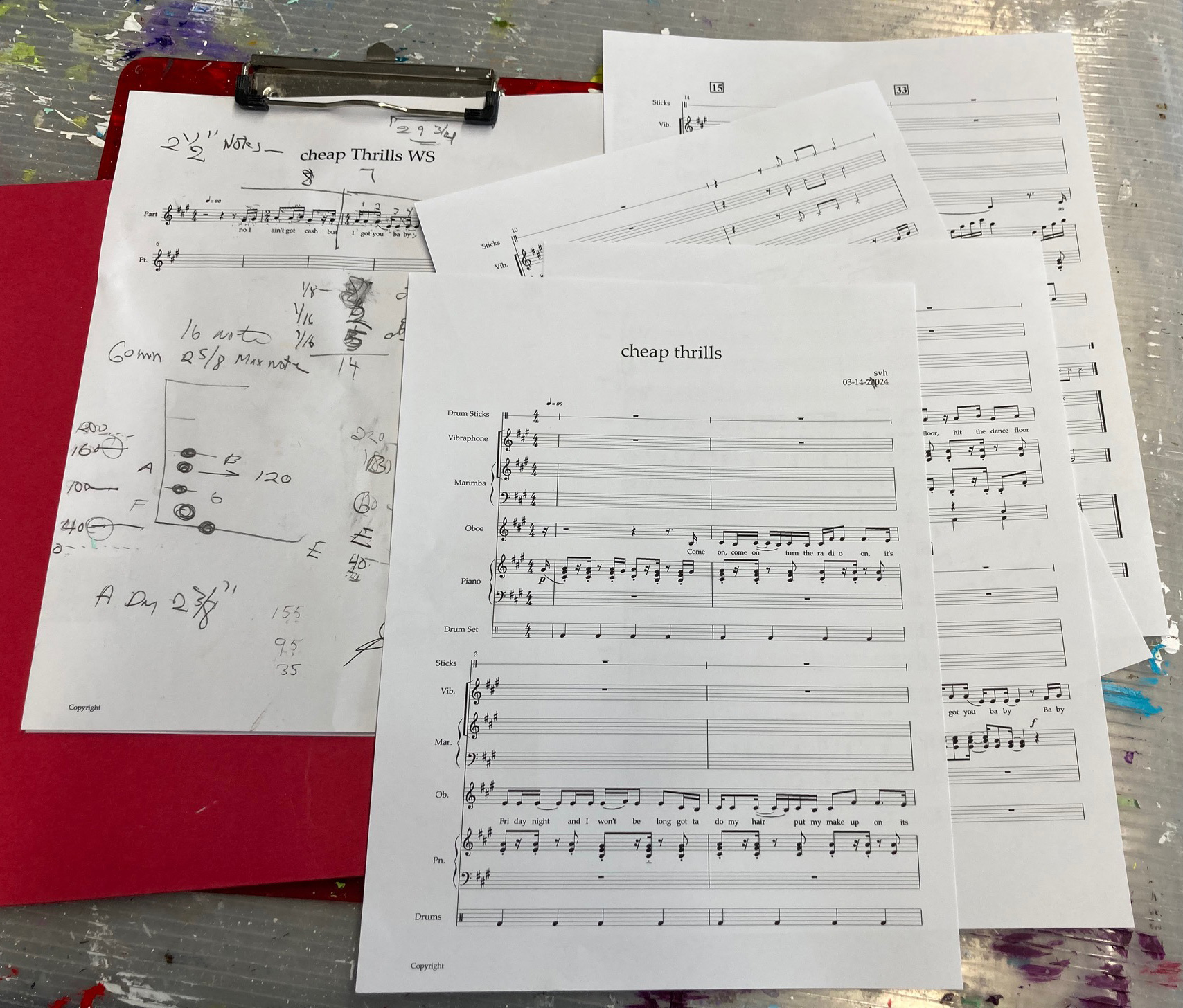
Cover music & Work Sheet for Cheap Thrills, March 14th
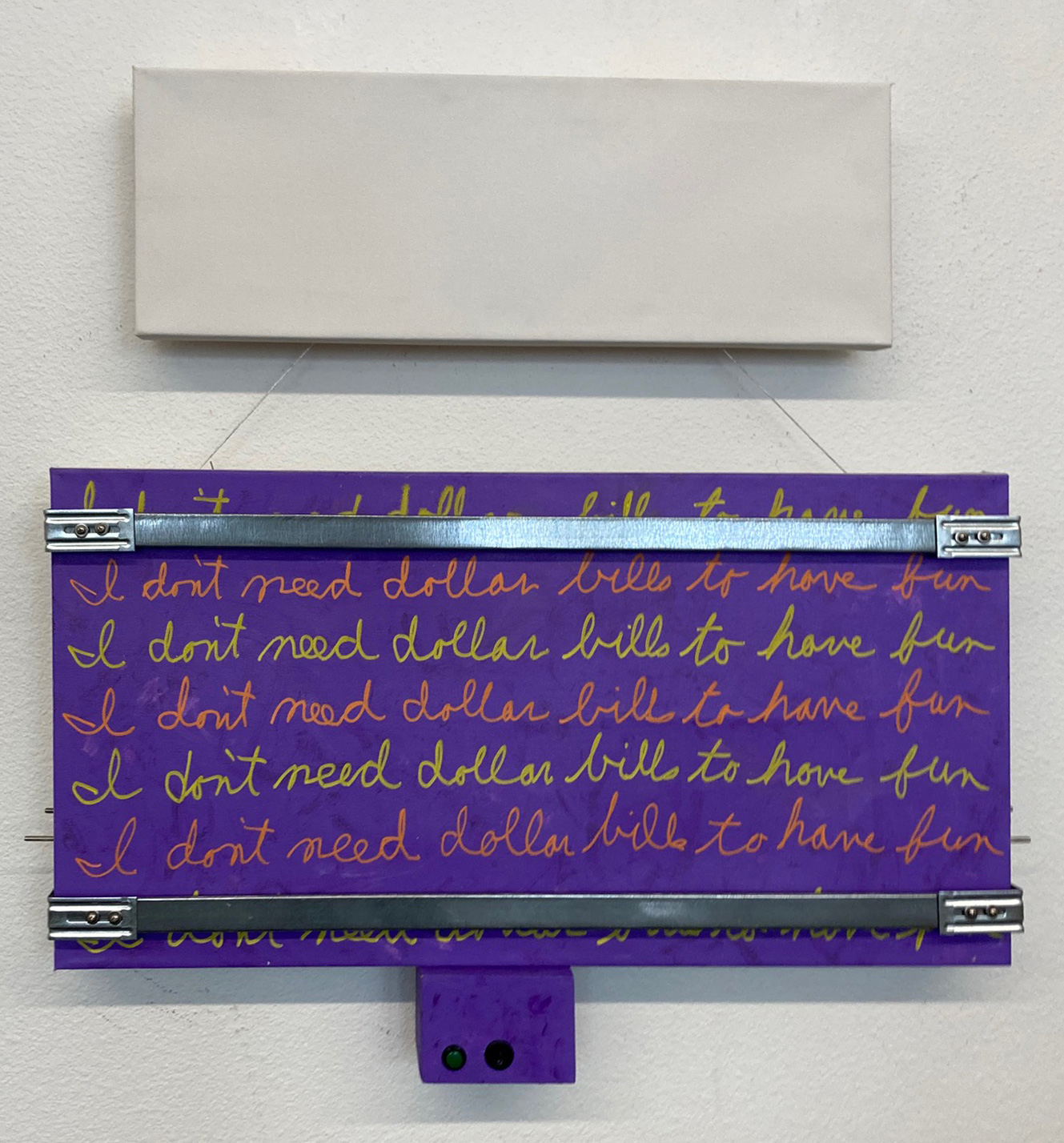
Cheap Thrills March 19th
Cheap Thrills is the second in a series of at less eight dinky artworks. Smaller size works will improve my applications chances for one-person exhibitions. My guess is I will need a minimum of ten examples of this art to show. I hope that eight tiny works along with two larger artworks will fit (it will be tight) in our Jeep Cherokee. Because each of these artworks plays the music they are portraying, and to fill blank wall space, my exhibition request will be to space all the artworks six to eight feet apart. It is important to separate the sound of the music. If the wall space is available, I would like to hang one larger work between two smaller works on each side.
As mentioned, this song is big, and in that thinking the artwork and the music box should have also been big. Instead, it is small, and so will be the music. That is a compromise I made to improve the possibilities of showing this art. “Show,” that one word, is the key to moving this art out of the studio. Look to Show, apply to show, show, show.
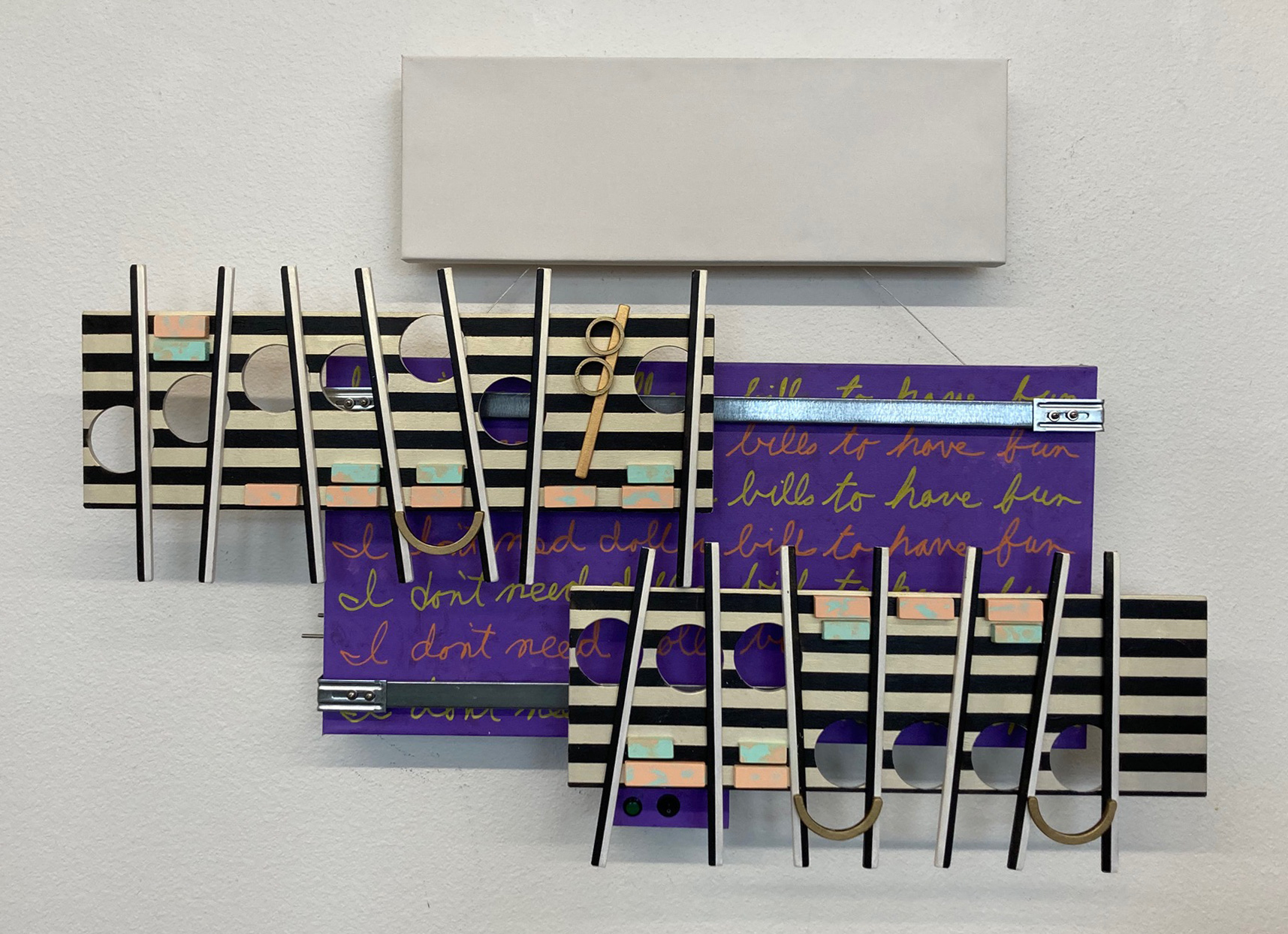
Cheap Thrills March 24th
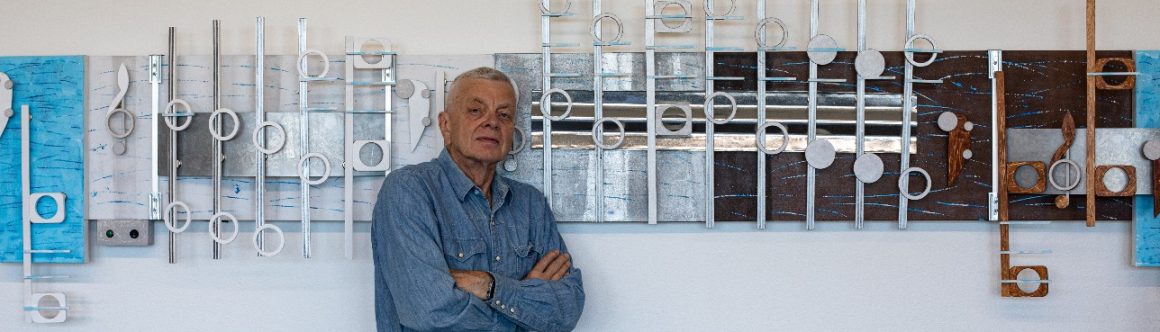
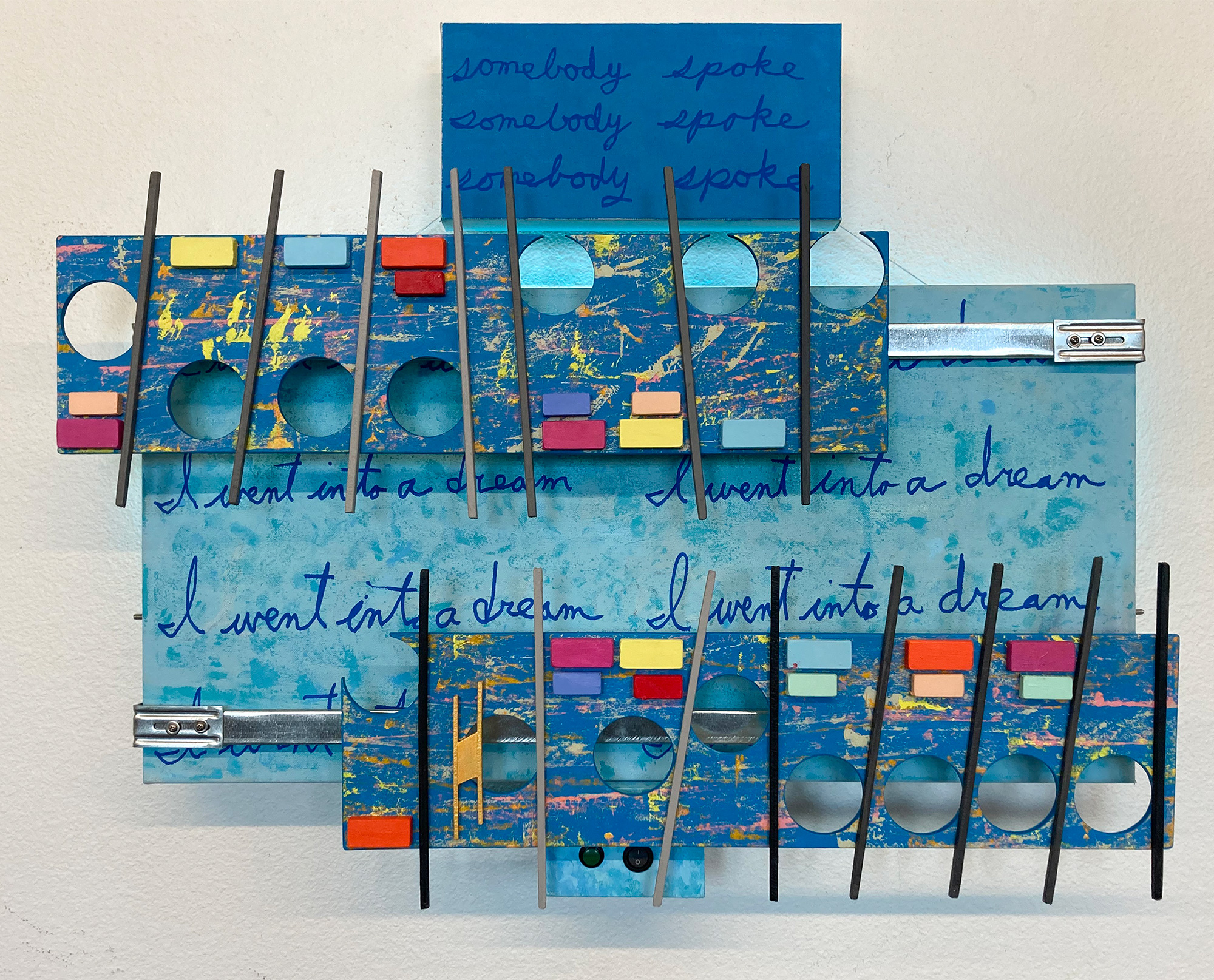
When I looked at the image above, hanging on my studio wall, it reminded me of my initial feeling when I first looked at my first small artwork, A Day. It didn’t impress me. It did not command attention, felt overwhelmed, and looked out-of-place hung on the large white studio wall. Then I tried to attach the two sections of the music, pictured below. That is when I ran into a problem. The music for this artwork is larger than A Day’s music. That caused an issue with the, glued in place, note stems of the two music sections interfering with each other. In order to find a fit, I had to shift the top musical notes to the left and the bottom notes to the right. Magnets hold each section in place. Unexpectantly I ended up placing them far off of the canvas. Extending the music this aggressively gave the artwork a less boxer, wider rectangle look, typical of my larger works. That was something I should have thought of earlier in the works design. Finally, different from A Day, I went with a larger eight inches by twenty-four inch hanging canvas. When painted, this will add to the physical look of this small piece.
This tiny artwork took two weeks to complete, which is about half the time of the larger works. Future minor projects will go faster if I make these small works a series and use a similar template. The reason for this size is to fit better in smaller exhibition space, allow me to take more artworks to an exhibition, and finally to have a price range about half that of the larger works. I do not know how complicated they will become, but they will, and when they do, allowing two weeks, pricing them lower by fair for me, that amount of time allowed for each project seems reasonable. I do like with this work how easy the decision was to try new ideas. I can see already that innovations will happen faster, along with expense and time savings, for these small works are less risky.
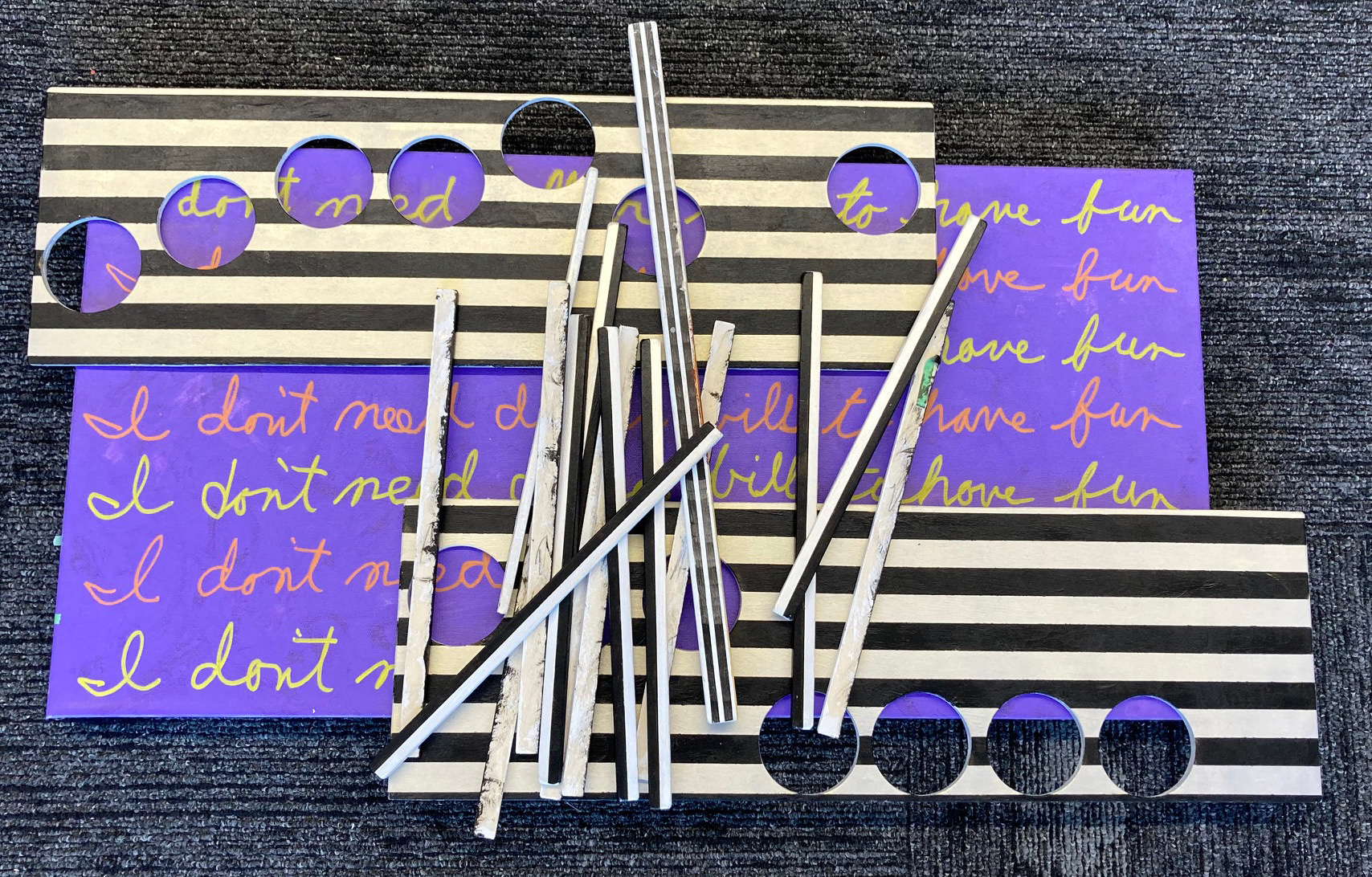
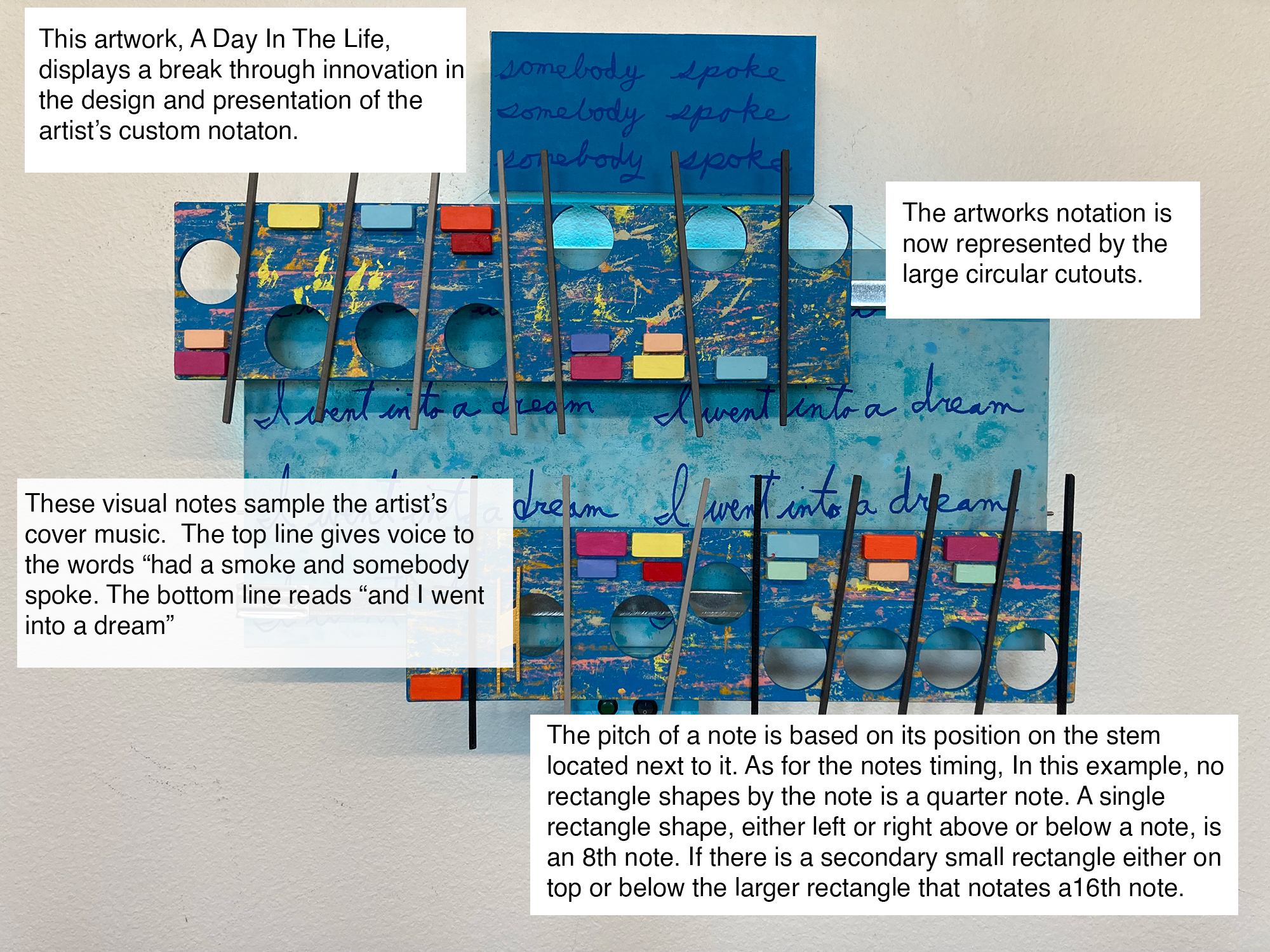
For example, the stereo system for A Day uses a one piece 2Watt system. Compared that to the much larger Zombie, that requires an expensive 20 watt system comprised three separate components and larger speakers. The benefit of that is a much better sound system. Another time and expense saving for small art is in the simplified custom notation, explained in the image below.
Explanation of how the new custom notation works.
Of course this innovation and style change requires a better attitude towards small works. When I first looked at this tiny artwork all alone on a twenty foot by ten foot high wall, it looked lost. To change that look and to help promote these tiny works, the plan is to place a big artwork in between a group of these small works on each side. This type of presentation would actually create for the viewer a back-en-forth movement between the pieces, creating a striking and positive visual between big and small artworks. To make this work, first I need an attitude change from big art that reflects big music to small art that points to the music. And the game of chess was the answer.
I enjoyed video games when they first became popular. I remember the original Nintendo and my favorite console, Sega Genesis. Overtime I realized that playing video games took too much of my free time. I stop playing. It is only recently I returned to gaming by playing chess online. I always play against the chess bots. They allow me to stop and go whenever. More important, playing against the bots reduces the stress of competition while teaching chess strategy, stimulating and challenging my thinking. I would have thought creating art would accomplish a similar goal, but it appears not to with de Konning. All this came to mind when I saw my first photo standing next to this tiny artwork. After exhausting all of my small art remarks I knew it was time to come up to an alternative approach, compare to all my previous failed strategy for creating small art. Then I realize I could compare this art adventure to a game of chass. I saw these tiny artworks symbolically as the pawns in a game of chess as well as in the art market.
Pawns in chess are the weakest chess piece. Unless they are not. The pawn is the only chess piece that can turn itself into another piece, including the game’s most powerful piece, the Queen. I am not going into the details of chess on how the lowly pawn can win the game, but I do see a comparison between the pawn in chess and my mini artworks. I see if played right, these tiny works of art might be the right move forward (pawns only move forward) that I totally underestimated in the past.
Thinking of the art market as a strategy of chess helps puts everything in its place. In comparing a pawn in chess with these small works of art my current plan is to move these little artworks forward one step at a time with the help of a companion Queen or Rook. Each step forward in chess is like a step forward for small works of art, bringing them nearer to the other side of the chessboard, or, in art terms, the upscale market. It may be possible to turn pawn art into the queen of the contemporary art world.
Optional: Commentary about the where, the why, and the reasoning behind this art, my current observations.
For almost two months I experimented with try tele visit therapy suggested by my doctor. Part of my routine was to note my thoughts before and after a session. One note of mine that stood out, that seemed to put my art and my therapy into a firm perspective said this, “Everything would make sense……if this art sold.” I do not remember any reaction or comment from my therapist. But I knew what those words meant and that conerned me. It was soon after that I saw the end of my tele visits was near. The more I thought of those words, it became clearly to me that I needed a honest examination of what was my motivation to continue down this art path, for I was feeling that after 18 years and 755 blog entries, this art’s momentum felt stagnate. I was wondering if I was losing my sight of this art’s message.
Years ago this naive and enthused want-to-be artist found a message to paint and took that first step forward. Over time that first step became a step, another and then it turned to the left, then a step back, then a turn to the right was followed by a step backwards, that then surprisingly became two steps forward, which lead quickly into a spin around two steps back. To now to here eighteen years later. I cannot help the feeling that I am strangely standing near that same first step. Why do I feel that?
As I have mentioned, the marketing of this art or “…getting it out there..” has been challenging, with some enjoyable moments. Most of those came in the early years when this art was two dimensional. I ended selling early a dozen artworks on Etsy with the last sale in 2017. The next sale came in 2021. I welcomed it reluctantly, for it was a favorite of mine, “Walking in Memphis.” That one sale did confirmed in me the importance of this art over the money. Soon after I took the sister artwork of “Memphis,” The Blue Danube, of the market adding it to my personnel collection.
Now, in 2024, I am pushing forward with A Day in the Life, hoping that it will be the first of many mini works to find a market, the large works failed to do. These smaller size works also be a better fit in a residential space. For now, I am letting go of my overly youthful art idea of a museum wall. The reasoning is simple: this art has struggled over eighteen years to define even the smallest existence of a market. Then if there is no market, why do I keep painting music? Why am I creating musical artwork after musical artwork that rarely travels beyond the studio? Unexpectedly, I was reminded again why I paint music.
I was looking for a podcast while doing my (must be short) strength exercise routine. That is when I clicked on the podcast: Make Art not Content. I felt relatable to its title and how I obviously approach art. I scrolled down and found this episode: “What Every Struggling Artist Can Learn From Taylor Swift’s Rise.” The podcast tells a story of how Taylor saved her career and turned it around to where her stardom is now bigger than ever. The podcast summarized her accomplishment by offering other struggling artists three pieces of advice learned from Taylor’s experience: Find your allies. Make your journey about something bigger than yourself” and finally “Make more art.” I wondered, could my loyalty to this art be bigger than me, and that is the driving force of this art for the last eighteen years?
Throughout art history there are hundreds of images, of people playing musical instruments, dancing to music, singing music, listening to music, character images of music notation, and lots of abstractions depicting music, but nothing displaying the actual music as the subject. That is where I came in. I saw that and thought I found my unique art niche. I said then and believe now that this art has always been about the idea of combing art and music into what I define today as one meaning. Sales are also nice, but if this art was about the money, I would have stopped its evolution early on.
In our living room hangs the 2009 artwork Canon in D. I sold more Etsy prints of this one artwork than any other. I see why. It depicts an art style of sheet music that is appealing in its design and subject. I could have continued painting in this way dozens of other great songs. I am convinced if did that I would I would have quickly found my market as the portrait painter of a song. But I did not. I did not because I thought this art was about combing art and music in an ever higher, undefinable artistic levels of expression. That was the original goal. I have always thought that the meaning of this art was simple: keep the momentum going and all will end well. When asked the why you do this (a rare event) I have said I wanted someday to answer the question: “Did he make it?”
Canon in D 2009 L80″x30″
That thinking continues to this day even after eighteen years, because this art has presented me with unlimited opportunities to express and to grow my knowledge of art and music. I may never think I am at the end of combing art and music together into one meaning? I truly feel there are still unlimited amounts of techniques and styles I have yet to discover to take portraying a song to the even higher levels of artistic creativity. As I think through Taylor’s strategy, I remembered that when I first started this art I surely thought I had the time to find my market and to reach my goals. But that was eighteen years ago. I don’t know if I have eighteen more years to see this art, though. I see my time to build up this art verging on the words; I don’t know. The plan is to keep pushing this art hard forward with no further hesitation to reach a point where others may want to take up the challenge. The quest is a final combing of music into art and art into music that defines both meanings equally.
I do not want to forget Taylor’s third technique for success: Make more art. And the key to that success is to work fast. Maybe my quicker little pawn art has arrived at the right time. If so, for now everything makes sense…...if this art keeps growing.
 aRT iN mUSIC