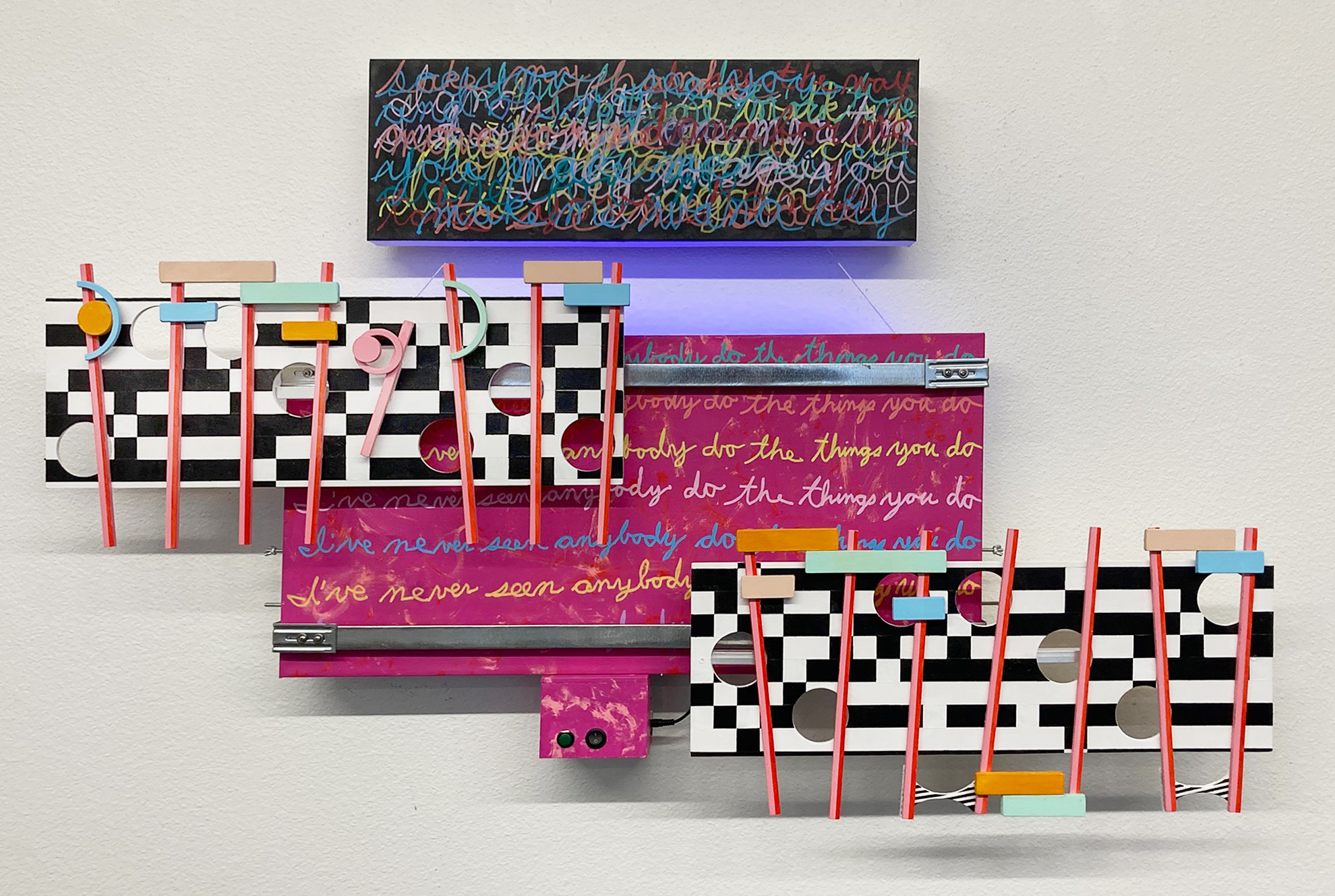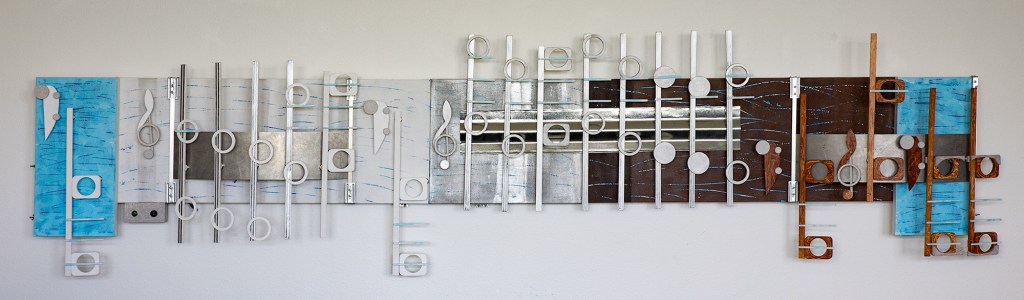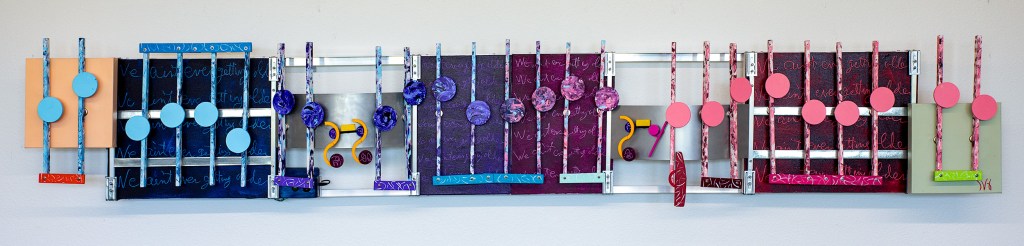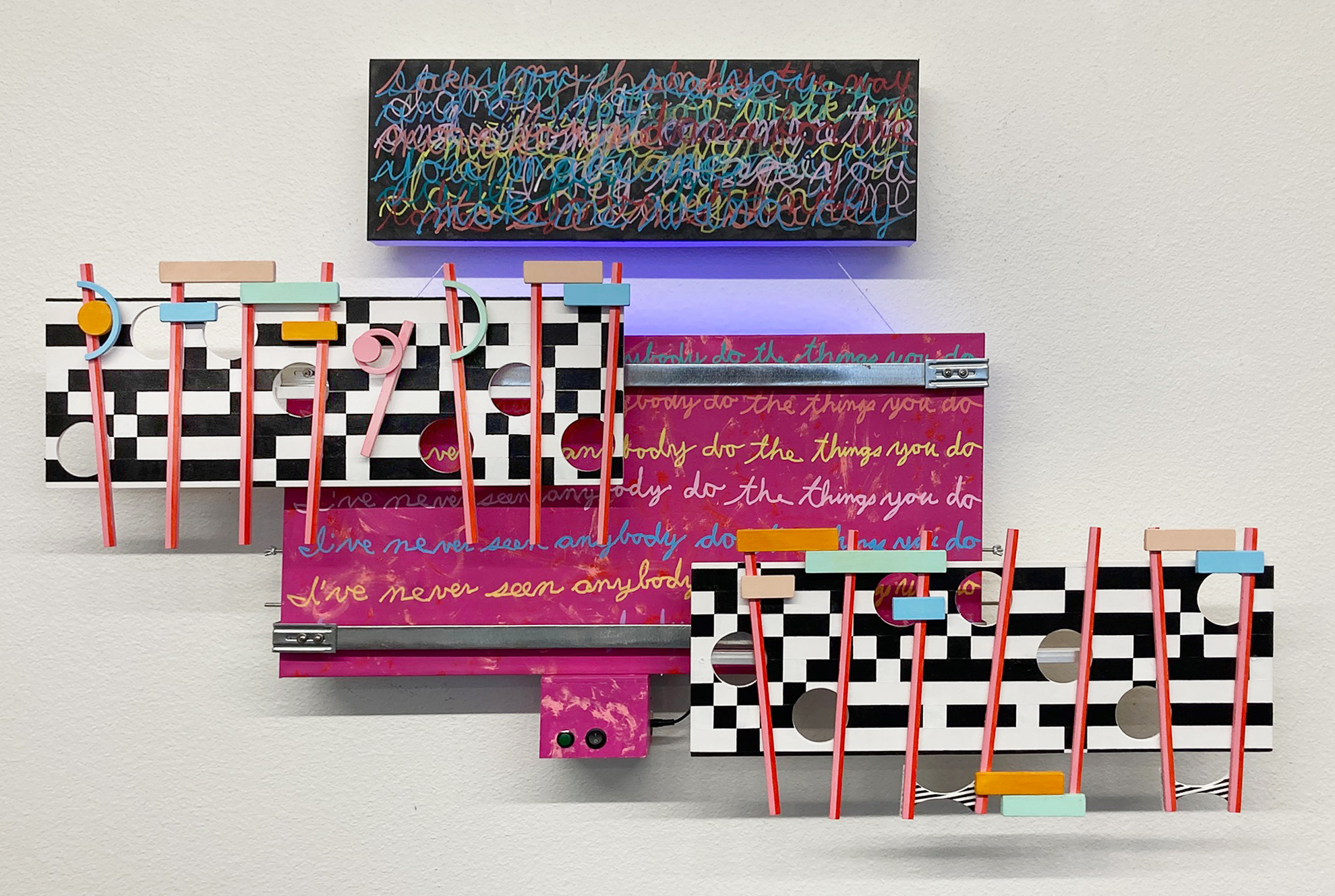
S_V_H Fast Car final image

Fast Car ≈L48.5″xH33.25″xD6.25″

I decided to, once again, create small works, but this time as a series. My plan was to use up my large supply of 15×30 inch canvases. I then had an unusual idea to hang them, with coated hanging wire, from another smaller rectangle canvas that then mounted the artwork to the wall. Although a little awkward to carry and hang, I completed my first new look mini artwork. The next three projects each improved on the previous mini, showing improvements in style and physical structure. I believe with Fast Car I now have a template that will allow me to produce future mini artworks within a two-week time span.

I needed, and now have completed the four mini artworks that will be a part of a plan to show this art outside the area. Of the minis, the first work, A Day in the Life, I lengthen to 44 inches to look more similar with the other three. These four works plus two others I will use to submit to individual showings.

I would mention that in the past, all my small artwork attempts found no more interest than my larger works. What differs with today’s new mini works is my reasoning. In the past I thought smaller artworks would sell easier. They did not. Today’s mini is not about pricing but about conserving my limited storage capacity and allowing me to submit to individual show proposals. After my awful trip to a duo art show in Wausau, Wisconsin, using a U-Haul truck, I decide never again.

My travel thinking is to pack up our Jeep Grand Cherokee with four minor works stacked on top of two major works. The two exemplar examples of this art I have chosen are Metamorphosis 2 (2022), music by Philip Glass, length 10 feet, and Closer (2023) at 9 feet, music by Coldplay. These artworks can be disassemble for transportation. That does not sound like enough works, but these artworks art different. That is because they play music.

The total together play time of these six artworks would take a visitor 6 minutes to listen to. Considering that most art view time is less than 30 seconds, that six minutes of music would equal, at less, twelve artworks on display. These six music boxes have a combine length of 35 feet with no spacing. Because they each play music, it would be smart for the viewer ears that each artwork would be six feet or more apart. Therefore, this group, when hung in a gallery, could use up 70 feet plus of display walls.

I have decided not to post any Reals (videos) on Instagram. This art is more (much more) than 1 minute snippets. From now on, I may post information or an image, for whatever stupid reason. I am no longer in the mood to entertain strangers that have not the slightest understanding of what this art is and what this art is trying to accomplish. I will continue to post videos, as I have always done, on YouTube.

Scott Von Holzen

S_V_H Fast Car 1st image

Fast Car following the mini templates of the two previous works

Completed in the first image of Fast Car is the notation with the lyrics, “I had a feeling that I belong.” The small wooden painted pieces scattered about are the notation’s beams and slurs, also completed and waiting to be glued down.

I do not consider the song Fast Car a must paint song. I do like the music enough that I consider it a good fit as a mini project for several reasons. The lyrics tell a detailed story. The verses are nice and flowing, but, for me, they seem to drag on. What makes this song great is the chorus where the words and melody super charges the music, confirming a connection I needed. That this song was first released in 1988 and then became popular again with the Luke Combs cover in 2023 gave me the feeling that this music has legs. When I am deciding on a song to paint and I find a favorite from years ago, I always look to see if other artists have done covers of the music. The more current the cover, the better. This artwork can then be a reminder for future musicians to take another look at this music.

This is Tacy Capmans’ official video of Fast Car.
This is the 2024 Grammy’s performance of Fast Car with Trach Chapman and Luke Combs

Here is the rough draft of my cover music for Fast Car. Start date was April 22nd.

Base foundation of the cover music for Fast Car

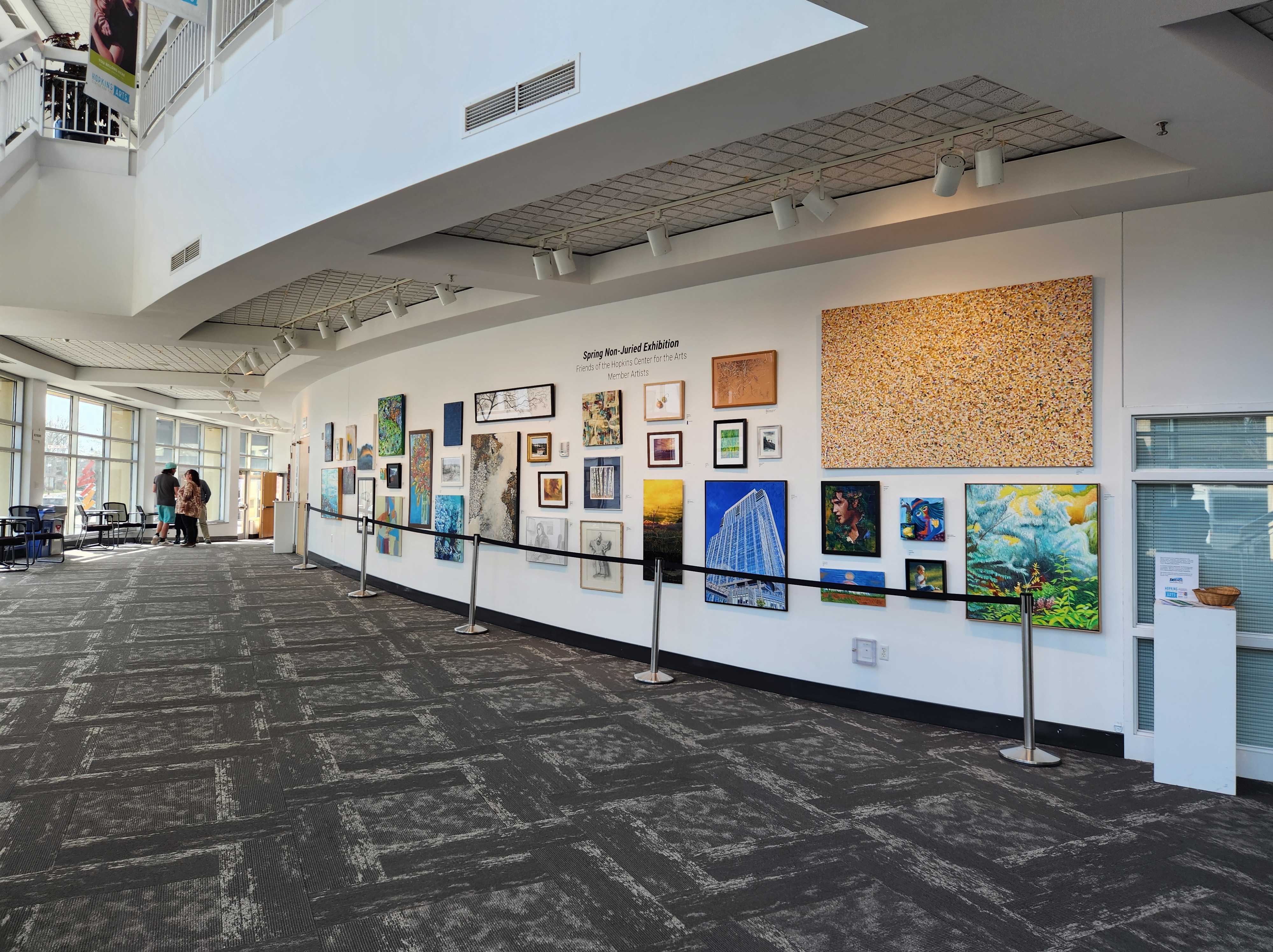
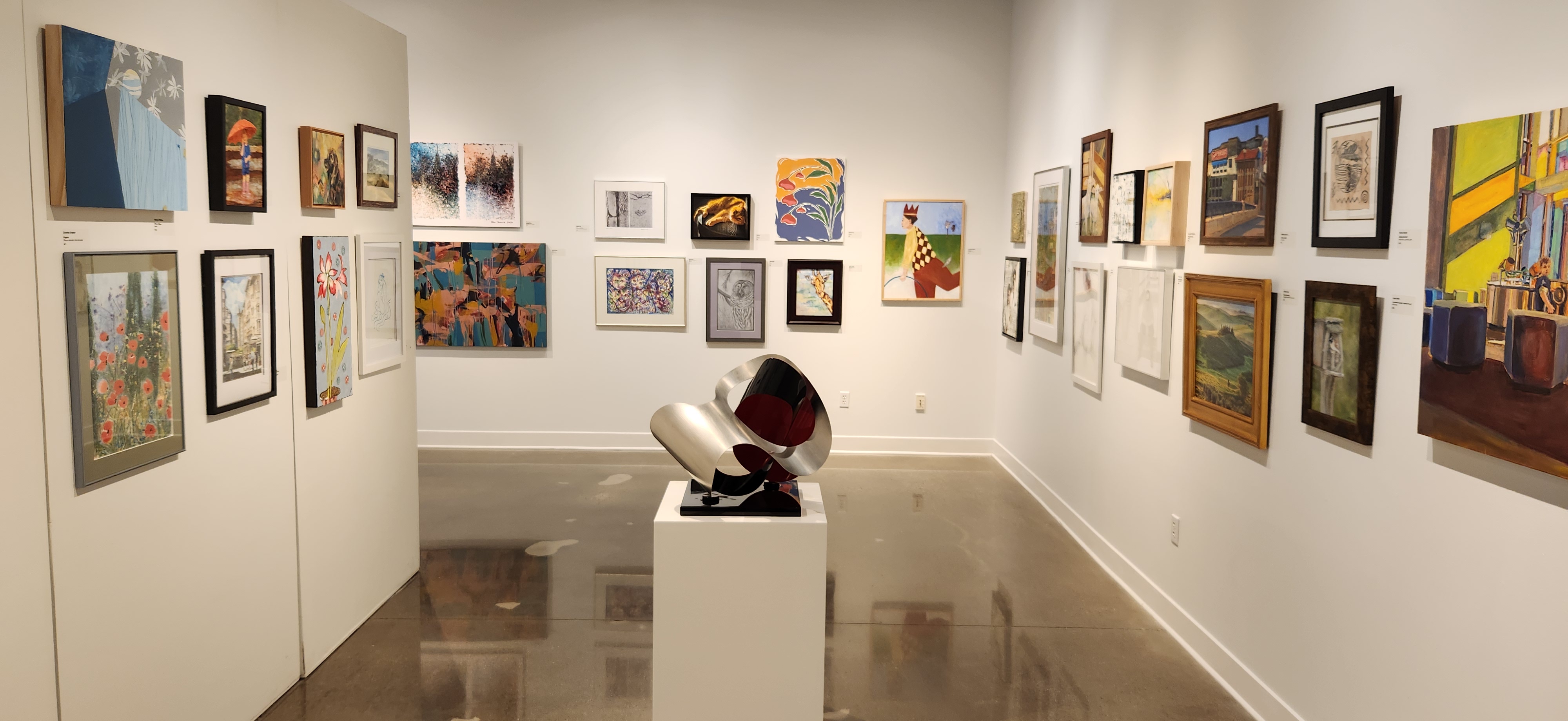
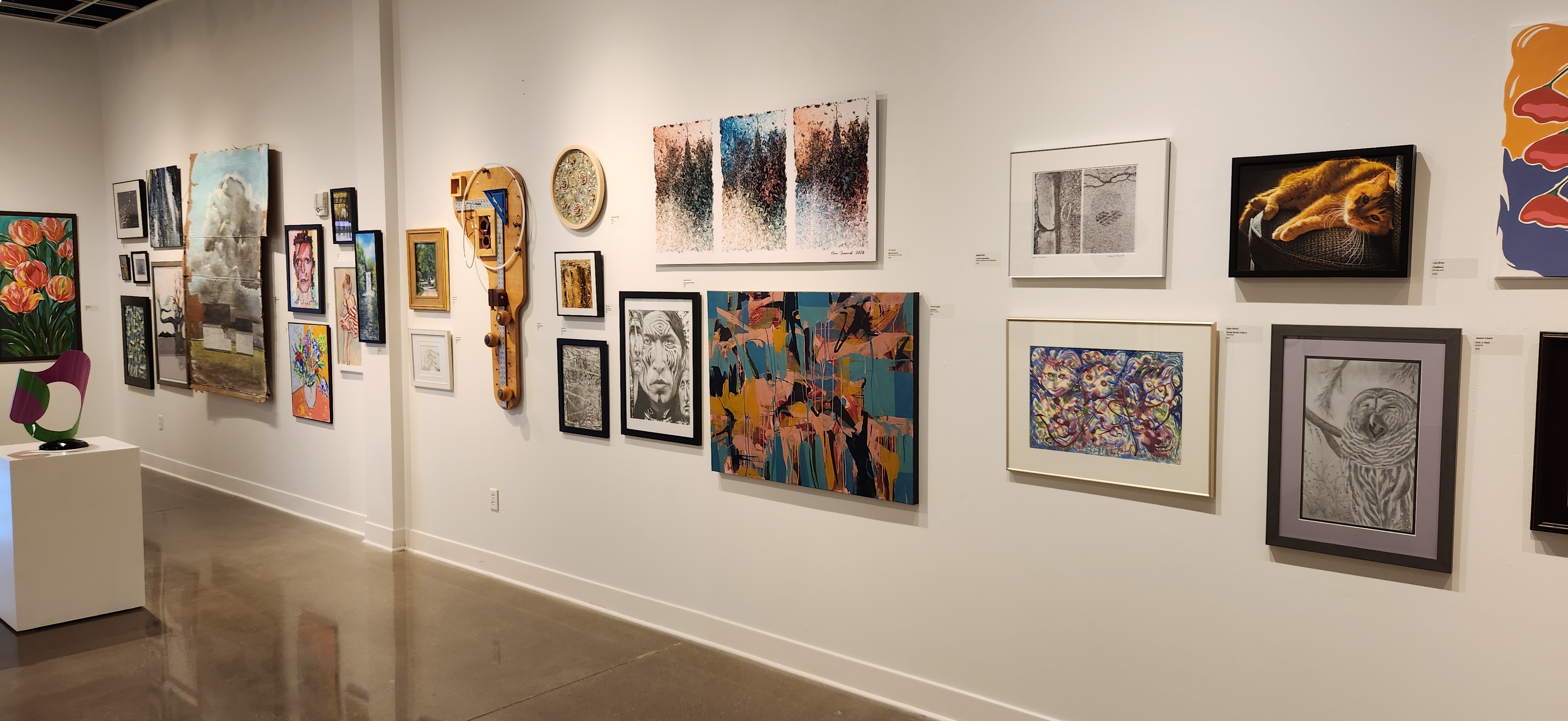
I have some thoughts on these images I received from Ray, one of our group members that was checking out the spring members show at the Hopkins Art Center in the area Minneapolis.

In 2019, I exhibited and attended the reception at the Hopkins International exhibition. The show was impressive, showing a higher level of quality with some interesting art on display. And although I dislike stacking, they put on an excellent show. The images above are from their current members show which is local talent. Ray sent the group over twenty images. My take, which I felt scrolling from one image to the next, was I have seen this art so many times before. I see this members show, as small, local boring art. I am also a follower on YouTube watching a lot of different major art exhibitions and gallery shows. This art is no longer local or small, but that is the only difference from the local boring art. What I mean by boring is not that the art is, insert any negative verb. Oh no, most of the contemporary art, both local and especially not from here, is highly polished and skillfully produced and decorative in style. The art that isn’t decorative feels strained to its limits trying to act, look, or be different. The results with all this effort are sales and happy customers for a few spot on artists, and the rest of the art and the artists quickly fade to storage. And yet, galleries absolutely need this art in abundance to fill empty walls from the last take down of pervious filler art. I am thinking as a group we should become members of the Hopkins? And really do I want to hang on top or below next year’s spring members’ show, which is pay to play? No one said this was going to be easy.

Scott Von Holzen

S_V_H Dance Monkey final

Dance Monkey ≈L51″xH33″xD6″ The artworks musical notation follows the words: “And when you’re done, I’ll make you do it all again.”

Dance Monkey project took over three week to complete. Creating an advanced draft, and then a finish version of the artworks cover music took three days. The rest of that time, was spend solving a number of issues related to the design and the performance of these mini works, plus updating the stereo system on Cheap Thrills. I also put together a new LEDs lighting system for these mini works and an alternative amplifier option. Time was also used up fixing a number of construction bugs for this series of artworks. My goal for time spent to complete these small artworks is two weeks.

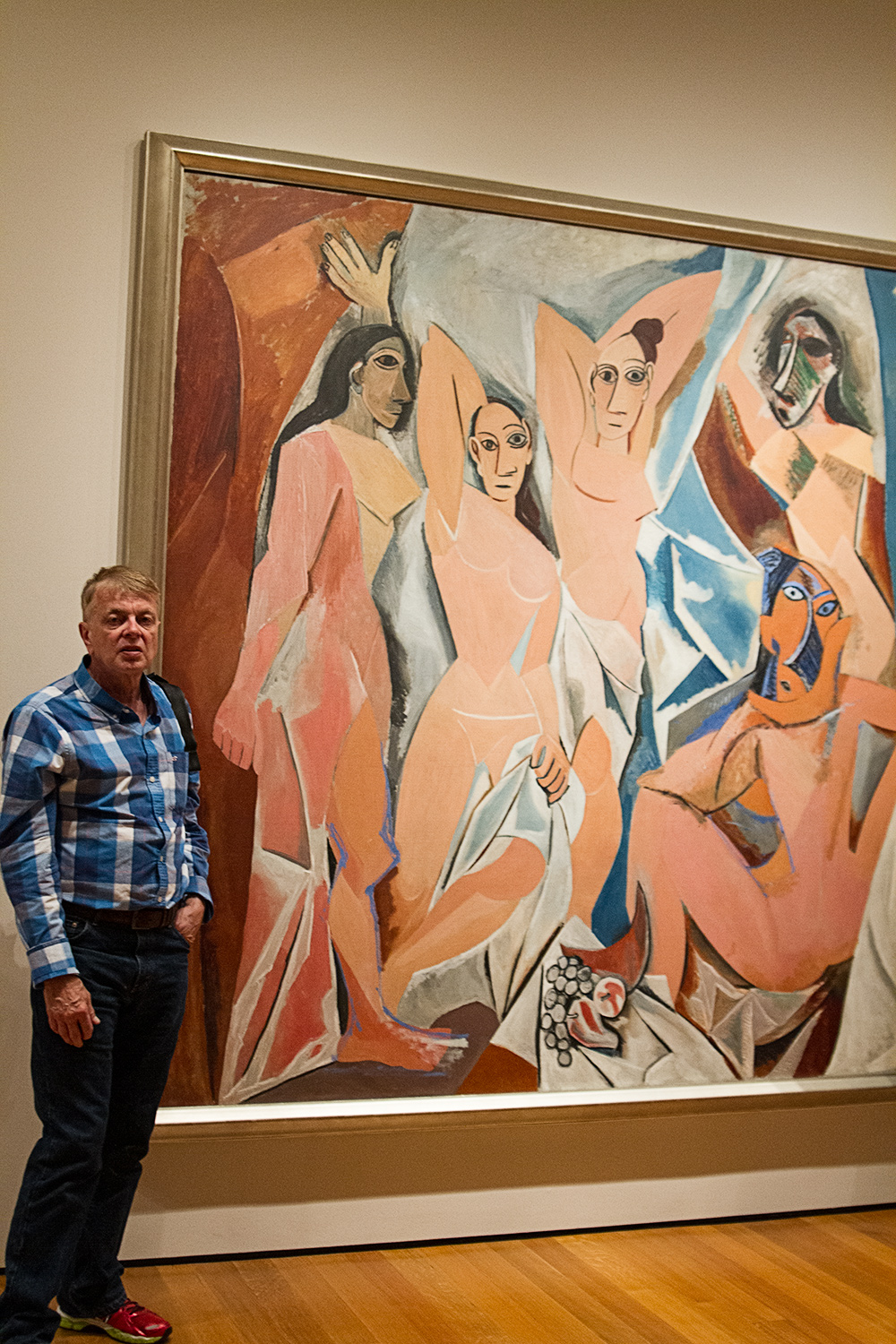
Before photography, talented painters where payed to produce ever growing realistic two-dimensional images of a three-dimensional world. Throughout the history of western art from the thirteen century into the twentieth century that is how they made a living. Then there was a change with the invention of photography and the portable camera that made realistic images easier and cheaper to produce. Painting, then had the opportunity to diversify its purpose. Notable artists like Wassily Kandinsky contributed to the creation of abstract art. But, for me, I would look to Pablo Picasso’s 1907 artwork, Les Demoiselles d’Avignon, as the first important painting of the twentieth century. In 2015, I saw this artwork in person at MOMA in New York city. I remember nothing about that moment, but luckily my good friend Tom Haley took the image below. I have read that Les Demoiselles d’Avignon had few admirers, including Picasso’s fellow artists. Les Demoiselles d’Avignon did not sell until 1924. MOMA purchased the artwork for a modest $18,000 sum by selling a Degas painting and donations in 1939.

I feel a connection between Les Demoiselles d’Avignon and my art. I see Les Demoiselles d’Avignon as a major artwork that was not made to be a quick turnaround sale by Picasso. I think Picasso created Les Demoiselles d’Avignon to make a statement and to change the course of art history. He certainly did all that and more. This art from day one was also never about sales. Instead, its end goal still is a more humbled realistic butterfly effect on future art. This quote by Richard Serra represents my sentiment: “Good artists impress the viewing public, while great artists impress their fellow artists.” Right now, my only connection to other artists is our art group. And their art, as I now expect and am perfectly fine with, is focused on impressing the viewing public. That is where the sales are. My take is: where their art stops mine begins.

On the drive over to a wedding with my wife I was playing softly my favorite music on Spotify. It was like listening to Muzak. I felt nothing coming from the music. I think music needs to be felt to be heard. At the wedding dance for 300 people the DJ music got louder as the night came on. Even though, again, I recognize the music all I actually heard was throbbing bass. All the other instruments sounded like a mix of blaring white, pink, and brown noise. I certainly felt the music, but did not hear it.

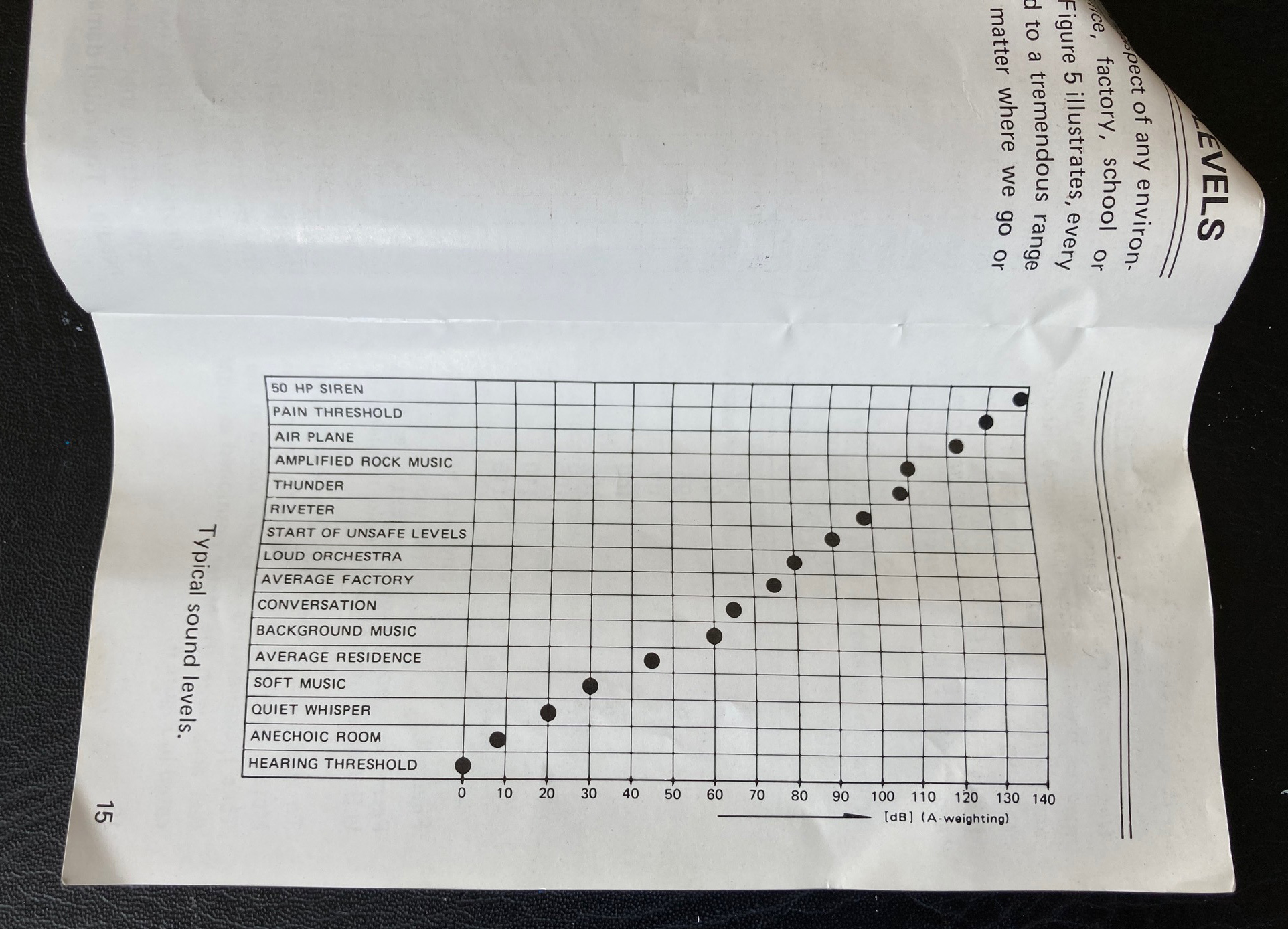
When this art is on display, the dilemma is the volume of the artworks. No matter who is in charged the artist’s preferred volume set in the Studio will need to be adjusted down for any public display. To help set the volume at public events I dug out my old sound level meter from Radio Shack. I put in a fresh 9 volt battery and this analog device, of course, worked. I use the meter to test and set a base reasonable volume in my Studio. I found that to be around 65 decides with spikes into the seventies. It can be louder but for this artwork those settings are enough that I can hear the music. I can feel the music.

With some experimentation and feedback from my last exhibit I am going with a gallery setting from 50 to a peak of 60 decibels. The sound meter manual states those levels would correspond to the residential to background music setting. Any volume lower than 50 number did not work for me. I am capping spikes at 64 decibels. I take all the measurements about 30 inches back from the artwork. This is only a starting position. I certainly know when hanging these works in either a private or public spaces, there will always be the threat of turn-it-down. In those moments I will do just that while hearing in my head the voice of Meat Loaf saying: “If it is too loud you’re too old.”

Sound Level Meter manual

Using the sound level meter, I have found a strange effect I am unsure of. When I compare at equal volumes, a better quality stereo system to a lesser quality system, the sound from the better system sounds consistently louder. The difference may be the quality of the sound being reproduced. Therefore, here is the mp3 of the music box music from Dance Monkey. Since a listener is not in the Studio, it’s okay to set the volume of Dance Monkey at a level depending on the quality of the stereo system. Find your level for this music needs to be felt to be heard. Although, in the Studio, my music varies in volume, quieter in the daytime, louder into the night. No sound level meter needed.

Dance Monkey final Music Box cover

This is an update on the previous artwork Cheap Thrills. The images below show the upgraded Cheap Thrills stereo system, and a test amplifier I used on Dance Monkey. In my comparison testing, setting the volumes close on both artworks, the differences surprised me. Some of this might be the music, but the sound coming out of the Dance Monkey amplifier system feels to me to be wider, with better separation between instruments. That may be because the test amplifier has both treble and a bass controls.

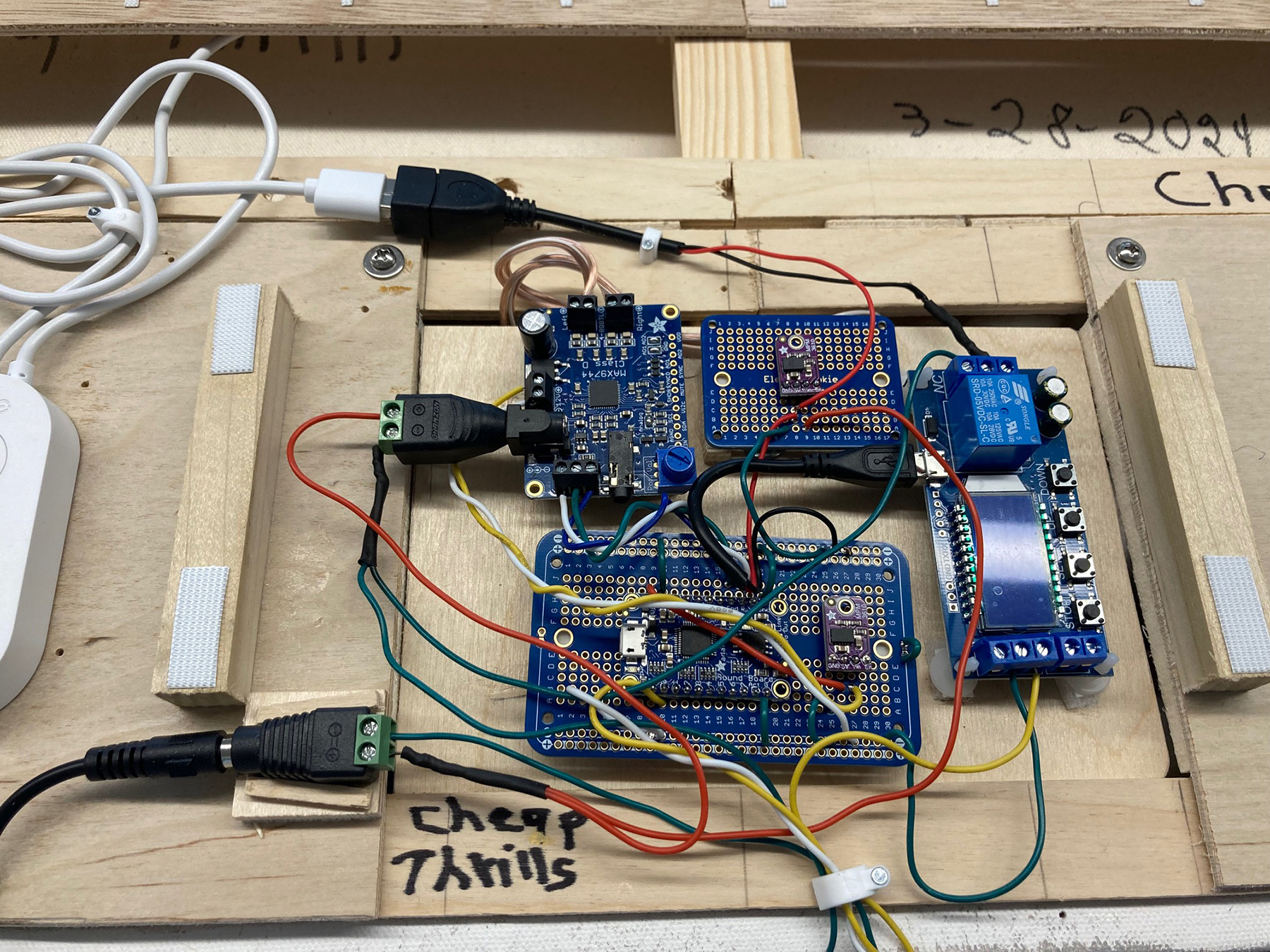
Cheap Thrills upgraded 20watt stereo system. Amplier is on the upper left.
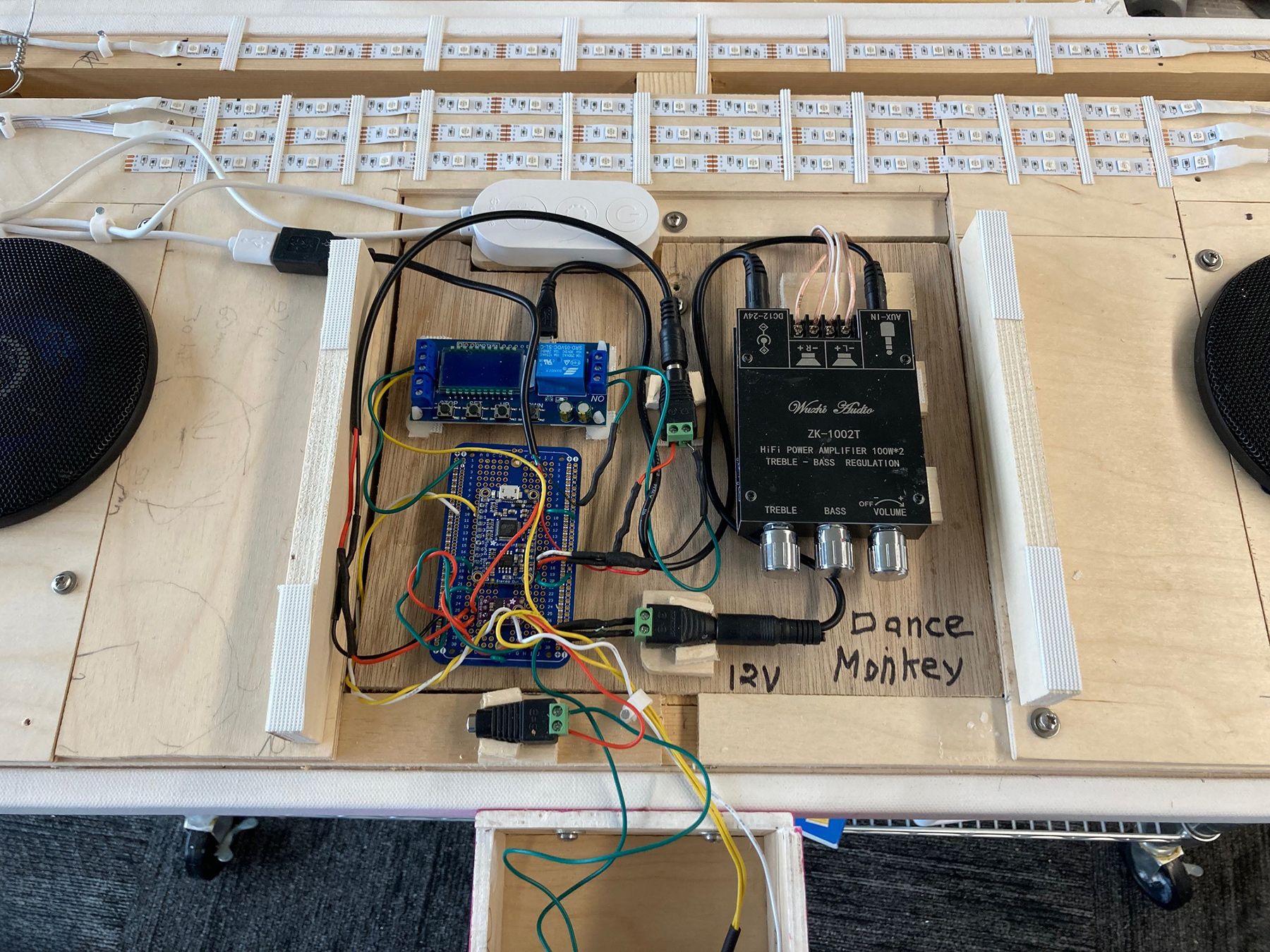
Cheap Thrills 100watt stereo system. Amplifier is on the right.

Originally, the artwork Cheap Thrills came with a 2 watt stereo system for the cover music that is under one minute. I thought this would save time and money over a 20watt system. I thought the 2watt system was appropriate for these mini styled works. I was wrong. In short, the 2watt stereo, even at its maximum volume of 60 decibels, lacked clarity, separation, sound depth, and detail. The 20watt upgrade resolved all those issues and made Cheap Thrills cover music sound almost as good as my major and much larger works, which have cover music limited to a length of a minute and a half.

Les Demoiselles d’Avignon 1907 MOMA 2015 photo taken by my lifelong friend now passed, Tom Haley

Next Music Box project is called Fast Car. Tracy Chapman wrote and released the song Fast Car in 1988, Luke Combs recently covered it, in 2023.

Scott Von Holzen