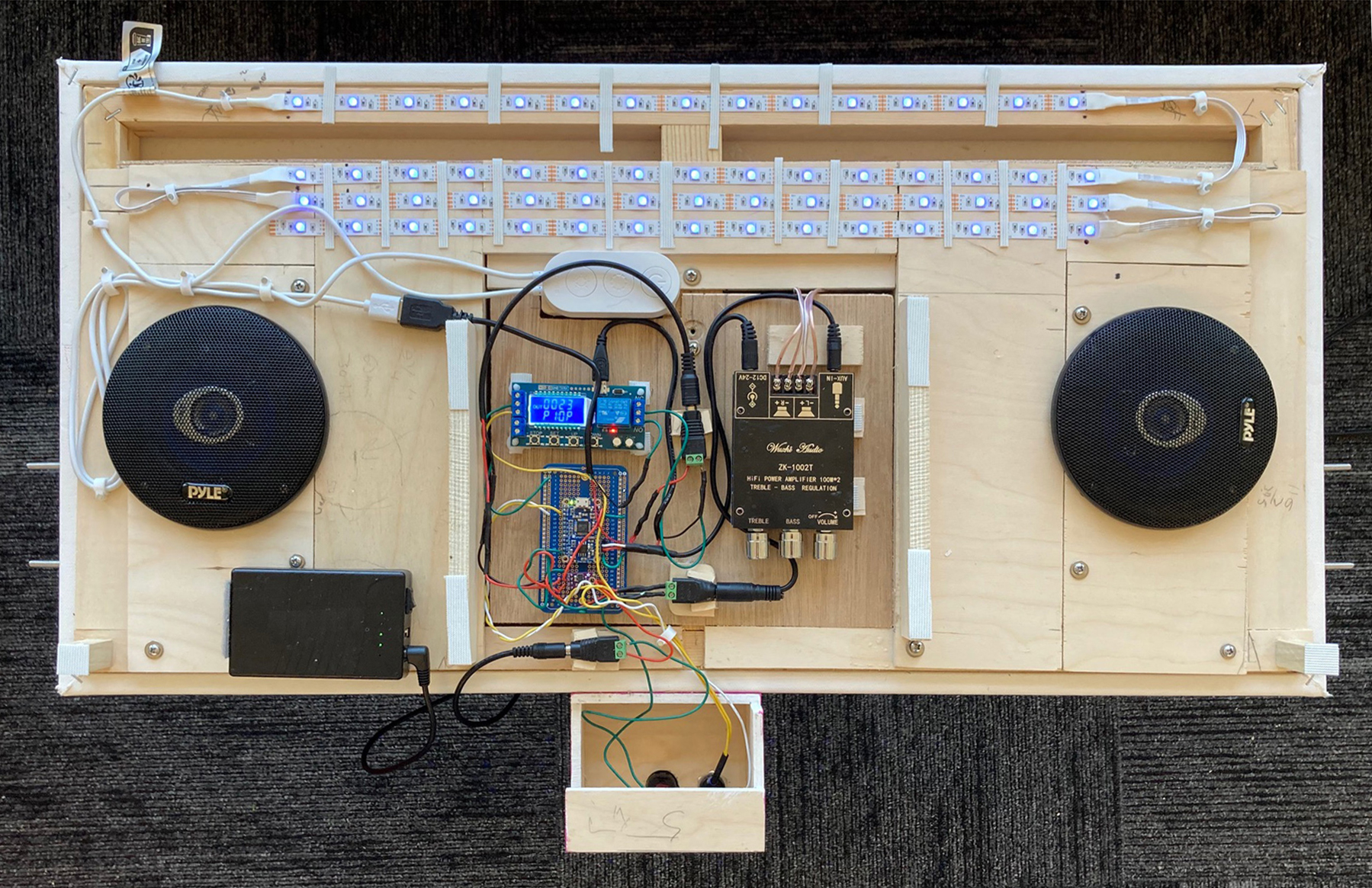
The backside of Danceshowing the replacement 100w amplifier I found to replace my 20wthat is back-ordered.
My choice to become a visual artist began after looking back at 500 years of western painting, and finding a different way to represent it. If that had not happened my other options would have been a return to photography (Ansel Adams) that I had pursued for decades, fall back on my passion for poetry (Robert Frost & E. E. Cummings, or writing (Ernest Hemingway) that drove me in my twenties. Instead, I am making this new path by creating distinctive portraits of songs. These mini music boxes are now the latest step forward in this journey. Once, resolving production issues, their smaller size, and therefore shorter production time, will make them less of a risk in time spent and in artist project fatigue. These mini works should also double my yearly production, making more current art available to show in more exhibits and galleries.
Hearing the words left, right, in the video below, when testing a new stereo system install, is a relief knowing that all the soldering and wired connections work. This first test came about because the company where I have bought the 20watt amplifiers, that I have used for years in all my major artworks, where out-of-stock. That lead me to look for a backup replacement amplifier.
First tests of a new optional amplifier. The Adafruit sound board comes with a default sound file used to tests the speakers.
I had a major crossroad back in 1993. That was the year the tourist motel up in Northern Wisconsin that my wife and I managed, sold. We went from “Scott and Barb from the Lake Aire motel” to “scott and barb,” living in a neighborhood. It was in this transition period that I earned a two-year degree and went to work at a paper company as an IT support person. This is where I meet the maintenance crew that I supported.
Eric Clapton and Cream
The maintenance workers lived with the idea that if you wanted something done, the cheapest and the best quality would be if you do it yourself. During my time at the motel I outsourced all the needed improvements. Now working as an IT guy, with its modest income, I reluctantly realized if I wanted home improvements, I would have to do the work myself. That choice started a learning process helped by the advice and guidance of my friendly maintenance crew. What I achieved then now years later has helped me build better art. That was a major crossroads that I luckily chose.
Recently, I stumbled onto another crossroad, which showed up in a note I wrote that I later shared with my therapist. The scribbled message read “…everything would make sense up to this point if this art sold.” That got me to thinking: how do I justify my new large expensive studio, all these many years of time, and incalculable amounts of monies spent, that to this day eighteen years later, there is still no definable market or interest? Of course the answer is I can’t. But the note’s stark question, offers an equally stark answer. Even my therapist thought selling art to whomever wanted to buy was the way to go solve (my words) artist’s frustration exhaustion. I had made the point earlier that my wish was to sell to collectors.
I need sales, became my thinking at a time that I began producing smaller, cheaper, more home owner wall friendly works. The original purpose of these mini works was to help slow down my tight storage issues. But now I see their size, quality, and lower pricing as a as a fresh approach, ignoring all the previous promotional attempts. Another understated advantage for smaller sized works is that they will be visually a better fit with the other members of our artist collective, EmptyWallsArt.
Although I do not have numbers from talking, I feel most of my fellow member artists sell fairly consistently. Still, they joined the collective, looking for more opportunities to sell their art. Overtime I realized that their practical focus was to make art that sells. When I first help create EmtpyWallsArt, my naïve reasoning was it was all about creating original art, that would then catch the eyes of high end galleries, that would then sell the art. But that may not be what they were thinking. Speaking for myself, I see the membership’s current obvious desire is to create more art that sells. That got me thinking. Maybe I should stop (it was not working anyway) trying to convince the group to go crazy creative. Instead, I wondered if I should follow them instead, knowing what I wrote that sales make sense out of all this art thing.
The collective comprises members who need to sell art to make a living. Others appear to want to sell to supplement their income. Until I read my note to the therapist, I felt I did not fit in either group. What helped me to choose were my current projects of smaller, less expensive, and more viewing public orientated artworks. Changing my thinking to that of the supplemental sales group meant I was taking the note seriously. But soon there surfaced the omnipresent reminder of who I and this art were all about. Once again, I found myself at another crossroads. Should my directional choice be Dire Straits or follow the advice of Oliva Rodrigo?
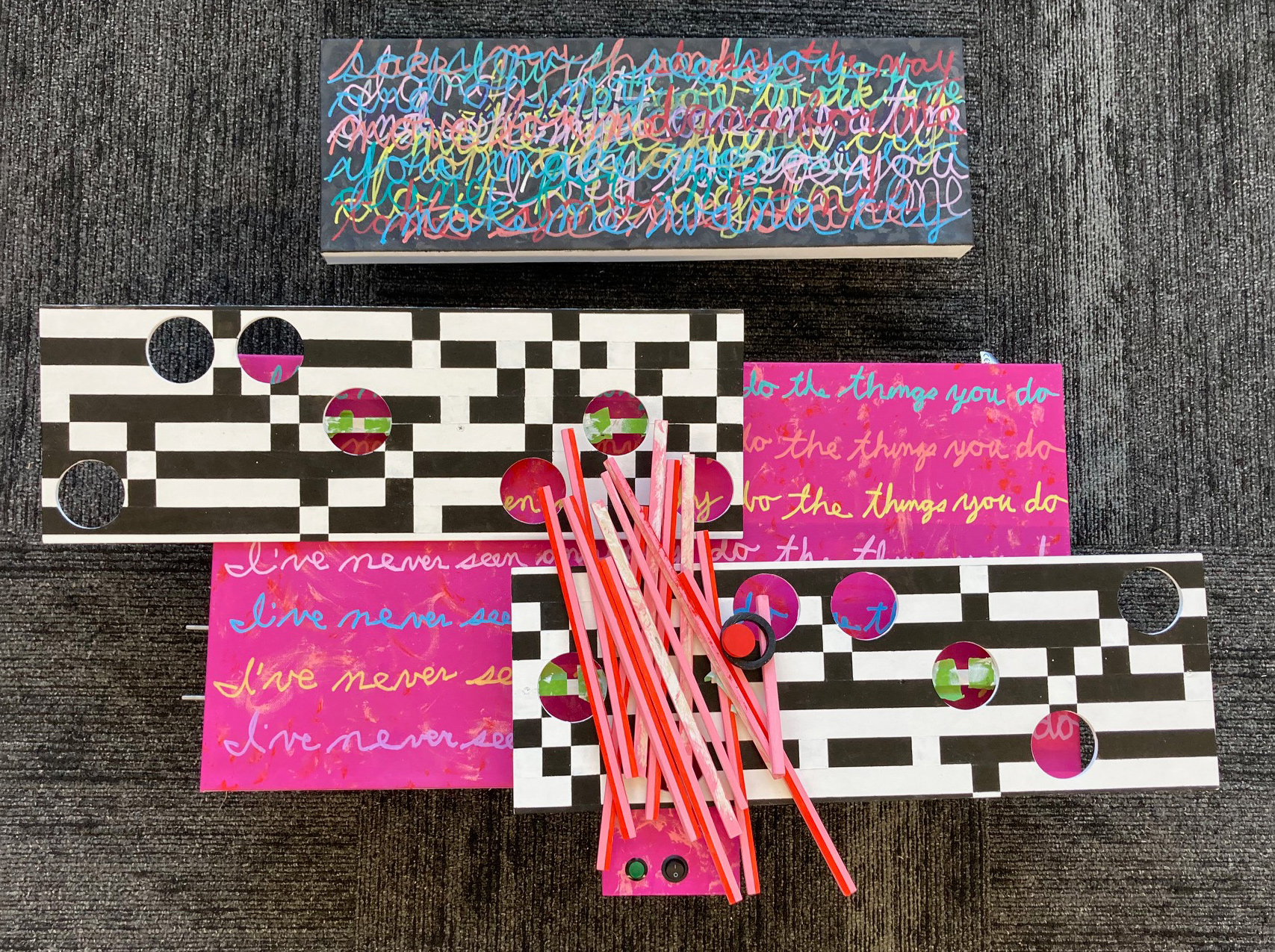
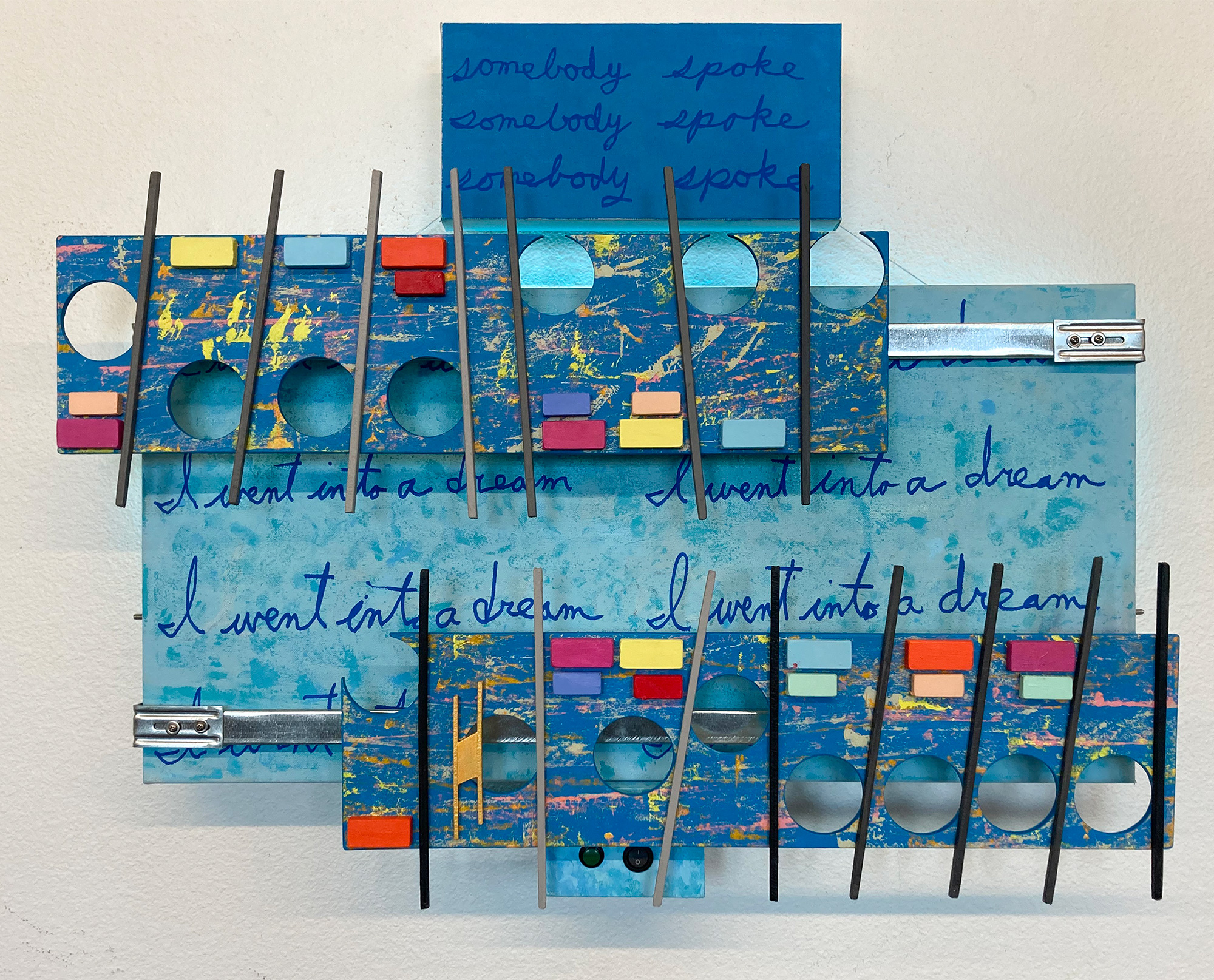
This tiny artwork took two weeks to complete, which is about half the time of the larger works. Future minor projects will go faster if I make these small works a series and use a similar template. The reason for this size is to fit better in smaller exhibition space, allow me to take more artworks to an exhibition, and finally to have a price range about half that of the larger works. I do not know how complicated they will become, but they will, and when they do, allowing two weeks, pricing them lower by fair for me, that amount of time allowed for each project seems reasonable. I do like with this work how easy the decision was to try new ideas. I can see already that innovations will happen faster, along with expense and time savings, for these small works are less risky.
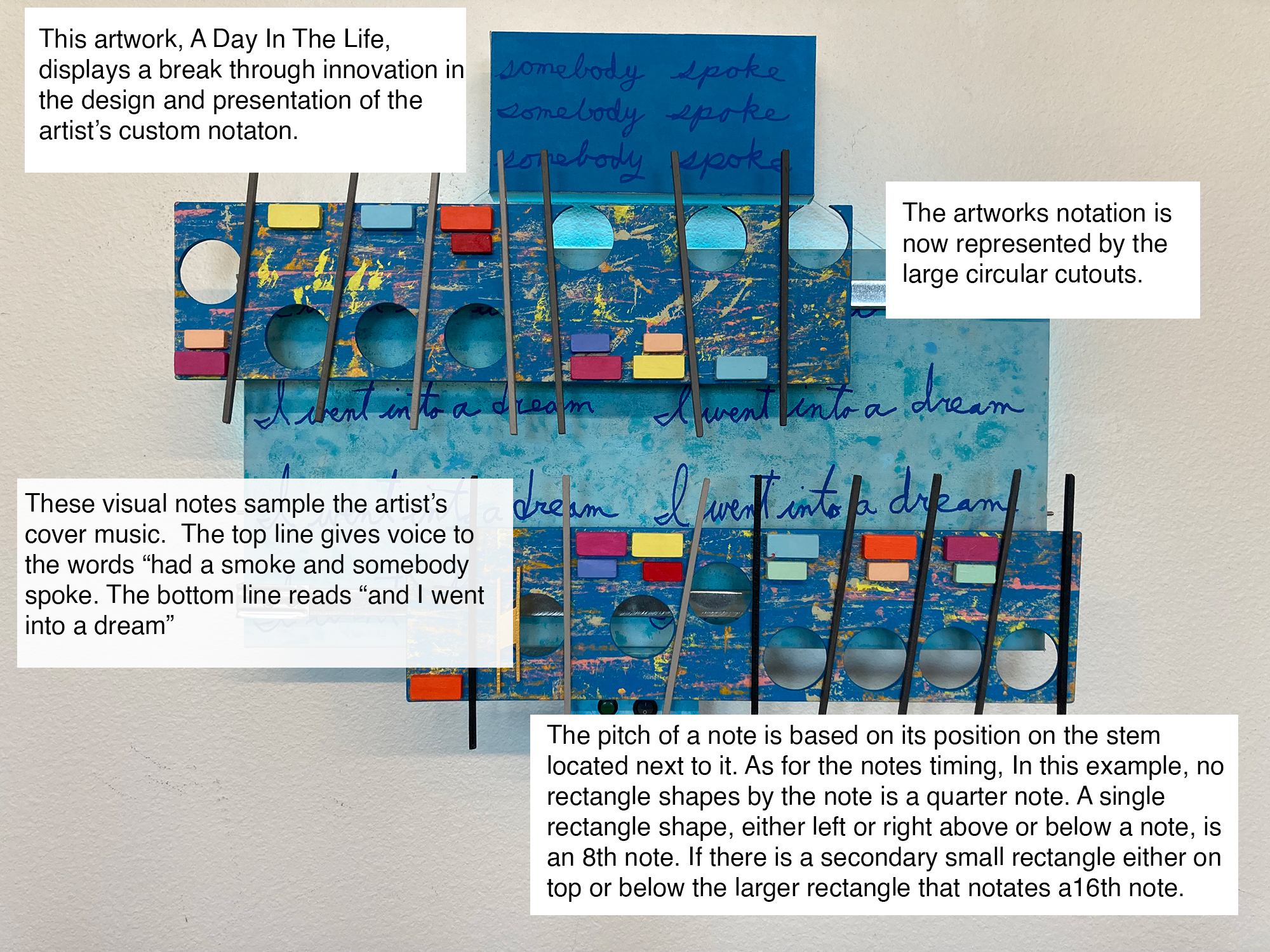
For example, the stereo system for A Day uses a one piece 2Watt system. Compared that to the much larger Zombie, that requires an expensive 20 watt system comprised three separate components and larger speakers. The benefit of that is a much better sound system. Another time and expense saving for small art is in the simplified custom notation, explained in the image below.
Explanation of how the new custom notation works.
Of course this innovation and style change requires a better attitude towards small works. When I first looked at this tiny artwork all alone on a twenty foot by ten foot high wall, it looked lost. To change that look and to help promote these tiny works, the plan is to place a big artwork in between a group of these small works on each side. This type of presentation would actually create for the viewer a back-en-forth movement between the pieces, creating a striking and positive visual between big and small artworks. To make this work, first I need an attitude change from big art that reflects big music to small art that points to the music. And the game of chess was the answer.
I enjoyed video games when they first became popular. I remember the original Nintendo and my favorite console, Sega Genesis. Overtime I realized that playing video games took too much of my free time. I stop playing. It is only recently I returned to gaming by playing chess online. I always play against the chess bots. They allow me to stop and go whenever. More important, playing against the bots reduces the stress of competition while teaching chess strategy, stimulating and challenging my thinking. I would have thought creating art would accomplish a similar goal, but it appears not to with de Konning. All this came to mind when I saw my first photo standing next to this tiny artwork. After exhausting all of my small art remarks I knew it was time to come up to an alternative approach, compare to all my previous failed strategy for creating small art. Then I realize I could compare this art adventure to a game of chass. I saw these tiny artworks symbolically as the pawns in a game of chess as well as in the art market.
Pawns in chess are the weakest chess piece. Unless they are not. The pawn is the only chess piece that can turn itself into another piece, including the game’s most powerful piece, the Queen. I am not going into the details of chess on how the lowly pawn can win the game, but I do see a comparison between the pawn in chess and my mini artworks. I see if played right, these tiny works of art might be the right move forward (pawns only move forward) that I totally underestimated in the past.
Thinking of the art market as a strategy of chess helps puts everything in its place. In comparing a pawn in chess with these small works of art my current plan is to move these little artworks forward one step at a time with the help of a companion Queen or Rook. Each step forward in chess is like a step forward for small works of art, bringing them nearer to the other side of the chessboard, or, in art terms, the upscale market. It may be possible to turn pawn art into the queen of the contemporary art world.
Optional: Commentary about the where, the why, and the reasoning behind this art, my current observations.
For almost two months I experimented with try tele visit therapy suggested by my doctor. Part of my routine was to note my thoughts before and after a session. One note of mine that stood out, that seemed to put my art and my therapy into a firm perspective said this, “Everything would make sense……if this art sold.” I do not remember any reaction or comment from my therapist. But I knew what those words meant and that conerned me. It was soon after that I saw the end of my tele visits was near. The more I thought of those words, it became clearly to me that I needed a honest examination of what was my motivation to continue down this art path, for I was feeling that after 18 years and 755 blog entries, this art’s momentum felt stagnate. I was wondering if I was losing my sight of this art’s message.
Years ago this naive and enthused want-to-be artist found a message to paint and took that first step forward. Over time that first step became a step, another and then it turned to the left, then a step back, then a turn to the right was followed by a step backwards, that then surprisingly became two steps forward, which lead quickly into a spin around two steps back. To now to here eighteen years later. I cannot help the feeling that I am strangely standing near that same first step. Why do I feel that?
As I have mentioned, the marketing of this art or “…getting it out there..” has been challenging, with some enjoyable moments. Most of those came in the early years when this art was two dimensional. I ended selling early a dozen artworks on Etsy with the last sale in 2017. The next sale came in 2021. I welcomed it reluctantly, for it was a favorite of mine, “Walking in Memphis.” That one sale did confirmed in me the importance of this art over the money. Soon after I took the sister artwork of “Memphis,” The Blue Danube, of the market adding it to my personnel collection.
Now, in 2024, I am pushing forward with A Day in the Life, hoping that it will be the first of many mini works to find a market, the large works failed to do. These smaller size works also be a better fit in a residential space. For now, I am letting go of my overly youthful art idea of a museum wall. The reasoning is simple: this art has struggled over eighteen years to define even the smallest existence of a market. Then if there is no market, why do I keep painting music? Why am I creating musical artwork after musical artwork that rarely travels beyond the studio? Unexpectedly, I was reminded again why I paint music.
I was looking for a podcast while doing my (must be short) strength exercise routine. That is when I clicked on the podcast: Make Art not Content. I felt relatable to its title and how I obviously approach art. I scrolled down and found this episode: “What Every Struggling Artist Can Learn From Taylor Swift’s Rise.” The podcast tells a story of how Taylor saved her career and turned it around to where her stardom is now bigger than ever. The podcast summarized her accomplishment by offering other struggling artists three pieces of advice learned from Taylor’s experience: Find your allies. Make your journey about something bigger than yourself” and finally “Make more art.” I wondered, could my loyalty to this art be bigger than me, and that is the driving force of this art for the last eighteen years?
Throughout art history there are hundreds of images, of people playing musical instruments, dancing to music, singing music, listening to music, character images of music notation, and lots of abstractions depicting music, but nothing displaying the actual music as the subject. That is where I came in. I saw that and thought I found my unique art niche. I said then and believe now that this art has always been about the idea of combing art and music into what I define today as one meaning. Sales are also nice, but if this art was about the money, I would have stopped its evolution early on.
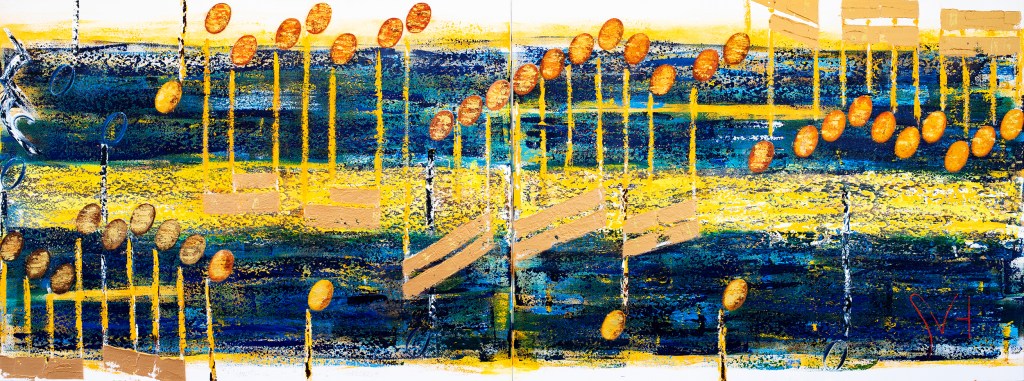
In our living room hangs the 2009 artwork Canon in D. I sold more Etsy prints of this one artwork than any other. I see why. It depicts an art style of sheet music that is appealing in its design and subject. I could have continued painting in this way dozens of other great songs. I am convinced if did that I would I would have quickly found my market as the portrait painter of a song. But I did not. I did not because I thought this art was about combing art and music in an ever higher, undefinable artistic levels of expression. That was the original goal. I have always thought that the meaning of this art was simple: keep the momentum going and all will end well. When asked the why you do this (a rare event) I have said I wanted someday to answer the question: “Did he make it?”
Canon in D 2009 L80″x30″
That thinking continues to this day even after eighteen years, because this art has presented me with unlimited opportunities to express and to grow my knowledge of art and music. I may never think I am at the end of combing art and music together into one meaning? I truly feel there are still unlimited amounts of techniques and styles I have yet to discover to take portraying a song to the even higher levels of artistic creativity. As I think through Taylor’s strategy, I remembered that when I first started this art I surely thought I had the time to find my market and to reach my goals. But that was eighteen years ago. I don’t know if I have eighteen more years to see this art, though. I see my time to build up this art verging on the words; I don’t know. The plan is to keep pushing this art hard forward with no further hesitation to reach a point where others may want to take up the challenge. The quest is a final combing of music into art and art into music that defines both meanings equally.
I do not want to forget Taylor’s third technique for success: Make more art. And the key to that success is to work fast. Maybe my quicker little pawn art has arrived at the right time. If so, for now everything makes sense…...if this art keeps growing.
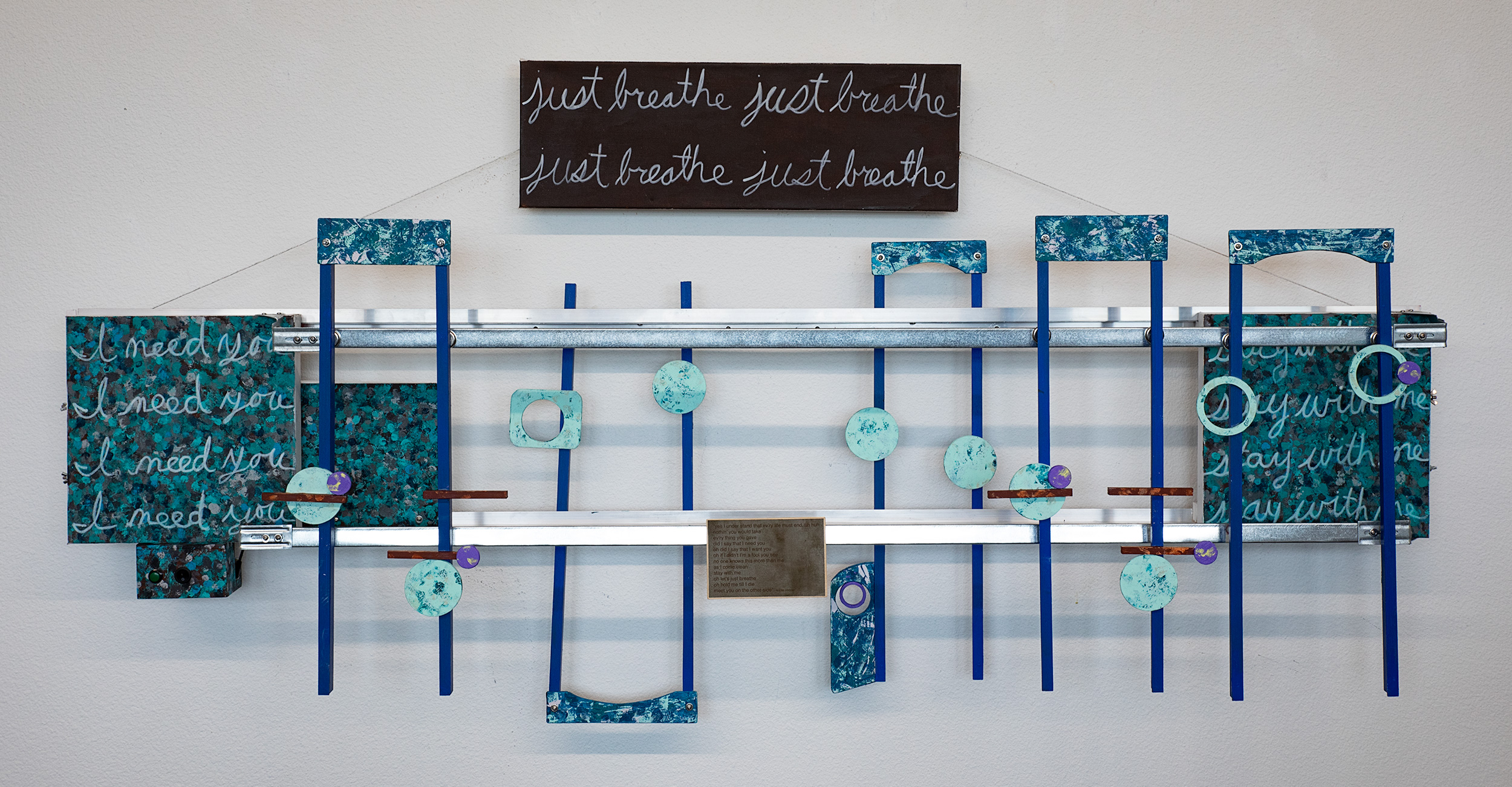
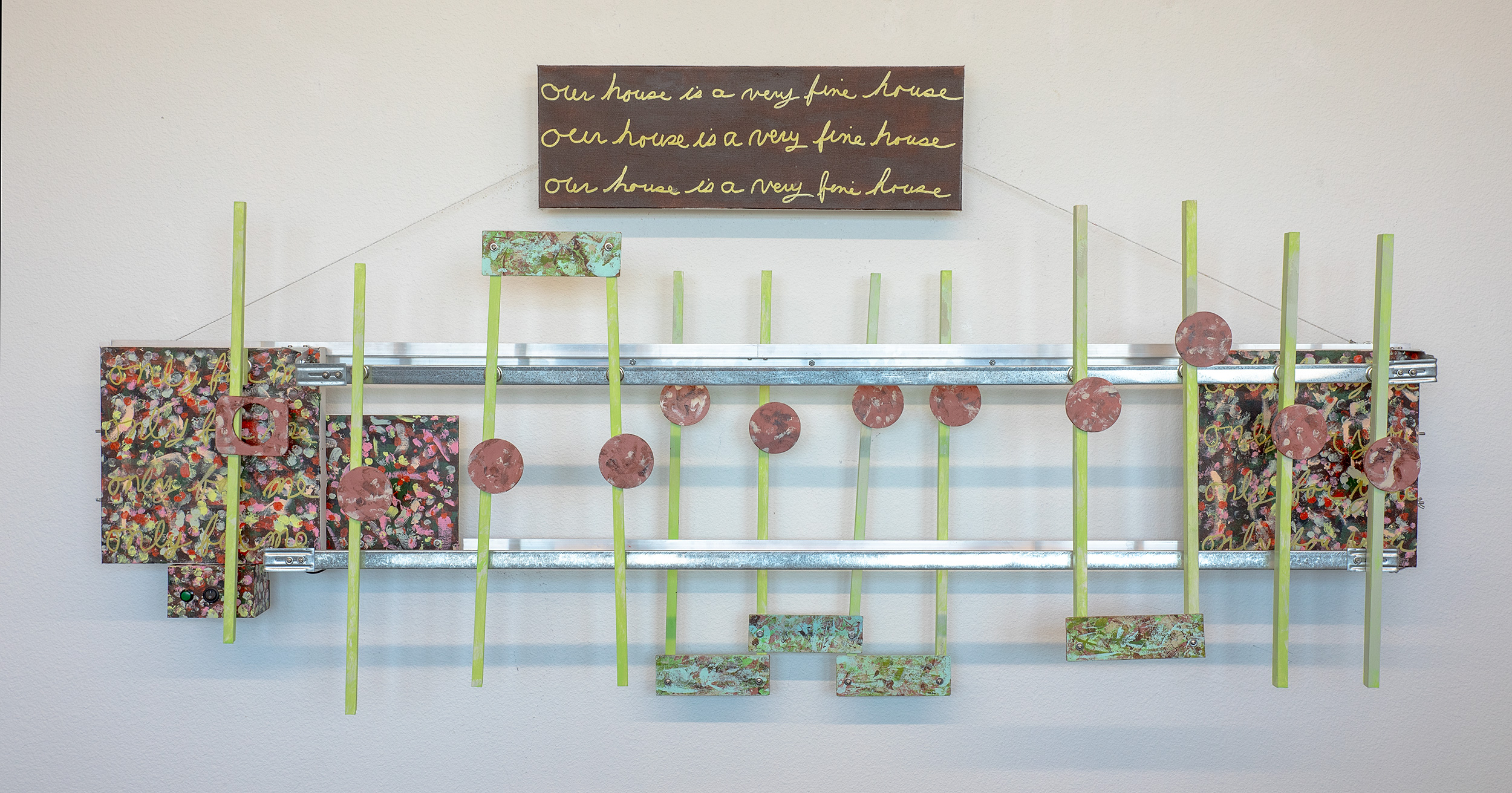
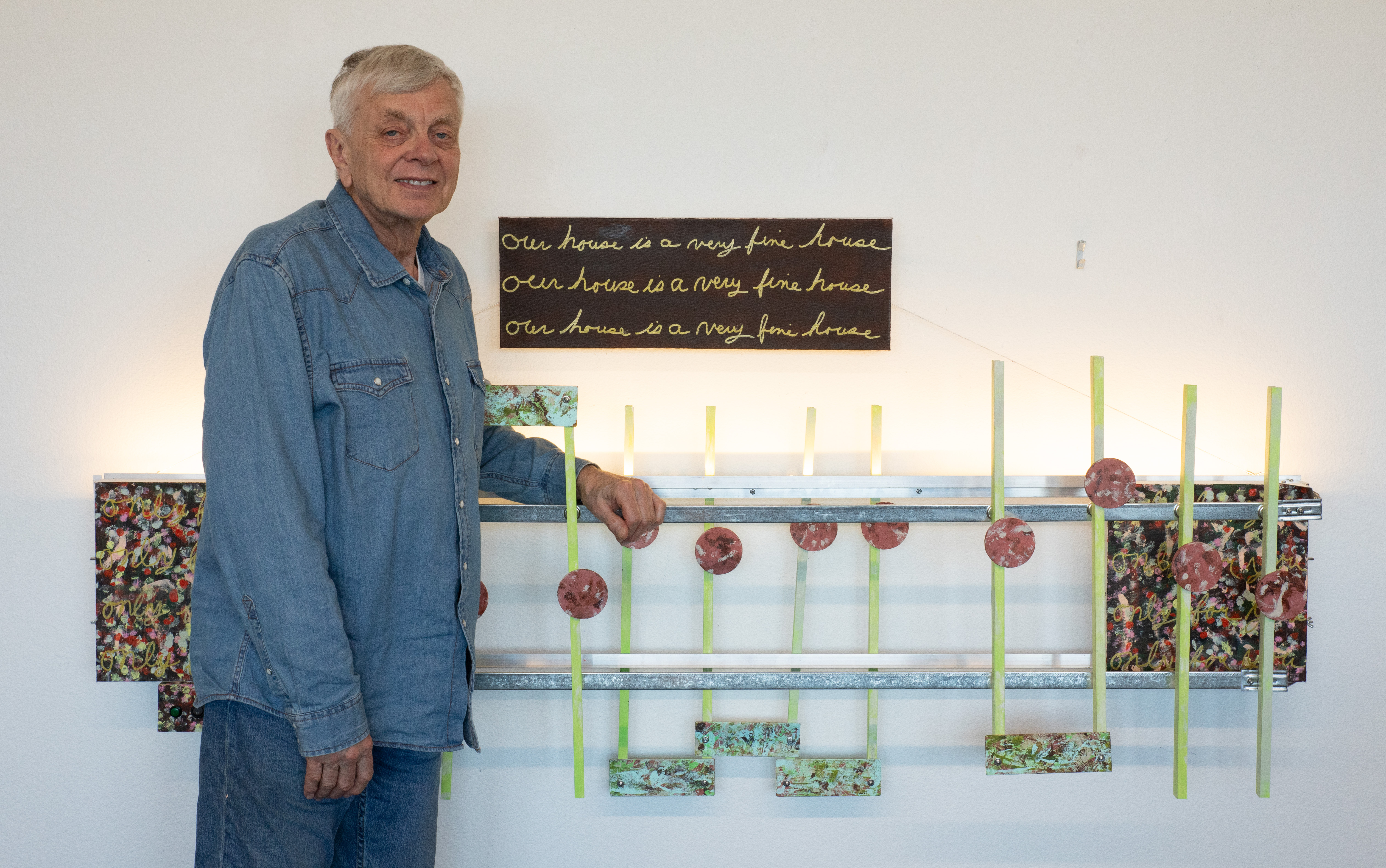
Just Breathe L72.25″xW34″xD10.75″Our House L72.25″xW35.75″xD10.75″
I have little more to add about these two experimental artworks. They were both the original idea of making small art. Now, they are not. I have another idea so read on. There are a couple of style changes that came out of these two works that will probably develop with the art. The first is the exposing of the hanging wire. After so many years of working to hide, or looking for the wire to hang the artwork, these works make that a lot simpler. A big surprise was that I could easily balance these artworks out from the wall and it was equally easy to level both the top canvas and the artwork. The second style change was the placement of my notation on the backside of the artwork frame. That is a good idea. It breaks up that left-to-right flow, gives the artwork depth, and certainly adds interest. In all I am exhausted by the extended timeline it took to produce two works at once. I believe this will not happen again for a while.
Just breathe original cover musicOur House original cover music
And yes, my idea of smaller artworks has again changed after completing these two in one project. The idea of creating smaller artworks over the years keeps coming back with the results always the same: smaller music boxes should be easier to sell. Except that they don’t. I keep proving this over-an-over. As always, the results have been the same, nothing encouraging. But, once again, I have a new purpose to why I need to go small. Actually, even smaller than these two works.
In order to “break on through to the other side,” I need to show, show more, and show often this art. To make that possible, I must solve the question of how do I travel with multiple pieces of this art. Currently, anywhere outside my home area, this would be impossible unless I rented a U-Haul van. My god, the last time I did this it turn out to be a miserable, noisy, and expensive experience. I had to repair damage art upon arrival, and repair damaged art after returning to home. I must not forget we had to stop twice to put air in a tire. I vowed never again. That holds to this day. I rather have my work gather dust in a forgotten storage. Period. But? I am a founding member of a group of artist’s name EmptyWallsArt. As a group we are now adjusting to our new reality with the recent passing of another founder of EW Art, Christy Skuban. One plan that was decided was to spread our reach further out to 300 miles in search of exhibitions and shows.
Currently, our Jeep Grand Cherokee can stack three of my averaged size artworks each six feet or under. That might be enough for some shows, but if I apply for a one person show, certainly I need more numbers of art. The idea for these latest works was to make smaller artworks. Even though I use memory foam in between, the weight increases with each level of art that is stacked laying down. These two works would be the top layer. Their narrower width would allow for adding only one more artwork. The problem I discovered was that any art stacked on the third lay must have a length under six feet. This is not an issue staking works on the first two layers, therefore my newest smaller works would not fit. I could solve my travel issues by buying a $5000 small enclosed aluminum trailer. That would be okay if I was consistently selling art, but I am not. I needed another smaller art idea, and that came together after losing Christy Skuban.
Christ Skuban passed away in early February. She was a founding member of EmptyWallsArt
Big Block Builder H29″xW23″xD2″ is one of Christy‘s works, I believe from 2023.
My thinking today about the idea of going small comes from reading the story of Jo Van Gogh-Bonger. She single-handedly made Vincent Van Gogh known to the public. What she did was to loan out Vincent’s artwork for exhibition that included, not for sale, major works. Other lesser known works that were for sale then surrounded those primary pieces. Vincent’s out of reach artworks made the smaller, lesser artworks more desirable. That is where Christy now comes in. Her small size works have sold at each of the EWA shows. Christy’s art, along with examples like Big Block Builder, has inspired me to build a new look for smaller art. If this new plan works, the results will be that I will only take one large artwork to an exhibition. On top of that first layer I will then stack super small size music boxes, no longer than 36 inches, two feet wide, and a few inches deep.
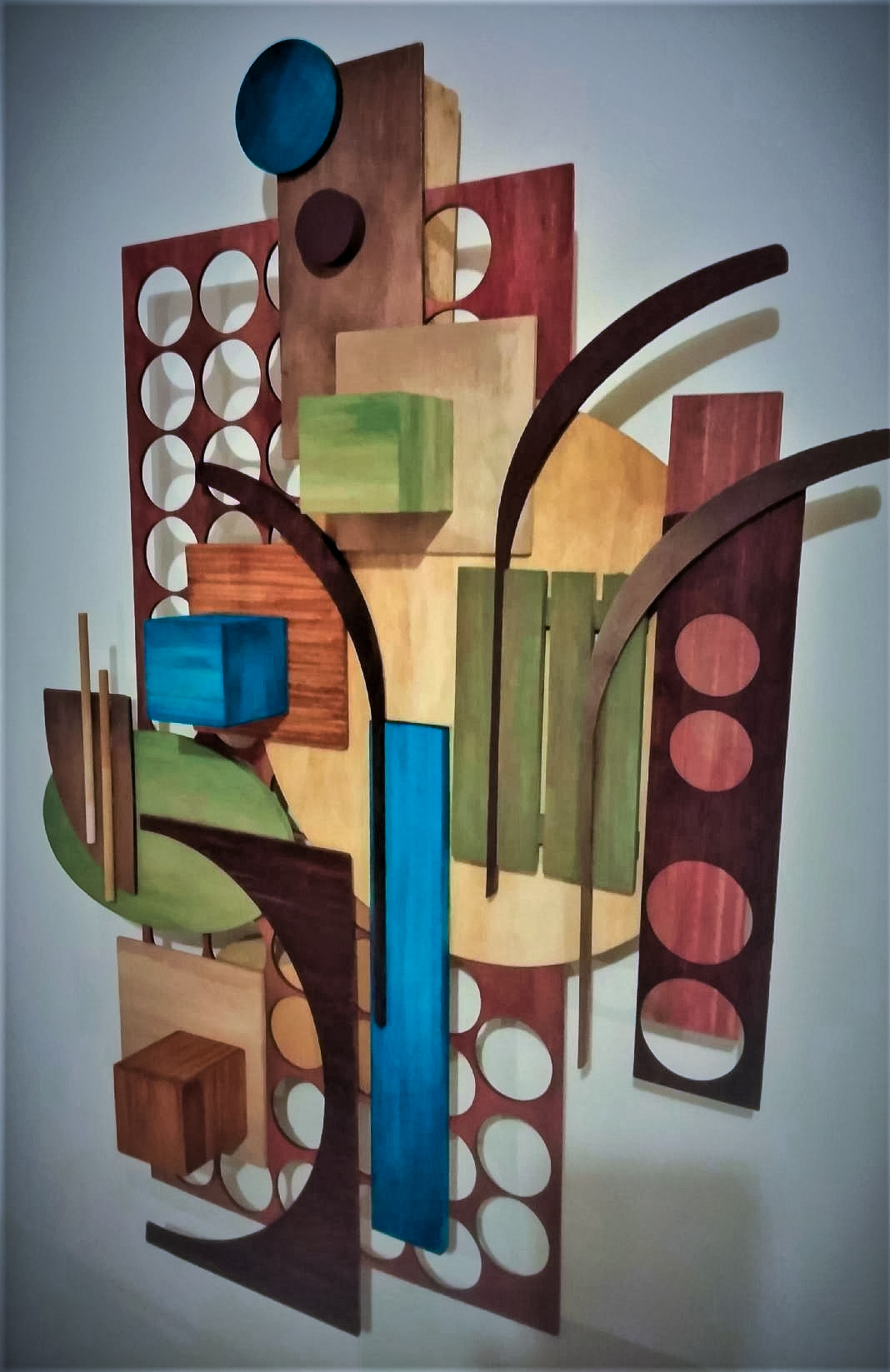
I am currently cutting my circular notation from wood. What remains is scrap wood that is filled with holes in the shape of circles. My idea is to reverse my notation. The cut holes will now represent my notation. How I will do this is to take a wide rectangular piece of plywood which would represent a musical staff. I will than mark and cut out round holes in a left-to-right order that matches the up and down flow seen on my artworks and in sheet music. Christy’s work, Big Block Builder, embodies a vision of that idea. If I can make this work, I am seeing an opportunity to take this art in an entirely new direction, while solving the travel issues I currently have. Like my larger portraits these smaller works will also include playable custom music, and hopefully LED lighting. This challenge awaits.
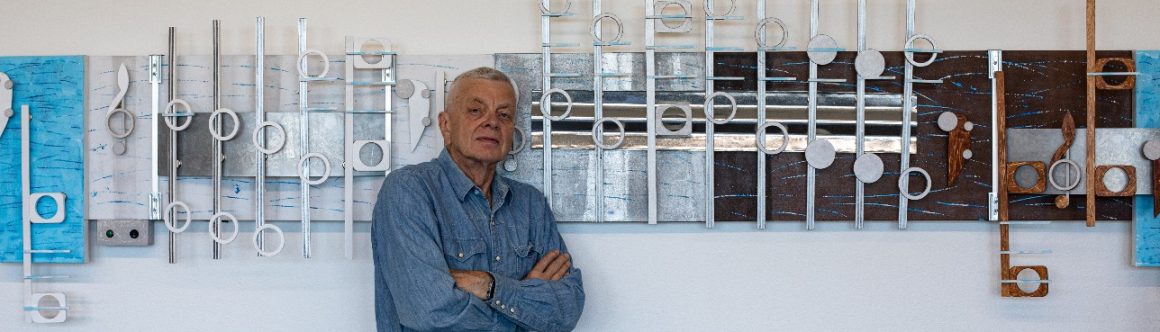
 aRT iN mUSIC