S_V_H Martha my Dear first image

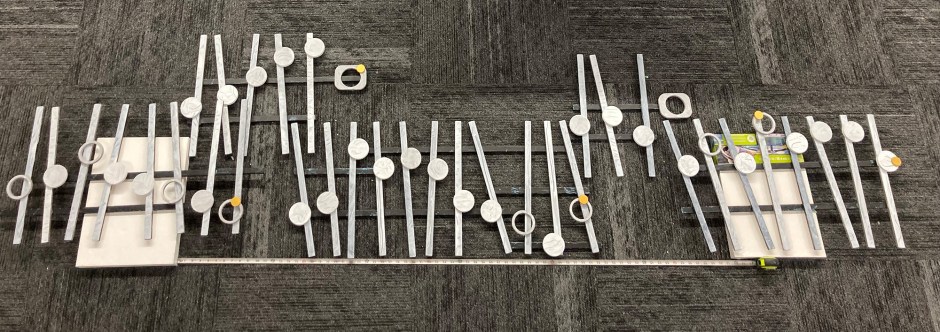
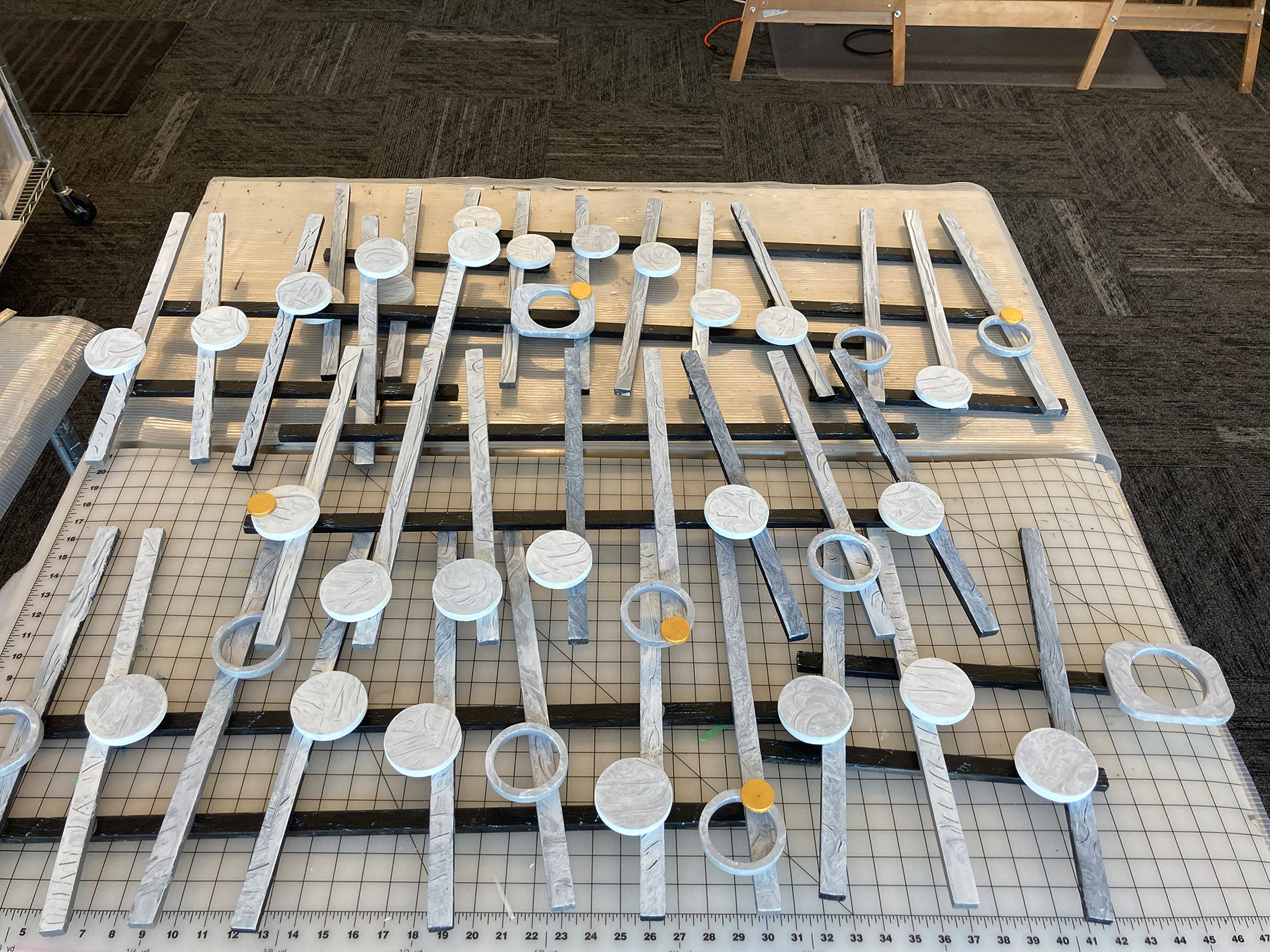
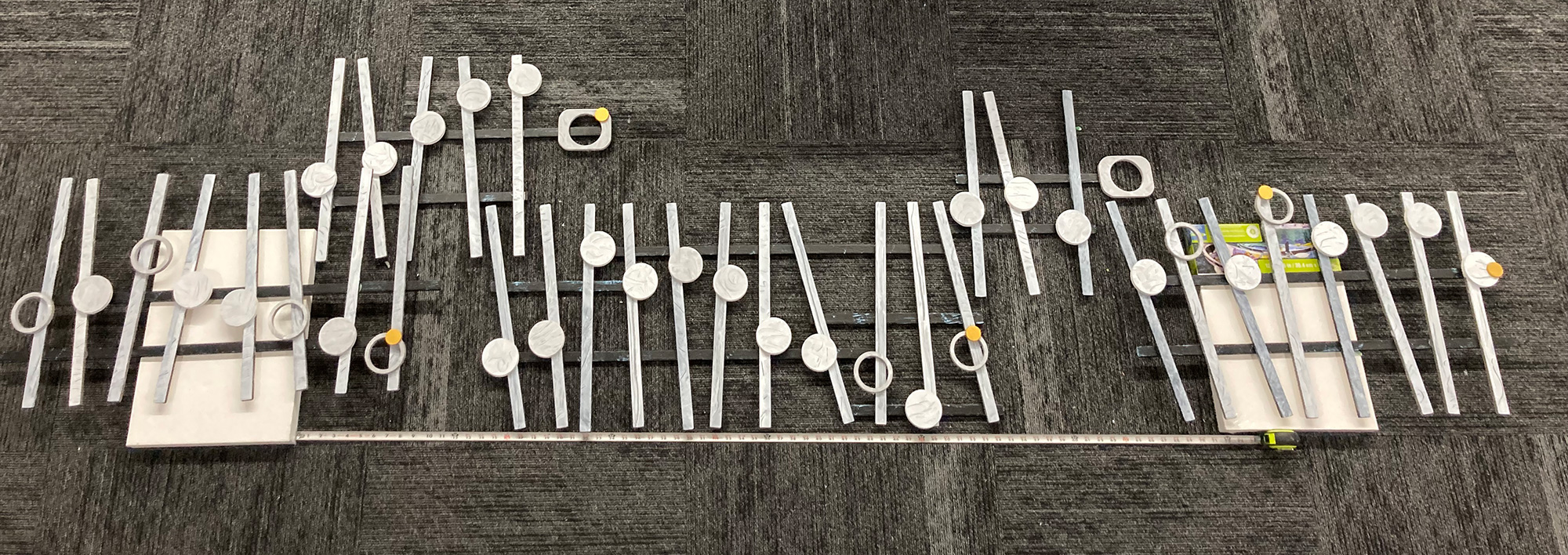
This first image of Martha my Dear is of pile of music that I carefully built. Laid end-to-end the music is, oh! That measurement came to twelve feet, seen in the image below. Hum? From the start of this project the plan was to control the amount of music and therefore its length, knowing that the canvas was only 72 inches. Hum?

Warning! All the next stuff is kinda geeky. The main purpose of this blog is to document this art. Any entertaining value is strictly accidental. Besides, I would never want this art, these blog entries, or my videos to-go “viral,” This is out of fear of becoming a one-hit-wonder and/or bad timing for my eventual 15 minutes of fame option.
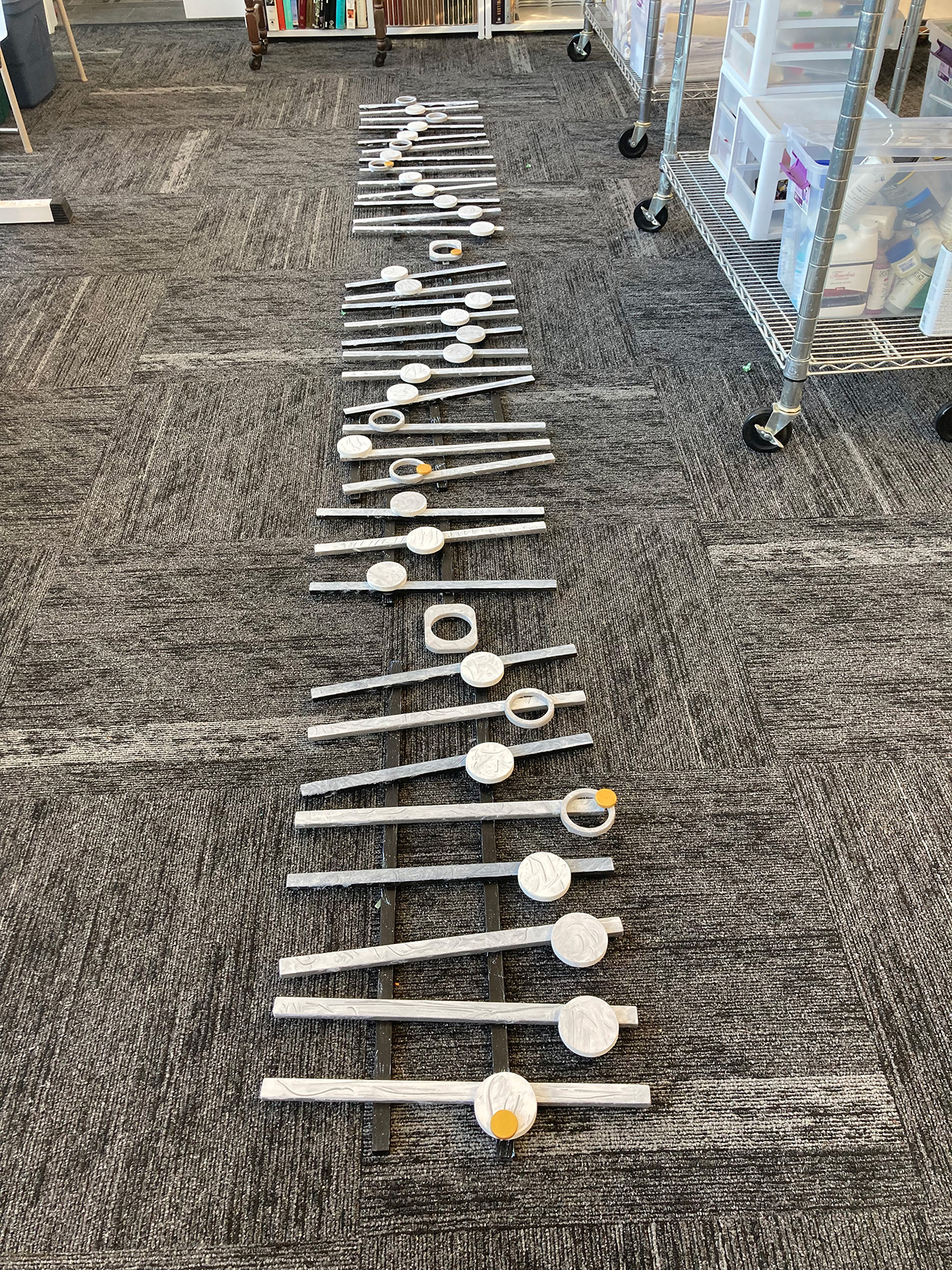
Anyway, what I have to work with is a roll of heavy primed canvas the length of six feet and my choice to cut the canvas at twenty inches in width. Luckily, I have two options, with one being building two connected six-foot canvases frames. Seems like a lot of work. Or, what I will do, which is to reduce the length of an artwork by meshing the music together.
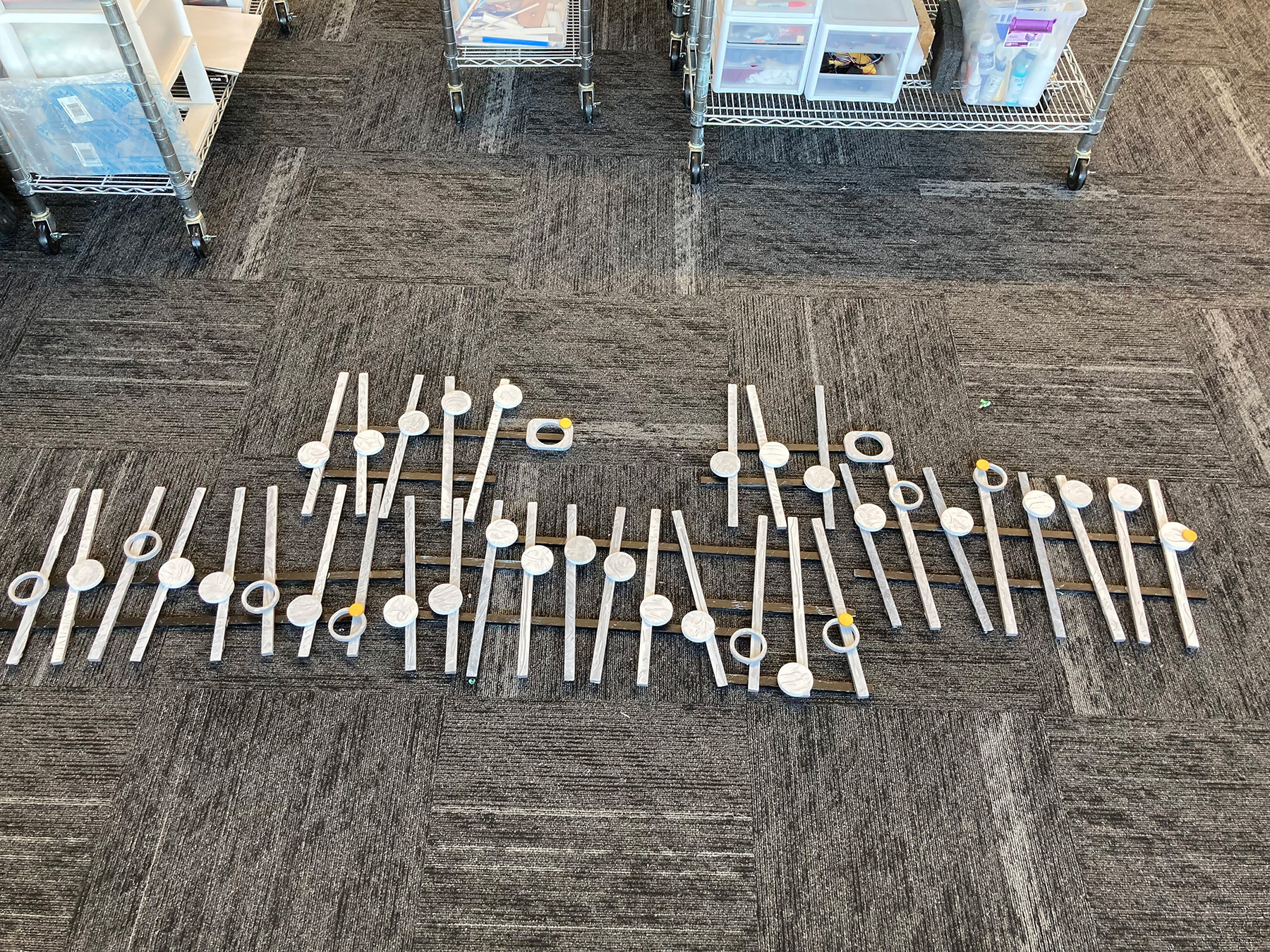
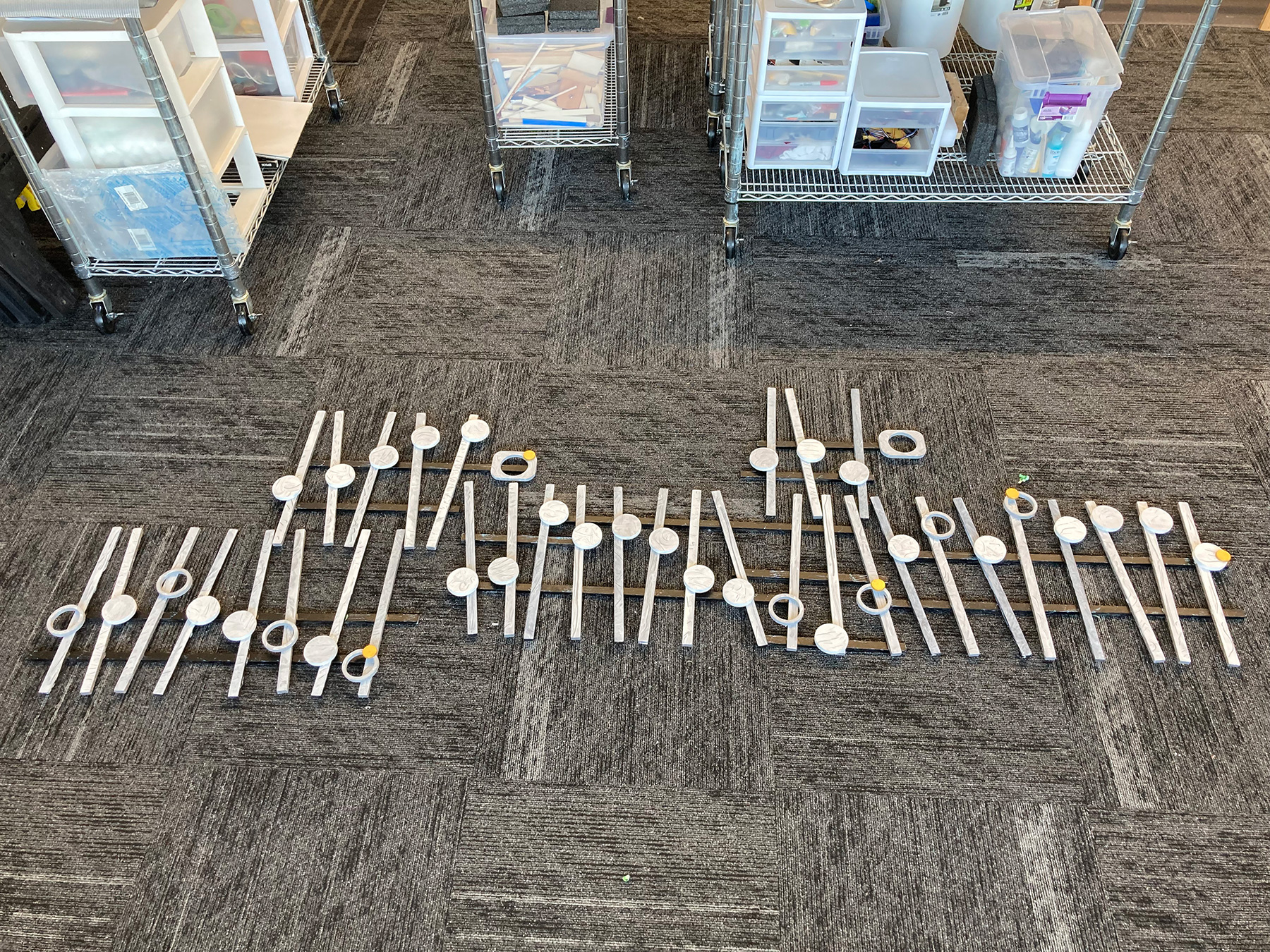
Here then are three basic sketch ideas. Each of these resulted in a project length of around 102 inches. That is easily workable with the addition of the two speaker boxes attached on both ends of the canvas frame. These boxes will also be out front of the canvas, with music attached allowing the music on the canvas to slide under, reducing overall length. An example of this would be the left side of the last image of the Chopin Prelude music box.

This next image is my about time to move-on-lets-work-on-the-canvas-next.
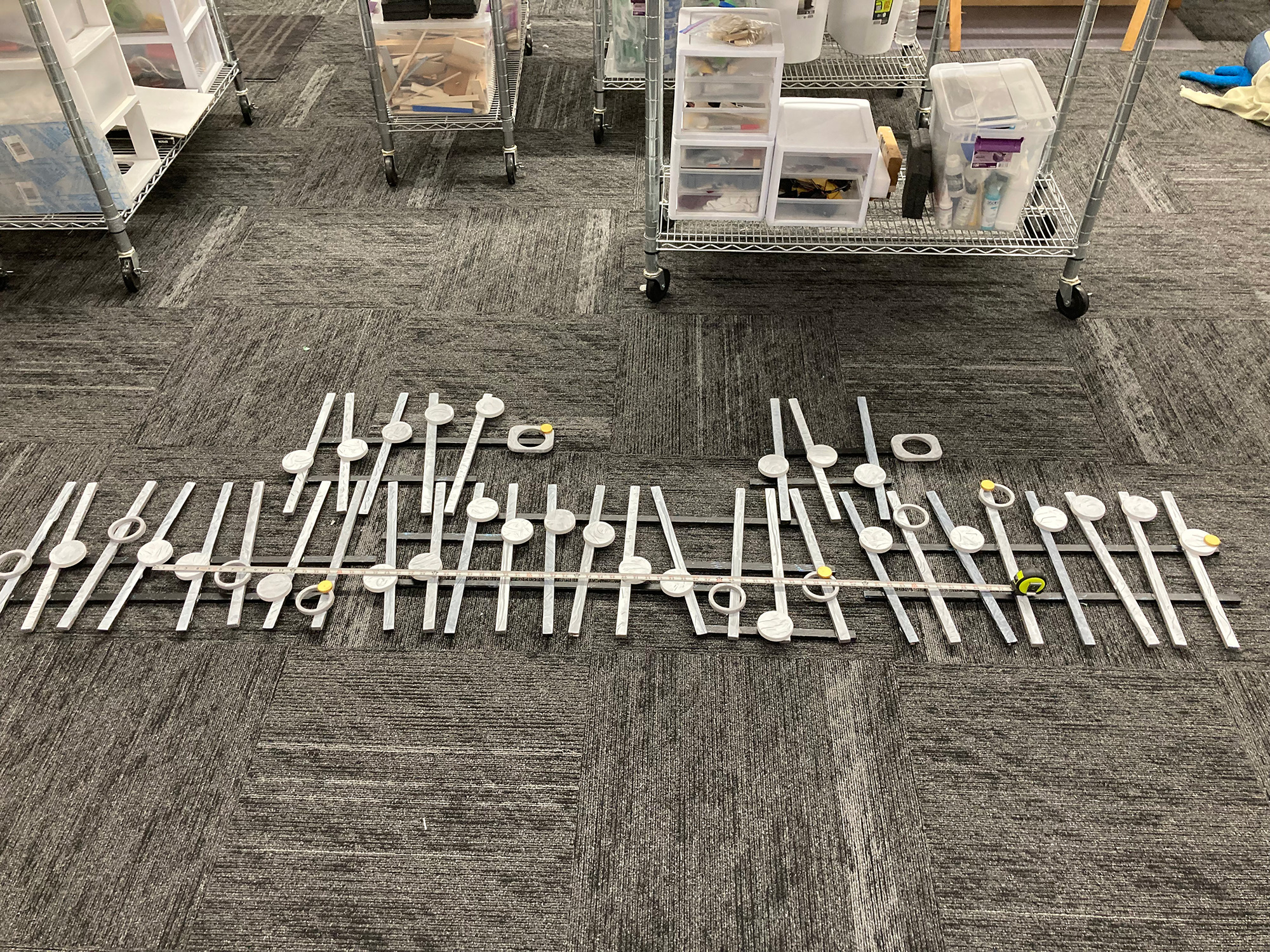
But first here is my final “sketch” for this next music box. To add documentation, I rarely have done any drawing of any preliminary sketches for my music projects. I have several sketchbooks I used when I first started out as a portrait painter back in the 1970s. Since then, I have simply preferred photography over the pencil.

This last preliminary image shows I can attach all the music to a measured six feet by twenty-inch canvas, along with the added speaker boxes.
Scott Von Holzen
S_V_H Martha my Dear musicBox project

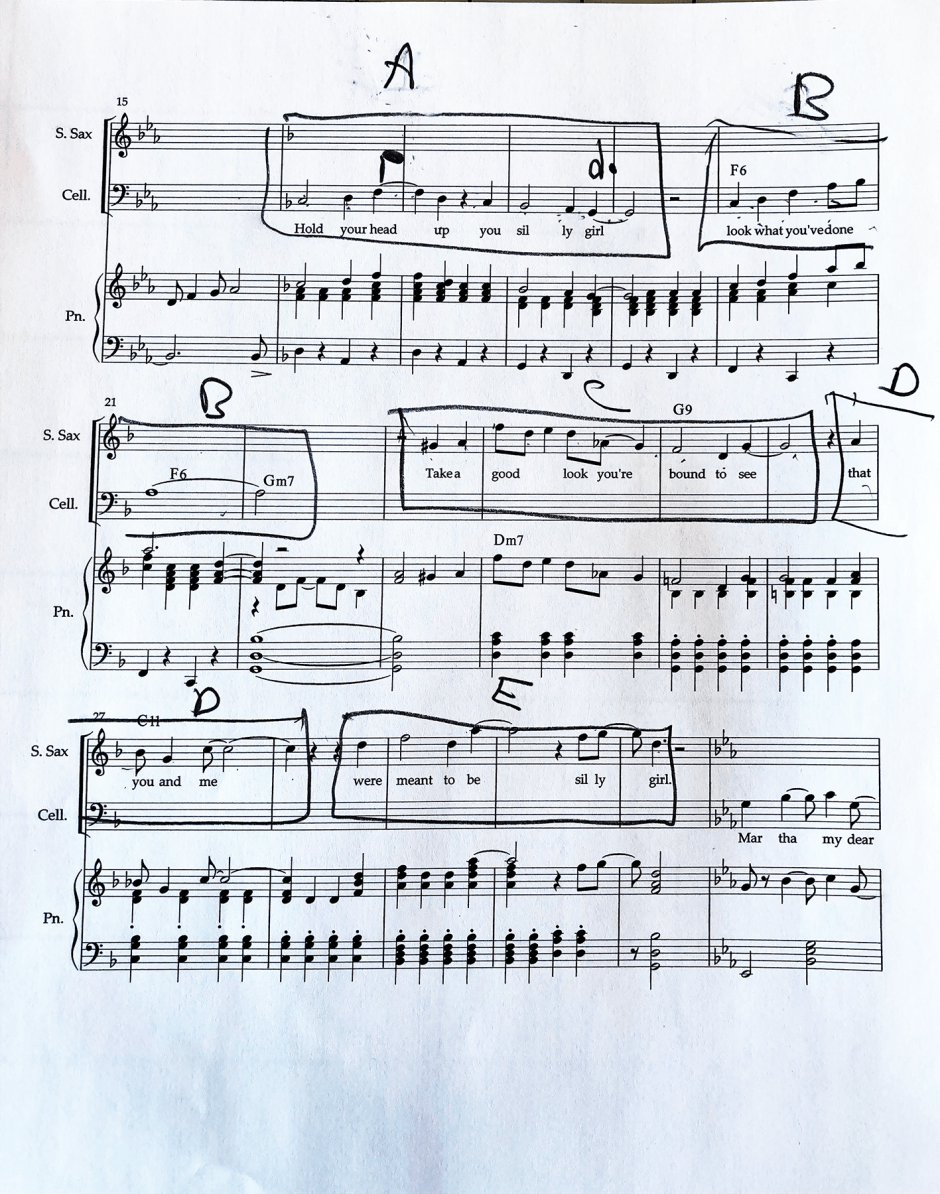
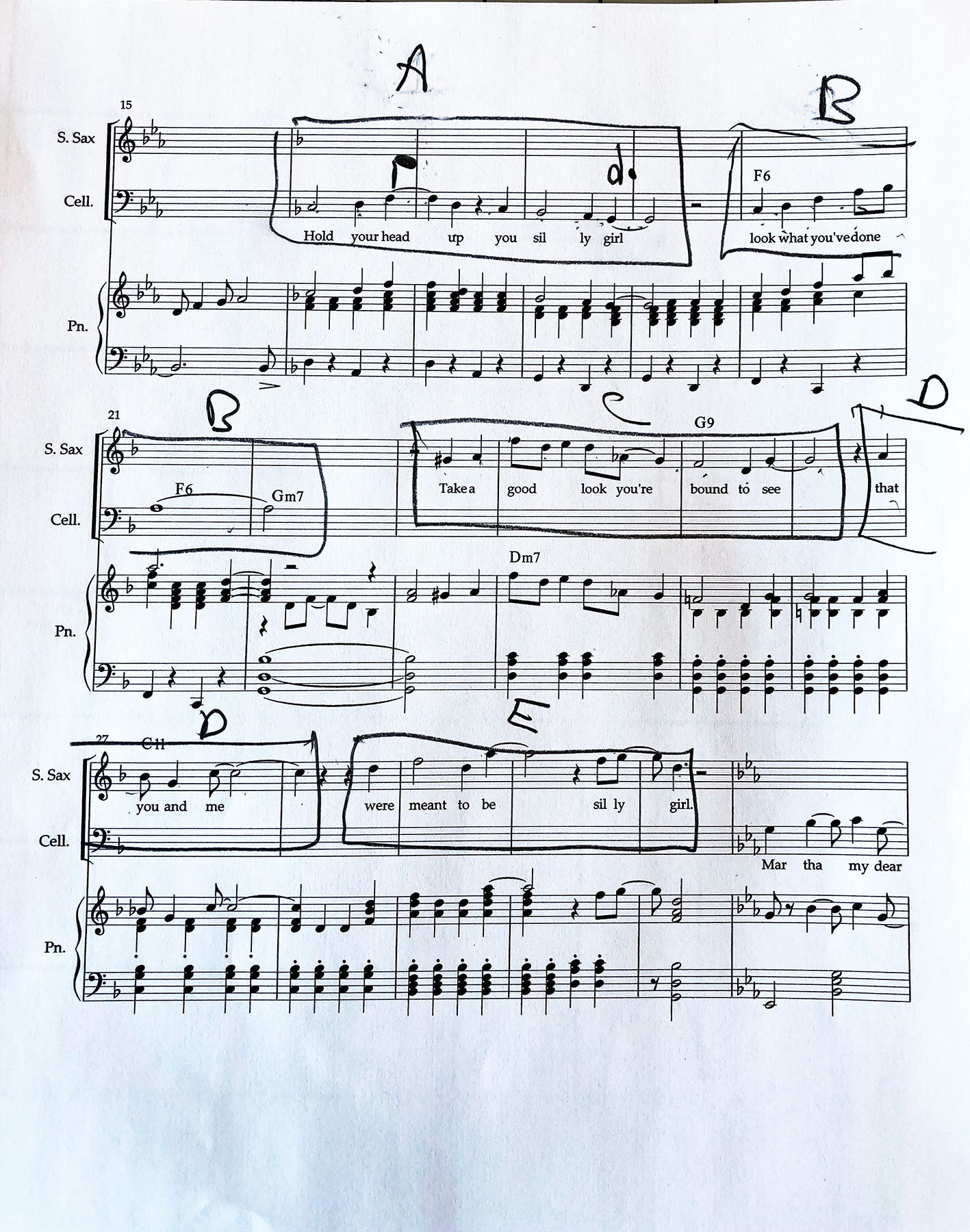
I am posting early to document this process. The image below is part of the sheet music I put together. I am using the notation software Notion that is a part of StudioOne, the DAW used for the final soundtrack. This worksheet is dated November 20th. By putting in the hours needed I found to my surprise that the draft of this music was done after a bit of tweaking today. This sheet music will then be my template to create the visual part of the artwork. The circled parts of the image below show the music that I will build. The choice of notes was made the same as it has always been: I look for an interesting part of the arrangement that has a good start and finish that will fit the artwork. Today’s projects, I no longer am concerned about the fitting the music to the artwork. That is because I don’t want the artwork to fit anymore. Moving the music outside the canvas makes for an open and improvisational look. This is art without borders.

Page 2 of 3 of the Martha my Dear worksheet date 11/2012021

The sheet music is what the artwork samples. To explain, I create and when required; I pay for the right to create a cover for the music. From that cover I then choose a sample and that is what the viewer sees. I then import the sheet music notation from Notion into StudioOne. With a few days of work the music will be finished. Notion works great to produce a musical draft. StudioOne then takes that Notion file to a professional level. Its only limitation is the skill of this artist.

Notation software draft of Martha my Dear

I am not trying to overestimate the quality of this shorten by a minute cover of this great Beatles song from their White Album. The same White Album that I stood in line on a November day at the record store on State Street in Madison, Wisconsin, the day of its release. Nor am I trying to denigrate this fabulous piece of music by chopping it up into smaller pieces visually and in the performance. No, this project and the others like it, which I now refer to as musicBox instead of Interactive Constructive sculpture, are challenged by the typical viewer’s attention span.

A lengthy piece of music can lose a viewer’s interest waiting for the song to end. They can simply walk away, not comprehending what they are looking at or what is being heard. There will be many viewers, especially younger ones, and listeners who have never heard of this music, or do not connect to the music. Shortening helps, but the music, no matter the quality or the length, means more to me than another cover song. No, this music exists as a voice of an artist extending a finger forward. I am a bright shiny object. If you ever get the chance Push the button. I do.

Scott Von Holzen

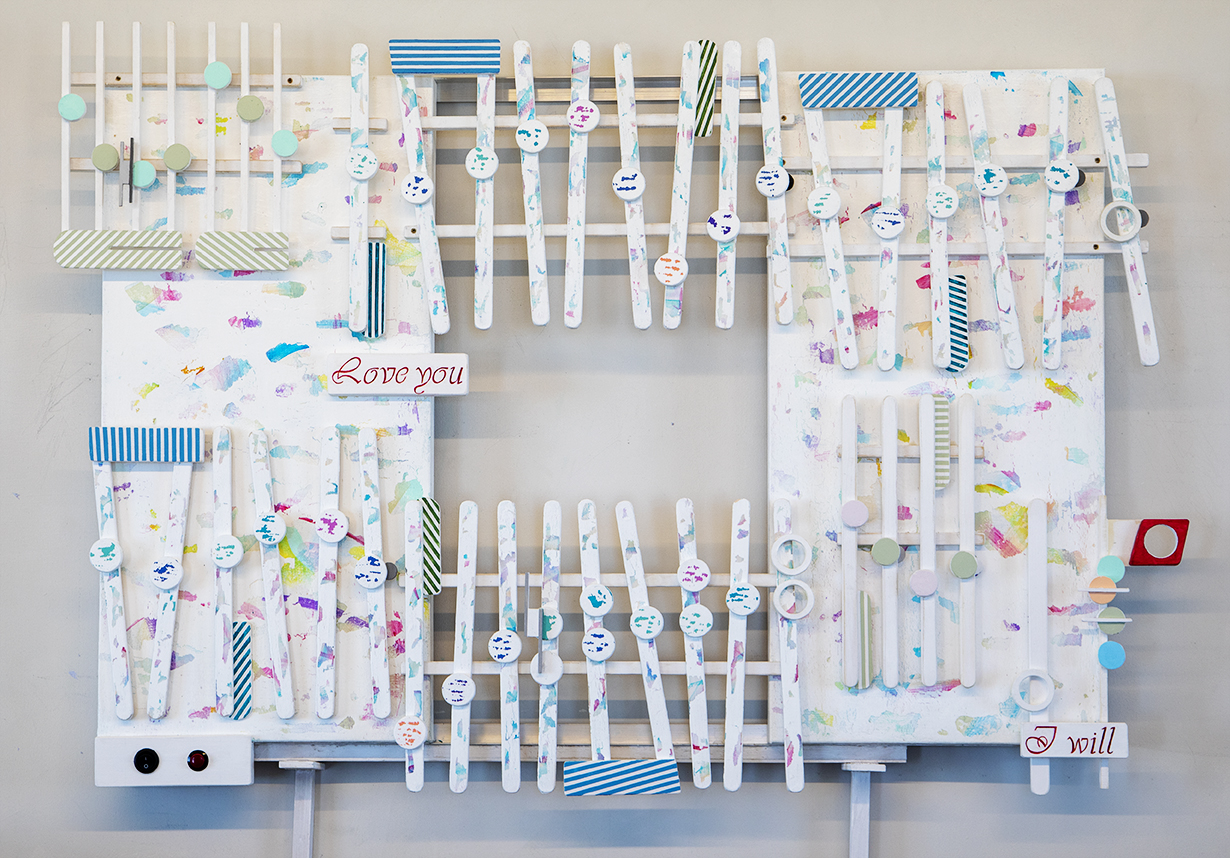
S_V_H I Will final image

I Will L41″ x H27″ x D3″

I have finished the second version of the music I Will.  The video below talks about the two versions of this project and the differences in the music.

What makes this artwork unique is the experimental technique of scraping off the top layer of paint, reviewing the painted layer below.  The creation of this procedure gives to me my own abstract style.  Dealing with backgrounds has been a big pain since the beginning of this art.  The music needs to be on something and that dilemma has been the struggle and the driving force behind this arts innovation.  Although there is still some testing and trial and certain errors to come, I believe after fourteen years of changing background styles I now have a straight path forward.

I like to follow up on what I have said concerning what the viewer is to do when standing in front of the artwork and then playing the music.  Originally,  I wanted the viewer to listen to the music and visually follow the flow of the music that is the artwork.  That made sense. The viewer could then see how the music and the artwork related to each other, which was a founding reason I wanted to paint music.  That reasoning worked great as long as it was up to the viewer to find the music on their own.  They then needed to figure out by listening to the music exactly when and what the artwork flow was displaying.   That all changed when I added the music.  My first push of a button was the first four notes of Beethoven’s 5th symphony.  With that change, I made it a lot easier for the viewer to follow along with the flow of the artwork.  That relief did not last long.

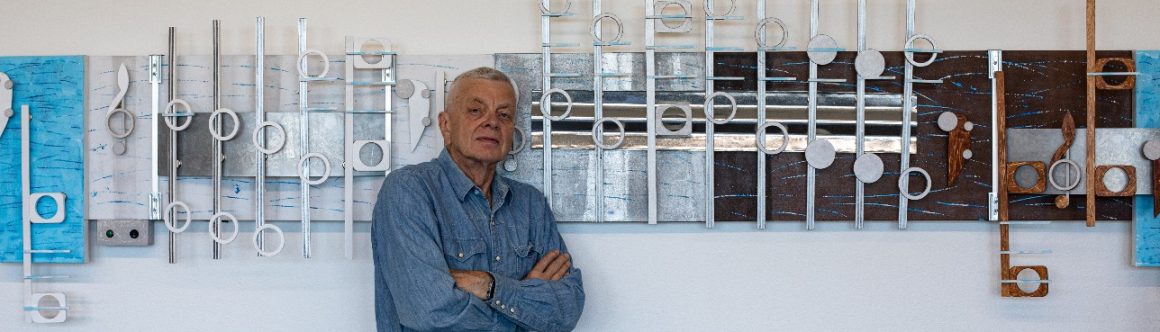
Because this art is living and growing, new changes came along.  I found better computer software to create notation, and that included higher quality computer versions of instruments.   It did not take long for me to create a notation that used multiple instruments representing the flow you see in the artwork.  A good example of this is the wonderful 2019 artwork, Will The Circle Be Broken.


Then came the awakening that shocked me: this art and the music in it had grown to where I could not follow consistently along with the music and the artwork.  If I could not what hope would there be for the causal viewer?  Not being able to follow the flow of the music of the artwork left me with the question of how the viewer was to interact with the artwork?  I had made a great advance with this art, but unintentionally I created a conflict between enjoying looking at the artwork and listening to music.  With the presence of a button to push to play the music, I had created artwork that interconnected sight and sound.  For now, unless I figure out something else, I recommend the viewer keep the two senses separate.  Look at the artwork as a representation of a song in color and form.  Then press the button and enjoy the music for what it represents,  the sound of art.

Scott Von Holzen