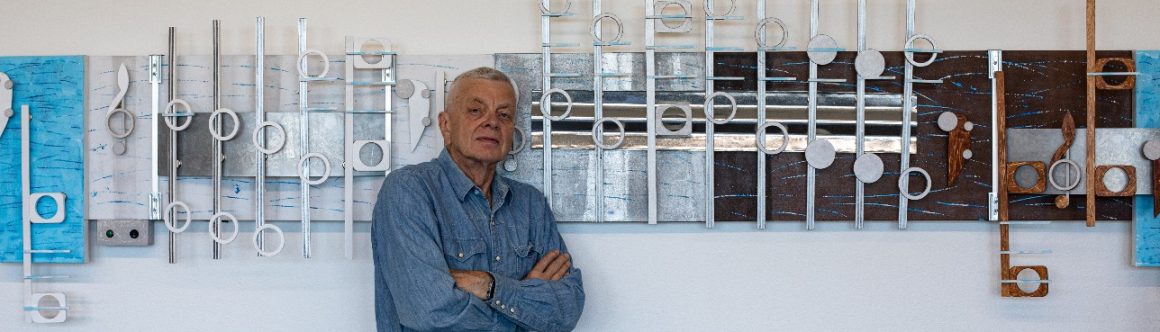

Here is a closeup of a handwritten Lyrical Verse by Scott Von Holzen that is mounted on the artwork, My Foolish Heart. Follow down this page for the explanation of what is going on here.

My Foolish Heart Music by VICTOR YOUNG
Words by Ned WASHINGTON
“The night is like a lovely tune, beware my foolish heart!
How white the ever distant moon, take care, my foolish heart!
There’s a line between love and fascination
That’s so hard to see on an evening such as this
For they both give the very same sensation
When you’re lost in the magic of a kiss
Her lips are much too close to mine, beware my foolish heart!
But should our eager lips combine, then let that fire start
For this time it isn’t fascination, or a dream that will fade and fall apart
It’s love this time, it’s love, my foolish heart!”
–––––––––––––––––––––––––––––––––––––––––––––––
(THE WORDS FROM THE HANDWRITTEN LYRICAL VERSE attached to the artwork.)
It’s Love Lyrical Verse for the artwork My Foolish Heart SCOTT ON HOLZEN
“When I am with someone new, I dream for the night hours. The evening falling over us. The white of the moon, setting the opening scene. Soft voicing lines share the same sensations . Is it love. is it fascination. For the night holds a lovely tune. Beware the bright white of the moon. And yet there’s a hard line to cross between love and fascination. Mystery lost in the magic of a kiss. And if fascination or a fades or falls apart in time. Why still. Her lips too close. Beware the light the ever distant moon, exposing should eager lips combine. Seen in an evening such as this. Then let the fire start. This time It’s love this time it’s love. My foolish heart pressed Between two eager lips. On an evening such as this.”
Here is an explanation of what I am doing: copying words and lines from someone else’s copyrighted lyrics. I am writing one person’s feelings and the words from that song that the listener is recalling when thinking about the music and why the music and the lyrics stick in their head.
Speaking for myself, there are few songs that I have memorized the lyrics to correctly. Here is an example: Bruce Springstein song “Radio Nowhere.” The actual line from the song is: “Is there anybody alive out there?” But for forever and months more, I would think to myself this line: “Is there anybody out there with a light on?” That is a small, tiny example explaining my lyrical verse. The lyrics are not mine, and I acknowledge that. But the memories, the dreams, stories and lyrics behind the music, I feel them . And this is why I spend considerable time building an artwork, the cover, music and lighting that define this art. All that is mine.

On October 12th, I was reading the lyrical verse for My Foolish Heart. One line from the verse caught my attention. After letting this verse settle I went all Jean-Michel Basquiat and crossed out words and left that lyric verse line as “Her lips too close.” And I actually like this change. This shortened line goes better with the line before: “Will Still.” The original line is a great lyric: “Her lips are much too close to mine...” I felt I needed to put more of my voice into this verse.
It was a serendipitous moment when I came across this video of Bill Evans. It is an interesting behind-the-scenes story. Evans is somewhere out of the country, while the drummer is local, and this conversation I did not expect. There is another connection I have with this video..
In 1966, I graduated from high school. Not knowing I was growing up in the same cultural world as Bill Evans. Thinking back to my youth I wonder about the differences between the music and art of the 1950s and 1960s and what I see and hear today.
When I attempted to introduce that aspect of myself into a conversation, the younger group responded briefly and dismissively. I withdrew like an adjective holding on until the final edit. In today’s world of art and music fitting the conversational mood was better than trying to make a comparrison about their music and art and what I grew up seeing and hearing. What would be my point beyond me chassing ghosts.
Of course, good art and memorable music are still being made today. But I find comparisons increasingly difficult the more I learn about art and music together. Perhaps I am simply recognizing how fortunate I was to grow up in the cultural world of the 1950s and 1960s, when so much of its music and art became part of my everyday life. I took much of it for granted then. Only later in 2006 did I grasp in earnest the meaning of that understanding and how much music and art had had given me.

Scott Von Holzen