S_V_H Vivaldi’s “The Four Seasons(Autumn)adagio molto Final image

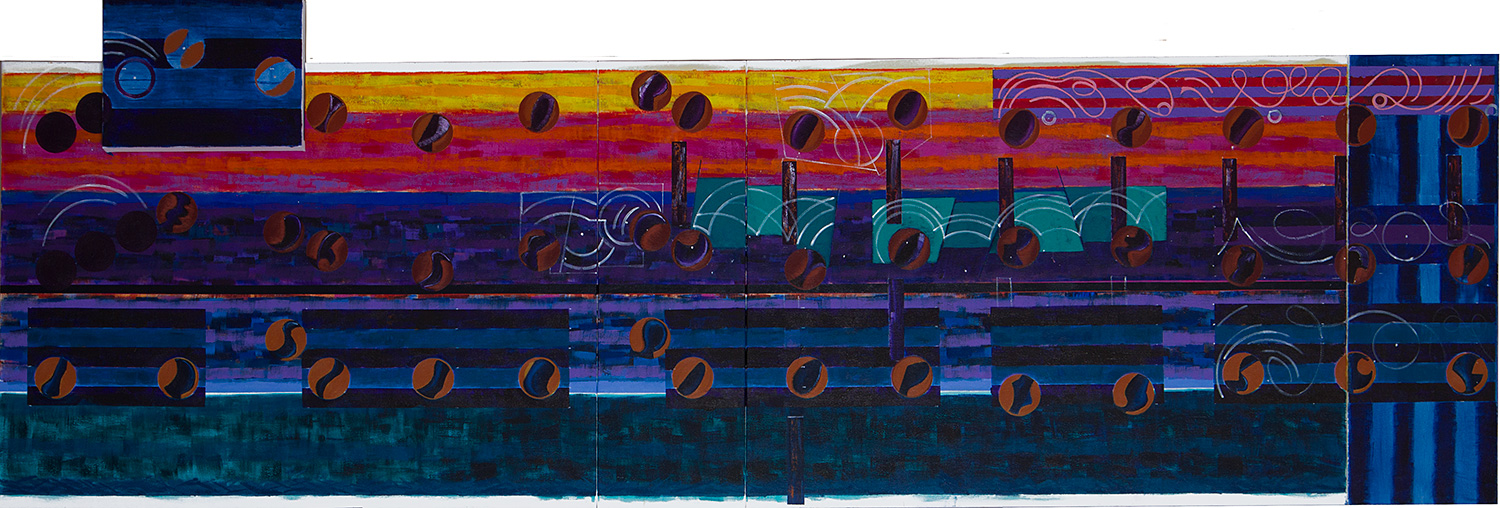
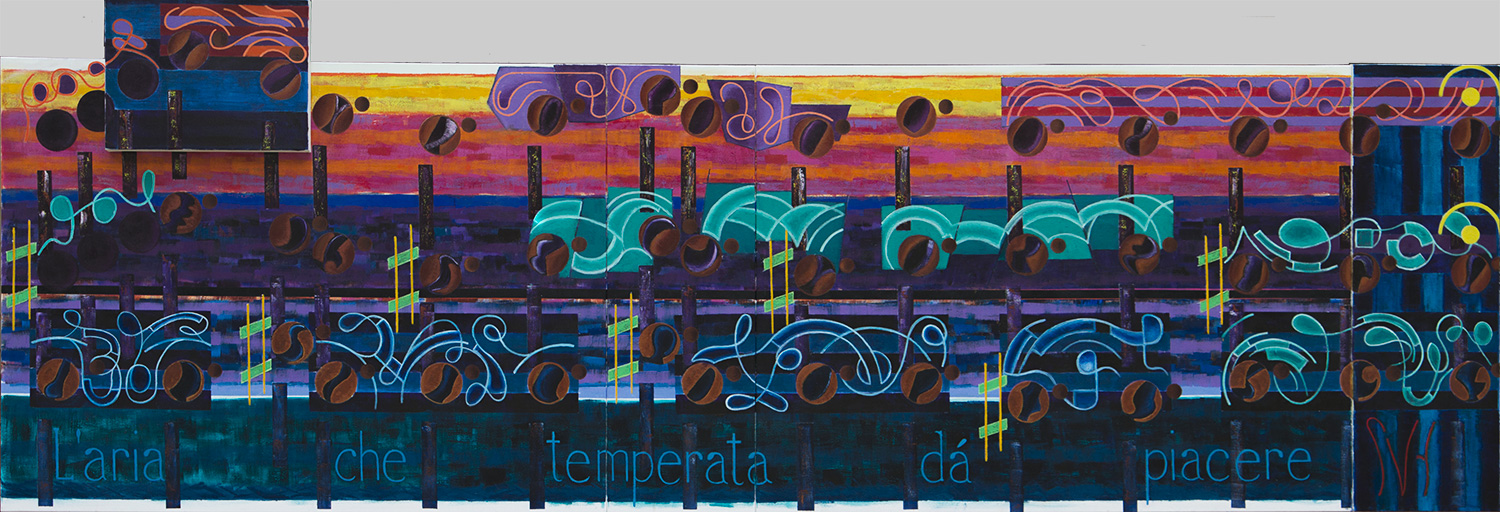
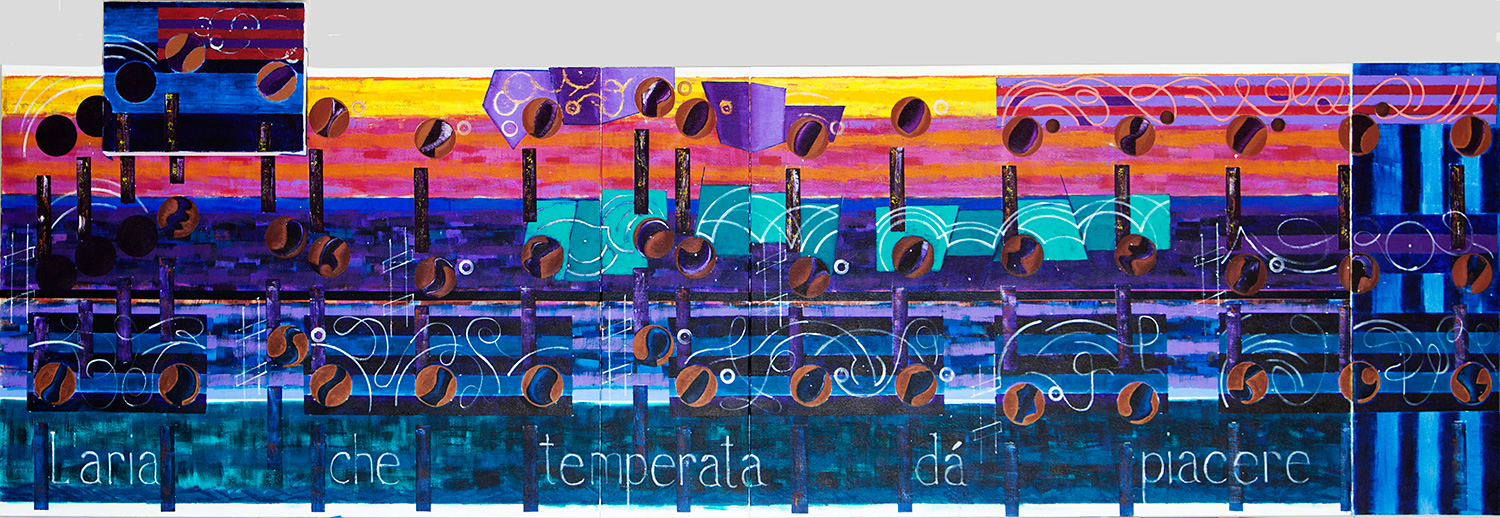
Vivaldi’s The Four Seasons – Autumn – 2nd  movement.  This artwork is composed of five canvas panels with a total length of 120inches by 40.75 inches, maximum height.  This work was started on May 28th and now 47 days later it is finished. The guesstimate is a minimum of 3 hours a day was spent working with this artwork.  This means about 130 hours to complete.  The amount of time an artist puts into a work is not a prerequisite for value or quality, but it is good information to have when planning.

Listening to One Night in Bangkok

Melissa Ferrick – Don’t Say Goodbye

Bruce Springsteen – Streets of Philadelphia

Etta James – At Last

If I look at this painting objectively, there is not much in art history that looks  similar to this, or that approaches the way this art depicts music.   That does not mean it is any good, but there is a feeling, that this new Vivaldi work is continuing the push of this art in an interesting direction.

What then was accomplished with this artwork? We can start with those interestingly portrayed musical ties that are crazy good in this work.  This is an image of your standard sheet music musical Tie:

Now, here is this artist take on a musical tie from this painting:
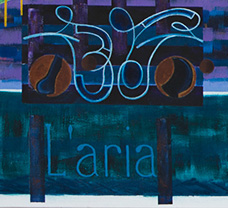
There is no comparison, one image is of standard musical notation, and the other has nothing to do with music and is a creation from imagination. Simply put, one can be played, while the other can be either appreciated or dismissed.

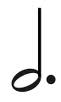
This artist take, on Vivaldi’s musical notes, took on the look of  individual planets (not intentionally) each with their own little moon (dotted half-note) that floats across the canvas.  Here is musical notation version of a dotted half-note:

 This is this artist take on a dotted half-note:
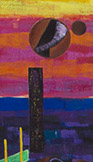
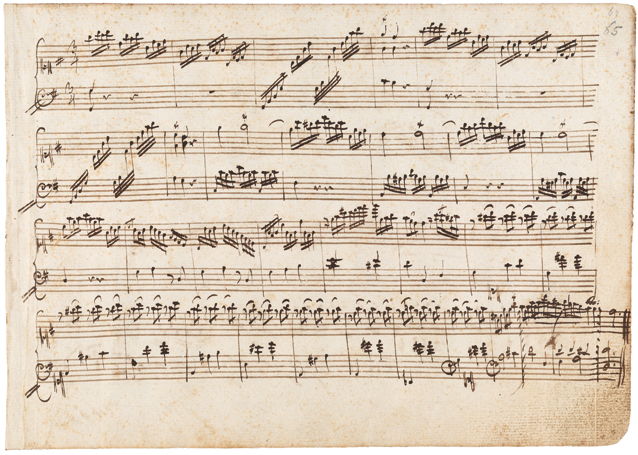
Throughout this work every object that floats over the background has been treated as an individual item which gets some of its inspiration from the musical manuscripts of Mozart at the British Library.   
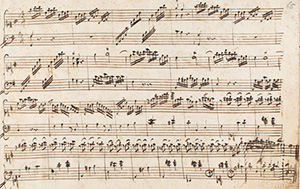
The way musical notation is jotted down is as individual as the musician.  Those varied pencil marks can then produce an infinite number of options when played.  So, it is in looking at music and with the understanding of this endless variety that is music, that has been a part of what has allowed this art to quickly improve and transform.

Tiny Dancer – Elton John –  from the album Madman Across the Water

Listening to Will Smith – Wild Wild West

Billy Eckstine – Misty

Suicide Blonde – INXS

One  technical issue that had been a concern of  this artist, was to not to create an abstract musical artwork that could be dismissed as decorative:  partially defined as a painted work on canvas that has the right colors to match the furniture, and is the right size to full the space on the wall. When the thought is about decorative painting Henri  Matisse comes to mind, and what was learned from his art that actually changed this art over the years. It is in this gowning process, and the better understanding of the great variety that is music, that allowed this art to be depicted however it was wished, and that any concerns with  decoration was nonsense.  The varied use of color and shapes are needed to enhance the feel and mood of the music. Since music is usually listen to, and since these paintings have no sound, this art needed to create visually images to arouse the music inside of the viewer. Plus in practical terms it would have been boring painting standard music notation, which would have killed this art.  Thank you Matisse. Matisse is also on that short history list of influential artists starting with Vincent Van Gogh,  Rembrandt van Rijn,  Henri Matisse, Pablo Picasso, Mark Rothko, Jackson Pollock, and J.M.W Turner.

Sting – Stolen Car (Take Me Dancing)

Janis Joplin – Try

Bowling for Soup – 1985

This artist believes that this work’s style certainly pushes forward. But  its limited use of add on canvases can be seen as an unavoidable short coming of this artwork. Otherwise, the best of this art is in the style and coloration of all those half-notes, those magnificent ties, the words that are large and look great reflecting the mood of the painting in their color, and the use and variety of colors in the background.

There are now ten more works of Vivaldi’s The Four Seasons, yet to paint, with the next one beginning tomorrow, delayed because of the multiple hours required to write this one blog entry.

Listening to Take Five – Dave Brubeck

Vivaldi – The Four Seasons – Winter – 1st movement the artist favorite.

Michael Jackson – Blood on the Dance Floor

Keb’ Mo’  – Soon as I get Paid

This now brings me to this years Birthday painting that everyone, that reads this blog, will have an opportunity to receive a sign photograph of that work, t0 be painted from beginning to finish, all in one day, July 31st. I will be posting another blog entry with the details.

Ending this blog entry with The Killers – All these Things that I’ve Done

Scott Von Holzen
S_V_H Vivaldi’s “The Four Seasons(Autumn)adagio molto image6

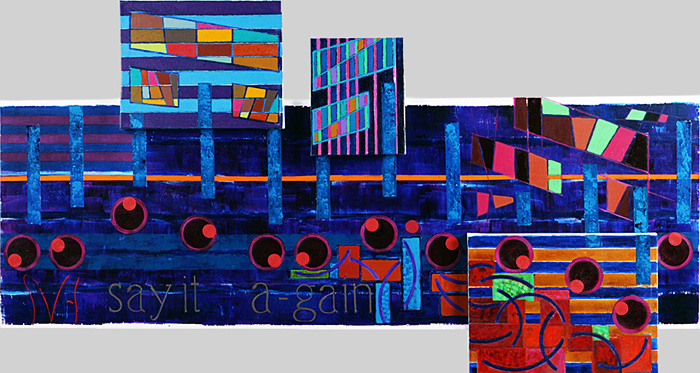
Vivaldi’s The Four Seasons – Autumn Second movement, 3 meters in length by 1 meter.  Yes, this artwork looks messy.  That will all be refined in the next couple of weeks.

Listening to Coldplay live – In My Place

Stevie Ray Vaughan – Voodoo Child

This artwork depicts the flow of this music’s ending.  The video below is not a great version of this music, but it demonstrates the expansive flex that allows music to be preformed and still be recognized, even when everyone is playing the same notes.  Taking that thought further that is why there is so much variety being put into this and the other artworks. Great music allows itself to be stretched in every direction, which brings out the creative sparks  in every performer.

The Chordettes – Mr. Sandman

Carrie Underwood – Before He Cheats

Pink – Misery

Also, I get bored using the same identical techniques in a work.  Of course repeating a style, lets say from one half note to the next, gives an artwork a smoother flow and comfortable feeling of consistency, and has it need and place.  But again, it becomes tiresome, and maybe disappointing at times, and that is when those little tweaks appear all over the canvas.  Call it this artist take on music in Cubism.  The large extent of styling in this work is because this canvas is uniquely describing three different instruments:  the top flow line  is the Principle Violin, while the second is the Primary Violin, and the third is the Cello. The desire then to give each instrument its own look, which leads to different ways of applying paint.

The words are Italian from the original Four Seasons sonnets, with a basic translation of “The mild air is pleasant.” This part of the sonnet is about the coming of the night.

Patty Griffin – Long Ride Home

Indigo Girls – Mona Lisas and Mad Hatters (Live)

Already there is some thinking ahead that comes from a work  finished in March, called The Pretender, that hangs in the living room.

That work, with the main canvas being 20 inches by 60 inches (1.5 meters) is constructed around this small canvas, which adds quite a lot of visual appeal. That does not worked with this Vivaldi canvas, because again, three different instruments are being portrayed.  But, if the next canvas is another Vivaldi work, for example, and it needs only the Principle Violin,  then there will be that option to choose a  small main canvas,  with the tacking on of the rest of the music. This will make for more  work, for sure, but it adds, challenge, interest, diversity, and fun.  We shall see.

B.B King & Eric Clapton – Days of Old

Steel and Glass – John Lennon

Aimee Mann – It’s Not.

The next effort with this Vivaldi is to change all of these white lines, into objects that are colorful, interesting, rich looking, and add a balance to this work.  That may be what will bring this effort all together.  Not sure of that, but there is this thing that occurs that leads to the finishing of every one of these works.  Something finally happens to unite the whole canvas, and at that moment  it feels that the artwork has achieved all that is expected of it.  That is when the end is near, the clean up part begins, and the mind begins the process of letting go and moving on. Such is life.

Listening to Damien Rice – 9 Crimes  &  INXS  – Pretty Vegas

Finishing this post with a future painting,  Bach – Sonata No.1 in B Minor BWV 1014 – Adagio

Scott Von Holzen

S_V_H Vivaldi’s “The Four Seasons(Autumn)adagio molto image5

Vivaldi’s Four Seasons, 5 panels 120 inches (3m) in length. I have decided it was time to move the photography of this artwork forward and work with RAW images. In the before time there was a 4by5 camera and a large format darkroom.  This photographer spend way to much time on darkroom techniques, instead of creative photography.  The move to digital and the end of the dream to be a professional photographer, especially after returning to painting in late 2004, all lead to the abandonment of the dark and the quest to be the next Ansel Adams. Today, I shoot  a Canon 7D with a Tamron lens, and shooting in RAW brings back some of those old beloved darkroom feelings.  Looking at this first attempt this web image is close to the artwork, in color and feel, but with a tad too much saturation.

Sinead O’Connor – Nothing Compares 2 U  Music that needs to be painted.

Listening to Renee Olstead – Someone to Watch Over Me.

This work has been in progress of over a month.  Summer has slowed the art, and it may take another week or more to finish this work.  It is important to finish it soon to keep the momentum and interest up.  This  canvas has been demanding and it was only last night that I began to see some aspects of what I call a finished looked. That is telling that the work is starting to become its own statement.

Joe Turner – Shake, Rattle and Roll

Queen – Somebody to Love

The ties (all those squiggly  lines) will be the look that will dominate this work.  To note this is the first time  that there are combos of hand drawn and  ties created with the help of a compass.  The use of hand drawn ties, especially along the right side as this music ends, softens the look, similar to the music as it fads away.  Again you see the influence of Sean Scully, in the rectangle stripping.  This Vivaldi music is composed of a lot of dotted half  notes.

Clint Black – Are You Sure Waylon Done it This Way.

July Collins – Brother Can You Spare A Dime

The drawings,  in this painting, of  this arts version of the dotted half-note, were done to create a unique look for each. Since this arts focus has evolved over the years to be about displaying the of flow of the music, and not to replicate the actual music, that has created an environment of freedom that tests, and pushes to see how deep the talent is. Music is much more then the standard notation that gives it a representation.  The best  musicians take a song to new places, and own it.  But can this art achieve those same results?  That is this artist quest. Still can he own it?  That, is something  I want to find out.

Listening to Landside – Fleetwood Mac

Bruce Springsteen –  Because The Night

Scott Von Holzen