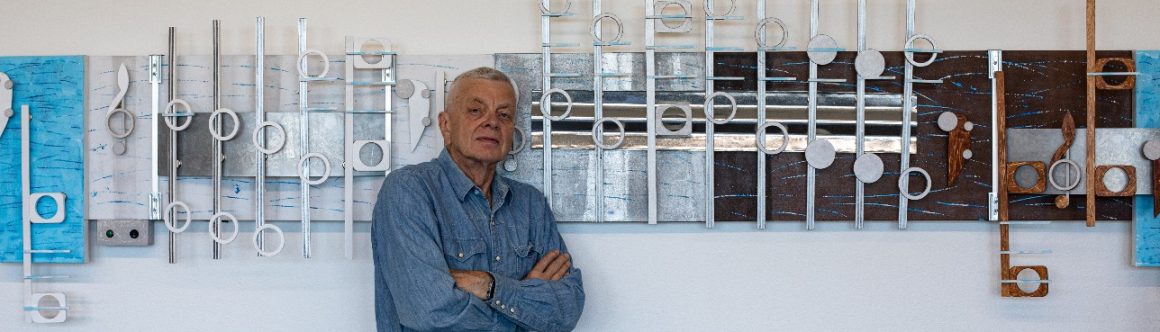
S_V_H The Beatles Triptych image 3

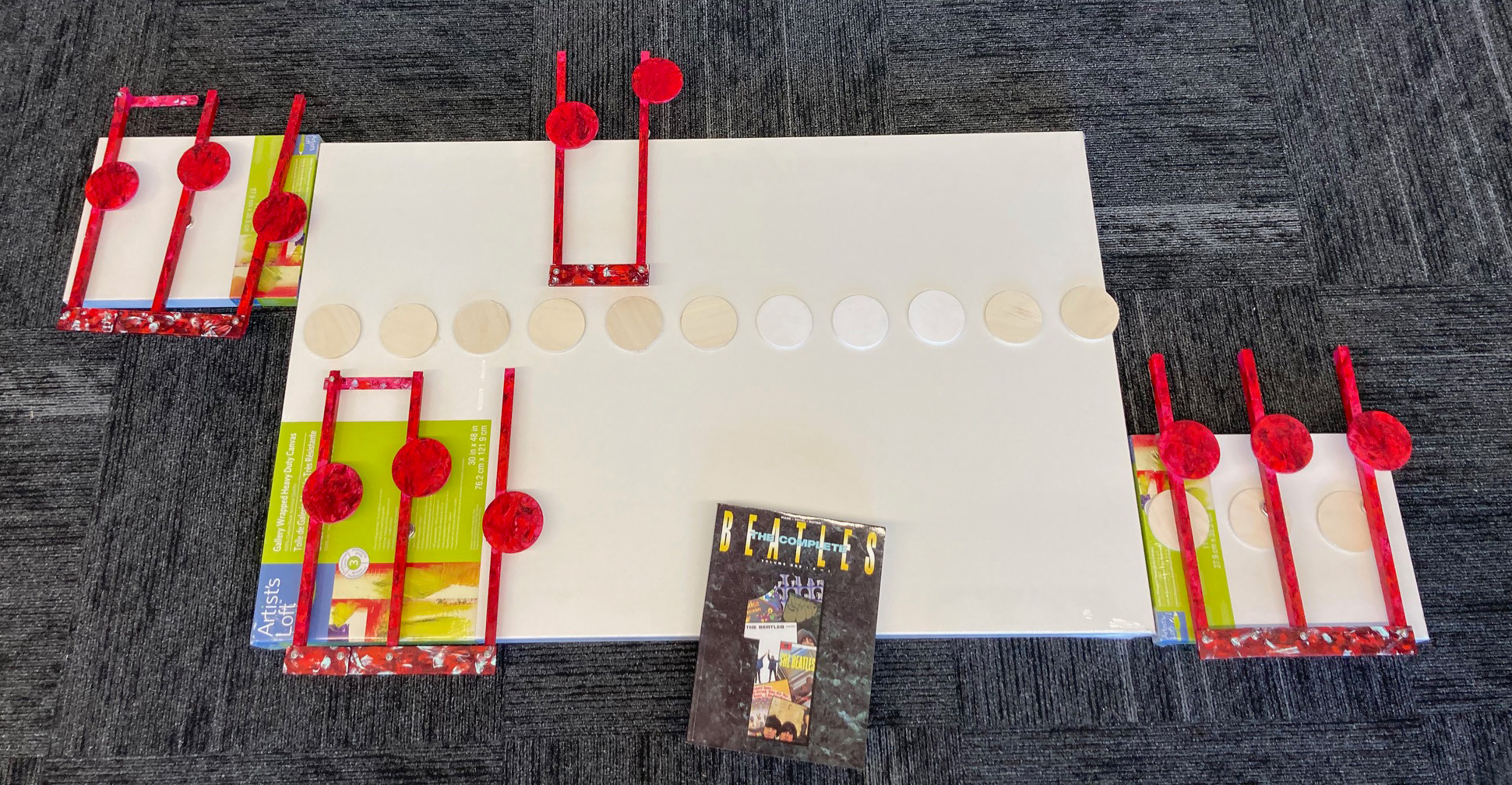
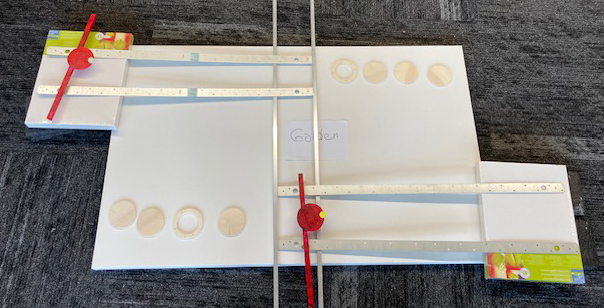
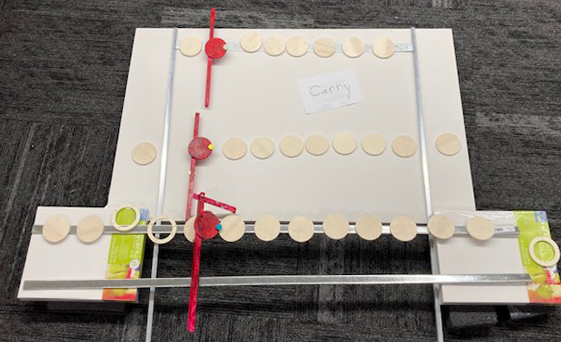
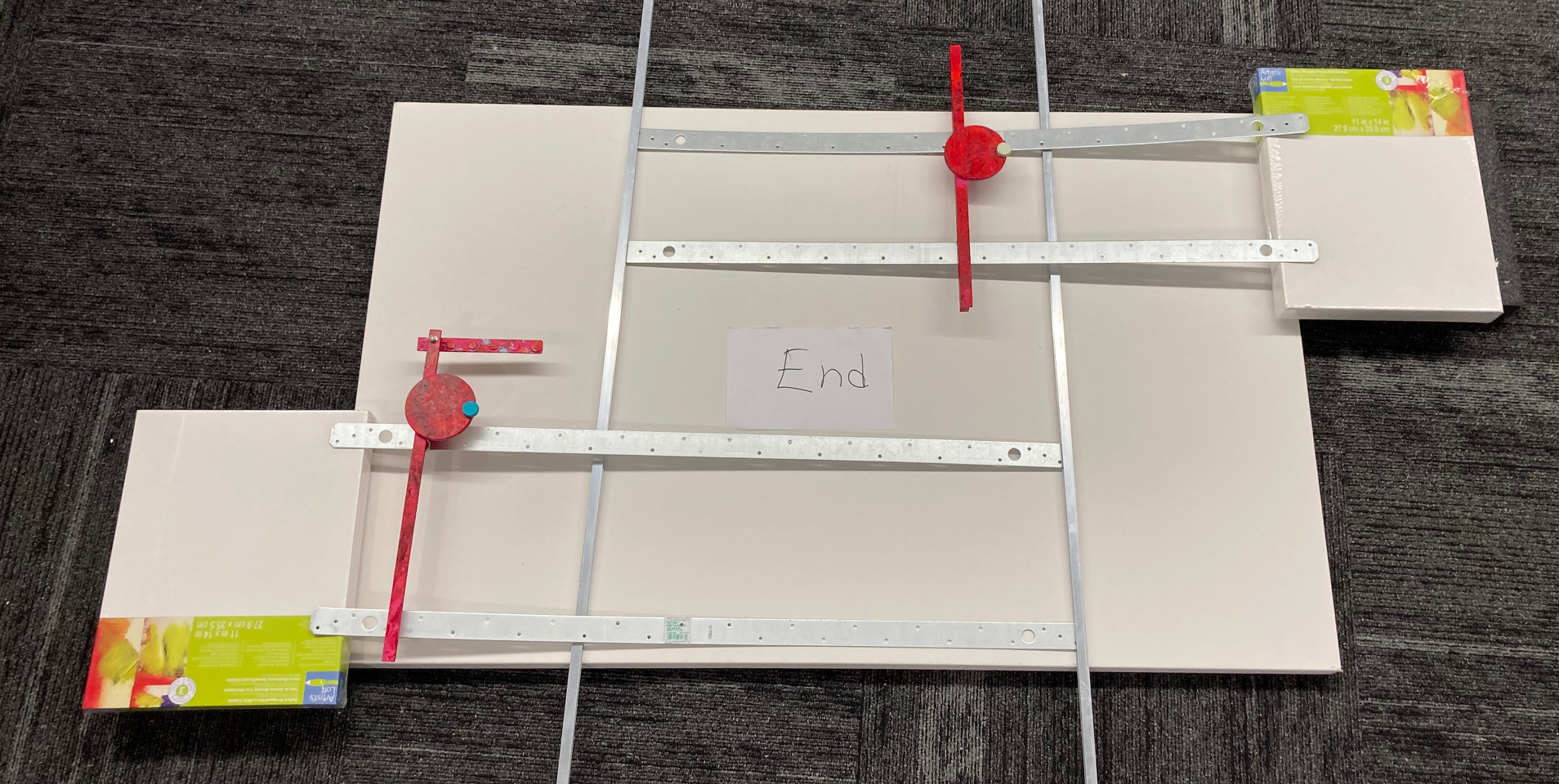
I now have a working layout for the three artworks for The Beatles’ triptych project. I do this to confirm that all the sampling notes fit on each artwork. Below, I am showing the layout image that illustrates the hanging order. Following the same order of Paul McCartney’s video featured in the previous blog, the first image on the left will be Golden Slumbers. The center image is Carry that Weight. The right image is The End.
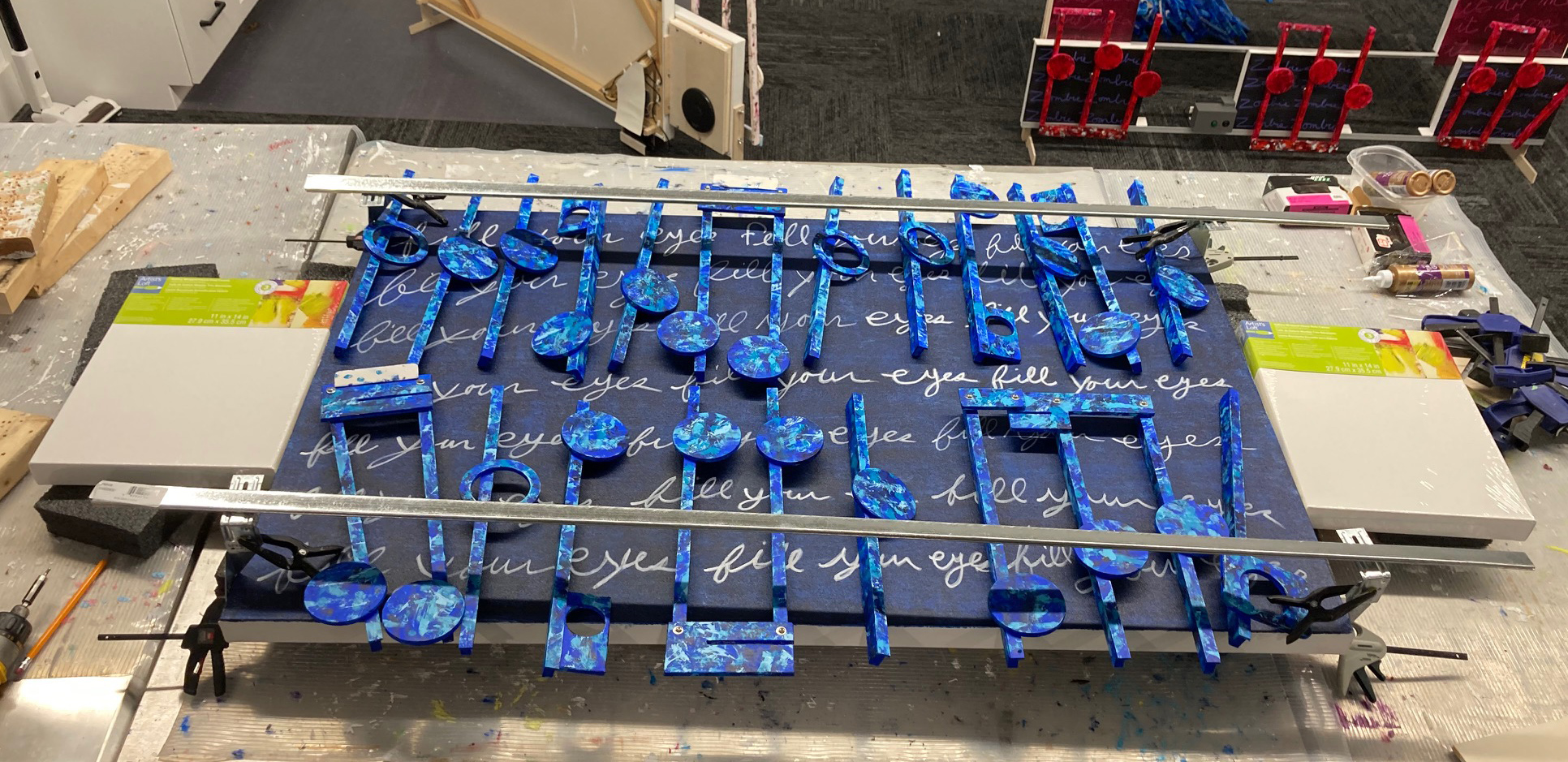
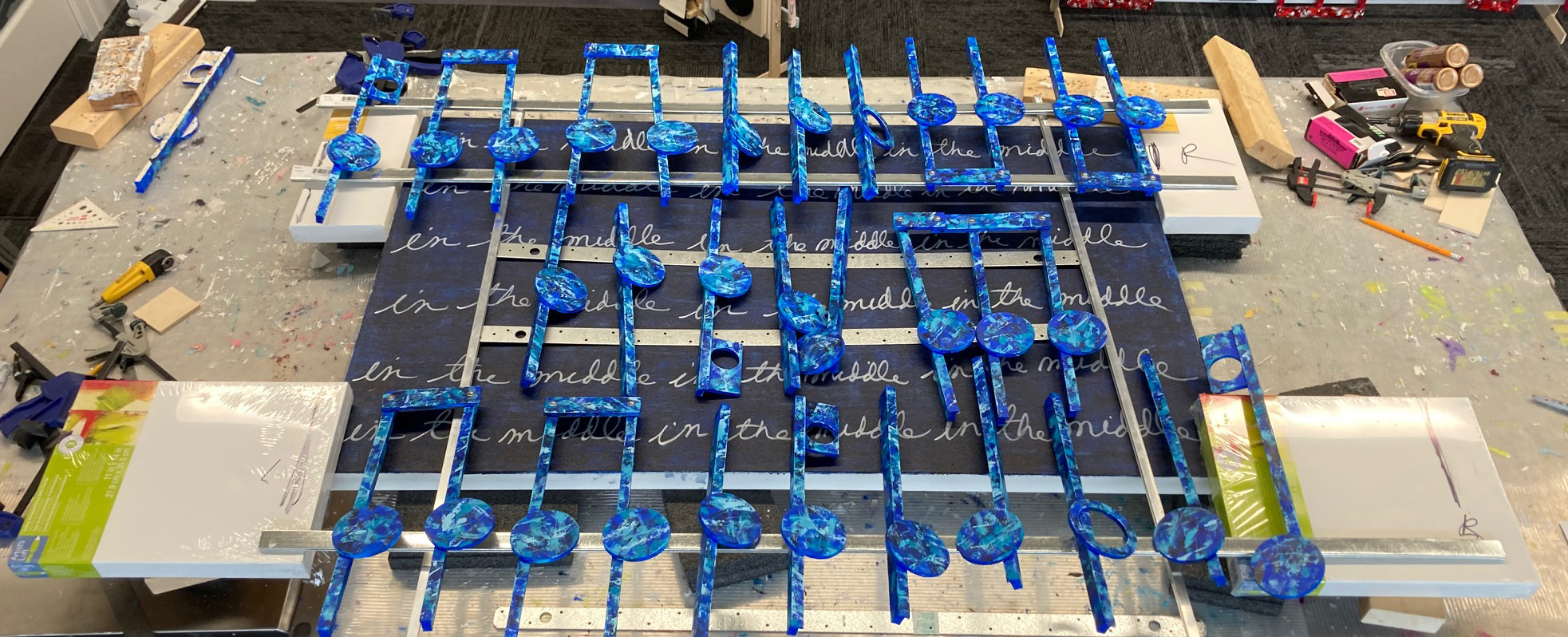
In the past, I have worked on one project at a time from start to finish. Every new music box project begins with the creation, in PerSonus Notion, of a draft cover of the music. I then take my cover sheet music and chose the sample that would be the worksheet for portraying the music. I did not do that with this project. Instead, I first put together the worksheet sample for each of the artworks. This change came about when I decided I needed to build all three artworks together. I decided that each would share a common design, the same use of color, and other visual features. This came about because of time constraints needing all three completed by the coming mid to late January. That then pushed me to get this multiple project going, knowing that the cover music was secondary to the need to have completed artworks. Currently already deep into this project, the time line looks a lot better. I believe now that I will have both the artworks and their music boxes completed before they’re hanging in January.

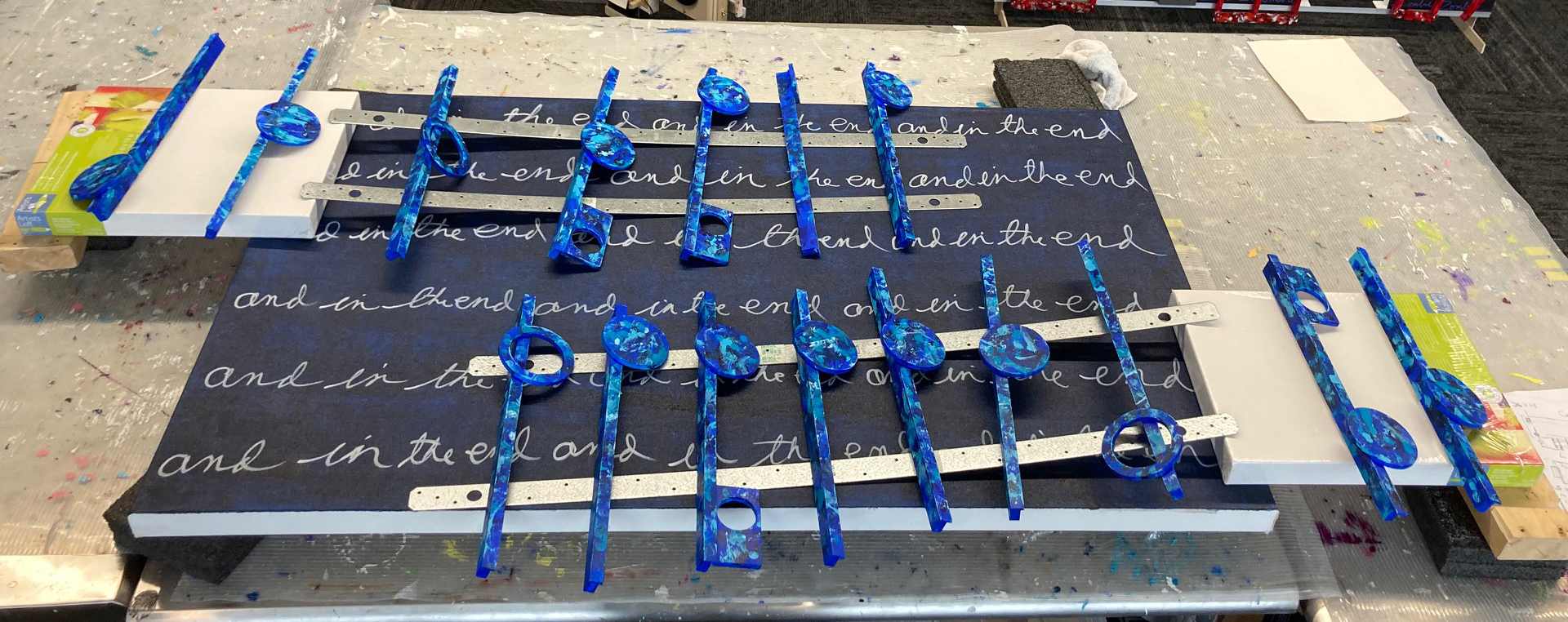
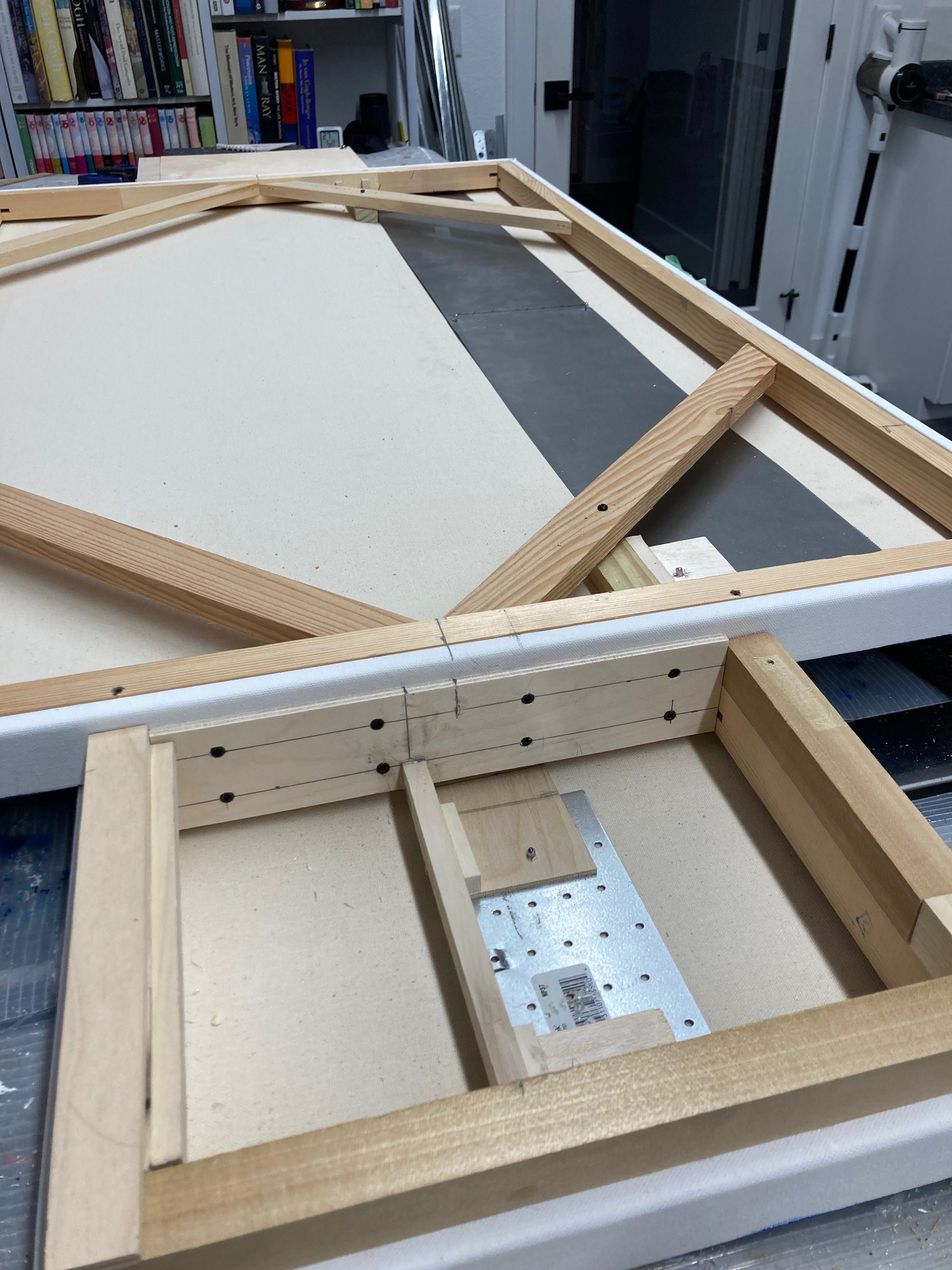
Currently, I am working on the backside of the artwork Golden Slumbers. The image below shows the installed steel plates across the top side of the artwork and in the speaker box. From the layout seen above for Golden I have added to both speaker boxes a steel plate to move two notes from each row off the main canvas. I had to do this after using the arrangement of the layout. I realized that twelve notes across a thirty-six inch canvas would be a tight fit.
Scott Von Holzen
S_V_H The Beatles Triptych image 2

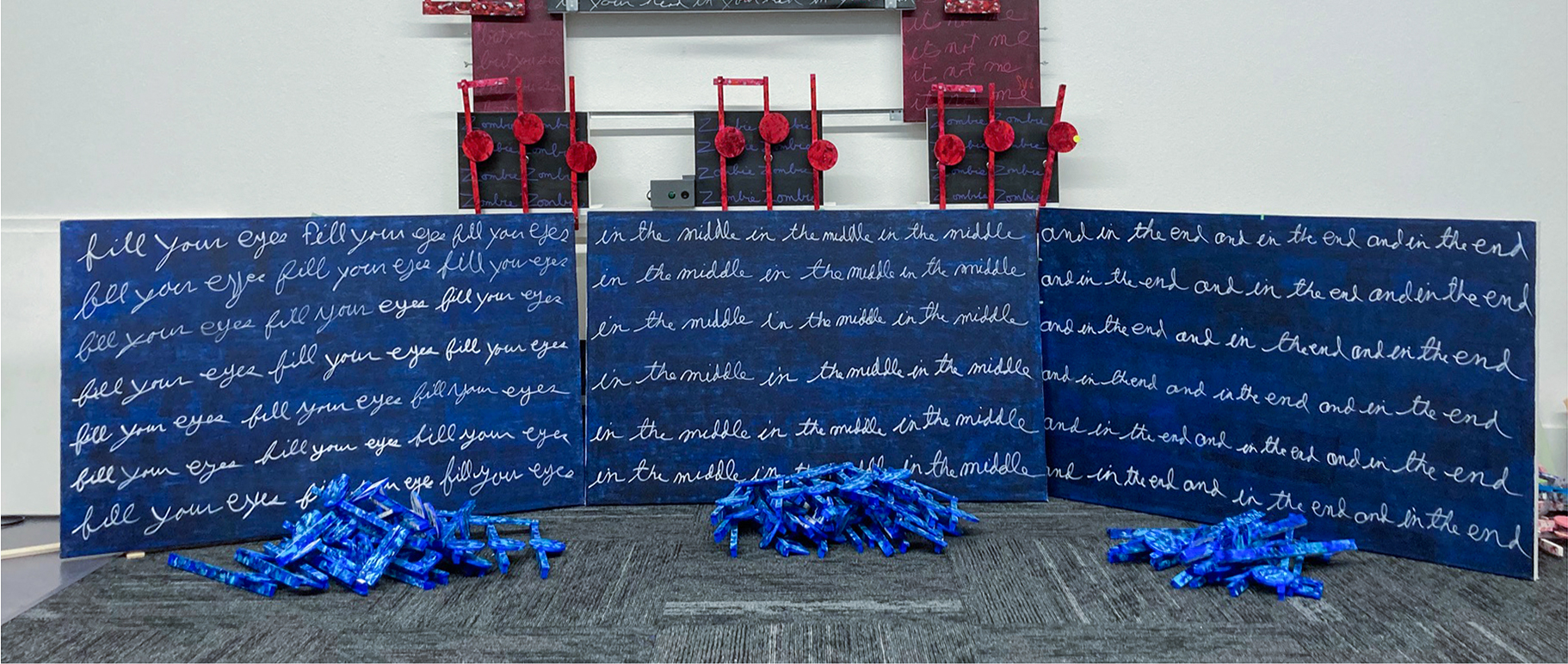
The Beatles Triptych main canvases from left to right: Golden Slippers, Carry that Weight, and The End. In front of each is their completed musical notes. Each canvas is 30 inches by 36 inches.

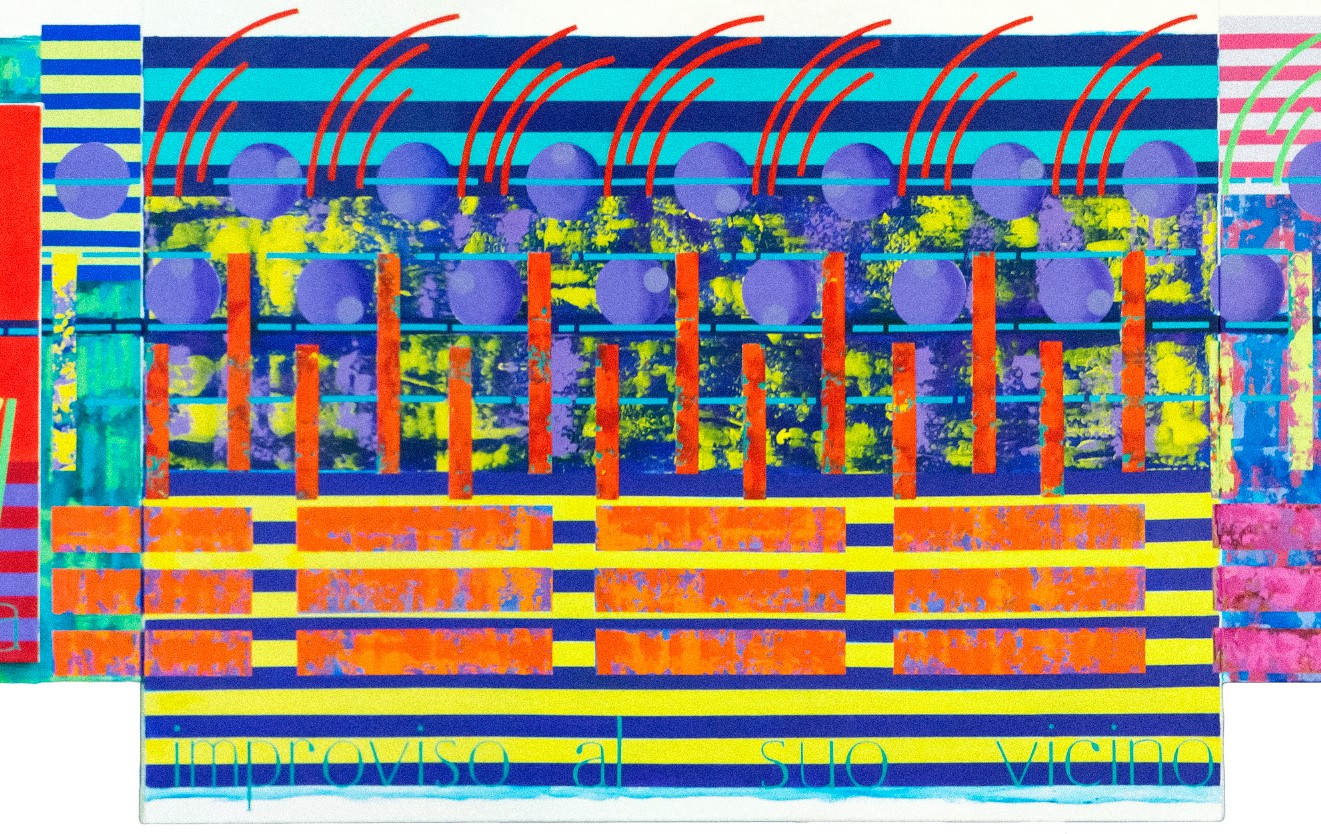
This is the first time I have used Liquitex acrylic pens for the cursive writing on these three panels. I learned quickly their use writing the words for Golden Slippers on the left. All did not go well. I made adjustments and the last two canvases’ appearance improved. I am a better printer than a cursive writer. That you can see in the cropped Vivaldi’s image below. But this current is no longer a product of that time.

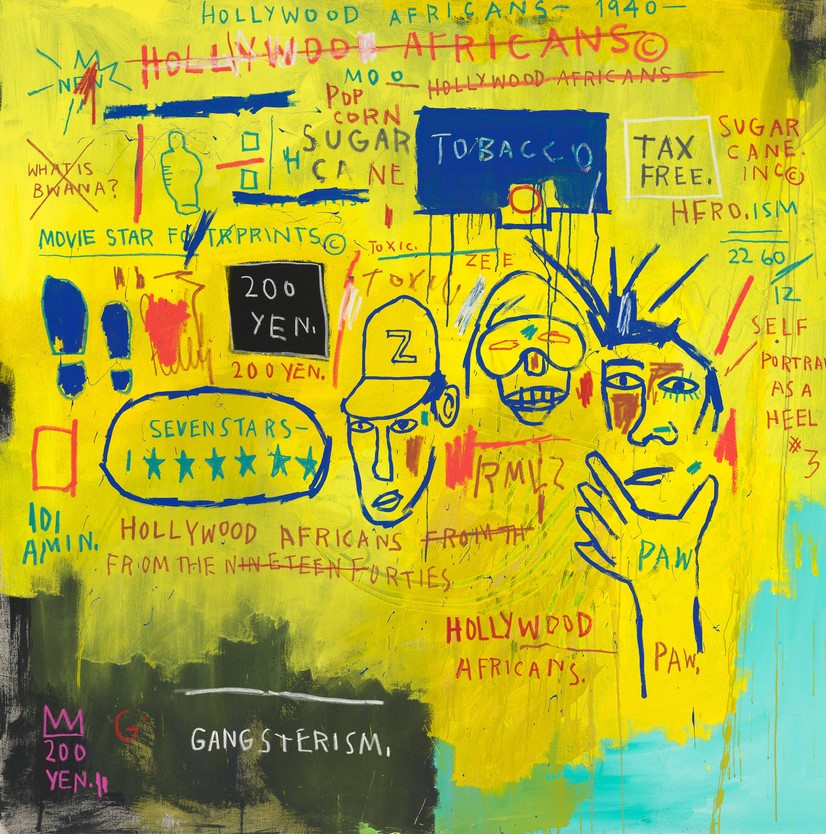
When I saw the handwriting of Jean-Michael Basquiat, that gave me the excuse I needed. I needed an excuse? Before Basquiat I would tolerate the time-consuming perfection of the printed words seen obviously in all thirteen artworks of the Vivaldi series. When I looked at Basquiat paintings, I realize the difficulty of beautiful penmanship or calligraphy was no longer a necessity for this art. I could move on. That I could print or write in my own unique style was a relief. That is when I switched from printing the word to cursive.

My reasoning is cursive writing is more natural, and more fluid for me. Also, cursive, in my handwriting style, is so bad that at the time it takes on an abstract look, that printing lacked. I like that a lot. I am now comfortable with the look at my words on these artworks. Importantly, every letter carries with it the look of me. Therefore, I do not care if they are legible, knowing that by repeating them eventually the viewer will be figure out what they say.

A close up of my formal words, in Italian, of Vivaldi’s summer allegro 2013
This is a good example of Jean-Michael Basquiat printing of words from the Whitney

As is obvious from the opening image, I am putting together all three artworks at once. I am also sharing their style and the colors used. What will separate each canvas are the words, the arrangement of the notes, and the placement of the speaker canvases. When finished, these three works will hang as one artwork.

Here is an early logo for the upcoming group show of EmptyWallsArt’s first major show of 2024

I am creating these three artworks, as a triptych, to make a statement to my art group, EmptyWallsArt, and to the artist community that I am, I guess, still a part of. This needs to be done. I am well aware of the importance of what I am doing. I am also aware of how difficult it is for others to see the value of what is being done. The why answer is simple: this art rarely sells. That is my fault, for my emphasis has never been on selling this art. My focus, from day one, was to push art history forward in a different direction. Never was it about making money. Although, I would certainly love to cover my art expenses that run thousands of dollars each year. The failure to promote this art may be in not figuring out what marketing direction I should focus on. What I know is that cheap everyday contemporary arts’ value is in decoration, while art sold by Christie or Sotheby’s auction houses is an investment. Neither of those ideas is realistic for me. So it goes. So, I need another find another market idea to keep this art on the move.

Scott Von Holzen

S_V_H Beatles Triptych

The first layout plan for the music box Carry that Weight.

I have a number of large canvases left over from my Vivaldi Four Season project from many years ago. Three of those canvases each 36 inches by 48 inches are going to be the base for three Beatles songs from their album Abbey Road.

After finishing the music box Zombie I had no clue what song I was going to paint next. As always in this situation I would go through my to paint song list. This time, nothing clicked. I actually cross through a number of songs that I have been skipping for months, if not for years. Not on that list was Golden Slumbers, that was on one of my play lists or it may have popped up into my head while listening to Spotify while walking my dog, Zelda. The song is from the album Abbey Road, which has always been a favorite of mine. The timing of this song also felt right for me. Besides, I have always thought it was a wonderful pop melody that would be a good fit for piano and maybe the violin. My only hesitation was its release date, which was 1969, over 54 years ago.

Trying to find music that was a little closer to this current decade, I found the Spotify, a playlist of 73 songs called Best of 2000s. The list contained two songs I had already painted. A favorite was by The Killers, the 2004 song, Mr. Brightside, (no audio) painted in late 2016. The other was a 2014 commissioned work, Chasing Cars, by Snow Patrol (That was last I heard of that group). As for the rest of the music on that playlist I found I knew 17 more, but none I wanted to paint. That brought me back to the Beatles. I brought up YouTube to see if there were any covers. I found a cover of Golden Slumber by Dua Lipa.

The Official Audio only by Dua Lipa

Finding a current pop star doing a cover for this classic Beatles song gave this music credibility and a fresh connection to the music. I have always felt that of all the bands from the sixties, the Beatles would have the best chance to live on. Dua Lipa is a small proof. Finding her video lead me to another significant find that finally excited me to start another project.

Paul McCartney on piano. And it looks to me that Phil Collins is on drums and a young Eric Clapton on guitar. The other person McCartney recognizes looks to me to be George Martin.

The video above is of Paul McCartney singing Golden Slumbers, followed by Carry That Weight, and ending with a third song from the album Abbey Road, The End. Right away, I thought, Triptych. An artist triptych is three artworks that share a common theme, and are usually similar in size. I then checked my canvas inventory, and came up with three main 30×48 canvases, and six speaker-size canvases 11×14 inches.
Because of the size of the main background canvases, I stayed with the larger notes on used on the previous artworks, What’s Going on, and Zombie. The thirty-inch canvas height also allows two rows of notes.

These images for this triptych each show a layout for the music while keeping each work under six feet and forty-two inches wide.

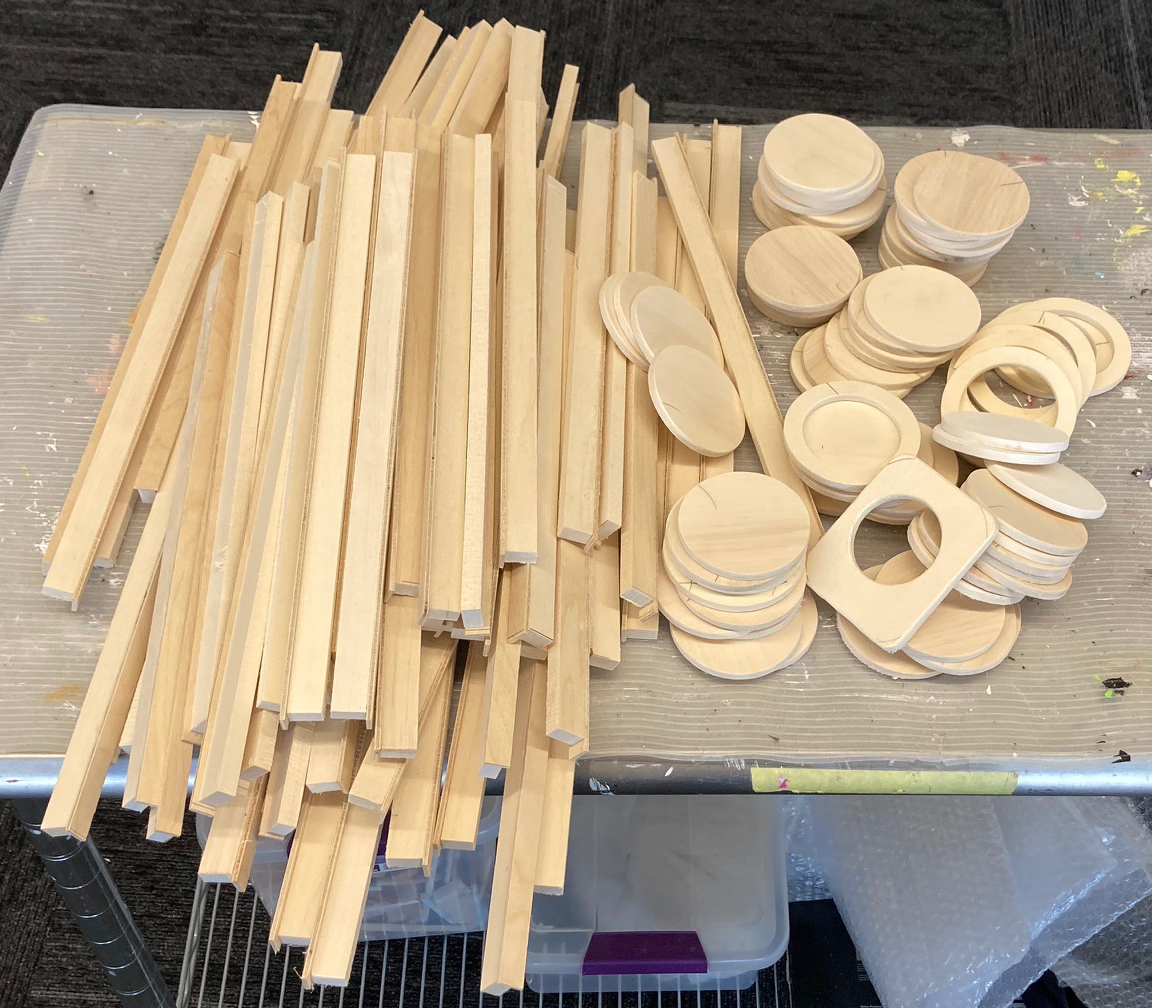
I have this technical note, shown in the image of the stems, to document a change in design. This started after finishing Wildfire in January 2023. What I have done was to return to a previous idea of standing the stems on their edge in order to add depth to the music. This worked fine until I used the larger 3 1/4 wide notes. Those projects include What’s Going on, the last work, Zombie, and this current project. The problem was that the 1/2 wide wood I use for the stems is only about 10mm wide on edge. That look is too narrow for such large notes. The obvious solution would be to go to 1 inch wood, but that is expensive and would add considerable weight to the artwork. A better idea to accommodate the 3 1/4 wide notes, came from the 2019 artworks, Giant Steps and Over the Rainbow. In both works I attached to the stems, for support, 3mm plywood about 14mm wide. But instead of attaching them to the backside of the stems as seen in those projects, I am mounting those 3mm strips on the front side of the stem. It is the 3mm 14mm wide plywood that shows out to the viewer. Another equality important result in this design change is I am now eliminating a considerable amount of tedious sanding. The 3mm plywood is a finishing edge. Little sanding needed. Enough of that.

Scott Von Holzen