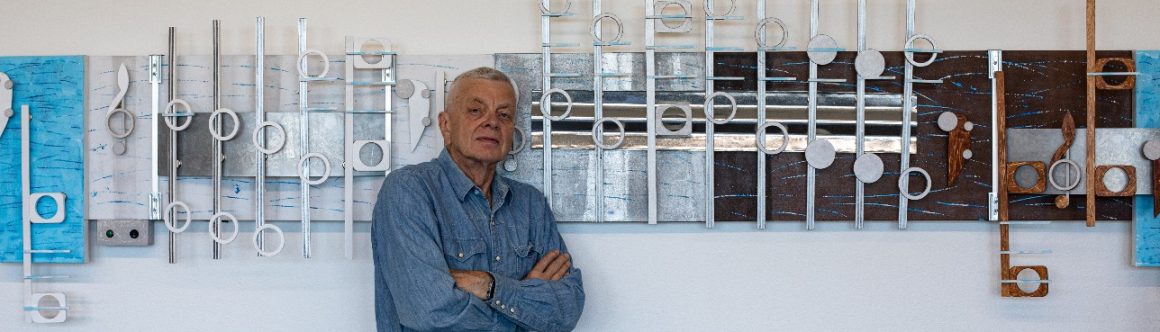
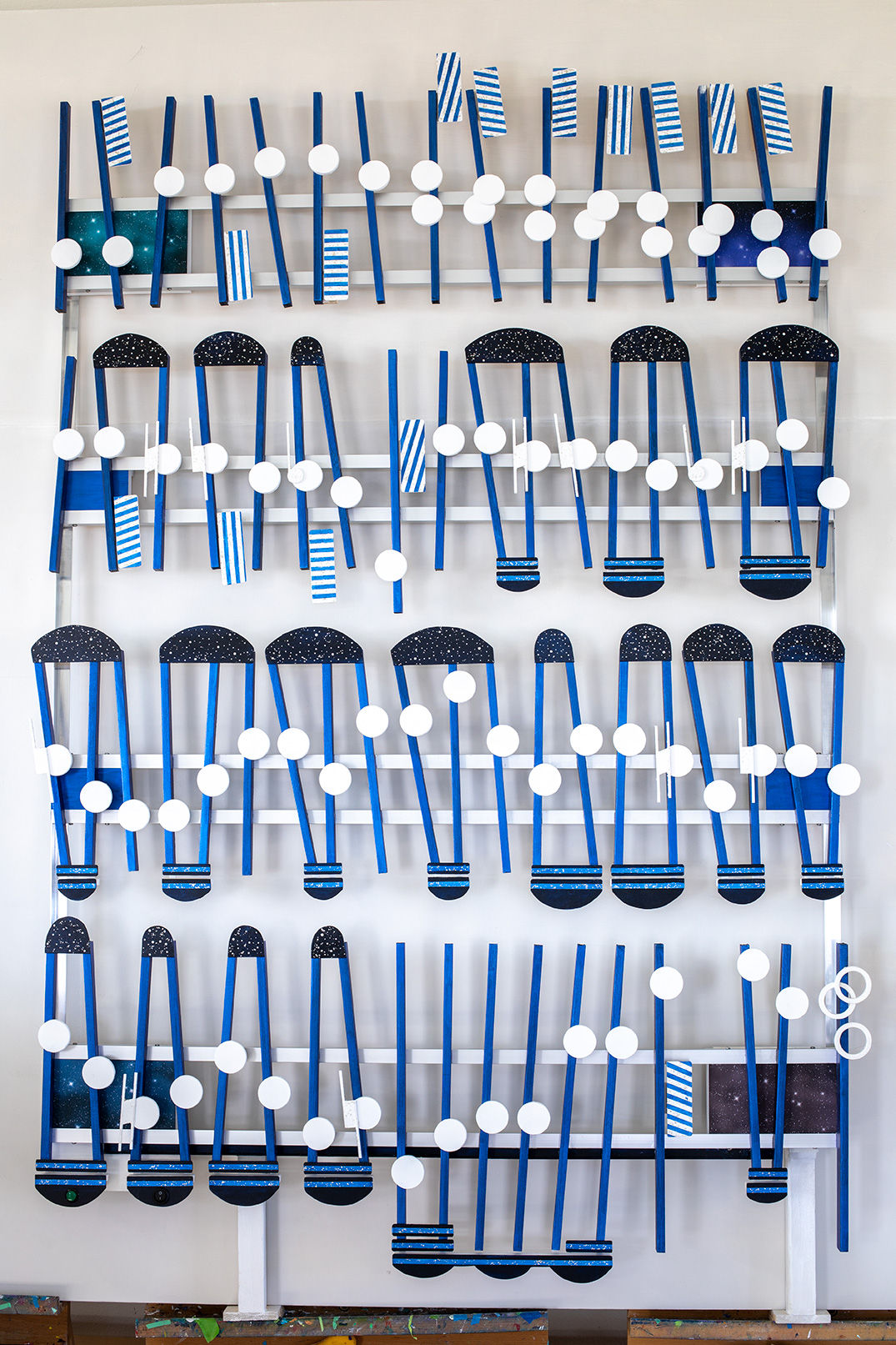
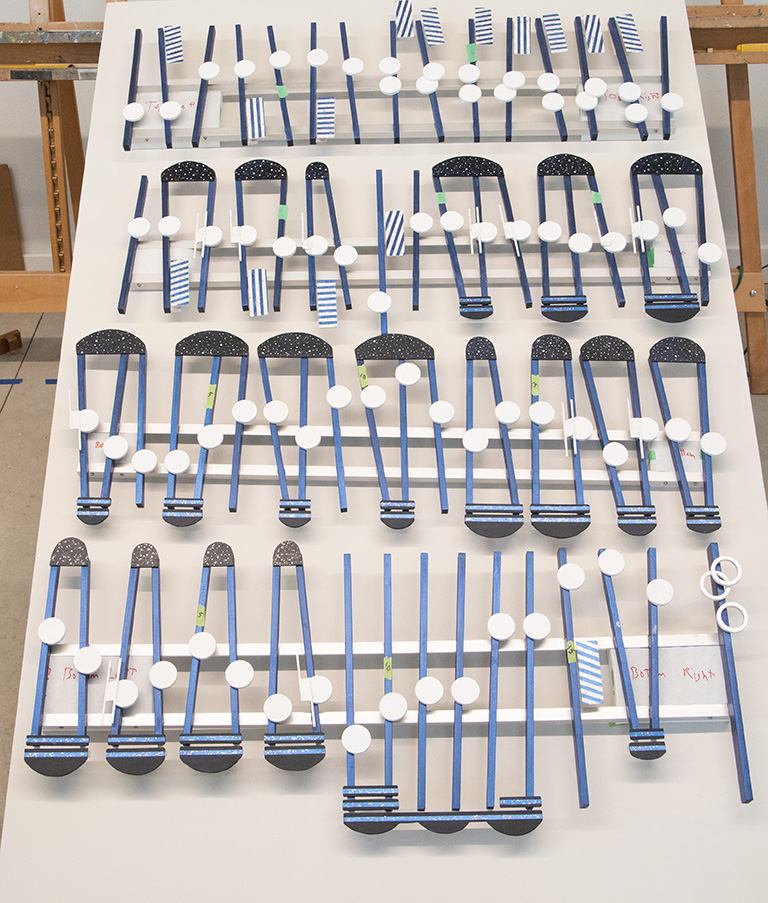
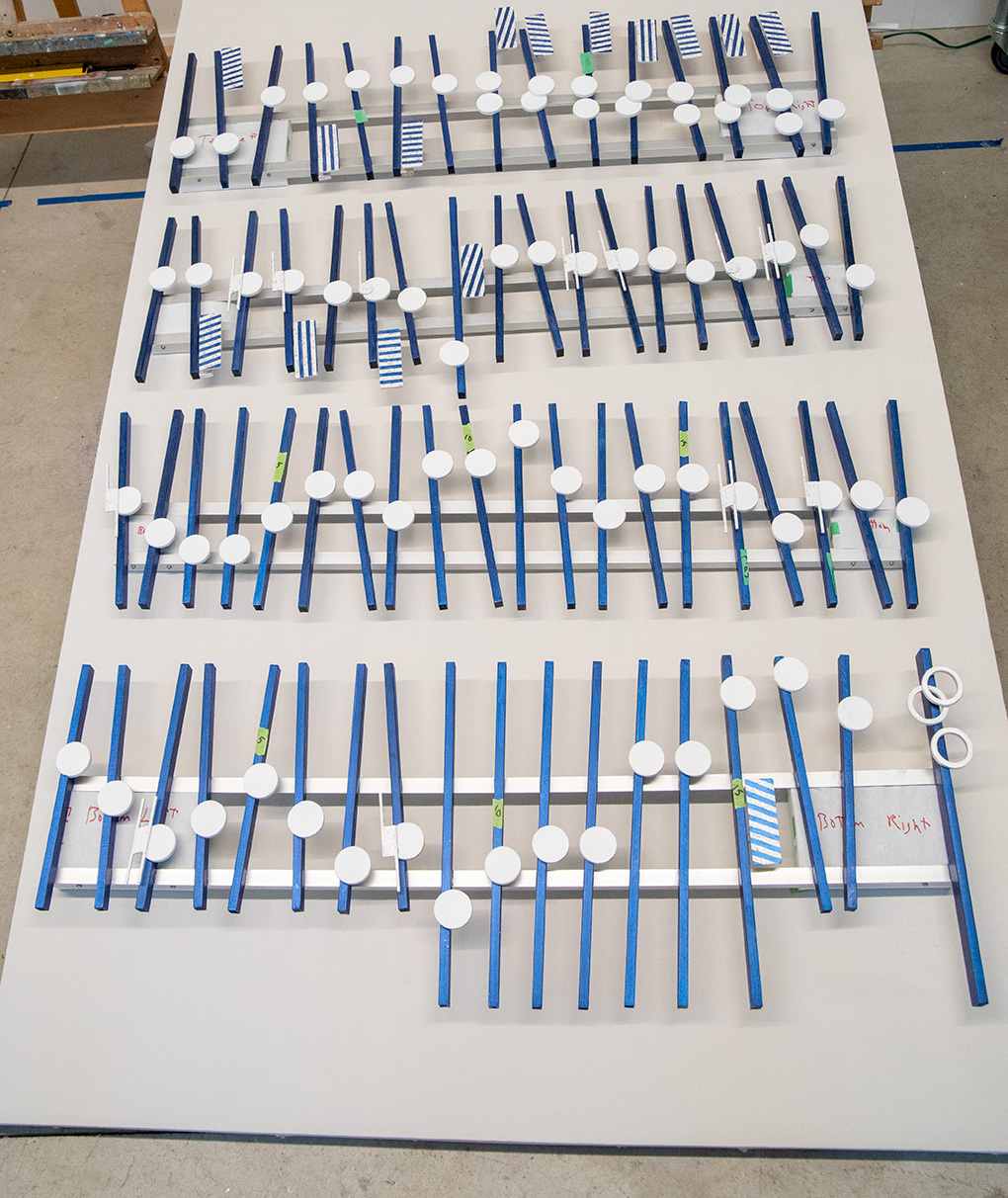
I finished Twinkle Little Star, on October 11th. I delayed this blog entry because my attention quickly pivoted to my next major project, Unbroken, based on the music Will the Circle Be Unbroken. When I first put together and then started this project, my enthusiasm was high. That feeling came from my arrangement and from Twinkle Little Star being highly recognizable music. I felt this artwork would increase awareness and appeal for this art. Later, after over a month of work, I lost that excitement, except for my arrangement of the music. You can see those feelings in my final video of Twinkle little star.
What I forgot to mention in the video is my concerned with the dominates of these sculptural artworks by the musical flow while smaller and smaller backgrounds are adding less interest and support to the music. My direction in 2019 has been to minimize the backgrounds while emphasising the flow of that music. In Twinkle I have pushed this idea even further with such small backgrounds that add little interest. Part of why this happened was because of Twinkle’s theme, Mozart’s piano version number 5, and not today’s version of Twinkle, Twinkle Little Star. I may need to change this direction made obvious by this artwork. This all became part of my concerned when I found it hard to follow the musical flow while listening to my arrangement of Twinkle Little Star. Then the question became, why should anyone follow the flow today, if It never mattered before?
From this art’s beginnings I have portrayed a small flow of a particular piece of music, that only a trained musician had any chance of understanding. I thought nothing of it. I was creating artworks that contain much more canvas so I could add lots of visual interest and colors to enhance the flow of the music. That began to change when I took the flow of the music of the canvas and made it three dimensional. That resulted in a reduction in the background’s value. I then discovered sound when I added it to a small artwork of the first four notes from Beethoven’s fifth symphony. Pressing the play button brought smiles. That caused me to add sound to my artworks thinking this helped the viewer better connect to the artwork. I then made improvements to the sound and the quality of my arrangements to where I have found it hard to follow the flow and the sound of the music. It looks like I am back where I started in 2006.
That tells me to succeed, I need to go “Back to the Future.” I look at it in this way using my mentor Vincent Van Gogh and two of his images, courtesy of Wikipedia The first is Van Gogh’s masterpiece The Potato Eaters done early in his career:

On my art path, The Potato Eaters may be where I am today with this art.
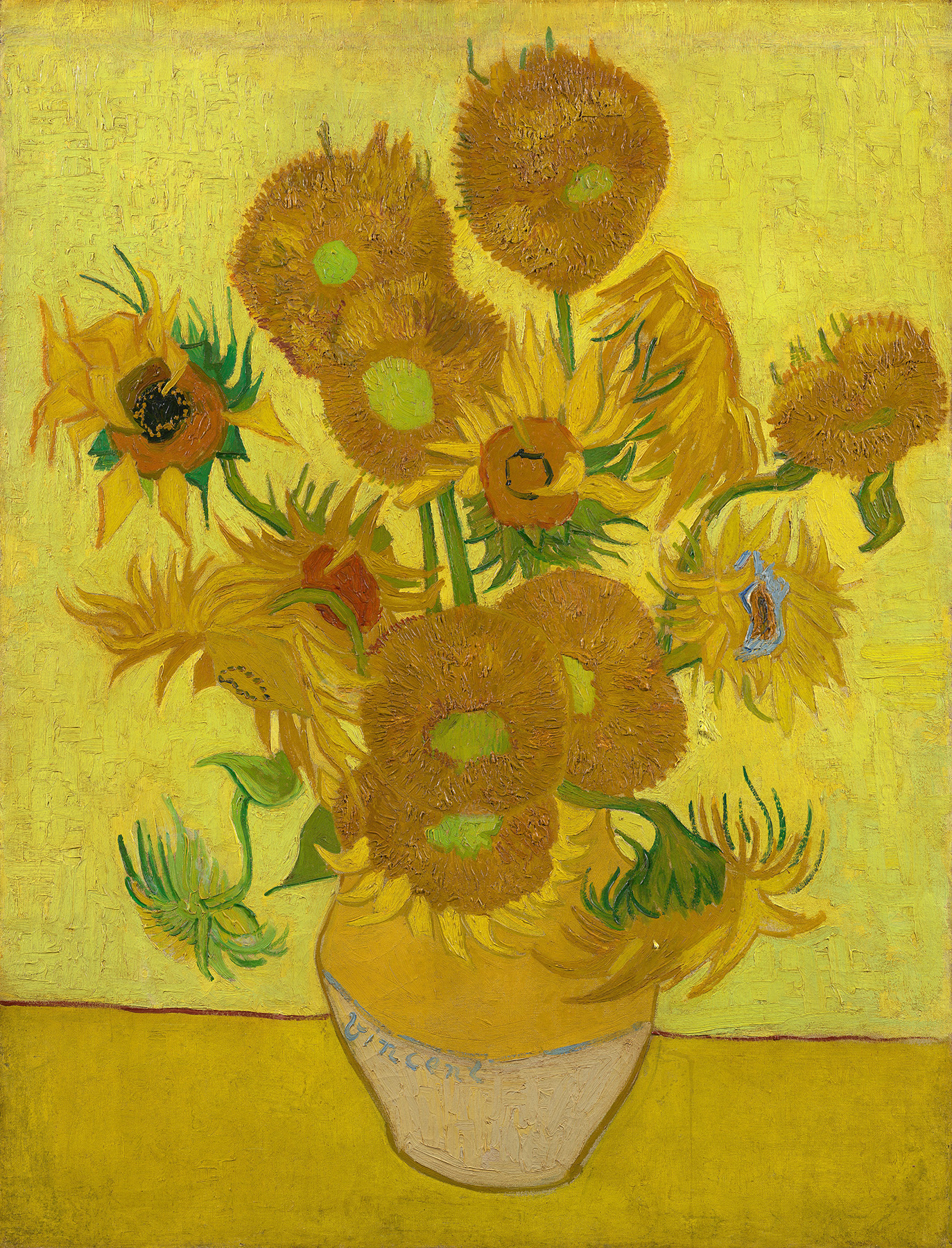
This other image is of Van Gogh’s popular Sun Flower artworks. The big change is his lightening of his palette. That is where this art needs to end up. I thought my “big change” was adding sound. That may be only part of this story. There remains some extra volumes to write if I want to reach the “lightening” of this art.
Scott Von Holzen
 aRT iN mUSIC