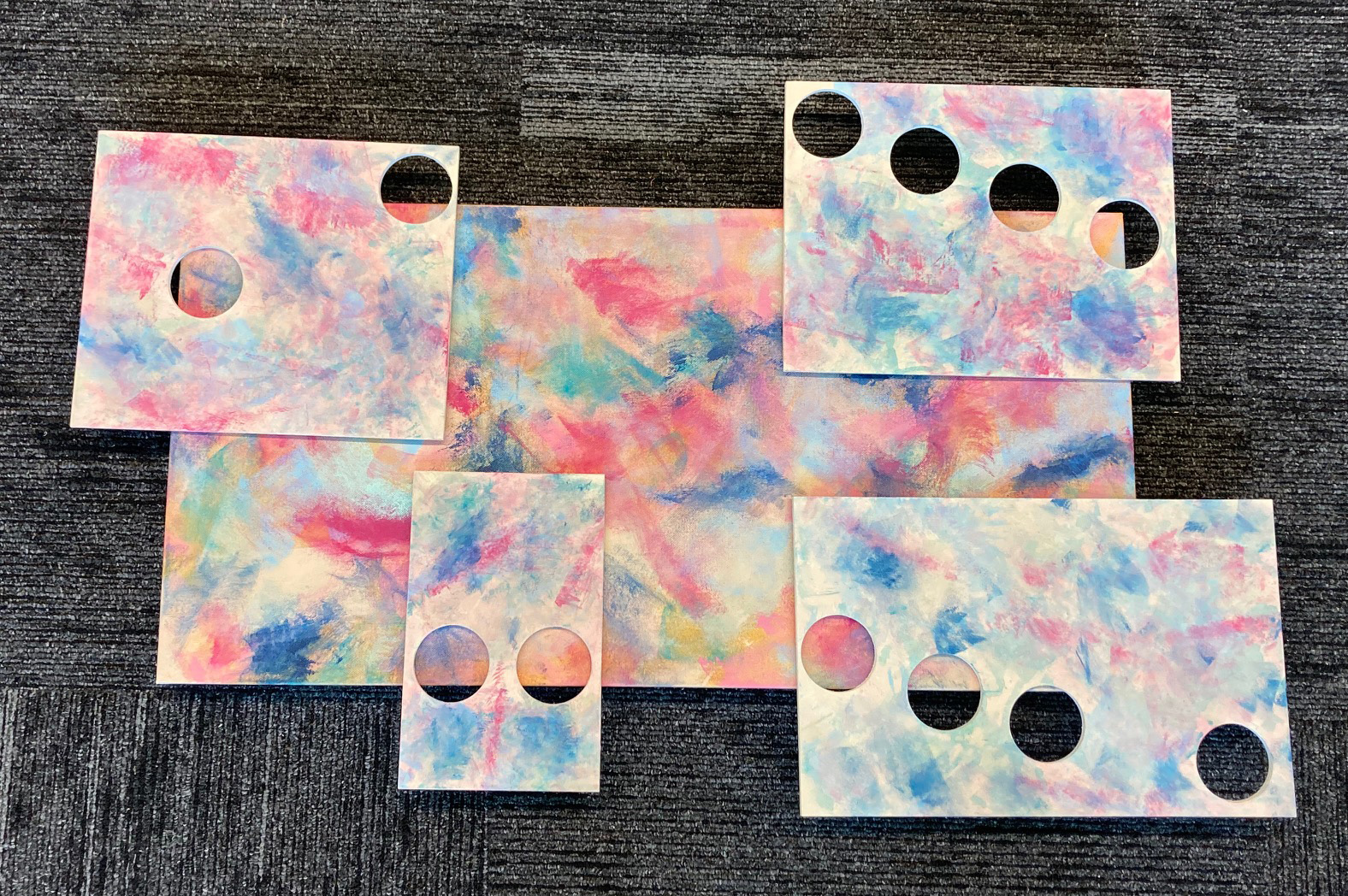
S_V_H Love Theme (Cinema Paradiso) 1st image

Love Theme 1st image under 4 feet.

What is nice about these mini works is the commitment in doing them is not as large, intensive, or needlessly overwhelming as it was with the comprehensive works that took a month or more to complete. With these mini artworks I save time, increase production, have less to lose, and they offer me more freedom to experiment. This is what I see in this first image of Love Theme.

In the past, Mark Rothko, a leading figure in the Color Field movement, first inspired my approach to color in these musical artworks. His rectangles of solid colors gave me the idea of using them as a substitute for a musical staff. See the image below of a very early 2006 work that I wish I had never sold.
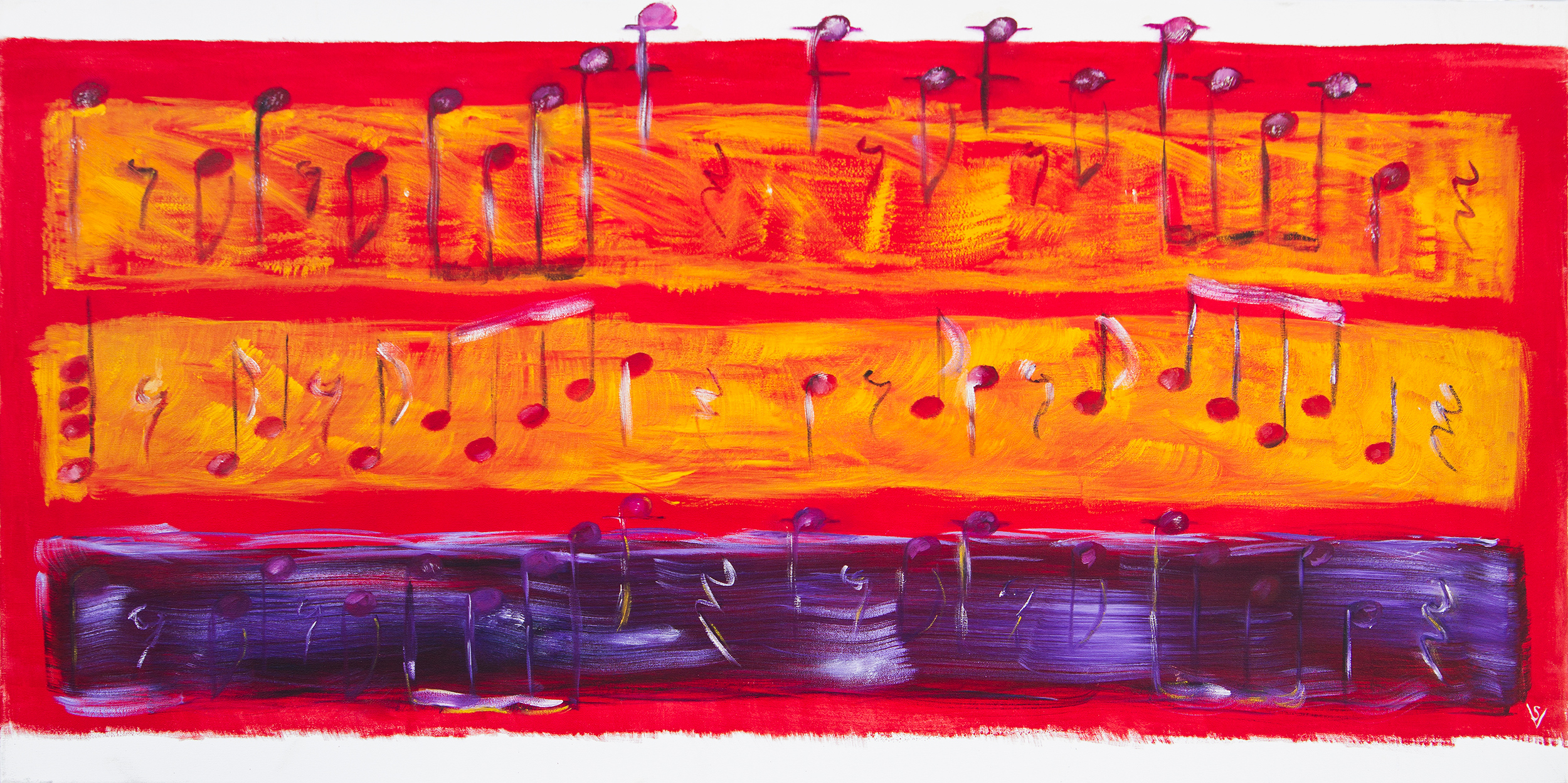
Mozart’s A Little Night Music, private collection.

You can see the evolution of the Rothko rectangles in the 2011 artwork Thunder Road, which is and will always be in my personal collection. It hangs today in my Studio alongside another favorite, the 2011 artwork Hallelujah, which shares a similar style.
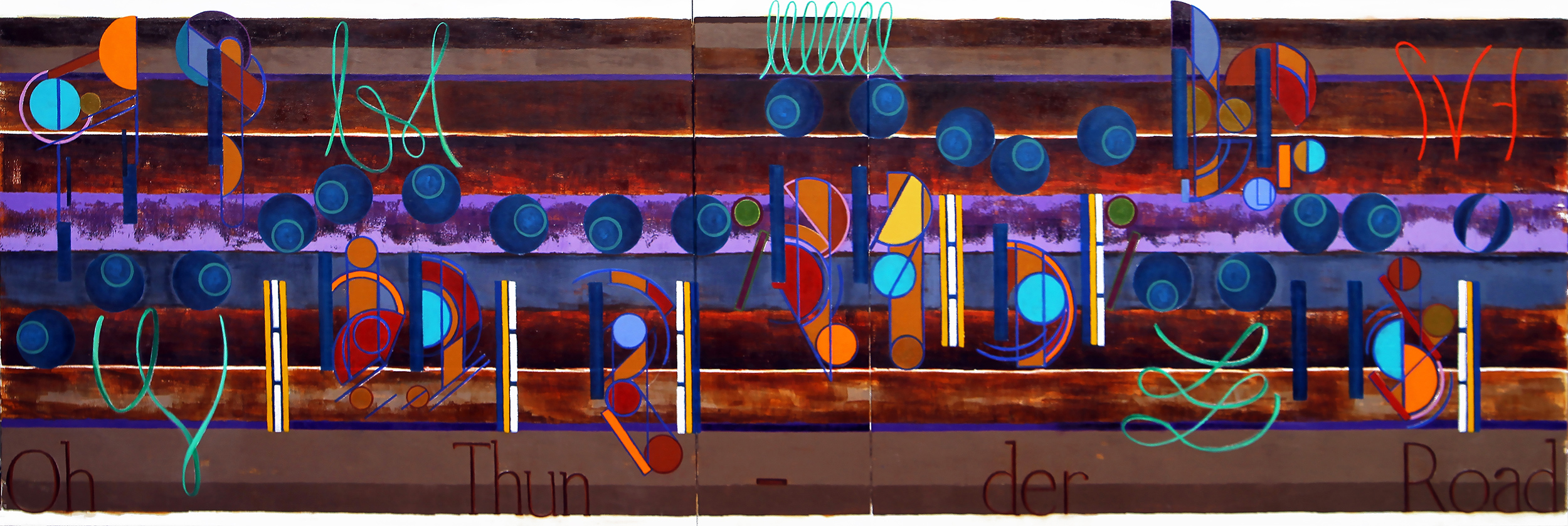
The nine-foot artwork Thunder Road 2011.

I tweaked my use of color with the Dave Brubeck artwork Blue Rondo á la Turk. For this project I discussed my first attempts to use the squeegee style of Gerhard Richter.
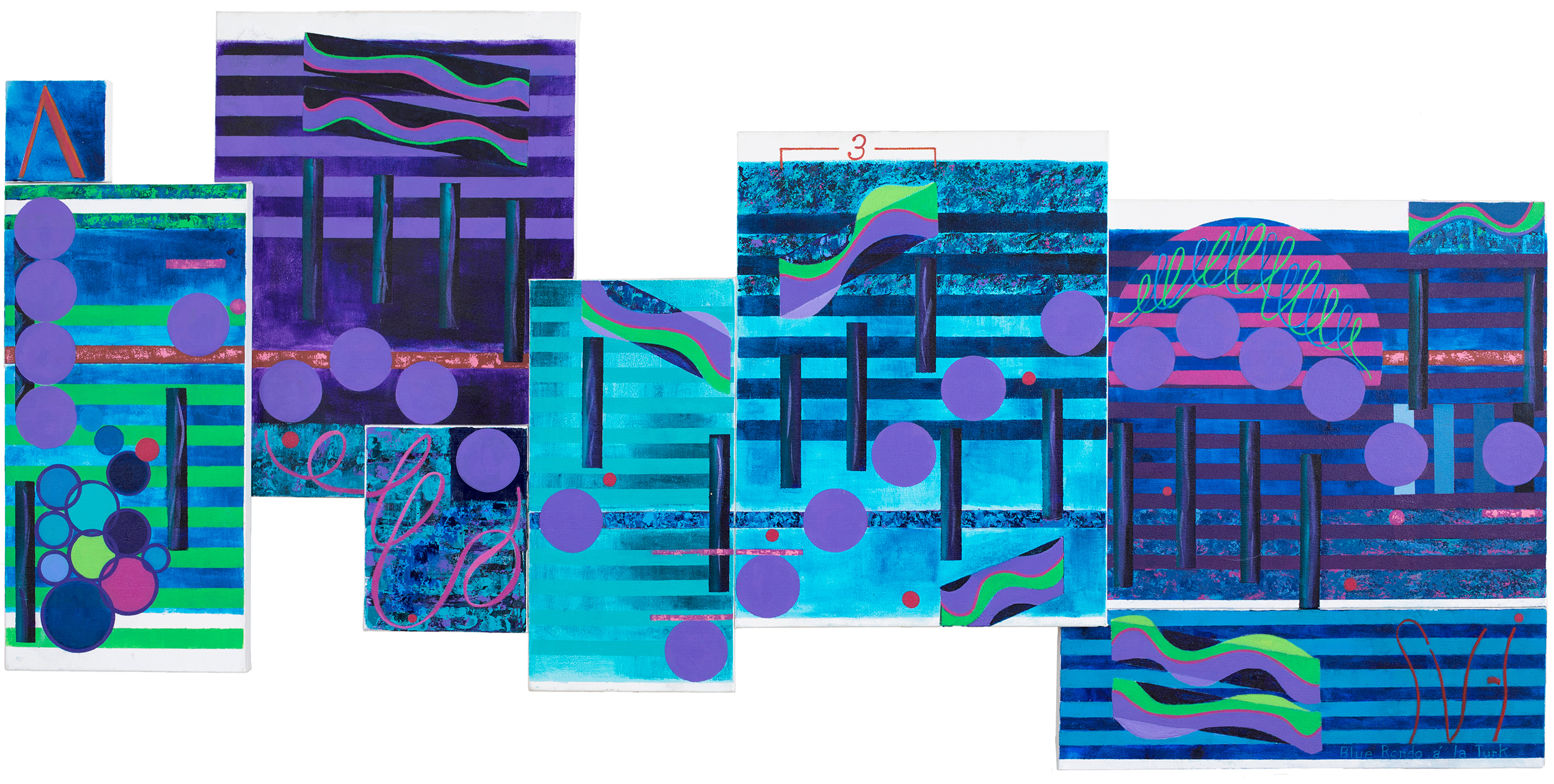
Dave Brubeck’s Blue Rondo á la Turk, 2013

Of course up to this day, my use of solid colors continues in the tradition of Color Field painting techniques. Although this new artwork, Love Theme, looks different in technique. I looked to the style used by the Color Field painter Helen Frankenthaler and her “landmark,” use of staining on her influential artwork, Mountains and Sea. It is from this artwork that I choose the colors and attempted her style although on primed canvas.
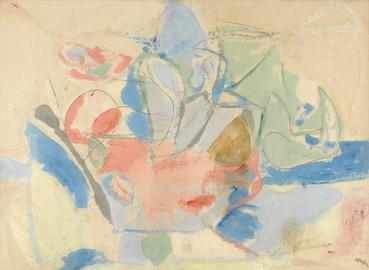
Mountains and Sea story from Wikipedia.

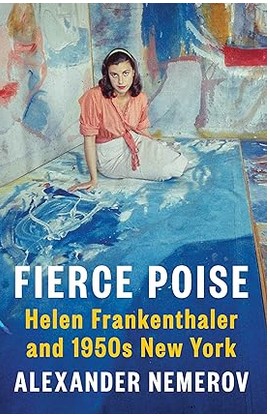
Finally, I am reading the book, Fierce Poise, about Helen Frankenthaler and wondering about the influence, or not, of Jackson Pollock and his use of unprimed canvas years earlier.
Scott Von Holzen

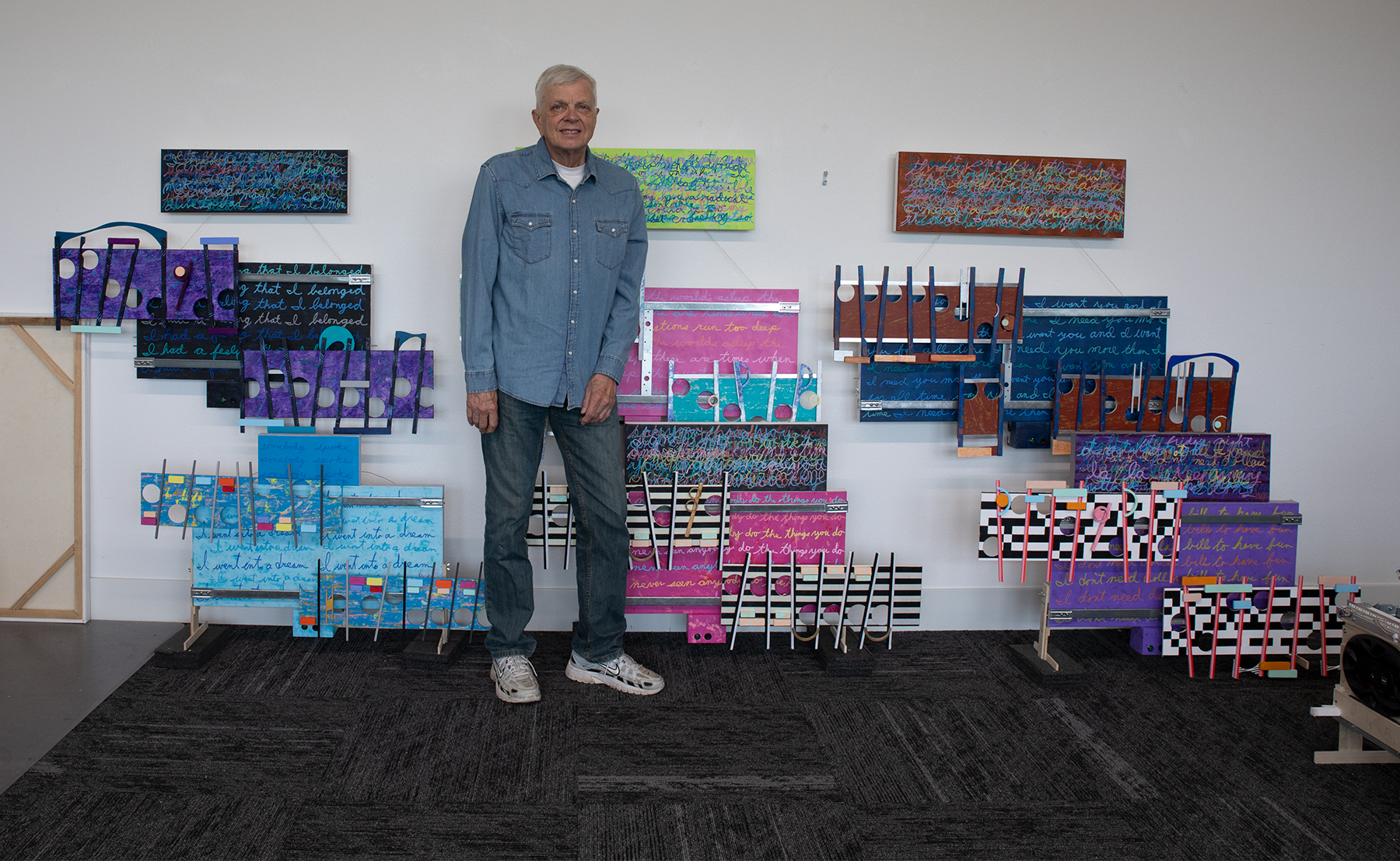
S_V_H The Logical Song Final image

The Logical Song ≈ L49″xH38.5″xD7.25

I enjoy shaking up color combinations seen in this artwork. But I am also at a point after 18 years of such use of color that I feel the need to move on. Besides, there is today so much brazen in your face color out there in contemporary art that I see its usage as a needy nuisance. A way to divert attention from the artists’ lack of originality. If the pretty massive use of matching colors is what the buyer wants, then I see the point. I also feel that color flooding the viewer is much more acceptable than silly and frivolous deep meaning add-ons that permeate today’s art. Similar to the Salon art of the late 19th century, today’s contemporary art comprises outstanding technical quality equally match by an astonishing lack of originality. It is time for Eager Allen Poe “Quoth the Raven “Nevermore.””

The artist with his latest mini-artworks dated March 1st to June 20th 2024
A talk and play of the first six artworks in this mini-music box series.

Here are several paragraphs documenting this artist’s technical drivel thoughts:
I was a little disappointed by how close the pink colors of the main canvas for Logical and Dance Monkey were. Using Golden Paints for Dance Monkey, I chose the color Medium Magenta. For Logical I mixed a color using Golden Paints Light Magenta, Quinacridone Magenta and Titanium White. My surprise was how similar the two colors turned out. For Logical I was trying to match the reddish pink of the stage lighting for a performance of live performance of The Logical Song.

I rarely mix my colors because that would not serve the purpose of color in these artworks. Over the years, I have accumulated pre-mixed tubes and jars from different companies that offer different shades and tints to cover my needs. Color for this art is like an accidental in music that is used to change the artwork to better represent the music’s original artist, the music, or both. In this art color detail like that of a 19th century John Constable landscape, is totally superfluous.

This is to document the progress in stereo systems in 2024, showing two different amplifier systems that can be alternatives to the standard 20Watt amplifier I have been using for years. The Dance Monkey amp is big, slow to load and may use up the battery quicker. It is the only battery with a heat sink. Its advantage is the bass and treble controls. At this level of hand built stereo systems, the quality of the sound and volume from each feels similar, although the music is different on each artwork.

Scott Von Holzen

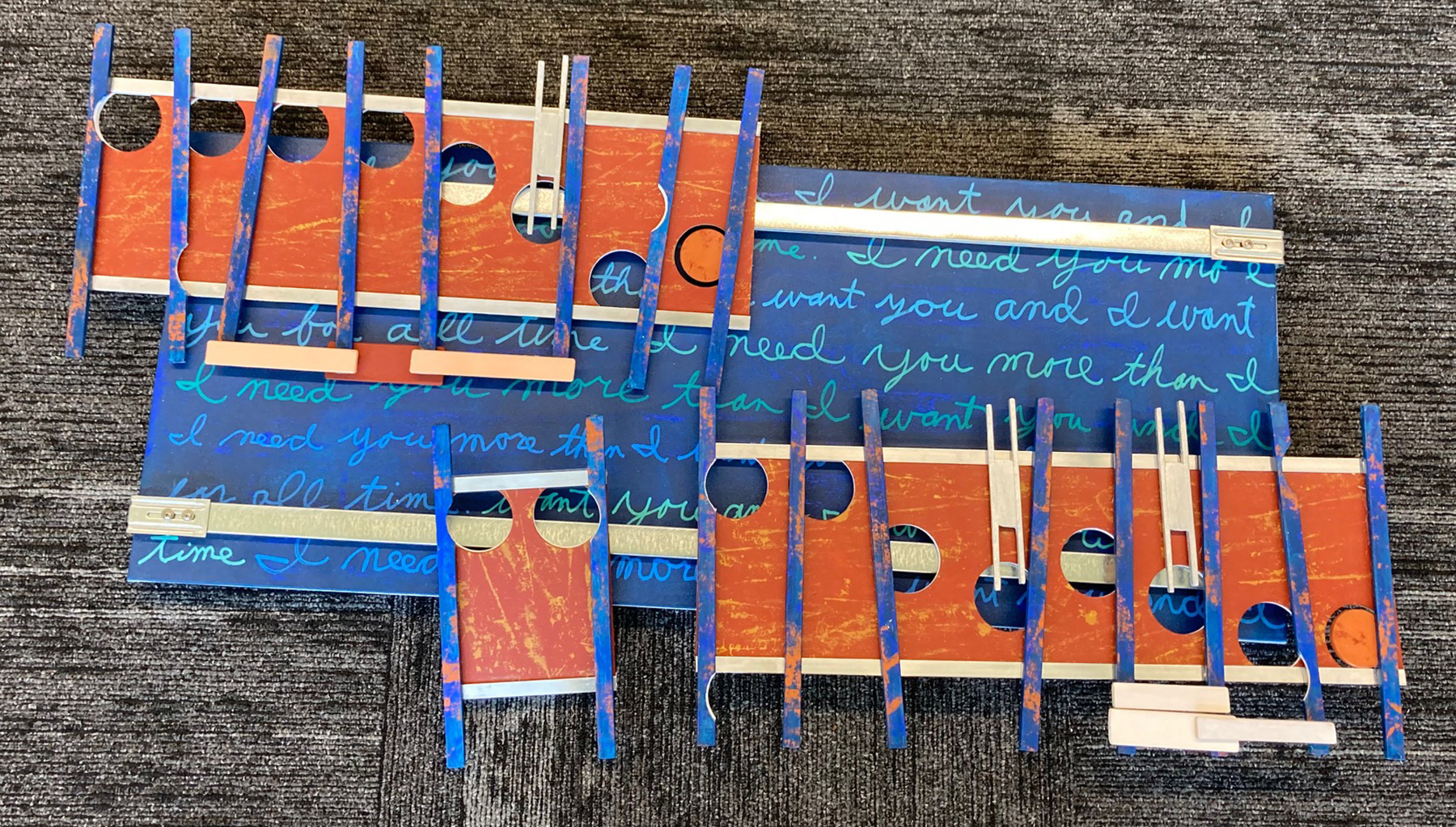
S_V_H Wichita Lineman first image

Wichita Lineman 40 inches main canvas.

I could be wrong, but I doubt many people under 30 years ever heard of this song or Glen Campbell. Of course I knew of it and have liked this song to this day. Although my first contacts with music was country (think Hank Williams) my first genuine connection to music was folk music. As a pre-teen I was more into pop songs I liked (Speedy Gonzales by Pat Boone). Even in college, my music tastes remained on the conservative side. I remember then ( as I still am now) being all in on The Beatles, but turned away from Led Zeppelin. I believe in my last year or so of college, in Madison, I finally began appreciating the rock music of Jimi Hendrix, Cream (I bought the album Wheels of Fire), and The Who, for examples. Of course in my later college years I also began developing a feeling for classical and a passion for the Blues.

Wikipedia chart (1968-1969) for Wichita Lineman

Here are two videos of Glen Campbell singing live Wichita Lineman. I chose my base colors (Red Oxide, Silver, and Cobalt Blue) used in this music box from these two videos.

This live performance was from The Glen Campbell Goodtime Hour
Here is a 2008 live later version by Glen Campbell.

When I looked for Wichita Lineman on YouTube, I came across an opinion video by Rick Beato, who currently has over 4 million subscribers, including myself. That video confirmed my choice to use this music for another mini artwork.

Later I found this interview of Jim Web who wrote Wichita Lineman
James Taylor cover of Wichita Lineman. I dated this video around 2021
Rolling Stone500 greatest songs of all time (actually from the 1940s to the two-thousands)

Jolene, by Dolly Parton at number 63 is the only song that I thought for sure was country music, that ranked higher. I believe these two should change places on Rolling Stone 500 Greatest Songs.

As a note to myself, this is the fifth in the series of mini artworks. They are all, for convenience’s sake, based on the same basic model. Well, I am getting bored with this repeating process. I am going to stay small, but I need a fresh approach to creating/building these small works (within the reasoning and parameters I set for these mini works).

Scott Von Holzen