S_V_H What’s Up second Image

Tuesday afternoon October 17th

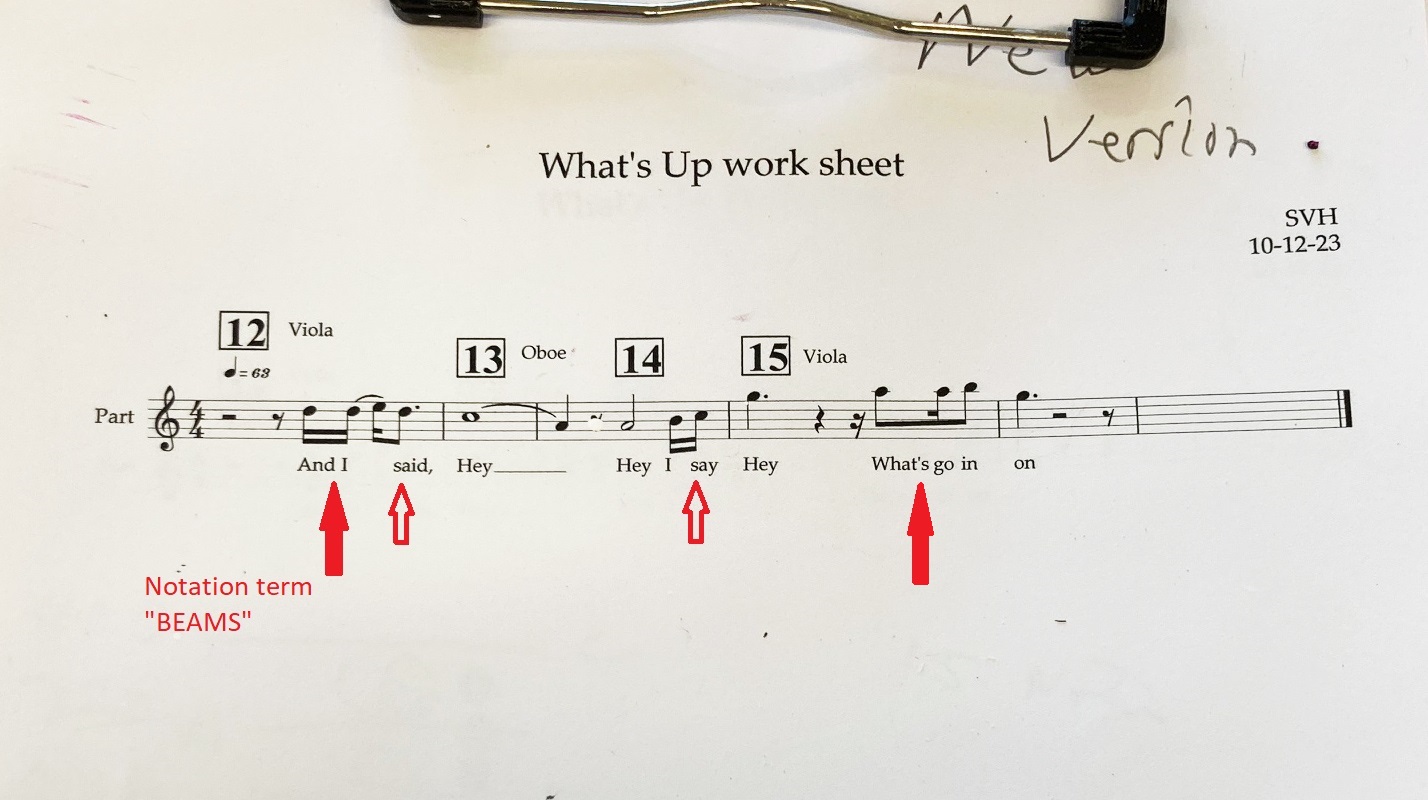
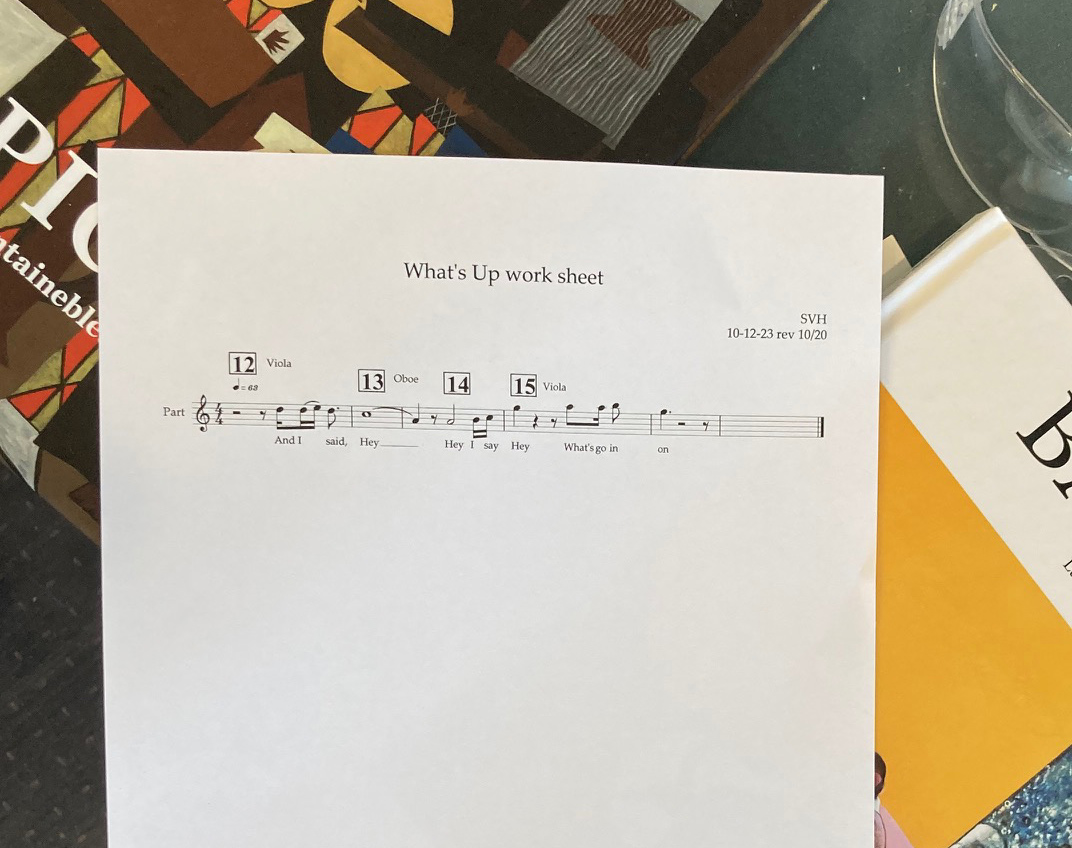
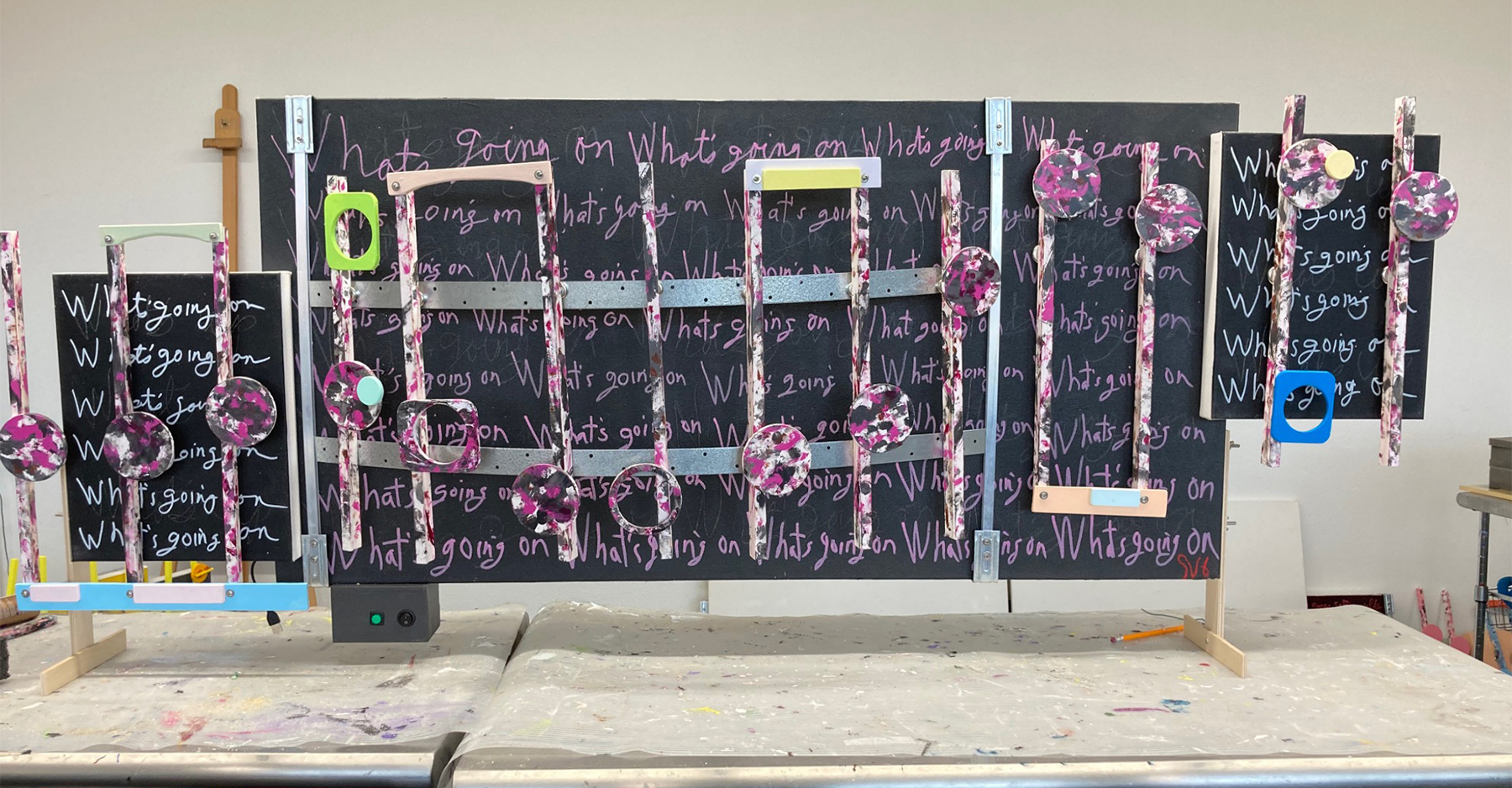
The problem that I had to resolve on Tuesday was I could not place my sample music the way the sheet music pictured. The problem was the different physical heights of the artwork would not work with the music’s beams. There was not enough available space for the beams to fit between the flat canvases and the center curved metal. The solution was to combine notes on the left, and to split a part notes on the right.

s

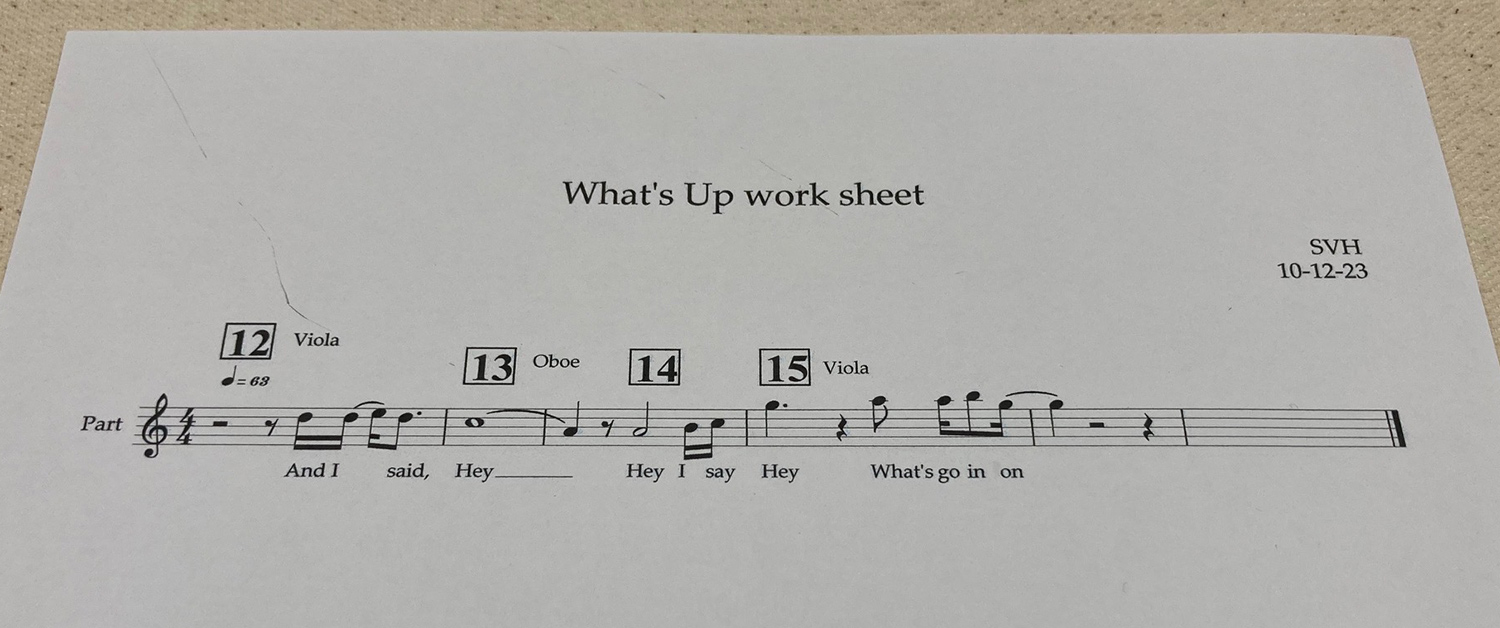
Original worksheet for the project What’s Up
Final changed worksheet combing notes on the left and separating notes on the far right.
Progress as of Thursday evening, October 19th.
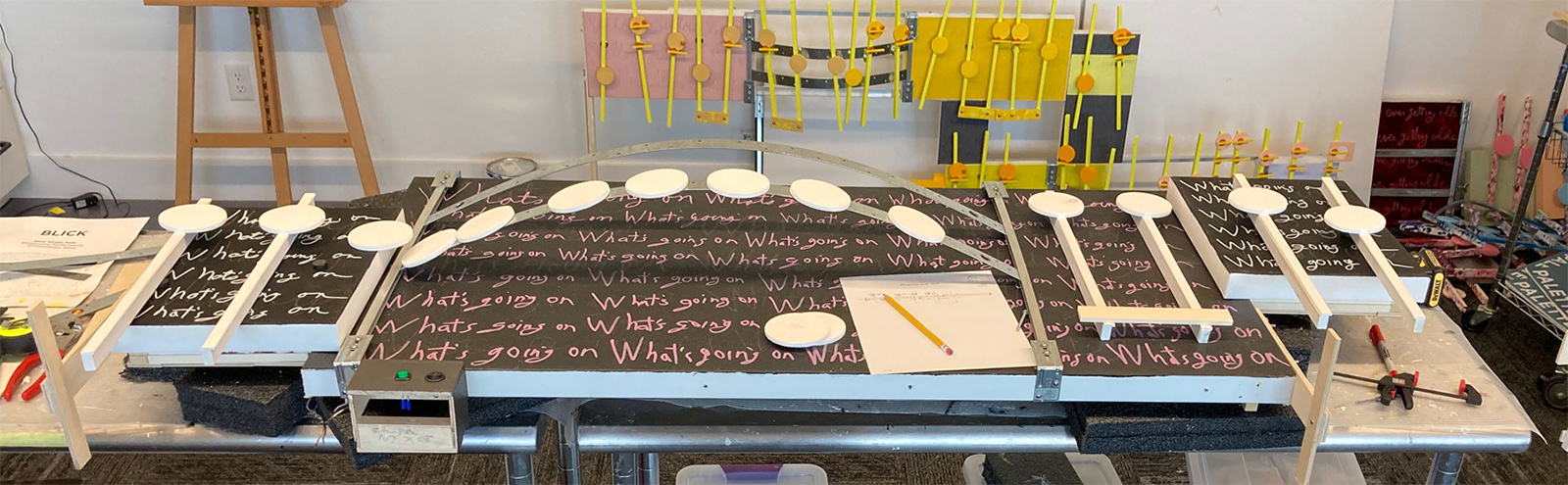
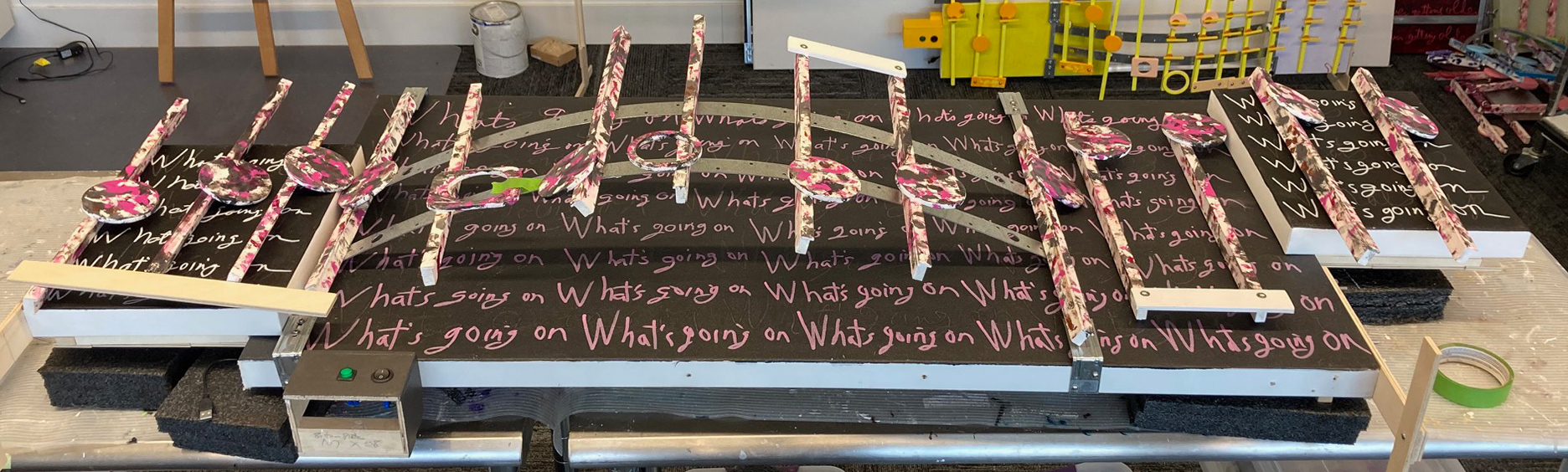
An early Saturday afternoon image of the music box What’s Up, with the finished music in place to assure everything fits.

After placing the music in place for the first time, I found I needed to correct the control box’s original positioning. It needed to be moved forward, for it was protruding beyond the artwork’s wall bumpers. This then caused issues with the placing of the lithium battery. That loss of time left the last major item, finalizing the cover music, for today and tomorrow to complete.

Scott Von Holzen

S_V_H What’s Up image 2

I photograph this image in the daylight. It does not capture the feeling that crossed through me on the evening before when I placed this young artwork on an easel and walked back to see if it worked. It worked. Even in a well lit studio, the sense of darkness still spills into the room from six large north-facing windows. The emotion I felt at that one moment was like, wow maybe I am on to something here.

Over the years I have used words in many artworks. Each time I do, and still do, I have chosen words from the music lyrics that were general enough to avoid any feeling of copyright. I would choose words from the artworks notes that were general in meaning, but would offer different meanings to the reader beyond the words used in the lyrics. Recently I changed that up by choosing small general reading phrases from the lyrics. I would place a phrase randomly on the artwork, insuring that there were no continuous lyrics to be found. To justify this use of the music words in this way, I would scratch and tear away small ragged pieces of top layer of paint that then damaged the words. That then made most of the painted words difficult to even impossible to read. After doing this a few times on several artworks, I felt all I was doing was diminishing, to destroying the value of words on the artworks. Instead of words to be read, they looked more like a scrabbled abstraction feature of the artwork. That is when the artwork Don’t Give up came along. That project allowed me to return the power of words to my artworks, while eliminating my concerns with their use in the music.

The word sample for the visual part of the artwork, Don’t Give Up, was an easy choice. I went with the ending of my cover music, which was, Don’t Give Up, repeating twelve times. To write them, I could have done what I have done in the past. For the first note of the first Don’t Give Up, I could have picked to paint the word, “don’t”. Then on the next repeat of don’t give up, I would have chosen the word “give” the second note in the repeat. Then on the third repeat of don’t give up, I would paint in, “Up.” This pattern would then repeat to the end of the artwork. Similarly, looking at the 2011 artwork, Hallelujah that artwork uses syllables instead of whole words, from the word Hal-le-lu-jah that repeats four times across the artwork. But I had a better idea.

The breakthrough was that the words, don’t give up, are a common language phrase, so I did not need to conceal them. Sensing that freedom of use, I thought, why not repeat those three words across all the canvases and even the music? Not only were those words important to my cover music, but they stood out on their own as a statement open for interpretation by the viewer. But there was a problem. I wanted the words to have a fluid movement appearance.

The best way to write the words in a spontaneous way, is in a cursive style. In the past, the only way I have displayed words has been in the print style. Although for me, writing words in a fluid quick motion using acrylic paint was a skill I lacked. The only option that came to mind, and I used with Don’t Give Up, was to scratch the words into the freshly applied layer of paint, using the end of a wider rounded paint brush. That actually worked well. Later I lightly glazed over the words to reduce their contrast. That same technique is what I first did with this current project using the words what’s going on. These three common language words from the lyrics are part of the sample that is the visual part of this artwork. Then I had another idea. Doing some art research, I found a set of acrylic pens that are hopefully archival. I then heavily glazed over my scratched in version to reduce contrast. That is when the fun began. I wrote with little effort only my previous wording of what’s going on, with a brighter, mostly legible cursive writing in a pink version of what’s going on. That color choice comes from the songs four non-blondes band. Finally, I didn’t and don’t care how pretty or poor, sloppy, or illegible my cursive writing looks. The viewer can simply see the pink color as powerful words or an abstraction if they so wish. Plus, my writing looks definitely human and a demonstration of what makes this art me and no one else. A lot of all of today’s art lacks originality, replaced with a colorful look that is so finely and perfectly finished that it loses any feel of being created by a human. Instead, it’s art that looks pretty to be pretty, prostituting itself for the quick stranger sale.

Scott Von Holzen

S_V_H What’s Up first image

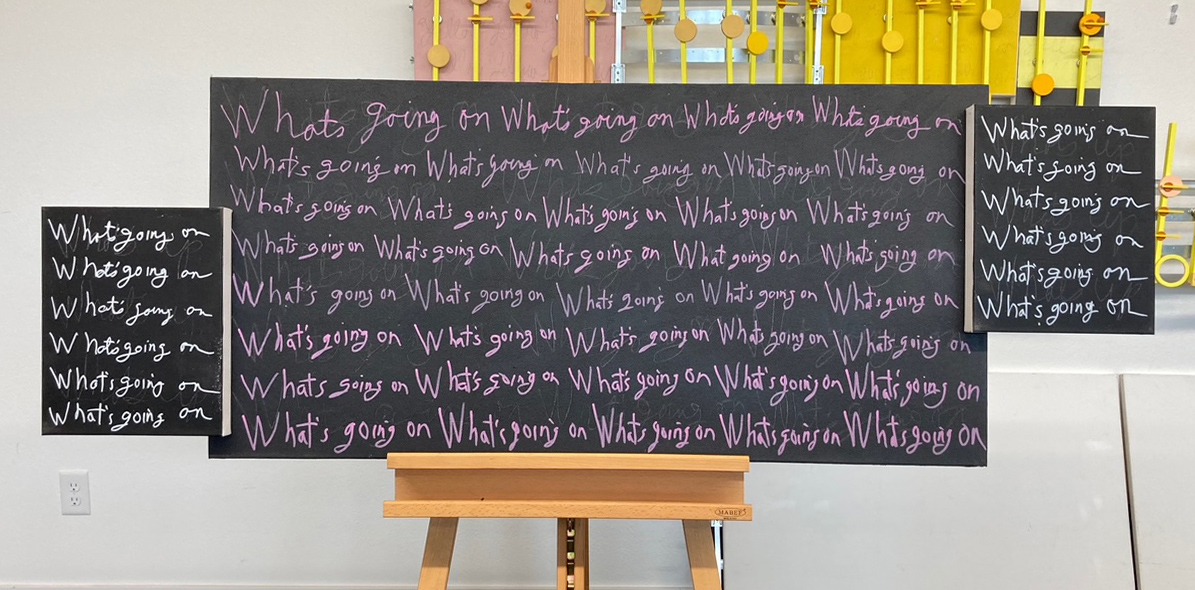
The first image of the main canvas which is 24 inches by 48″ inches.

What’s up is my next project. A lot of times a song pops into by Apple AirPod while walking my wonderful friend for life, Zelda, our Irish setter mixed poodle. And something in it, either the lyrics or the melody, catches the current mood I am in. That is how I keep on, keeping on. This time, my next project song came to my attention after listening to my Spotify Discover playlist. The song I heard on that playlist was a new cover by Dolly Parton of the song What’s Up. I have long ago added the original version of What’s Up by 4 Non Blondes in my Like playlist. Therefore, it has been there, but the Dolly Partons version surprised me. Then I saw that Linda Perry, who wrote and sang the original 4 Non Blondes version, was accompanying Dolly. That gave Dolly’s cover a lot of credibility and the confirmation I needed to spend the next few weeks working with this music.

The official 4 Non Blondes video with 1.6 billion views. so far.
Here is a cover by Dolly Parton that I never expected. Well done, this version features Linda Perry on the guitar who wrote this song. This video has 1 million views in two weeks at this writing.

I want to keep this artwork small. That means I will power my cover music with my standard 2 watt stereo system. To keep this project smaller in overall length, I first thought of installing the speakers on the backside of the main canvas. Instead, to give this work depth (a must for this art) I will lay the left and right speaker canvases on top of the main canvas instead. Also, because of the low number of notes, I am going with 3.5 inch in size. Along with the added speaker boxes, that will push this artwork’s length to around 6 feet. Still, compared to most of my projects, this one is small.

This audio is a late draft for the music box cover of What’s Up.

The pink repeating words “What’s goin on” dominate the image of the main canvas,” This is was my first time use of acrylic marker pens. I choose the color pink for this music which is performed by 4 non-blondes. Considering how many of my artworks include words, finding this easy to use, hopefully archival writing option took a long ago to find. Being the unknown, unknown artist, without a fine arts degree, has its consequences. Upon looking closer, Into the black background I have also scratched into the paint those same words, “What’s going on,” To note I left the question mark off the artwork to allow the viewer the flexibility to query their meaning.

It is only recently I have created a separate worksheet, alongside with my sheet music. In the past, I would print out my entire cover music and then outline the part in the sheet music the visual would be sampling.

The worksheet version of my cover music for What’s Up

Scott Von Holzen