S_V_H Vivaldi’s Winter Allegro Non Molto image 4


vivaldiWinterAllegro4

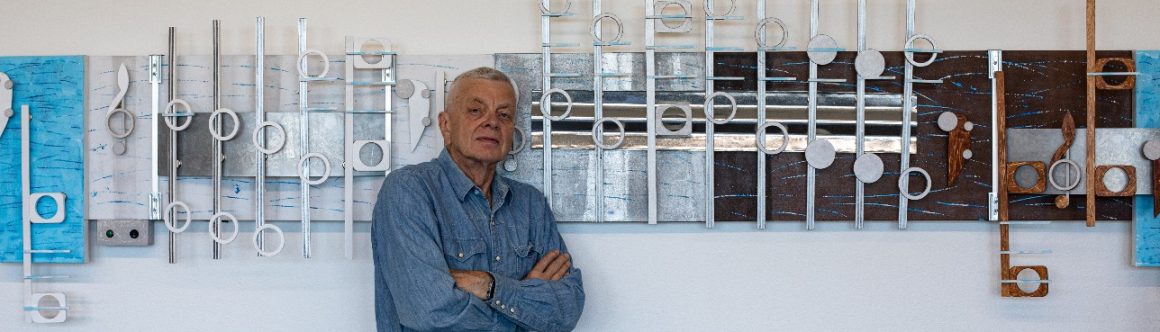
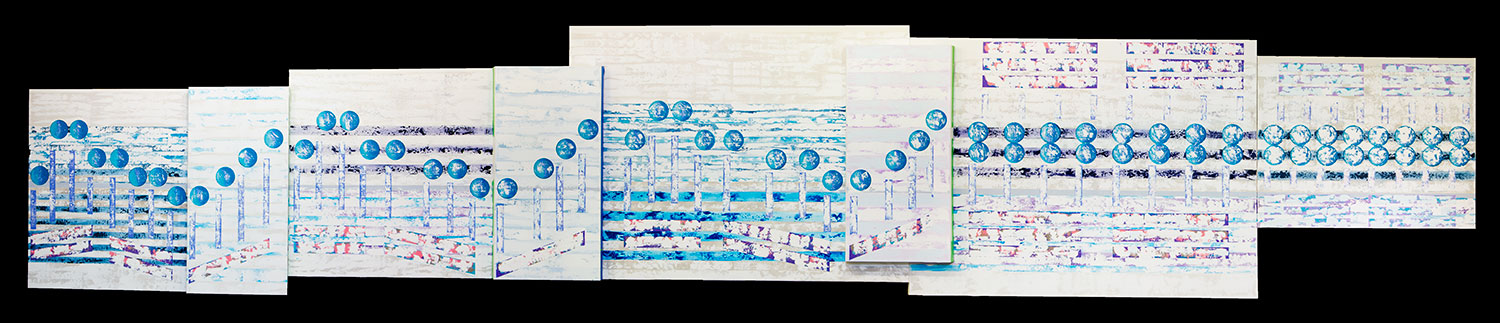
This Vivaldi has taken forever. And the enlarged image does little to portray the power and chill that this work sends through the viewer. You will have to see it up close to know its cold feel. But few of you will, and for now,  that is just the way it is.  I can say if you check out the other 10 Vivaldi’s at my Vivaldi page that this is one unique artwork.  It was better when I worked on this painting in mid February, but lucky for me now, the ‘chill’ is already in this work.  For It was in February that I switch my efforts to complete three commission works. Now, I am somewhat back, for I am also working on another client artwork, that has no hard timeline. I will have enough hours for this Four Seasons piece over the next couple of weeks, to finish it before June.  I need to finish for standing in line are the last two Vivaldi’s: the first movement of Spring, and the Storm that is Summer.  The timing for starting the Spring Vivaldi is already past, but in reality spring around here was nothing. It was bland, boring, and dull. For the most part the feeling of Spring was nonexistent, with most days being a back-en-forth between late Winter and early summer. What this means is that I will have accumulated little inspiration for my Vivaldi Spring based on the weather. Of course, that is not true with this Winter Vivaldi. It was a long, cold, bitter, uncomfortable winter, and it clearly shows in this work. If you are ever lucky enough to view this seventeen foot work in person, you will know and feel winter.

Scott Von Holzen


S_V_H Take Five 2014 final image

takeFive2014


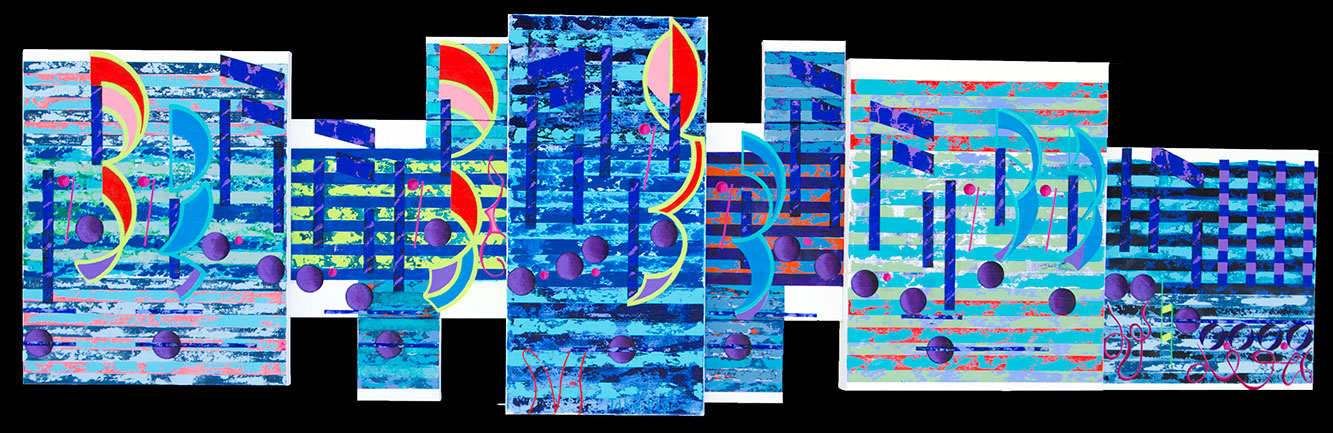
The great Dave Brubeck’s signature piece Take Five.  I started this work in December of 2013, and just finished it last week.  It was held up mostly because of two commission works that took priority.

You are looking at a work that evolved from its original ideas. What the original concept, creative plan, or art mission was I am sure of one goal of this artwork: I wanted to take the background from the obscure, supportive function, to where it dominated the artwork, with multiple layers of colors across stripping that covered the entire work.  Than I wanted to see if I could use the music to push back against the colors and visual impact that it was covering. Surprisingly,  I had to return to the background and repaint parts of it, to finally give the music the visual appearance I decided it needed. When I applied that yellow-green stripping,  on the second panel, this work finally began to come into focus.  On my sixteenth notes, I used a bright red to add the punch that comes at those points in the music’s flow.  That helped considerably to pull the viewer’s attention to the music, and away from the background. In the end the battle between background and music comes down to finding a balance.  I only know when it is there,  and it is obvious when it is not.

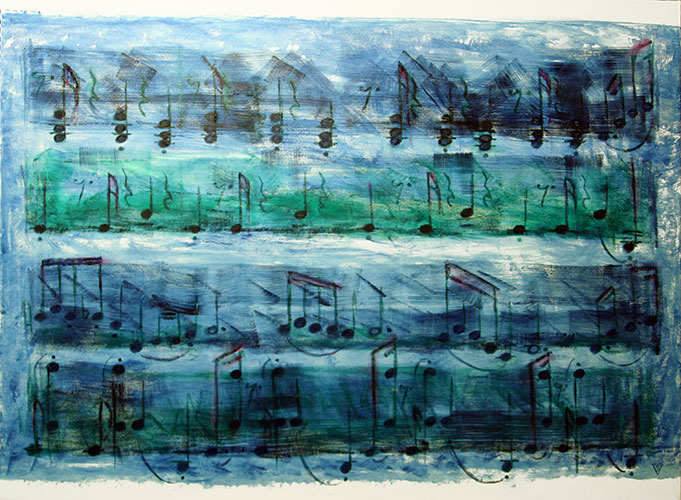
Just as a reminder below is my first Take Five from 2006.  You can see the freer style of painting.Take5_06

The Take Five from 2014 is a lot more structured, and I am beginning to wonder if maybe I should once again return to a more free hand style. My customer for the Japan work, liked this earlier style.  My vision for portraying music is to display its flow in an orderly form so that with a little effort, a viewer could see in the artwork the flow of the music that it represented. Although, few viewers will ever know where the music appears in these artworks. Even with the added help of words the way I choose them would not necessary clear up the mystery.

I will be presenting this artwork to a Professor of Music at the local University.  I plan on showing him exactly where the artwork appears in the music.  If I would not, I am sure he could find it if he took the time, but I am also sure he will still appreciated the artwork without knowing its exact location in the music. And that leads to this question: If few people know where any of these artworks show in the music, what is the need on my part to have such a precise depiction?

The first answer that comes to my mind, is that I portray the flow of the music fairly accurately, to separate my style from other methods of portraying music. Most of the artwork I have seen display music in an abstract way. I am guessing these artists see music as fluid subject. But I do not see music that way.

I have known sheet music since I was seven years old and learning how to play the accordion  I have also know its structure while playing an electric organ in a garage band, and later in college playing folk guitar and blues harp.  I knew that if I wanted to play music I needed to understand and follow the rules of notation that sheet music represented. That seems logical to me, so when it came to painting music I brought those inclinations about music with me.  Looking at music as an abstraction did not make sense. I decided If I am gong to spend weeks of my time painting a song, I wanted the artwork to represent that song, and only that song. Equally as important I wanted that artwork to appeal to the feelings of the viewer. Music has sound that appeals to emotions, and a performance can connect the viewer even more. Musical art is also visual that can be viewed, but it is taking that visual and creating an emotional impact that only the best of this art can do. That is why my music looks very little like sheet music. In order to try to create that ” viewer hook”  I had to abandon the rigid rules of notation, and its standard look. The flow of the music remains, but everything else is my choreography.  This allows me to create art in the abstract, but differently. That brings me to this conclusion.

Like, a singer, group or a band,music can be changed to better represent the performer’s style. The the same goes with me. My artworks are never an exact show of any of the music, but more so my personnel interpretation of the music.That is what separates  my artworks from the mundane representation of notation you see in any sheet music.But because I keep that flow of the music my abstraction makes each work unique to the music it represents. That cannot be said about most musical art. Still the question remains should I loosen up my structure.  Maybe, not so much in the Style of Take Five 2006 or Take Five 2014, but somewhere else, between this and that, and yes and no. I wonder?

Scott Von Holzen

S_V_H Love is All Around image1,2 &3

loveAllAround1


Love is All Around consists of 5 canvas panels 69 3/4 inches in length by a  height of 39 1/4 inches.

The Troggs original version of Love is All Around 1967-68 peaked on the US Billboard charts at No. 7.


Wet Wet Wet version is from the 1994 soundtrack to Four Weddings and a Funeral, that became another hit in the U.K.

loveAllAround2


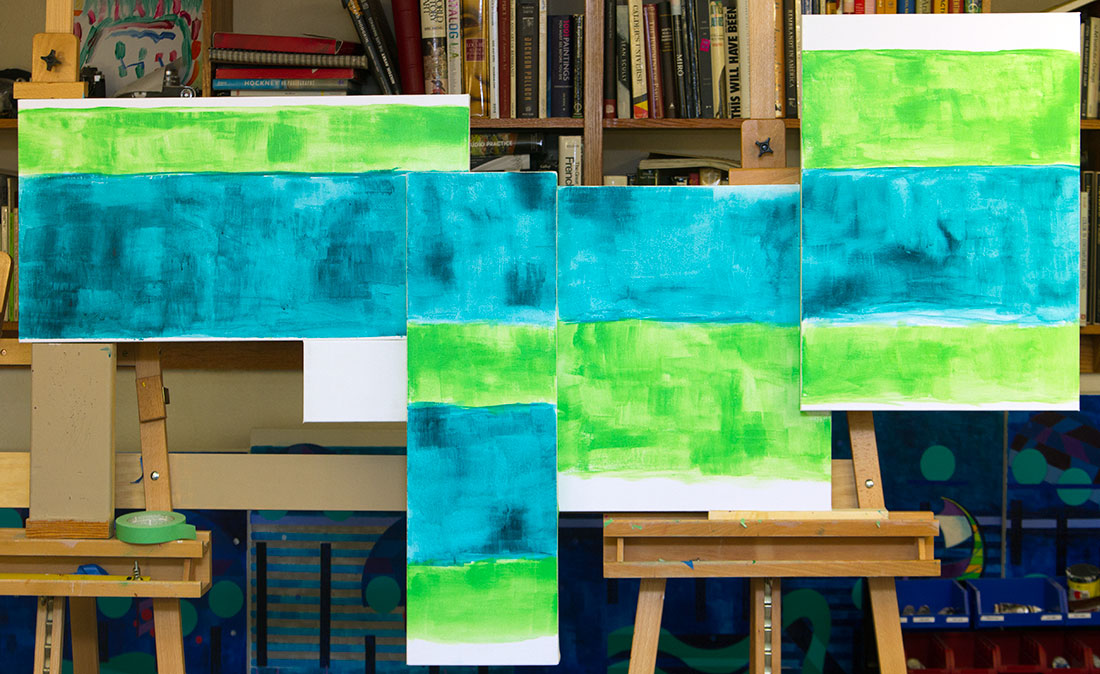
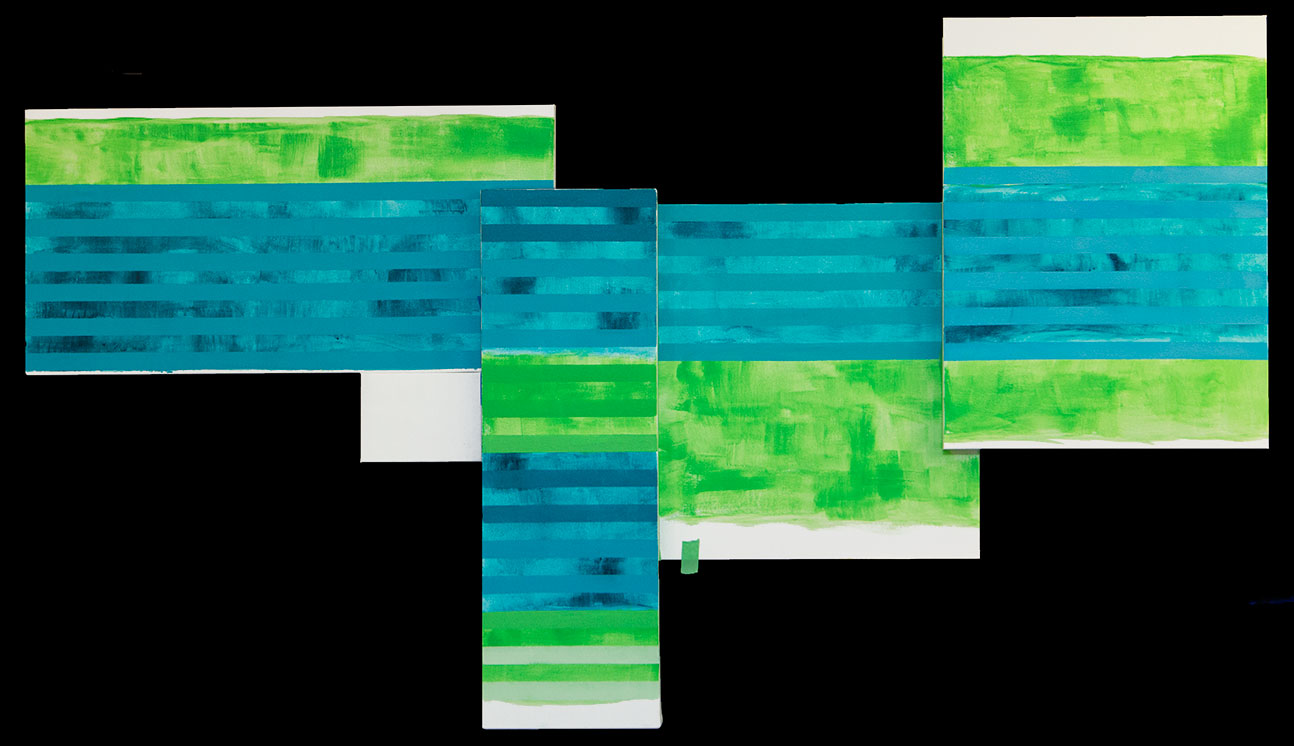
The first image of Love is all Around is from Monday. The above image two is from Tuesday evening.  All images that are image ones are about putting paint to cover parts of the white canvas.  It is about making that first statement. It is about making those first assumptions. It is about just getting it started.  A lot of work has already gone into this work. One of first steps is finding those interesting parts of the music. Then next is seeing what parts I like that might fit in the length of the work I chose.  Next, comes finding the canvases to fit the music, which requires trials to see what will work, and how the pieces will fit together.  Then there is a final check to see that all the music will fit correctly into the spaces provided, and that all the measurements are correct.  If that all makes sense I finally flipped the canvas over and screw and bolt them together. Now the artwork can be put on the easel.


loveAllAround3

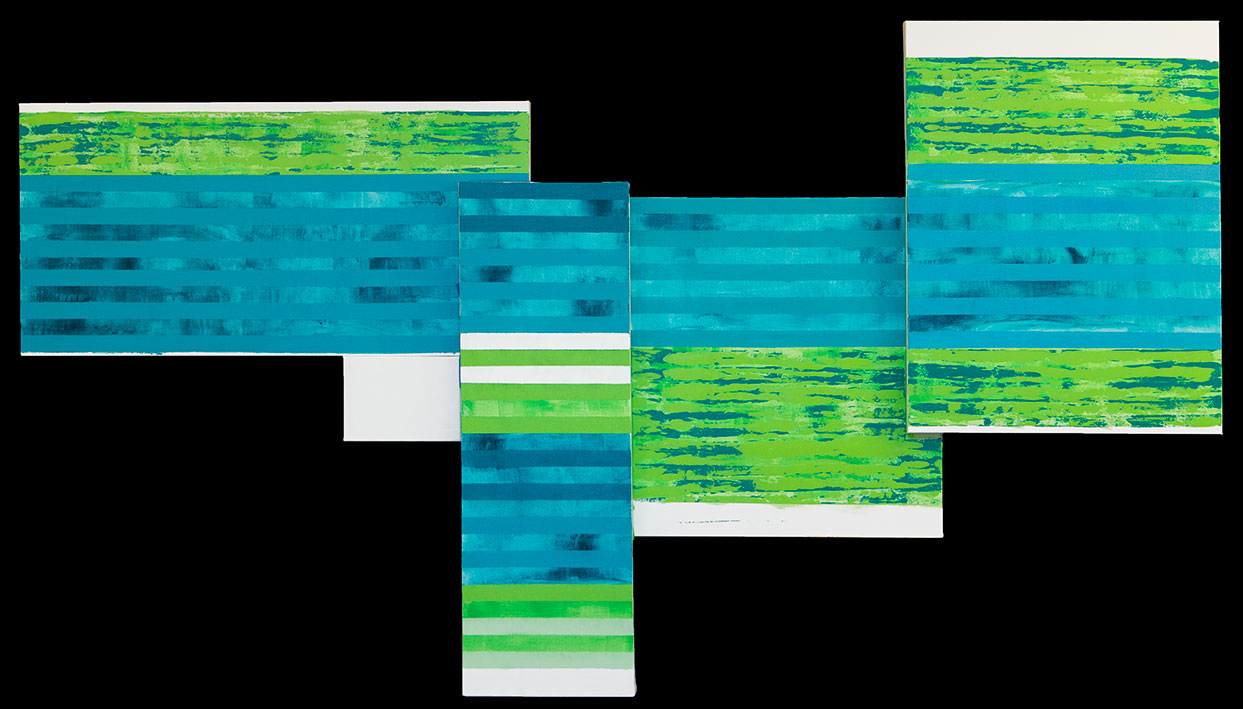
Love is all around third image Thursday. I have taken some lessons from the 17 foot Vivaldi, still in progress,  standing next to All Around.  In the Vivaldi I used some stripping but unlike Take Five, I kept some open spaces. The method I used in the Vivaldi to create the feeling of winter snow in these areas was to strip them with my homemade squeegee.  I created stripping in a freer way, which is something I have decided to try to do more of. Last night I put down the first strip, a turquoise color, over the blue-green, and I thought it may work.  Tonight I knew exactly what I had to do, and that was to re-strip these area with a slightly lighter green. That worked to blend all the colors together, and helped to tone down the darker color, which allow the other, more formal strips to stand out.  Now I am happy, and near the finish for this background.  For now.


Scott Von Holzen