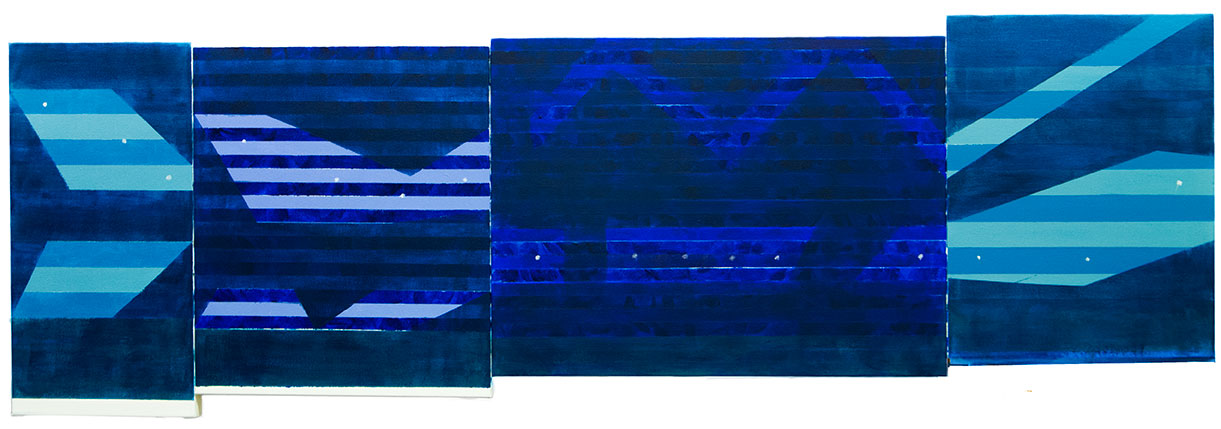
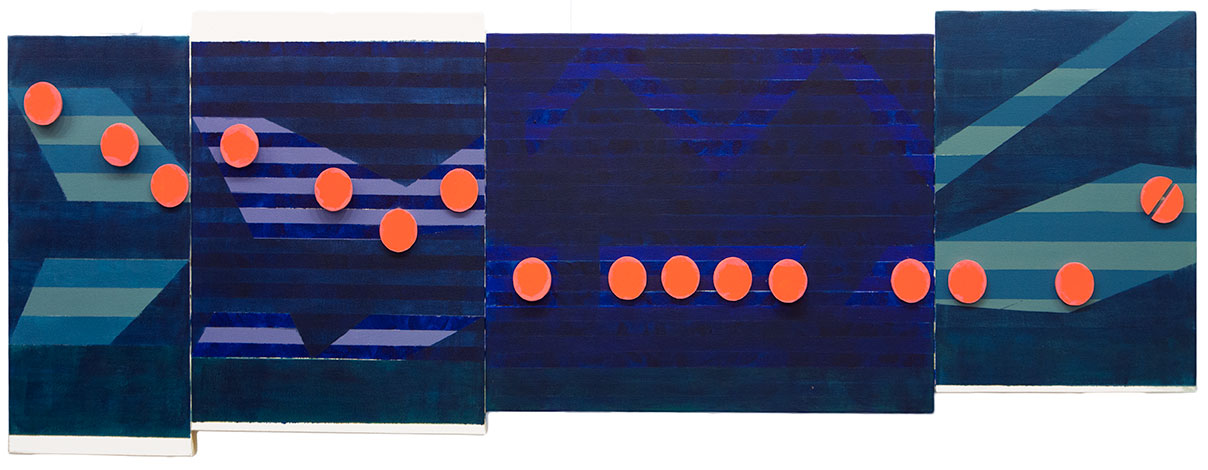
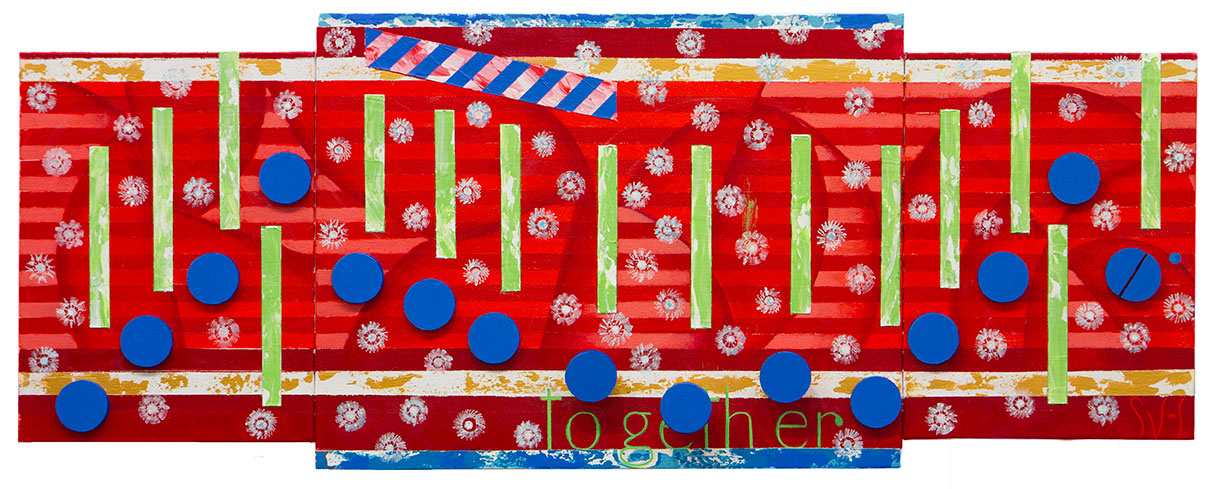
Embraceable You is larger painting consisting of four canvas panels measuring sixty-four inches by about twenty-four inches high.
Here are three different videos showing different styles for Embraceable You. Many of my artworks try to do the same thing by displaying different looks from one panel to the next. I do this on purpose to better show the versatility that is in the music. By using variety in looks I can, in this one way, then push this art way beyond the limitations of sheet music. That has always been my goal since I started painting music. Music has no limitations, and so should not this art.
First, is an upbeat version of Embraceable You from the 1943 movie Girl Crazy sung by a young Judy Garland.
Now, compare that performance of Embraceable You with this one by Wynton Marsalis at the 1989 Newport Jazz Festival
And here is, I believe, the 1947 Bluesy recording of Embraceable You, Commodore 7520B, sung my Billie Holiday that made it into the Grammy Hall of Fame.
This may seem obvious, but an important point that most music, like this one piece, can have multiple interpretations.
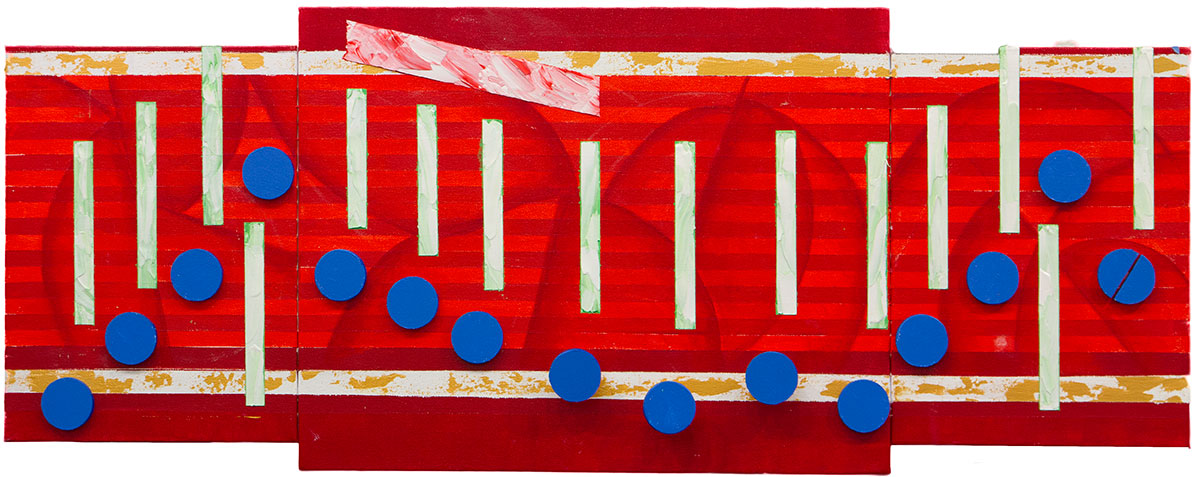
Surprisingly in image 1 you are seeing a style change in this artwork. What created this change was my decision in how I was going to handle the lower parts of the first two canvases. These two canvases contain the main words chosen for this artwork, and I had a concern that the stripping I had along the bottom of both panels would not allow the words to stand out. The easiest solution, one that I have used in the past, was to darken the background where the words where to appear. That is what I tried with a darker green. What I found myself doing, though, was backing off the color to allow the under stripping to stay visible. I decided to go against a solid block look I original thought that I needed for the words.
When I removed a small strip of tape, that I had forgotten along the lower edge, the original stripping remained. At first I thought that this mistake needed to be over painted, and then I saw a new opportunity to finish the background in a different way. I could still do the stripping, similar to what I have done in the past, but now I would apply a transparent layer across the entire painting. By taping sections before hand, I found then I could keep the uniqueness of each panel, but create a result that brings all four canvases together as a single artwork, representing a single piece of music.
Finding a way to pull this work altogether was an early concern for me because of this music. My stripping, for this painting, consisted of the two end panels having a similar coloring, and the second and third panel each portraying a unique look. This kind of diversity is a common technique I have used before, such as in Heavens’ Wall, but for this music something did not feel right.
To try to resolve these misgivings I did try ideas to shade or draw in some curves and lines to break up the background stripping, like in Heaven’s Wall, but I washed off all of my attempts. It was not until I pulled that small piece of tape, that I saw my answer. In a way, I am reversing the look of the background. Now, instead of trying to cover up, or break up, sections of the stripping, I apply tape to cover up some of the original stripping, and then paint over the entire background with a transparent color I accomplished the goal of pulling all four panels together, removing my misgivings. This then is new look for my backgrounds that may allow me to involve away from the experimental Cubist and Futurists ideas of line and shading.
This blog entry has taken some extra time, so here is Embraceable You with the music flow in place.
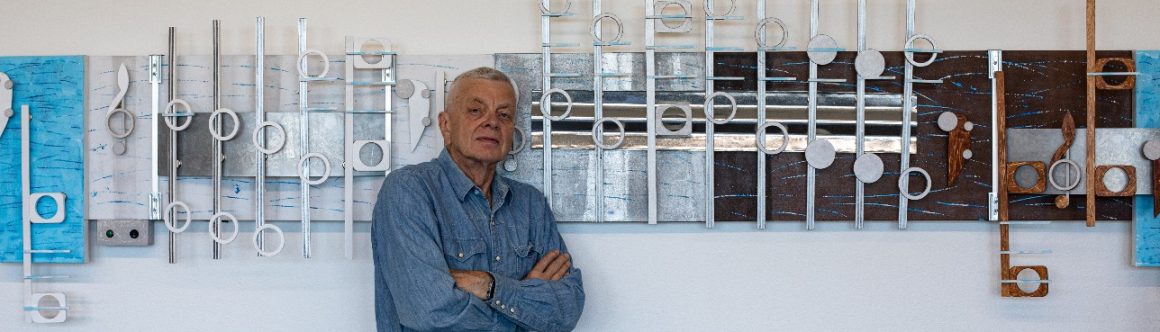
Scott Von Holzen
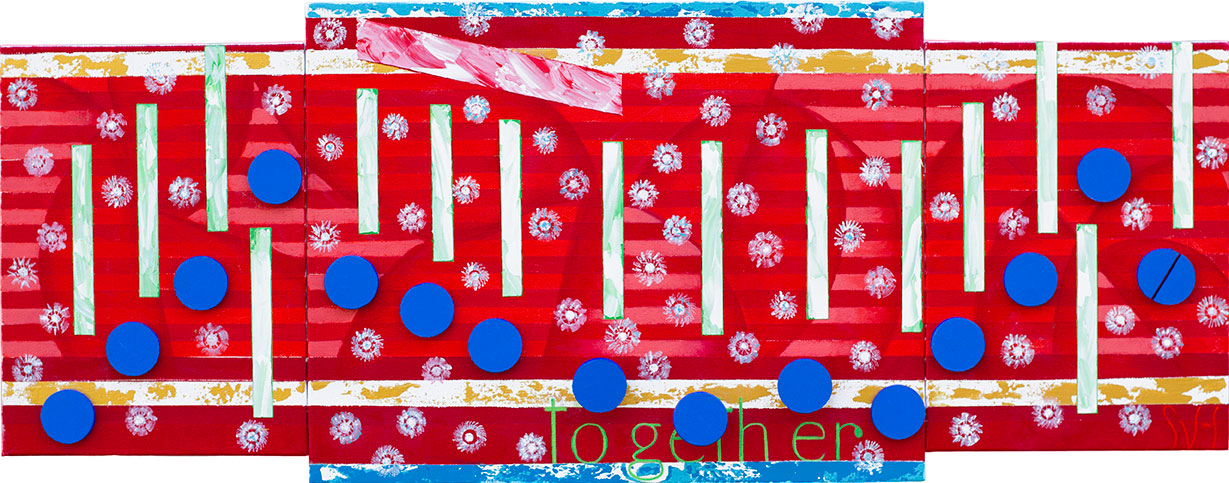
 aRT iN mUSIC