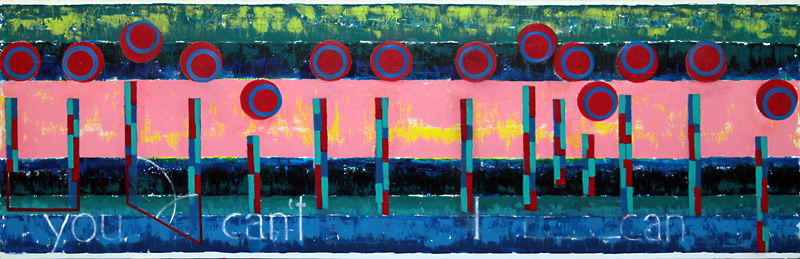
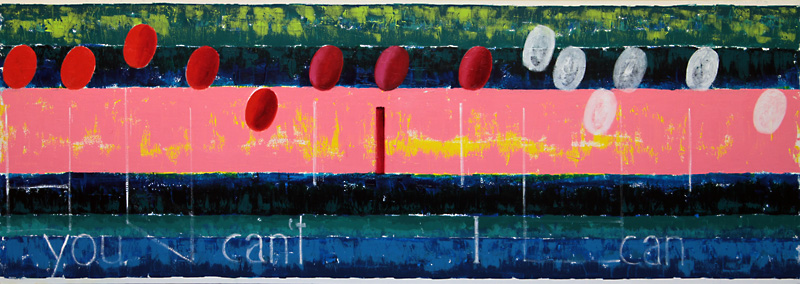
 I Call your Name has gone in a different direction from image3. Image3 was posted three days ago. But since then it has been a struggle, a frustration, a disappointment, a concern, a triumphant, and the awareness well understood, that this journey will absorb a lot time, sometimes with little to show. The time spent was with the problem with what to do with the notation, boring, been there, done that.
With Call we where back to oblong notation because the thought, from the previous work, a Chopin’s Valse that it was time to abandon the circle note. The reasoning for that came about because circle notes just float, and do not appear to be moving. That appearance of motion has always been important. You can see that emphases grow over the years, with the sharply raising of the angle of the notes done to create more movement. A constant problem although, was the need for precise drawing and balancing, of the look of these notes over the entire canvas, required considerable time and effort. This was fine, at first, because the notation was considered the most important part of these artwork. This changed over time as a better balance in value caused an emphasis change to create better, and stronger backgrounds. The quality of the backgrounds improved to where they can stand on there own, with or without the notation Over dozens of these canvas the same drawing techniques where being used for the notation. This has resulted in the same basic appearance of the notes from work to work: oblong with traditional style shading.
Then when the circle worked in Naive Melody with the eighth notes, it was thought that the circle could also worked for the notation. After painting circle notation in Winter, and No Sunshine, it became obvious that the notation appeared to be floating on the canvas without the look of movement. In the last Chopin Valse work this became the issue. The only thing that helped Valse was the extensive range of the notes, and some different tones used on the notes. Shading the circle notes did not work like it did with the oblong note. The final thought with Valse was that this would be the end of the circle note. With Call Your Name, a twist to that idea was tried.
On Call the notes where first put down as circles. Then inside the circle it was attempted to draw in the the oblong notes. This seemed a good idea because drawing the circle provided precise top and bottom locations. The notes appear more rounded, then oblong, top and bottom, while the sides where drawn inside and the outside of the circle was then removed. Some of the fourteen notes started to look good, so it then was felt it was time to shift the attention to the notation stems to see what could be done with them.
The note stems development has been stagnant over the last many works. Imagine hanging just above this computer desk is an example of the frustration in finding a unique way to portray a straight vertical line. Basically, it has been that way, since the beginning of this art. The note stem is a vertical line, and its representation in this music has been important to help connect the notation and to pull the edges of the canvas into the picture. Then a thought occurred out of nothing: the long rectangle line could be widened, like what was done in Naive, but instead of painting in one smaller rectangle inside the larger one, two lines would be drawn, with different colors and lengths. It then soon because obvious, that some of these inside rectangles, could be drawn just a little differently, and they could then easily come to represent piano keys. That last revelation closed the deal. These artworks are about music, and to just draw objects without any reference to music, seems at times too decorative: pretty color shapes adding up to being nothing more then filler.
Finishing the stems for the fourteen notes, and standing back, those oblong notes now appeared not to work. They seemed out of the flow and appeared, style wise, less original. They just did not seem to fit with the other looks going on this work, and it became obvious that they where going to require a lot more work to just to make them all look similar to each other. Maybe, it had to do with the large amount of time spent on each of these canvas to draw and shaped the oblong notes, that had finally reached its limit. But, the circle, as a representative of the notes, had a big issue: they have a float look but not a movement look.
The problem was how to use the simpler to draw, and certainly a huge time saver circle note, bit give give them a sense of motion. There was no compromise to be made. Either that circle had to move or it was go back to the oblong shape. Out came the art books as the search began. The Van Gogh technique of small square dashes of mixed colors, executed at a angle, was the best that could be thought off as of yesterday night. An earlier in that evening, an attempt at drawing oblong notes inside the circle notes was tried, but that looked dumb. They were washed away and the angled brush strokes was all that was left to show from that nights work.
This morning the search for inspiration continued, all art build on the previous. Nothing else came out of the Van Gogh books, but those short mixed brush strokes. Nothing jumped out no matter how many pages where flipped though, or how many Georgia O’Keeffe interesting abstract works where viewed. Then grabbing the first book of the New American Abstraction series, there it was on page 288, a circle painting by Alexander Liberman, called Sun II. It is a red circle painting with two smaller circles drawn inside. The one circle was a small solid but more importantly, the other larger circle was a line in yellow. That was it, the circle as a line. The idea was to draw the notation as a large solid colored circle, and inside that draw a smaller circle as a line shape, and place it randomly about the outer circle. The sporadic placement of this inside circle appears to throw the outer circle out of place, and ah.. aha….motion is created. Once again the door opened the way forward for this work and more to come. And once again there is incentive for the the artist live on to fight through another day.
Scott Von Holzen

 aRT iN mUSIC