S_V_H Chopin Valse Op.64, No.2 image2

Chopin’s Valse.  There was a commercial today on the TV where there was a scene in a studio with the artist saying that he did not know where the inspiration comes from but all of a sudden it just appears. Not a quote but similar.   Surprised, that caught.  There has been discussion in this blog and the artist has spoken to others about not knowing where it comes from and suddenly there was that deep artist meaning being commercialized on TV?

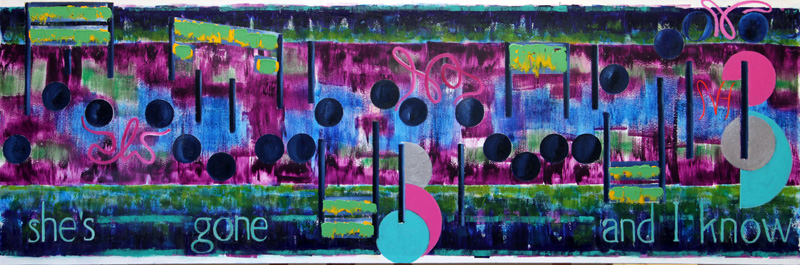
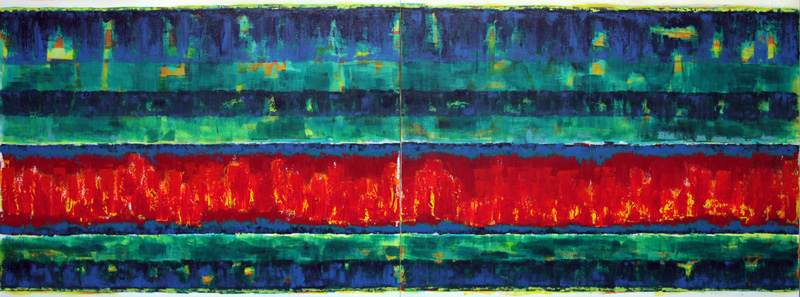
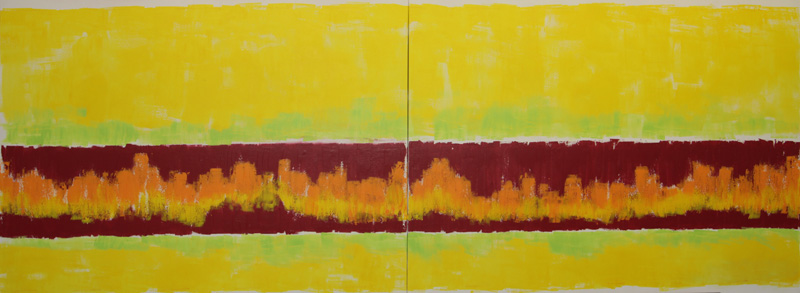
Seeing that commercial  reveled a truth about this art: it is a lie it is not all about the inspiration.  It is never there at the end and barely starts that way.  Just look at this image and the previous one.  Wow, there is a difference.  And guess what it just did not just happen.  It is work.  It is standing back and saying, this sucks. And it is then about trial and a lot of errors.  That is where things are still, with this work.  The current feeling is that there is too much green.   No matter what colors where put down, last night, to cover that upper green strip, above the imaginary Staff, nothing worked. It was all washed off, over and over again the rag was rinse clean of paint.

Stick inspiration but stick with the discrediting  of it just happens.  It does not, it is a job, it is work, and it is just fine that way.  Did not Thomas Edison say 10 percent inspiration 90 percent perspiration?  True, it starts with a feeling for the music and a colors that seem interesting.  If that is inspiration, OK that works.  But, after applying the first colors the feeling melts  from the dream world, down the drain, to the reality world of what the hell are you doing, and how can this work be saved.  That is when the truth begins to show up in the paint.  Like the truth the artist paints have many layers.

Scott Von Holzen
S_V_H Chopin Valse Op.64,No2 image1

Valse, a one syllable word the means concert waltz.   Chopin wrote 19 of these waltzes. The canvas is three feet by eight feet, and is a classical piece picked to shake things up from the previous works.  It will. This canvas will represent a small section of this waltz that is played fast and so the use of the bright colors.  Since the notes move sharply up from the left to the right there is going to be a lot of territory  that will need to stand on its own.  The base has added importance to hold interest and to help move the music along.

The thought is to put the base in a good look and then draw in the note heads only. Then, step back, and for the first time work the background  further like a musical landscape that will pump up the emotional impact, add diversity, and pops the notation. In previous works that has been the trend with the background, but here there is hope that the effort will be pushed harder forward.   We shall see.

Scott Von Holzen

S_V_H Ain’t No Sunshine image4 final

First the slang word ain’t is detested, and yet when sung by Bill Withers it seems to work.  It is cold in Wisconsin and  today the general weather seems to be effecting the concentration and drive.  Last night was spent painting in some, and cleaning up, sharping some edges, and signing.  Tonight, this work will be gone over and let go, but the mood, right now to start another, is lacking some enthusiasm.

Lately, there has been a number of these two foot by six foot canvases and they are starting to look somewhat repetitive.  There is a anxious creative need to do a Classical work to shake it all up, but the feel for this music has been weak, and unimpressive.  The music is searched out and played and the information is gathered about how great the work is, but it is hard to be convinced.  Do not know where this comes from.  Time was spent browsing Mozart, and Vivaldi, and just recently Chopin’s waltz Op. 64 No. 2.  The canvas is only eight feet by three feet a must to break this two foot binge of lately, which means about 32 notes.  That few of notes for a Classical piece makes it is hard to find a start and end point.  The start point is going to be a start it here because the measure breaks with the previous measure. The end is harder because a lot of good classical music just keeps moving.   Lucky in this Chopin piece there is a rest that pauses the action and a start that can be chopped off.  Also, a nice early version of this music was found in the Public Domain.   So, time to pump up the creative juices and plunge ahead.  We shall see, if the music fits the height and if so it should be a go.

Back to Ain’t No Sunshine.  There has been a lot of enjoyment listening to the six different versions of this music by: Bill Withers, Aaron Neville,  Bobby Blue Bland, Buddy Guy, Eva Cassidy, and Sting with David Sanborn.  With this variety it has kept the music fresh.  Enjoyed putting down round notes, but would have like them to be larger, like in Winter.  The colors of this work amaze, because they come not from preferences but from the need of the work.  Strange, the work drives the colors, that is driven by the music that in this case comes from a personal arrangement.

A lot of time and frustration was spent with the three ties. Originally they where a lighter green. All have all been washed off and repainted, and changed in style, to try and make them look fresh. Every work of art moves the art forward.  The problem with the style of the ties is that the forward movement has been in a number of different and scattered directions.  Similar to the creative path of the eighth notes which have lately stopped changing in jerky steps with the painting of Naive Melody.

The words are strong and colors sharp and fitting with the music, an exceptional work that challenges the Birthday painting and makes the interesting Cry Me A River, finished near the end of November, seem dated in style.

Scott Von Holzen